REVIEW · NEW DELHI
Moral Slum Tour in Delhi with hotel pickup & drop
Book on Viator →Operated by Discover Activities · Bookable on Viator
This tour gives you a very different lens on Delhi. You’ll visit Sanjay Colony in the Okhla Vihar area with a professional guide there to explain day-to-day life, then you’ll cool down with a stop at the historic Agrasen ki Baoli stepwell. It’s a thoughtful mix of realism and architectural calm.
Two things I really like: the hotel pickup and drop make the day easy, and the guide-led visit is built to add context instead of turning people into a spectacle. A local guide can make the difference, and the names Dolly and Viktor have shown up in past tour experiences, which tells you the guides are often connected to the area they’re explaining.
One possible drawback: you’re entering a real residential slum, so the experience can feel emotionally heavy for some people. Go in with a respectful mindset, and plan to have your assumptions challenged in a good way.
In This Review
- Key points before you go
- Sanjay Colony in Okhla Vihar: What this Delhi slum visit really shows
- The 3–4 hour plan: hotel pickup to Agrasen ki Baoli
- What happens on the ground in Sanjay Colony (and why the guide matters)
- Agrasen ki Baoli after the neighborhood: why the contrast is useful
- Price and value: is $69 really fair for what you get?
- Ethics in action: how to make this type of visit respectful
- What you’ll likely take away (beyond the main sights)
- Who this tour suits best
- Should you book this moral slum tour in Delhi?
- FAQ
- How long is the Moral Slum Tour in Delhi?
- What area will I visit during the slum portion?
- Is hotel pickup and drop included?
- Is this tour private?
- Do I get a guide during the slum visit?
- What’s included besides the guide?
- Are meals included?
- What’s the weather requirement?
- What is the cancellation policy?
Key points before you go

- Hotel pickup and drop: you don’t waste your time figuring out Delhi traffic
- Sanjay Colony (18 acres, 45,000 residents): smaller than Mumbai’s Dharavi, but still a major community
- Professional guide for context: the visit focuses on how daily life works, including local work setups like garment making units
- Agrasen ki Baoli stepwell stop: a strong contrast right after the neighborhood visit
- Private tour format: only your group, so questions feel easier
- No meals included: plan for snacks or dinner on your own after the tour
Sanjay Colony in Okhla Vihar: What this Delhi slum visit really shows
Delhi has plenty of “see the sights” energy. This isn’t that kind of day. The core of the experience is a guided visit to Sanjay Colony, located in the wider Okhla Vihar area. It’s not as huge as Mumbai’s Dharavi, but it’s still substantial: the community covers about 18 acres and is home to around 45,000 residents.
One detail that helps you understand the place faster: the area was forest land before residents started moving in around 1979. That timeline matters because it shapes what you’ll notice on the ground—how the community formed, adapted, and built the everyday infrastructure of life.
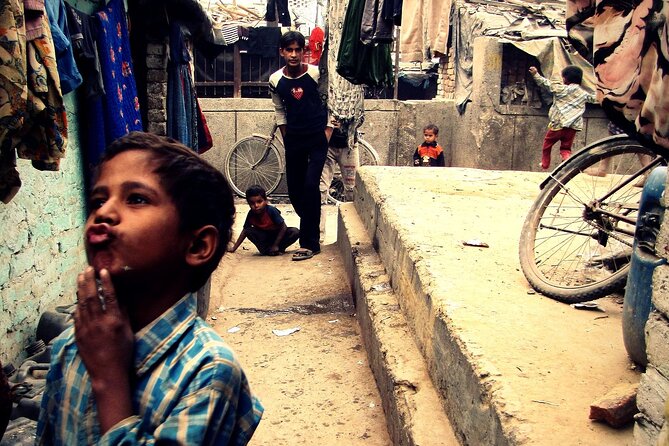
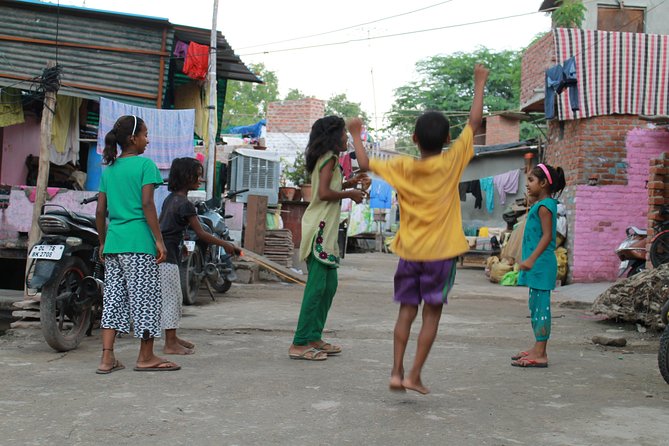
You’ll see how people make ends meet through small cottage-industry style units, including garment-related work setups. It’s not “poverty tourism,” because your guide’s job is to explain the rhythm: what work looks like, how religious spaces like temples and mosques fit into the daily map, and how practical services show up too (you may encounter things like schools and a small doctor’s office).
And yes, you’ll also see that life here includes people of many ages, with kids playing and adults moving through their day. The contrast can be striking. The point isn’t to pity anyone—it’s to understand that a community’s resilience and everyday creativity are real, even when resources are limited.
The 3–4 hour plan: hotel pickup to Agrasen ki Baoli
This tour is designed to fit into a half-day window. Expect a total duration of about 3 to 4 hours, with round-trip transfers from your Delhi hotel.
The rhythm is simple:
- Start at the Sanjay Colony visit (with guide context)
- Then head to Agrasen ki Baoli for a guided pause at the stepwell
- Return to your hotel afterward
The slum stop includes admission ticket as part of the package timing, so you’re not standing around sorting out entry fees. And because the format is private, you can ask follow-up questions without feeling rushed or crowded.
One practical note: since the schedule is tight, you’ll want to be ready when pickup happens. Delhi timing can change with traffic, and a smooth start helps you get the most out of that visit window.
What happens on the ground in Sanjay Colony (and why the guide matters)
The most important ingredient here is the guide, and the tour is clear about that: you have a guide during the slum visit only. That means the slum portion is where the “context engine” runs, and it’s also the portion that tends to shape how you’ll feel about the whole experience.
In real neighborhoods like this, it’s easy for outsiders to see only surfaces. A professional guide helps you read the scene:
- You’ll learn how residents set up indigenous work units, including garment-making activity
- You’ll notice how different community needs show up side by side—places for worship, schooling, and basic health support
- You’ll hear explanations that help cut through stereotypes and replace them with actual understanding
In past experiences, the guides’ local connection has been a big part of the impact. Names like Dolly and Viktor have led tours, and the strong common thread is that they bring lived-in perspective. When a guide can explain what daily life looks like from the inside, the tour stops being a lecture and starts feeling like interpretation—you can connect details to ideas.
Also, expect a human moment. You might see locals gather at the edges of the visit. That doesn’t automatically mean danger or discomfort—more often it means curiosity and visibility. If you go in calm and respectful, the situation usually becomes part of the learning.
Agrasen ki Baoli after the neighborhood: why the contrast is useful
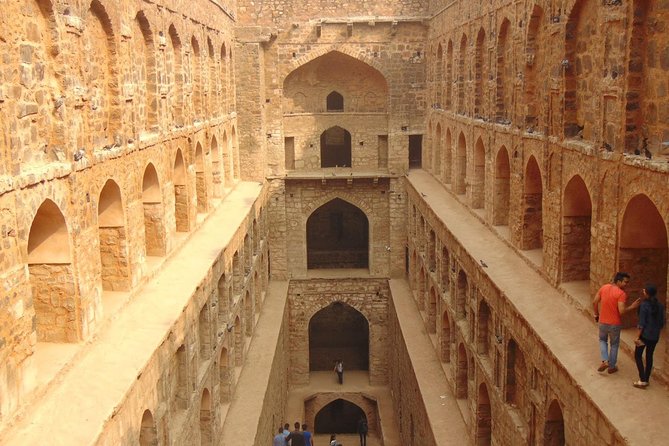
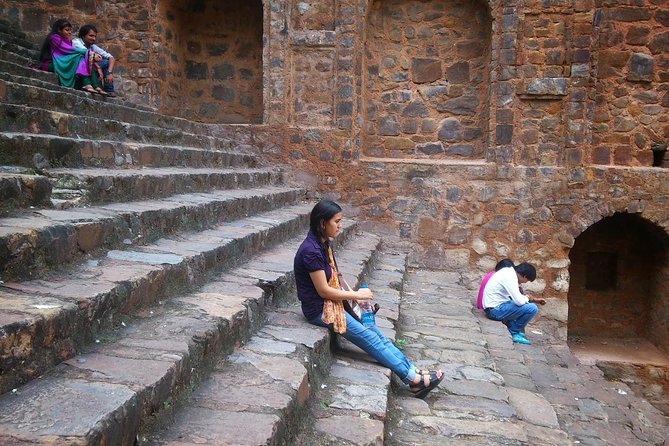
After the slum visit, you’ll stop at Agrasen ki Baoli, a historic stepwell known for its beautifully symmetrical architecture. This is the kind of place where your brain gets a visual reset after the complexity of a residential neighborhood.
Stepwells aren’t just pretty. Historically, they were practical public infrastructure in Indian cities—built to handle water needs and communal life. In the middle of a tour about daily realities, that matters. You go from stories about work, community spaces, and survival logistics to an architectural form that shows how planning and design shaped life in the city.
The timing is smart: going there after Sanjay Colony helps you compare two kinds of “life systems.” One is modern and ongoing, shaped by the day-to-day decisions of residents. The other is a durable structure that carries history in its symmetry.
It’s also a good chance to breathe. If the first part of the tour feels heavy, this stop gives you a calmer, slower pace.
Price and value: is $69 really fair for what you get?
The price is $69.00 per person for a private tour with hotel pickup and drop. At first glance, you might think it’s pricey compared with generic city tours. But look at what’s included and what’s not.
Included:
- Private transportation
- Guide during the slum visit only
- Stop at Agrasen ki Baoli with admission ticket
- Mobile ticket
Not included:
- Meals
Now the value question: you’re paying for a guided, context-heavy visit to a living community plus transport support so you can focus on the experience rather than logistics. For many people, the guide’s interpretation is the real cost driver here—and that’s exactly what you’re buying.
Also, the private format matters. When only your group participates, it’s easier to ask the tough questions and move at a pace that feels respectful. Group formats can be hectic in sensitive settings. Private tends to feel steadier.
So is $69 “worth it”? If you want a meaningful Delhi experience that goes beyond monuments—and you’re okay with the emotional weight of visiting a residential area—this pricing usually feels reasonable.
Ethics in action: how to make this type of visit respectful
This tour is framed around dispelling stereotypes and building a positive understanding of communities. That goal only works when visitors behave with care.
Here’s what I’d keep in mind:
- Treat people as people, not as a photo opportunity.
- Let your guide handle context. If you don’t understand something, ask rather than guessing.
- Stay calm if there’s attention. In many places, locals may be curious about outsiders.
A good sign is how the visit is structured: you have a guide to provide context, and you’re not just dropped into an area and left to “figure it out.” That structure helps steer the experience toward education rather than exploitation.
And your attitude matters just as much as the tour design. You’ll get more out of the day if you’re open to learning instead of trying to confirm what you already believe.
What you’ll likely take away (beyond the main sights)
People often come away with a shift in perspective, and in this case the change is tied to specifics.
From Sanjay Colony, you’re likely to remember details like:
- The community’s size (18 acres, around 45,000 residents)
- The mixture of work setups—especially garment-related production units
- The way daily life includes religious spaces, schooling, and basic healthcare
- The idea that residents have built systems to earn living in their own ways
Then Agrasen ki Baoli lands as a contrast:
- A symmetrical, historic structure that points to long-term city planning
- A quieter moment after a more intense neighborhood visit
When these parts connect in your mind, the tour becomes more than a stop on a schedule. It becomes a more accurate picture of Delhi as a city of layered realities.
Who this tour suits best
This is a great fit if you:
- Want something more meaningful than standard sightseeing
- Like tours that are guided by context, not just logistics
- Enjoy learning from local explanations
- Are comfortable with sensitive subject matter in a respectful way
It may not be the best fit if you’re looking for a light, carefree walking tour. The slum visit is real, lived-in, and not staged.
Also, it’s private, so it can be a nice option for couples or families who want questions answered at their pace. Past experiences include a parent traveling with a 14-year-old, and the structure tends to work well when you’re prepared to talk about what you see.
Should you book this moral slum tour in Delhi?
I’d book it if you want a Delhi experience that’s direct, guided, and designed to change how you see people and communities. The hotel pickup and drop remove hassle, the professional guide makes the visit educational, and the Agrasen ki Baoli stop gives a satisfying architectural reset after the neighborhood part.
Skip it if you know you can’t handle emotionally challenging places or you want a purely comfortable, low-intensity day.
If you’re on the fence, ask yourself one question: do you want to see how a city works at ground level, with real context? If the answer is yes, this is a strong pick.
FAQ
How long is the Moral Slum Tour in Delhi?
The tour takes about 3 to 4 hours.
What area will I visit during the slum portion?
You’ll visit Sanjay Colony in the Okhla Vihar area.
Is hotel pickup and drop included?
Yes. Round-trip transfers from your Delhi hotel are included.
Is this tour private?
Yes. It’s a private tour/activity, so only your group participates.
Do I get a guide during the slum visit?
You’ll have a guide during the slum visit only.
What’s included besides the guide?
You’ll have private transportation, and the tour includes a stop at Agrasen ki Baoli with an admission ticket included. You’ll also get a mobile ticket.
Are meals included?
No. Meals are not included.
What’s the weather requirement?
The experience requires good weather. If it’s canceled due to poor weather, you’ll be offered a different date or a full refund.
What is the cancellation policy?
You can cancel for free up to 24 hours in advance for a full refund. Within 24 hours, the amount paid is not refunded.