REVIEW · NEW DELHI
Jaipur City Private Day Tour From Delhi By Car-All Inclusive Tour
Book on Viator →Operated by Bagga India Tour · Bookable on Viator
Jaipur in one day starts before sunrise. This private full-day trip from Delhi is built for people who want Jaipur’s big-name sights without figuring out trains or hiring drivers. I love that it brings you to major landmarks like Hawa Mahal and the City Palace, then keeps going to major heritage stops like Jantar Mantar. The one drawback is the schedule: it’s about a 15-hour day, so it can feel long on the return drive.
The service side gets strong praise in the feedback I reviewed, especially drivers like Gulbir Singh and Manoj, plus guides such as Vijay, Karni, Manpreet, Sonu, and Vikram Singh. In other words: if you care about clear explanations and safe, confident driving, this format aims to deliver.
You can also shape the day a bit, including the choice to skip Jaigarh Fort. The route blends palace and monument stops with quieter, hands-on places like Panna Meena ka Kund and Galtaji’s Monkey Temple, where sacred water tanks are fed by a natural spring.
In This Review
- Key highlights you’ll actually feel during the day
- Pink City, fast and focused: why this day tour works
- The early 4–5 a.m. pickup and the Delhi-to-Jaipur drive
- Hawa Mahal: how Jaipur’s palace-front design lets light and air do the work
- City Palace: royal power, administration, and the feel of Jaipur’s center
- Jantar Mantar (1734): standing inside an astronomy machine
- Jal Mahal at Man Sagar Lake: the picture stop that changes the mood
- Lunch at Jaipur City Heritage Restaurant: where the all-inclusive value shows up
- Jaigarh Fort: optional royal views, with a built-in skip option
- Panna Meena ka Kund: the stepwell stop that feels surprisingly human
- Monkey Temple (Galtaji): temples, tanks, and the natural-spring water angle
- Price and the real value: what you’re paying for at $9.60
- Private by design: what you gain with this format
- Who should book this Jaipur day trip (and who might not)
- Should you book this Delhi-to-Jaipur private day tour?
- FAQ
- How long is the Jaipur City Private Day Tour?
- What time does pickup happen in Delhi (and nearby cities)?
- Is the tour private or shared?
- Are monument entrance fees included?
- Is lunch included?
- What sites are included in the tour?
- What is special about Monkey Temple in the itinerary?
- What is included besides sightseeing?
- Is free cancellation available?
Key highlights you’ll actually feel during the day
- Early hotel pickup, private AC car, and hotel drop-off: you lose less time to logistics and start the day in motion.
- Hawa Mahal + City Palace: two must-see views that also explain how Jaipur’s royal city was planned.
- Jantar Mantar (1734) and its 19 astronomical instruments: history you can stand in front of, not just read about.
- Jal Mahal photo stop at Man Sagar Lake: a quick visual payoff that breaks up the palace-heavy pace.
- Sacred water sites: Panna Meena ka Kund and Galtaji’s water tanks add a different side of Jaipur.
Pink City, fast and focused: why this day tour works
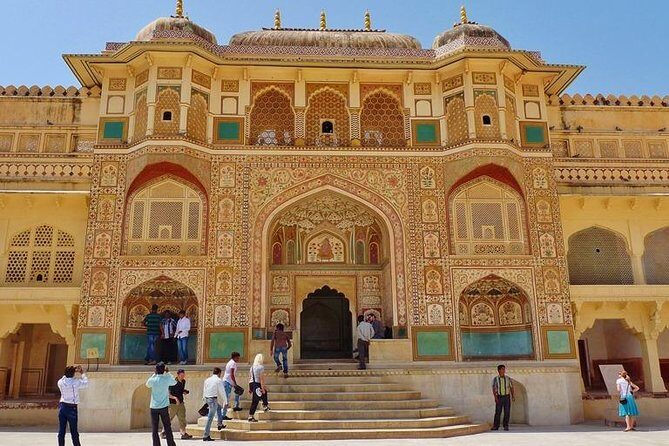
A Delhi-to-Jaipur same-day trip is always a trade-off. You give up a slow morning in Jaipur, and you give up a relaxed evening back in Delhi. What you gain is a full sample of the city’s headline landmarks in one go—without the stress of arranging transport, tickets, and timing for each stop.
This tour is designed around that goal. It runs for about 15 hours and uses an air-conditioned car with a chauffeur. That matters because Jaipur’s “main stops” are spread out enough that a private driver saves you from bouncing between taxis and bus lines. You also get a local city tour guide, which turns the sights into something you can understand while you’re standing there.
It also helps that the itinerary includes both royal Jaipur (Hawa Mahal, City Palace, Jaigarh Fort) and the city’s more spiritual and practical heritage (Panna Meena ka Kund and the sacred water tanks at Monkey Temple). If your time in India is tight, that mix is exactly what you want.
You can also read our reviews of more city tours in New Delhi

The early 4–5 a.m. pickup and the Delhi-to-Jaipur drive
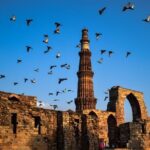
The day begins with pickup from your Delhi, Noida, or Gurugram hotel. Your driver meets you inside the hotel lobby at 4:00 or 5:00 a.m., depending on what you choose. Then you head to Jaipur by private air-conditioned car.
The drive is described as about 4 hours each way in traveler feedback, and the full tour runs long enough that you’re basically committing to a “get up, go, return” travel day. One review also highlights how the driver handled heavy monsoon rain while keeping everyone feeling safe—so the company is thinking about road realities, not just ideal weather.
What I’d watch for: you’re starting early, and the day is structured to move from one landmark to another without long pauses. If you’re the kind of traveler who needs a leisurely start, plan to go to bed early the night before.
Hawa Mahal: how Jaipur’s palace-front design lets light and air do the work
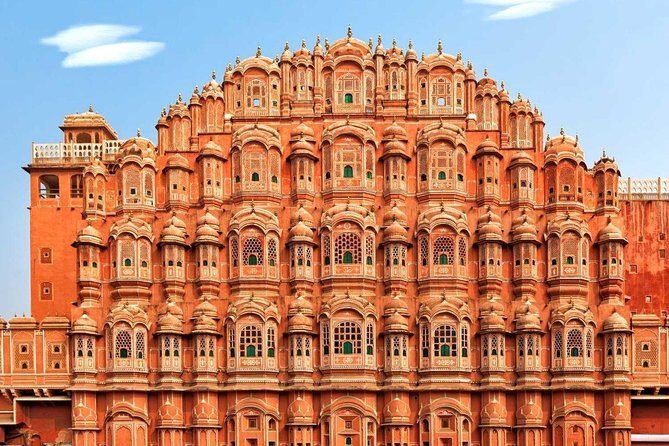
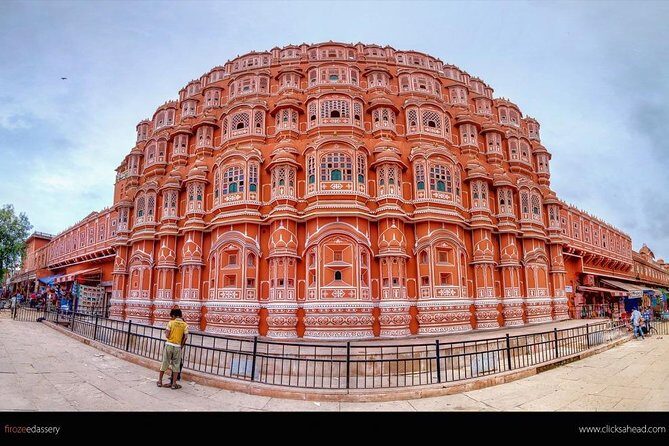
Hawa Mahal (Palace of the Winds) is one of those places that looks instantly impressive, then rewards you for slowing down and noticing details. Built from red and pink sandstone, it sits on the edge of the City Palace complex and extends to the Zenana (women’s chambers).
In plain terms, the architecture is about windows and airflow—hence the nickname. This tour gives it about 40 minutes, including the stop time built into the route. If you like photography, this is a strong choice because you can get different angles around the palace façade as you move through the area.
Tip: since the day starts early, your best light for photos might depend on what time you arrive and where you position yourself. Don’t overthink it—just be ready to shoot quickly during your assigned time window.
City Palace: royal power, administration, and the feel of Jaipur’s center
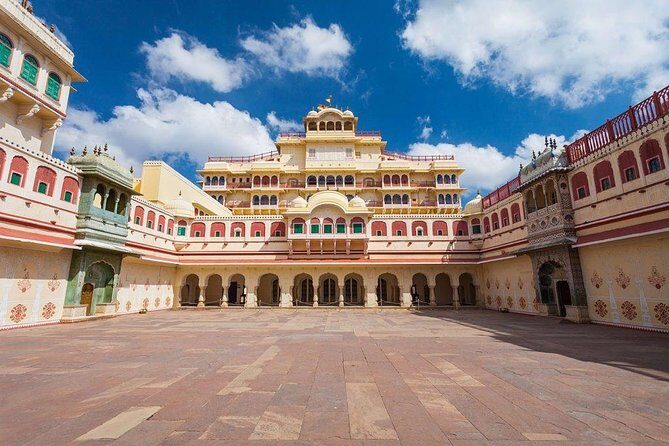
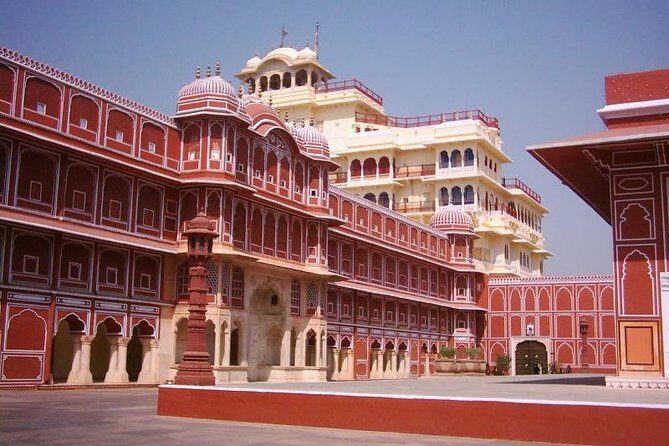
From Hawa Mahal, the next big hit is the City Palace. It’s described as a royal residence and former administrative headquarters of the rulers of Jaipur State. Construction started soon after the establishment of Jaipur, so the site ties directly into the city’s origin story.
You’ll get about 1 hour here. That’s enough time to understand the basic layout and take in the scale without feeling rushed through every room. The value of a guide shows up here: royal complexes can feel like a maze if you’re only following your own intuition.
If you care about how Jaipur functioned as a capital—not just how it looked—this is the stop that usually makes the city feel real.
Jantar Mantar (1734): standing inside an astronomy machine
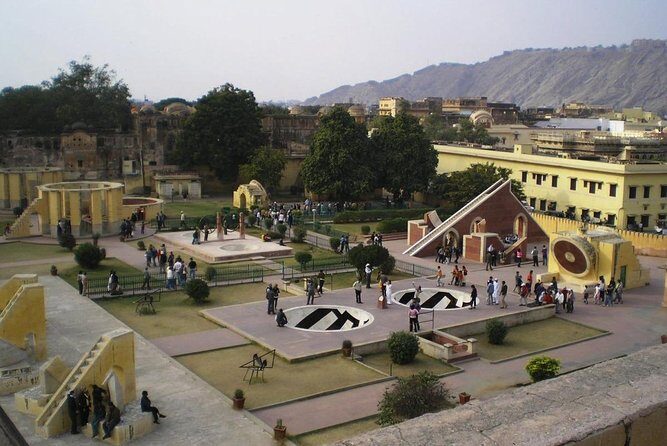
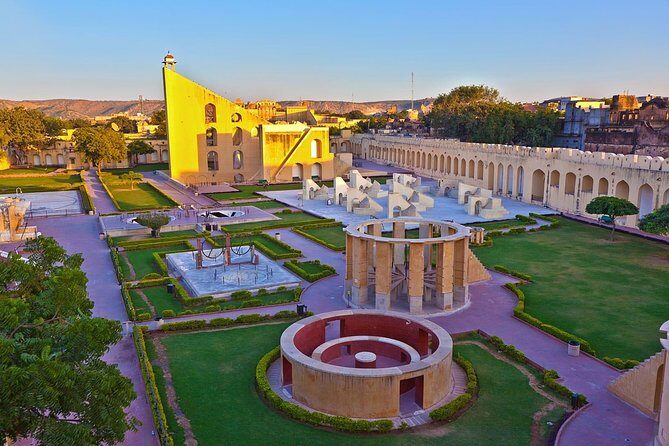
Jantar Mantar is a UNESCO World Heritage–listed astronomical center built by Sawai Jai Singh. The tour description points to its date as 1734, and it’s described as a collection of 19 astronomical instruments.
This isn’t “cathedral of guesswork” tourism. You’ll actually be able to look at instruments designed for measuring the sky. The best way to enjoy Jantar Mantar is to treat it like a lesson you can walk around. A good local guide helps you connect what you’re seeing with what it was made to do.
Expect about 1 hour for this stop, which is a good length for comprehension. Too short and you miss the logic; too long and you start skimming. This timing is about right for most people doing a day trip.
You can also read our reviews of more private tours in New Delhi





Jal Mahal at Man Sagar Lake: the picture stop that changes the mood
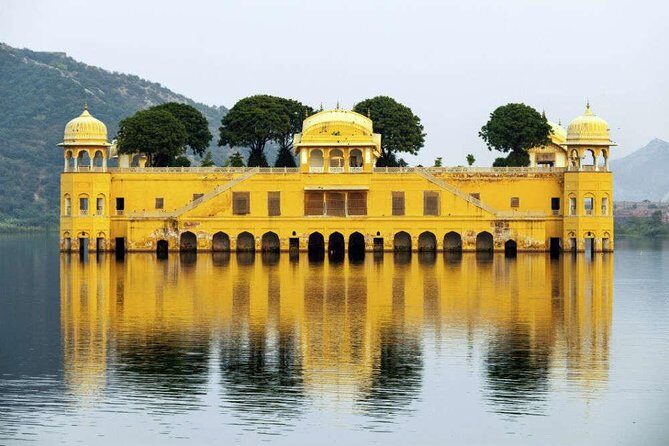
Jal Mahal is the Water Palace, located in the middle of Man Sagar Lake. The description says it was originally constructed around 1699, and that the palace and the lake area around it are part of what you’re visiting.
You’ll have about 30 minutes, and the listing notes it as an admission-ticket-free stop. That makes it a nice breather after the palace-heavy heritage stops. It also offers a different kind of view—one where the architecture sits inside water, rather than dominating a skyline.
Quick reality check: if you’re expecting a long, deep experience at Jal Mahal, this tour isn’t trying to be that. It’s a brief scenic moment that keeps the day moving.
Lunch at Jaipur City Heritage Restaurant: where the all-inclusive value shows up
Lunch is built into the plan after Jal Mahal. You’ll eat at the Jaipur City Heritage Restaurant and Cafe, and it’s described as serving good quality tasty food. If you choose the All Inclusive Tour option, the tour includes a buffet lunch there.
If you choose the non–all-inclusive style, lunch isn’t included; it’s listed as $10 per person. Either way, the lunch stop is your main time buffer during a long day.
This is also where you should decide what you value. All-inclusive options cost more upfront, but they reduce decision fatigue. For a same-day trip, that convenience is often worth it, especially if you don’t want to negotiate tickets and payments while you’re tired.
Jaigarh Fort: optional royal views, with a built-in skip option
Next is Jaigarh Fort, located on a promontory called Cheel Ka Teela in the Aravali range. The itinerary says you have about 1 hour, and you can skip Jaigarh Fort depending on your choice.
That skip option matters. Forts are great, but they can become a leg workout if you’re already moving since early morning. If you prefer to keep energy for Monkey Temple and the water sites, skipping Jaigarh Fort is a smart way to tailor the day.
If you do go, you’ll get another layer of royal Jaipur beyond the center-city monuments.
Panna Meena ka Kund: the stepwell stop that feels surprisingly human
Panna Meena ka Kund is a 16th-century historic stepwell. The description says it has 1800 foot steps (stairs) and was used to store and supply water.
It’s listed as an admission-free stop and gives about 30 minutes. Even with that short time, stepwells can stick with you because they feel functional and human. You’re not only looking at royal style—you’re looking at how people in Jaipur solved daily life needs.
A guide helps here, too. Without context, a stepwell can feel like a strange pit of stairs. With context, it’s part of Jaipur’s engineering and water culture.
Monkey Temple (Galtaji): temples, tanks, and the natural-spring water angle
Galtaji, commonly called Monkey Temple, is described as being about 10 km from Jaipur. It sits within a mountain pass surrounded by nature, and it’s a complex of temples with sacred water tanks.
The overview specifically notes seven sacred water tanks fed by a natural spring water. That makes it more than just a photo stop. It’s also a living religious site with practical water elements.
You’ll get about 40 minutes here, and the itinerary lists the Monkey Temple entry as included. The best way to enjoy Monkey Temple is to move slowly enough to notice the mix: temple architecture, rock-and-path surroundings, and the water tank system.
Also, because this stop is known for monkeys, your timing and comfort level matters. This tour’s stop duration is moderate, which usually keeps it from turning into a frustrating wait.
Price and the real value: what you’re paying for at $9.60
The listed price is $9.60 per person, and the tour is offered as an all-in-one private day trip from Delhi. On paper, that sounds like a steal—so it’s important to understand what’s included and what might be added.
Here’s the practical breakdown from the tour details:
- If you choose the All Inclusive Tour option, the price includes buffet lunch and entrance fees.
- If you choose the tour without entrance fees, monuments entrance fees are listed as $22.00 per person, and lunch is $10.00 per person.
- Breakfast is listed separately as $7.00 per person.
- The tour also includes an air-conditioned vehicle with chauffeur, tolls, parking, fuel, and state tax, plus hotel pickup and drop-off.
So the value calculation is simple. If you want convenience—less cash handling, fewer ticket lines, and fewer decisions during a long day—go All Inclusive. If you already plan to handle entrances and lunch independently, the cheaper base rate can make sense.
Given that it’s a same-day trip and you’re starting at 4 or 5 a.m., I usually recommend choosing the option that minimizes extra payments in the middle of your day.
Private by design: what you gain with this format
This is a private tour, meaning only your group participates. That’s not just a comfort detail. For a day trip like this, private attention can help with timing, pacing, and photo opportunities, especially at stops like Hawa Mahal and Jantar Mantar where positions matter.
The feedback also points to personal service quality: guide names like Vijay, Karni, Manpreet, Sonu, and Vikram Singh are mentioned for being friendly, accommodating with photos, and strong on explanations. Drivers like Gulbir Singh, Manoj, and Singh are praised for safe, prompt pickup and handling traffic, including monsoon rain.
One more small but real benefit: hotel pickup and drop-off from Delhi, Noida, and Gurugram hotels reduces the risk of starting your day already stressed.
Who should book this Jaipur day trip (and who might not)
This tour fits best if you:
- have limited time and want the major Jaipur sights in one organized day
- prefer private car service over public transport
- like a mix of palaces, heritage architecture, and practical sites like stepwells and sacred water tanks
- value a local guide who can explain what you’re seeing while you’re there
It’s less ideal if you:
- hate early starts and long road days
- want a relaxed, slow itinerary with lots of free wandering
- dislike moving from one attraction to the next on a tight schedule
Also, since Jaigarh Fort is skippable, you can adjust if you find forts tiring. That flexibility is useful on a day trip.
Should you book this Delhi-to-Jaipur private day tour?
If your goal is a focused Jaipur hit—Hawa Mahal, City Palace, Jantar Mantar, Jal Mahal, Panna Meena ka Kund, and Monkey Temple—this booking is a practical way to do it. The biggest “yes” for most people is the combination of private logistics and an optional All Inclusive plan that bundles lunch and entrance fees.
I’d say book it when you want structure and you don’t want to spend your precious time in India sorting out transport and tickets on your own. I’d hesitate if you’re sensitive to long days, since the tour runs about 15 hours and starts at 4 or 5 a.m. If that’s you, consider another plan with an overnight in Jaipur.
FAQ
How long is the Jaipur City Private Day Tour?
The tour duration is about 15 hours (approx.).
What time does pickup happen in Delhi (and nearby cities)?
Pickup from Delhi, Noida, or Gurugram hotels is scheduled for either 4:00 a.m. or 5:00 a.m., based on your choice.
Is the tour private or shared?
It is a private tour/activity. Only your group will participate.
Are monument entrance fees included?
Entrance fees are included if you choose the All Inclusive Tour cost option. If you book without entrance fees, monuments entrance fees are listed as $22.00 per person.
Is lunch included?
Lunch is included if you choose the All Inclusive Tour option (buffet lunch). If you book without lunch, lunch is listed as $10.00 per person.
What sites are included in the tour?
The tour includes stops such as Hawa Mahal, City Palace, Jantar Mantar, Jal Mahal, Jaigarh Fort (optional), Panna Meena ka Kund, Monkey Temple (Galtaji), and lunch at Jaipur City Heritage Restaurant and Cafe.
What is special about Monkey Temple in the itinerary?
Monkey Temple (Galtaji Temple) is described as a complex of temples in a mountain pass, about 10 km from Jaipur, with sacred water tanks. The overview notes seven sacred water tanks fed by natural spring water.
What is included besides sightseeing?
Included items are a local friendly city tour guide, hotel pickup and drop-off from Delhi/Noida/Gurugram, an air-conditioned vehicle with chauffeur, and all toll tax, parking charges, fuel, and state tax. Mobile tickets are also offered.
Is free cancellation available?
Yes. You can cancel up to 24 hours in advance for a full refund.