REVIEW · NEW DELHI
Incredible Delhi Day Tours
Book on Viator →Operated by Freedom Journey India · Bookable on Viator
Starting Delhi with a plan saves time. This full-day tour helps you get your bearings fast while you see major landmarks with a guide who can explain what you’re looking at. You’ll move between top sights in an air-conditioned vehicle, which is a big deal in a city that can feel loud, confusing, and hot.
Two things I really like: you get an English-speaking guide and bottled water included, and the route is built around the classic Delhi sights most first-timers try to pack in. One possible drawback: you don’t include lunch or monument entry tickets, so you’ll want to budget extra depending on which places you choose to pay for on the day.
The smart part is how the day is paced. Some stops are quick photo breaks, while others give you real time to walk, look closely, and absorb the setting. If your schedule is tight, this format helps you see a lot without turning the whole day into a sprint.
In This Review
- Key things to know before you go
- A smooth first day in New Delhi, built for your sanity
- Pickup and air-conditioned comfort: the real value of “organized”
- Qutub Minar: stepping into the 13th century
- Lotus Temple: the marble petals concept (and the Monday wrinkle)
- Humayun’s Tomb: Mughal style you can actually feel
- India Gate and the British-era government views
- Rashtrapati Bhavan and Sansad Bhavan: big architecture, big names
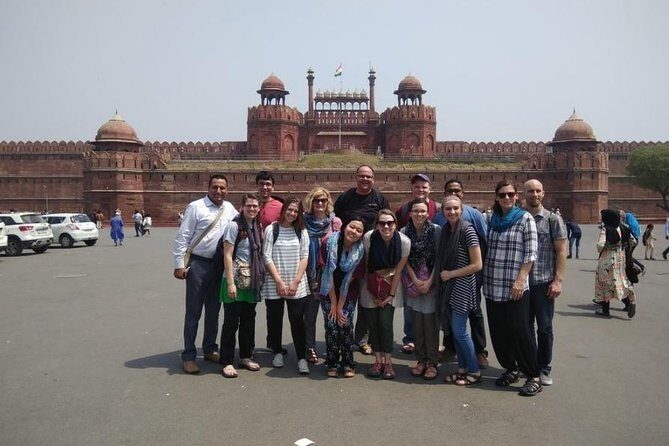
- Red Fort and Jama Masjid: the Monday contrast
- Chandni Chowk with food shops and a cycle rickshaw ride
- Raj Ghat: a quieter pause in the middle of noise
- What the $40 price gets you (and what to budget extra)
- Best for who? When this tour makes the most sense
- Should you book Incredible Delhi Day Tours?
- FAQ
- What time does the tour start?
- How long is the tour?
- Is pickup included?
- What vehicle do I ride in?
- Is the tour private?
- Is lunch included?
- Are monument entrance tickets included?
- What happens on Mondays for Lotus Temple and Red Fort?
- What’s included in the price?
Key things to know before you go
- Air-conditioned transport between sites so you’re not fighting traffic or heat on your own.
- English-speaking guide to make the history make sense instead of just reading plaques.
- Admission tickets aren’t included at several key stops, so plan for extra spending.
- Monday has special changes: Lotus Temple is only a drive pass and Red Fort is closed.
- Old Delhi + a market stop at Chandni Chowk with time for food shops and a cycle rickshaw ride.
- A private group tour with pickup details and vehicle size matched to your party.
A smooth first day in New Delhi, built for your sanity
New Delhi can hit you all at once: traffic, crowds, noise, and heat. This tour is designed to reduce the stress. You start at 9:00am and spend about 8 hours bouncing between big, important sights with a guide steering the day. That means you’re not trying to figure out routes, tickets, and timing while also dodging the city’s chaos.
What makes it feel especially practical is the structure. Some stops are timed so you get the essential views (and great photos) without burning hours. Other stops are longer so you can actually walk around and read the atmosphere—especially in the Old Delhi stretch.
The other big plus is safety and comfort. In the feedback for this experience, the guide Vijay and the driver get praised for keeping people feeling safe and comfortable throughout the day. That matters on a long, busy route.
You can also read our reviews of more tours and experiences in New Delhi.



Pickup and air-conditioned comfort: the real value of “organized”
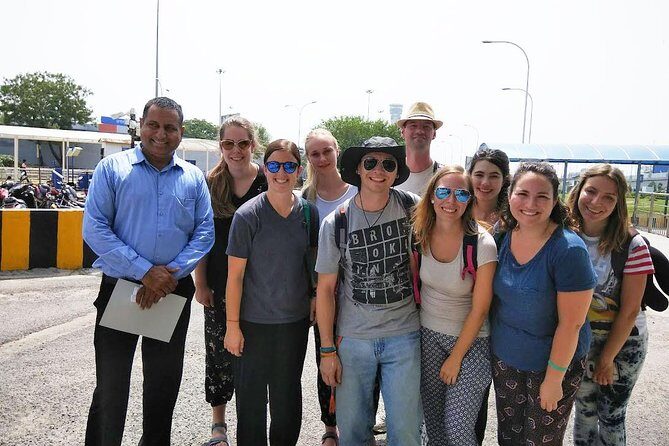
A day tour is only as good as the transport. Here, you get air-conditioned vehicle travel between attractions, plus pickup offered. That’s not just comfort; it also keeps the day efficient. When you’re moving by car, you lose less time to transit confusion, and you can stay on schedule.
The vehicle type changes with your group size:
- Pax 1 to 3 use a Dzire car
- Pax 4 to 5 use an Innova or Ertiga car
- Pax 6 to 9 use a 9-seater Tempo Traveler
- Pax 10 to 15 use a 15-seater Tempo Traveler
That’s a smart setup because Delhi days can run long, and a larger vehicle can be less comfortable for small groups. With private group touring, you’re not stuck waiting around for a random mix of strangers with wildly different pacing.
You also get bottled water included. It’s a small line item, but on a hot Delhi day it’s one less thing you have to manage.
Qutub Minar: stepping into the 13th century
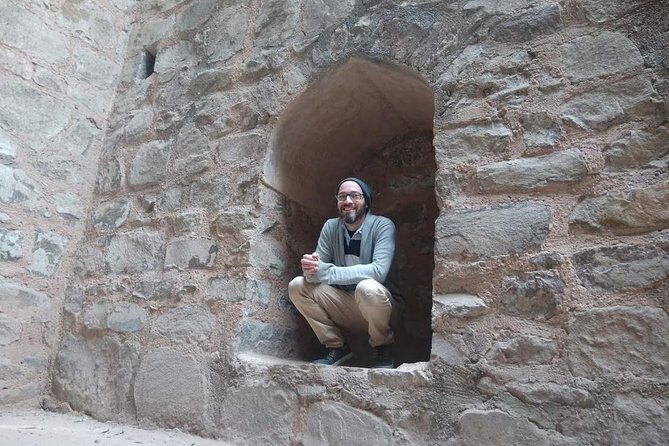
Your first major stop is Qutub Minar. This is described as the tallest structure on the Mughal Dynasty as constructed by Allauddin Khilji in the 13th century. The tower has five levels, and you get about 30 minutes here.
Why that works on a first-day tour: Qutub Minar is one of those landmarks that instantly signals you’re in a real historic city, not just a modern metro area. Even if you don’t know the full timeline yet, a guide can help you connect the dots—who built what, and why this site matters.
Practical tip: 30 minutes goes fast for photos, orientation, and a quick look around. If you like slow wandering, you’ll want to move efficiently here so you can enjoy the longer stops later in the day. Also note that admission tickets for this stop aren’t included.
Lotus Temple: the marble petals concept (and the Monday wrinkle)
Next up is Lotus Temple. It’s known for controlled 27 kinds of marble petals forming clusters that look like a lotus. The concept is tied to all religions being seen as one. This stop is listed as about 20 minutes, and admission is free.
There’s a key day-of-week detail: on Mondays, the Lotus Temple is a drive pass. That means you’ll get views from the road rather than the full on-foot visit.
If you’re aiming to see Lotus Temple closely, plan around that. If your trip lands on Monday, don’t let it surprise you—this tour already builds the adjustment in.
Even with a drive pass, Lotus Temple is visually striking. It’s the kind of place where, even from a car, you get that wow-moment of white marble forms against the city.
Humayun’s Tomb: Mughal style you can actually feel
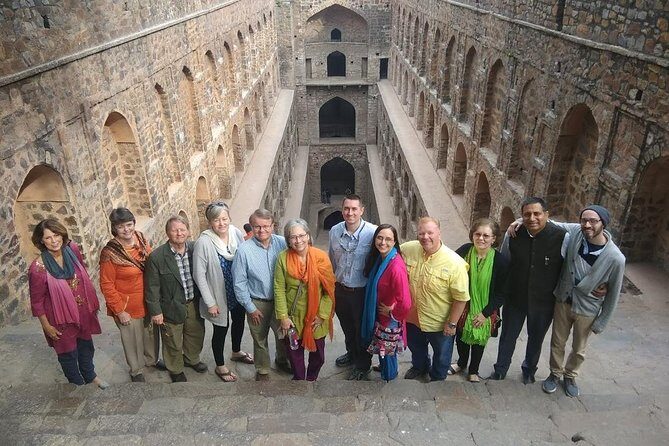
After that, you visit Humayun’s Tomb for around 2 hours. It’s described as built by Haji Begun, who is listed here as the wife of a Mughal Emperor, dating to the 16th century. You’ll spend enough time not just to look, but to take in the Mughal characteristics the site is known for.
Two hours is the right amount. Tomb complexes don’t reward rushing. You need time to walk the pathways, notice the symmetry, and sit for a minute if the day isn’t too hot.
Admission tickets aren’t included for this stop, so if you want full entry, you’ll need to handle that separately. Still, the guide’s context is what makes these places click: you stop seeing individual buildings and start recognizing an architectural idea.



India Gate and the British-era government views
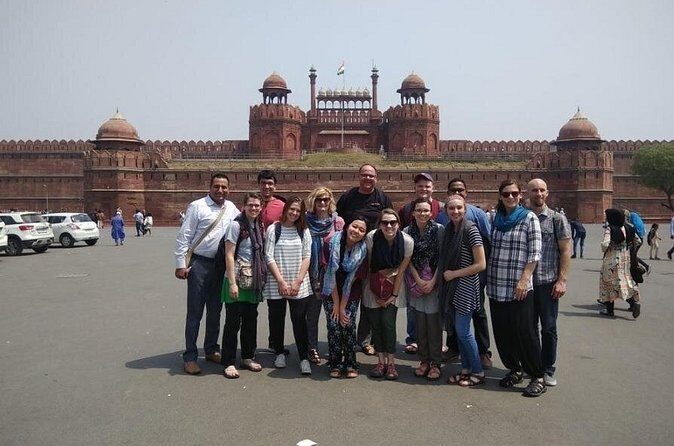
Then comes India Gate, with about 20 minutes. This memorial honors 70,000 soldiers of the Indian Army who died between 1914 and 1921 in the First World War period. It’s also a strong example of how Delhi layers its history—war memories, empire-era structures, and modern politics all sitting close together.
Right near India Gate, you’ll also drive through Parliament House and the parliament buildings. You get quick cultural context without spending the whole day queued outside.
This is where the drive-by segments are useful. Not every stop needs long walking time to be meaningful. Seeing the scale of the governmental buildings from the outside helps you understand how Lutyens-style planning influenced Delhi’s grand central government zone.
Rashtrapati Bhavan and Sansad Bhavan: big architecture, big names

As part of the same government-zone stretch, you’ll pass by Rashtrapati Bhavan, also called the President’s House or Presidential Palace. It’s described as designed by Lutyens and Baker, and it was known as the Viceroy’s House up until 1950.
You’ll also go by Parliament House, known as Sansad Bhavan. It’s described as built and designed by British architects Sir Edwin Lutyens and Sir Herbert Baker back in 1912.
Even if you’re not an architecture nerd, it helps to have a guide explain why these buildings look the way they do. You’re not just looking at stone and domes—you’re seeing an era of planning that still shapes how Delhi functions.
This stretch is also a nice pacing break. After a couple of longer history stops, the drive-by gives you a chance to recover, use the restroom if needed, and keep your energy for the Old Delhi portion later.
Red Fort and Jama Masjid: the Monday contrast
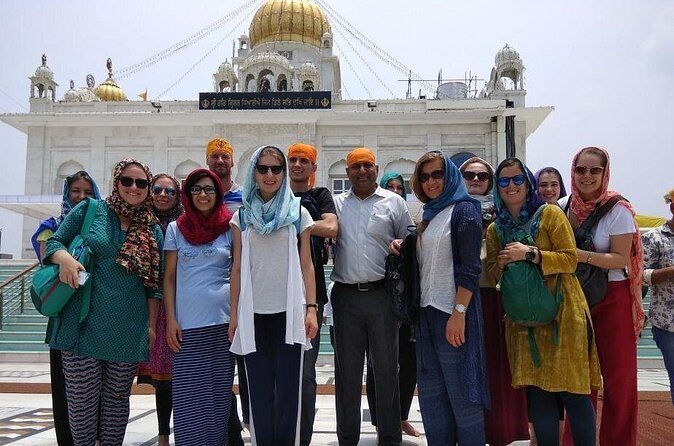
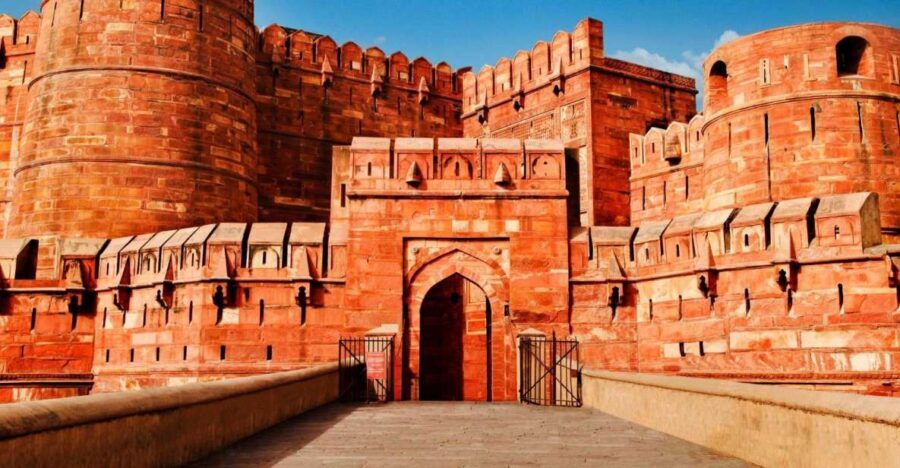
Red Fort is next with about 1 hour. It’s described as built by Mughal emperor Shah Jahan, and admission tickets aren’t included. Here’s the big caveat: Red Fort is Monday closed.
If you’re visiting on a Monday, this tour will shift around the day so you still get key Old Delhi energy. Plan your expectations accordingly. A closed major monument can feel like a letdown on your own, but a pre-built itinerary helps you keep moving.
Then you head to Jama Masjid, with about 20 minutes. It’s described as founded as Shahjahanabad by Shah Jahan and maintaining Mughal character. The courtyard is said to accommodate 25,000 people, and the mosque is described as precise with numbers.
Jama Masjid is one of the most atmospheric stops of the day because it’s both a religious place and a public space. Twenty minutes might sound short, but it can be enough for a focused look—especially with a guide to point out what to notice. Admission is not included, so if you want to go inside, you’ll need to plan for tickets.
Chandni Chowk with food shops and a cycle rickshaw ride
Now you shift into the Old Delhi experience at Pasar Chandni Chowk. You get about 30 minutes. This is described as the oldest market of Delhi with numerous food shops. You can also enjoy a cycle rickshaw ride in the crowd of the market.
This is one of the most “you’re really here” stops. Big cities can feel the same after a while, but markets break the spell in a good way. You see what people actually do: browse, snack, bargain, and move through the streets in a practiced way.
A cycle rickshaw ride adds a lot of value here because it changes your perspective. Walking through a dense market is one thing. Riding through it gives you a sense of the rhythm and density without burning your whole energy level.
Practical note: with only 30 minutes, keep your priorities simple. Decide if you want to focus on street food views, shopping browsing, or the rickshaw ride, then pace yourself. Also, this area can be busy, so keep a tight grip on your personal items.
Raj Ghat: a quieter pause in the middle of noise
Finally, you go to Raj Ghat, the cremation ground of Mahatma Gandhi. You get about 20 minutes and can visit or drive past.
This is your emotional reset button. After mosques and markets, it’s a different kind of place—more space to reflect, even if your schedule stays tight. If you prefer a visit over a drive pass, you’ll likely get more from the stop because it’s the kind of site where atmosphere matters.
Admission is listed as free for this stop. Either way, it helps to end the day with something that isn’t just stone and crowds.
What the $40 price gets you (and what to budget extra)
Let’s talk value. At about $40 for an 8-hour tour, this is priced like a practical, no-drama way to see the major highlights without planning your own route. The included items matter:
- English speaking tour guide
- Air-conditioned vehicle
- Bottled water
- All taxes, fees, and handling charges
You also get pickup offered, a private-group format, and a mobile ticket. That combination reduces a lot of the typical hidden friction of independent touring.
What’s not included is also important. Lunch isn’t included, and monument entrance tickets aren’t included at several stops. So your real day cost will depend on which entry tickets you choose to pay for and how hungry you get.
My advice: treat monument tickets as a separate budget line, and plan for a simple lunch strategy. This isn’t a “food tour” all day; it’s a landmarks-and-history day with one market stop for snacks and browsing.
Best for who? When this tour makes the most sense
This tour is a strong fit if:
- You’re new to Delhi and want a structured introduction
- You’d rather sit back in the car and let the guide handle the route logic
- You want both New Delhi government-era sights and Old Delhi energy
- You’re traveling with a group and want a private experience
It’s less ideal if you’re the type who hates scheduled timing. Some stops are brief by design—30 minutes here, 20 minutes there—so you’ll want to accept that the day is meant for coverage, not total wandering.
Should you book Incredible Delhi Day Tours?
I think it’s a yes if you want a first-day overview that doesn’t exhaust you. The strongest reason to book is the practical combo of air-conditioned transport, an English-speaking guide, and a route that hits both the major landmarks and the Old Delhi market feel.
I’d book it especially if you value guidance. The feedback highlights that guide Vijay and the driver keep people feeling safe and comfortable—exactly what you want on a long day in a busy city.
Just be sure you’re ready for the two watch-outs: admission tickets and lunch aren’t included, and Mondays change the schedule (Lotus Temple is drive pass and Red Fort is closed). If you can plan around those, this tour gives you a lot of Delhi for your time.
FAQ
What time does the tour start?
The start time is 9:00am.
How long is the tour?
It runs about 8 hours (approx.).
Is pickup included?
Pickup is offered.
What vehicle do I ride in?
It depends on your group size: Dzire car for 1 to 3 people, Innova or Ertiga for 4 to 5, Tempo Traveler (9 seater) for 6 to 9, and Tempo Traveler (15 seater) for 10 to 15.
Is the tour private?
Yes. It’s private, and only your group participates.
Is lunch included?
No. Lunch isn’t included.
Are monument entrance tickets included?
No. Monument entrance tickets aren’t included for the listed stops.
What happens on Mondays for Lotus Temple and Red Fort?
On Monday, Lotus Temple is only a drive pass, and Red Fort is closed.
What’s included in the price?
Included items are all taxes and fees, bottled water, an English-speaking tour guide, and an air-conditioned vehicle. Mobile ticket is also mentioned.