REVIEW · UDAIPUR
Heritage & Cultural Walk of Udaipur -Guided Walking Tour
Book on GetYourGuide →Operated by Yo Tours · Bookable on GetYourGuide
Udaipur’s old stones talk back. I love how this walk strings together the Clock Tower and City Palace so you start understanding the city’s power, pride, and layout within minutes. The one drawback is simple: it’s only about 2 hours, so you’ll move at a brisk pace and you won’t linger forever at every viewpoint.
What makes it more fun than a standard sightseeing loop is the guide style. You get a friendly storyteller who speaks English and Hindi, plus local tips that help you eat well and plan smarter while you’re in town. Just note there’s no water bottle included, and there’s no hotel pickup, so you’ll want to show up ready to walk.
In This Review
- Key highlights you’ll actually remember
- A 2-hour Udaipur walk that gives you a real mental map
- Clock Tower and the old-market maze: where Udaipur starts feeling navigable
- Bagore Ki Haveli and Jagdish Temple: ornate details explained in plain language
- Gangori Ghat and Lal Ghat on Lake Pichola: the city’s waterfront reality check
- City Palace: balconies, towers, and why it feels like it watches you back
- Tripolia Gate and Jagat Shiromani Temple: the 1711 story you can see
- The guide experience: stories, hidden lanes, and practical local tips
- What to bring, and how to time your walk for best comfort
- Price and value: $14 makes sense if you want guidance, not just sights
- Should you book this Udaipur Heritage & Cultural Walk?
- FAQ
- How long is the Heritage & Cultural Walk of Udaipur?
- What does the tour cost?
- Is there a live guide, and what languages do they speak?
- Is this tour a private group?
- What are some of the main places you visit?
- Is hotel pickup included?
- Is a water bottle included?
- What should I wear or bring?
- Is free cancellation available?
- FAQ
- How long is the Heritage & Cultural Walk of Udaipur?
- What does the tour cost?
- Is there a live guide, and what languages do they speak?
- Is this tour a private group?
- What are some of the main places you visit?
- Is hotel pickup included?
- Is a water bottle included?
- What should I wear or bring?
- Is free cancellation available?
Key highlights you’ll actually remember
- Clock Tower and Mewar royal souvenir connection that explains why the city’s landmarks feel personal
- Bagore Ki Haveli linked to a Mewar prime minister, with the kind of architecture you can’t “get” from photos
- Jagdish Temple carvings you’ll notice up close once someone points out what to look for
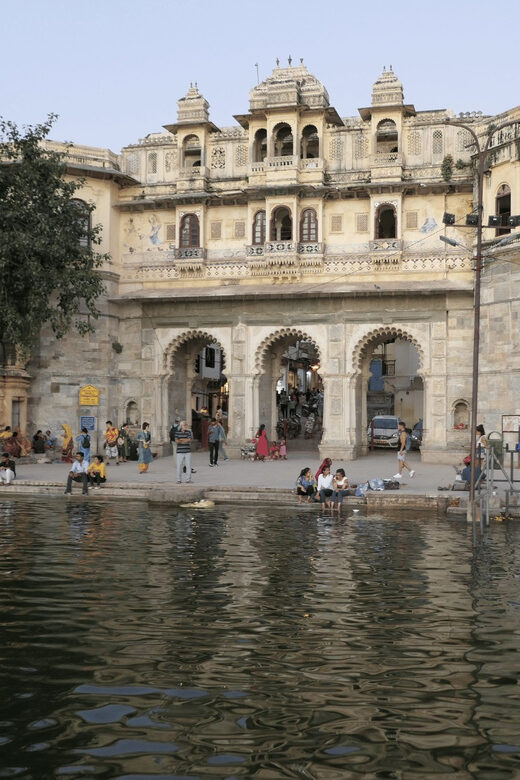
- Gangori Ghat and Lal Ghat along Lake Pichola, great for seeing how Udaipur relates to water
- City Palace balcony-and-tower views that frame the lake like a living postcard
- Tripolia Gate and Jagat Shiromani Temple with the 1711 story and marble torana details
A 2-hour Udaipur walk that gives you a real mental map
This is the kind of tour that helps you get oriented fast. Udaipur can feel like a maze of lanes and viewpoints, and if you’re wandering solo, you might end up seeing pretty things without understanding how they connect. Here, you move through key nodes: the old city streets, the haveli and temple cluster, the lakefront ghats, and then up to the big official power symbol—City Palace—and finally the Tripolia Gate area.
At just 2 hours, you’re not spending half a day on logistics or backtracking. That’s a value play, especially at $14 per person. The ticket isn’t expensive for what you’re getting: a live guide, access to smaller lanes, and a narrative thread that stitches the stops together into one story.
The best part is that the tour doesn’t treat history like a textbook. Your guide uses historical explanation and curious anecdotes, including mildly cheeky talk about past and present celebrity types and defunct royals. That light gossip tone isn’t there to disrespect anyone—it’s there to keep the walk lively while still teaching you what the buildings meant.
You can also read our reviews of more walking tours in Udaipur



Clock Tower and the old-market maze: where Udaipur starts feeling navigable
Most people see Udaipur’s monuments first. This tour starts a little earlier in the story, with the city’s Clock Tower—the first public clock built as a souvenir to the royal family of Mewar. That detail matters. It turns a simple timepiece into a statement about who funded public life and what the ruling family wanted the city to remember.
From there, you pass through the old market, with narrow, crooked, heritage-packed streets. This is where a guide earns their fee. In old bazaars, it’s easy to walk past architectural leftovers—doorways, faded signage, carved stone frames—because nothing screams “look at me.” With a guide, you’re learning how to spot clues: building shapes, street turns that seem random but weren’t, and the way trade lanes align with larger power points.
A practical tip: expect the ground to be uneven in older lanes. Comfortable clothes are mentioned for a reason. I’d also plan for quick photo stops—don’t assume you’ll have time to set up like you’re shooting a documentary.
Bagore Ki Haveli and Jagdish Temple: ornate details explained in plain language
Next comes Bagore Ki Haveli, described as an 18th-century haveli built by a Mewar prime minister. Even if you’ve seen havelis elsewhere, Udaipur’s feels special because it sits in a tight urban context—stone and ornament mixed into real daily movement. Up close, you start seeing how status was broadcast through craftsmanship, symmetry, and decorative framing rather than just size.
Then you move to Jagdish Temple, where the focus shifts to religious art and the kind of ornamentation people often miss when they skim. This is the stop where you’ll likely slow down, even if the schedule doesn’t give you long pauses. The temple is decorated with ornate carvings, and once someone points out what to look for, the details stop being random decoration.
One thing I like about this segment is how it’s both visual and conversational. Your guide isn’t just naming features. You’ll get small bits of context that make the haveli and temple feel connected—house to power, power to devotion, and devotion to art.
Gangori Ghat and Lal Ghat on Lake Pichola: the city’s waterfront reality check
Then the walk changes mood. You head toward the lake, specifically Gangori Ghat and Lal Ghat on Lake Pichola. These are famous waterfronts, but the value here is understanding why they matter in the city’s layout.
When you stand near the ghats, you can see how Udaipur behaves like a water-and-stone city. The lake isn’t only scenery. It’s part of how the city organizes itself—what views get framed, where movement makes sense, and how major landmarks relate to the shoreline.
This is also where your guide’s pace makes a difference. Without a tour, you might just take a quick look and move on. With a guide, you get pointers for what to notice in the view: how the shoreline lines up with bigger structures later, and how the palace area is designed to dominate the horizon.
If you’re the type who likes photos, this is a strong window. The lake backdrop helps. Just don’t spend so long shooting that you lose the timing for the next big stop.
City Palace: balconies, towers, and why it feels like it watches you back
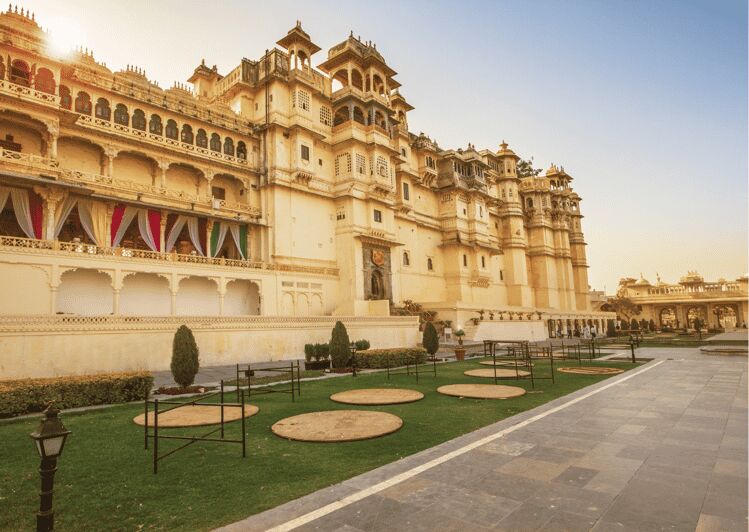
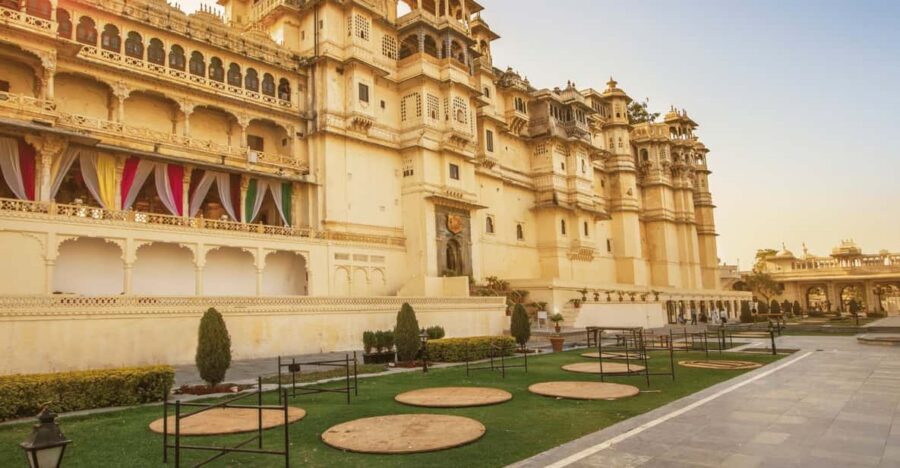
No Udaipur highlight list is complete without City Palace. On this walk, it’s more than a photo wall. The palace is described as overwhelming you with balconies and towers, with cupolas towering over the lake. That’s exactly the experience you should aim for: take in the vertical scale and then notice how the lake sits behind it like a giant screen.
City Palace works especially well on a guided walk because your guide can help you read the palace visually. You’re not only looking at a landmark; you’re learning the “design logic”—how the buildings relate to one another, how the views are organized, and how the palace projects authority into the waterfront setting.
What I appreciate is that the tour keeps the sequence logical. The waterfront ghats help you understand where you are, and then City Palace lands with the right impact. If you come to the palace without that lead-in, it can feel like a standalone show. Here, it feels like the culmination of the city’s story.
Practical note: you’ll likely be standing and walking more than you expect. Build in patience for small photo waits and step carefully on uneven areas around old structures.
You can also read our reviews of more guided tours in Udaipur





Tripolia Gate and Jagat Shiromani Temple: the 1711 story you can see
The walk ends with the kind of monument that rewards close attention: Tripolia Gate—a three-arched gate built in 1711. The year matters because it turns the gate from a decorative entrance into a historical marker. You can start thinking like a local historian: why would a gate of this form be built, and what did it mean to move through it?
Near it is Jagat Shiromani Temple, with an exquisitely carved marble torana, plus a Garuda chhatri and mandapa. That list can sound technical, but your guide should translate it into something you can actually see. The torana and carved details are where your eyes learn to slow down and separate ornament from structure.
This segment is also where the tour’s tone pays off. The anecdotes—those mildly scurrilous, cheeky stories about royals and celebrity-style personalities—often fit this area well, because you’re dealing with power. A royal gate isn’t just stone. It’s politics, display, and memory.
When you finish here, you’ll usually feel like you can place the city pieces in your head: market lanes below, lakefront relationships in the middle, and gate-and-palace authority above.
The guide experience: stories, hidden lanes, and practical local tips
This isn’t a “stand behind me” tour. It’s described as a blend of history and curious anecdotes, with access to hidden lanes and places. That matters because Udaipur’s magic is often in the stuff you’d skip: side streets that connect major sites, forgotten nooks, and heritage buildings that don’t look important until you understand their role.
One of the most praised parts is the storytelling energy. In particular, guides like Yash are known for sharing history and local traditions in a fun, entertaining way. That style usually means you’re not just hearing facts—you’re getting context you can use later, like how people think about the spaces you saw that morning.
You may also get help with local food specialties and chai spots. Even if your tour time is tight, these recommendations can save you a lot of trial-and-error. And because the tour emphasizes local tips to save money, you’re not just paying for walking—you’re buying direction.
Also, it’s a private-group format. That tends to make questions easier. If something sparks your curiosity—carving technique, why a gate is shaped a certain way, how a haveli functioned in daily life—you’re more likely to get a direct answer.
What to bring, and how to time your walk for best comfort
You’re told to bring comfortable clothes. In practice, that means breathable layers and closed-toe shoes you’re comfortable walking in. Old city lanes can be uneven, and you’ll be moving between temple and palace-area structures.
There’s no hotel pickup and drop, so you’ll need to make your own way to the start. If you’re staying in or near the old city, that’s often easier than it sounds, but you’ll still want to give yourself buffer time so the walk doesn’t feel rushed.
No water bottle is included, so plan to carry your own. Two hours passes quickly in Udaipur because the streets keep feeding your attention.
If you have flexibility, consider doing the walk earlier in the day. It’s when Udaipur’s street life feels easier to take in, and it tends to make the sightseeing feel less tiring.
Price and value: $14 makes sense if you want guidance, not just sights
At $14 per person for about 2 hours, the value comes from three areas:
1) You’re getting a live guide who can speak English and Hindi, with storytelling built into the route.
2) You get access to hidden lanes and places, which is where self-guided wandering can miss the point.
3) You leave with practical recommendations—food and chai, plus guidance that helps you explore efficiently.
If your goal is only to photograph the big names and you’re happy reading signs and maps on your own, you could build a route. But if you want the city’s meaning—the who/why/how behind the landmarks—this price is a bargain for what you get in a compact time window.
Should you book this Udaipur Heritage & Cultural Walk?
Yes, book it if you want to understand Udaipur, not just checklist sights. The route hits major anchors—Clock Tower, Bagore Ki Haveli, Jagdish Temple, Gangori Ghat and Lal Ghat, City Palace, and Tripolia Gate—and the guide is positioned to make the story stick with anecdotes and local detail.
Pass or rethink it if you’re the type who needs long breaks at each site. The tour is short, and you’ll be walking continuously. Also, since there’s no water bottle and no pickup, you’ll want to handle those basics before you start.
If you’re on a first visit, this is one of the smartest ways to build your Udaipur map fast. You’ll finish feeling like you know where to go next—because your guide will have taught you how the city pieces connect.
FAQ
How long is the Heritage & Cultural Walk of Udaipur?
The tour lasts about 2 hours.
What does the tour cost?
It costs $14 per person.
Is there a live guide, and what languages do they speak?
Yes. The guide is live and speaks English and Hindi.
Is this tour a private group?
Yes, it’s listed as a private group.
What are some of the main places you visit?
You’ll see the Clock Tower, Bagore Ki Haveli, Jagdish Temple, Gangori Ghat, Lal Ghat, City Palace, and Tripolia Gate (with Jagat Shiromani Temple details).
Is hotel pickup included?
No, hotel pickup and drop-off are not included.
Is a water bottle included?
No, a water bottle isn’t included.
What should I wear or bring?
Wear comfortable clothes. Since water isn’t included, bringing water yourself is a good idea.
Is free cancellation available?
Yes, you can cancel up to 24 hours in advance for a full refund.
FAQ
How long is the Heritage & Cultural Walk of Udaipur?
The tour lasts about 2 hours.
What does the tour cost?
It costs $14 per person.
Is there a live guide, and what languages do they speak?
Yes. The guide is live and speaks English and Hindi.
Is this tour a private group?
Yes, it’s listed as a private group.
What are some of the main places you visit?
You’ll see the Clock Tower, Bagore Ki Haveli, Jagdish Temple, Gangori Ghat, Lal Ghat, City Palace, and Tripolia Gate (with Jagat Shiromani Temple details).
Is hotel pickup included?
No, hotel pickup and drop-off are not included.
Is a water bottle included?
No, a water bottle isn’t included.
What should I wear or bring?
Wear comfortable clothes. Since water isn’t included, bringing water yourself is a good idea.
Is free cancellation available?
Yes, you can cancel up to 24 hours in advance for a full refund.