REVIEW · UDAIPUR
Heritage & Cultural Walk of Udaipur (2 Hours Guided Walking Tour)
Book on Viator →Operated by Yo Tours · Bookable on Viator
Udaipur’s old lanes have stories on every corner. This Heritage & Cultural Walk strings together the big names and the in-between streets, from Ghantaghar Clock Tower to City Palace, so you understand what you’re looking at quickly. I especially like the small group size (up to 15), because it feels easy to ask questions and get good photo time on narrow streets. I also like that your guide is a friendly storyteller trained by Yo Tours and can speak English and Hindi, with practical recommendations for the rest of your visit.
One consideration: it’s a real walking route. There’s no hotel pickup, and the tour starts in the Old City and ends at Delhi Gate Circle, so you’ll want comfortable shoes and a plan for getting back after about two hours.
In This Review
- Key highlights I’d plan around
- A 2-hour walking tour that gives you bearings fast
- Meeting at Ghantaghar Clock Tower and following the Old Market lanes
- Jagat Shiromani Temple: marble torana, Garuda chhatri, and mandapa
- Bagore Ki Haveli and Lake Pichola’s Gangori and Lal Ghats
- City Palace over Lake Pichola and Tripolia Gate’s 1711 arches
- Price, group size, and what $13.05 buys you
- Practical stuff you’ll want to know before you go
- Should you book this Heritage & Cultural Walk in Udaipur?
- FAQ
- How long is the Heritage & Cultural Walk of Udaipur?
- What does it cost?
- Where is the meeting point and where does the tour end?
- How large is the group?
- What languages does the guide speak?
- Is hotel pickup or drop-off included?
- Is free cancellation available?
Key highlights I’d plan around

- Ghantaghar Clock Tower start: the first public clock of the city, built as a souvenir to the royal family of Mewar
- Jagat Shiromani Temple craftsmanship: marble torana, plus Garuda chhatri and mandapa
- Bagore Ki Haveli perspective: a well-known 18th-century building linked to a Mewar prime minister
- Lake Pichola waterfront stops: Gangori Ghat and Lal Ghat, both part of the lakeside viewing route
- City Palace and Tripolia Gate in one walk: balconies, towers, cupolas, and Tripolia’s three-arched gate built in 1711
- Max group size 15: small enough for conversation, not a long parade of strangers
A 2-hour walking tour that gives you bearings fast

Udaipur is the kind of city where it’s easy to feel impressed and still unsure what connects everything. That’s why I like this kind of short, guided walk: it gives you a mental map, not just a checklist. In about two hours, you’ll move through the Old City lanes and land on major landmarks tied to the Mewar story—then you’ll leave with ideas for what to do next.
The format also helps your pace. You’re not stuck waiting around for a bus, and you’re not touring one building at a time with no connective tissue. Instead, you walk from the Ghantaghar Clock Tower area through heritage streets, then into a string of architecture you can actually compare side by side: marble temple details, a haveli (historic townhouse) built in the 1700s, and then the oversized presence of the City Palace above Lake Pichola.
Price matters too. At $13.05 per person, you’re paying for a guided narrative plus access to spots you might not notice on your own. This isn’t a museum deep-dive; it’s a smart orientation tour you can build the rest of your itinerary around.
You can also read our reviews of more walking tours in Udaipur



Meeting at Ghantaghar Clock Tower and following the Old Market lanes

You start at Ghantaghar (Clock Tower) in the Old City, near Jagdish Temple Road. This matters more than it sounds. The clock here is described as the first public clock of Udaipur, built as a souvenir to the royal family of Mewar. So right away, you’re not only seeing a landmark—you’re getting the why behind it.
From there, you walk through the old market zone: narrow, crooked streets and heritage buildings. That street layout is the point. Udaipur’s historic core isn’t laid out like a modern grid, so the guide’s storytelling helps you make sense of how the city works as you move. And since the tour includes access to lanes and places you may not find on your own, you’re less likely to feel like you’re just walking the most obvious path.
I also like that the tour is built around photos. You’ll be stopping often enough to grab images beyond the most standard tourist crowd shots. The small group size (up to 15) helps with this. You’re not fighting for space at every corner, and you can usually step aside for a better angle.
Practical note: it’s group walking. If you like to linger, just tell your guide you want extra minutes at a stop. If you try to sprint ahead, you’ll lose the story thread.
Jagat Shiromani Temple: marble torana, Garuda chhatri, and mandapa
One of the most satisfying stops is Jagat Shiromani Temple, where the focus is on carvings and architectural features you can easily miss if you only glance. The tour calls out an exquisitely carved marble torana, plus a Garuda chhatri and mandapa. That’s a lot of craft packed into a short visit.
Here’s why I think this stop is worth your attention: temple architecture in Rajasthan isn’t just decorative. Details like the torana work like visual signage for who built the place and what traditions mattered to them. The guide helps you look at the carvings with the right frame, so you’re not stuck asking yourself what you’re even looking at.
Also, this stop helps balance the overall route. Before and after, you’re moving through markets and civic royal spaces. A temple pause gives your eyes a different texture—marble light, sculpted forms, and a calmer moment to slow down and reset.
Downside? If you prefer only large, dramatic vistas, you might enjoy this less than the lake and palace segments. The pay-off here is in close details, not sweeping skyline panoramas.
Bagore Ki Haveli and Lake Pichola’s Gangori and Lal Ghats
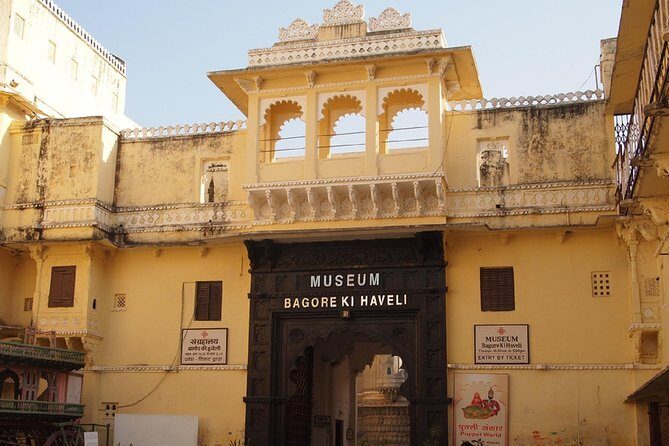
Next up is Bagore Ki Haveli, described as a gracious 18th-century building built by a Mewar prime minister. A haveli is a lived-in kind of history. Even when you’re just sightseeing from the outside or while passing close by, it tells you how wealth, politics, and daily life shared the same spaces in historic Udaipur.
Right after, the route shifts to the water: Gangori Ghat and Lal Ghat on Lake Pichola. These are the waterfront viewpoints that help you understand why the City Palace looks the way it does. When you stand near the ghats, the scale and placement start making sense. The city’s major structures aren’t floating in a vacuum; they’re positioned to relate to the lake.
I like that the walk places these ghats before the biggest palace stop. It creates a natural visual build-up. First you see the lakefront character, then you move toward the monumental palace presence, so the final reveal lands harder.
One consideration: ghats can be crowded depending on time of day. The good news is the tour keeps the route to two hours, so you’re not stuck waiting around for a long period in one spot. If you’re photo-focused, this is where you’ll want to be ready—once you’re at the right angles, take your shots and let the guide move you on before the scene gets awkward.
City Palace over Lake Pichola and Tripolia Gate’s 1711 arches
The centerpiece moment is City Palace of Udaipur. The tour describes it as majestic, with balconies, towers, and cupolas towering over the lake. This is exactly the kind of landmark where a guide adds value. Without context, a palace like this can blur into a single mass of beauty. With context, you start noticing how the palace relates to the surrounding city and water.
The final stretch includes Tripolia Gate, a three-arched gate built in 1711. Gates are useful landmarks because they mark entry points and movement corridors in old cities. Walking toward or past one helps you understand how people would have navigated the historic urban fabric.
You finish at Delhi Gate Circle after discovering hidden trails and stories that level up your understanding of the city today. That ending point is helpful if you want to continue exploring on foot or connect to other parts of town without needing to retrace your route.
If you love architecture and enjoy learning while walking, this section is the best payoff. If you’re more of a sit-and-relax type, the “movement toward gates and palace viewpoints” style may feel fast. Still, it’s short—around two hours—so you’re not committing a whole day.
You can also read our reviews of more guided tours in Udaipur





Price, group size, and what $13.05 buys you

At $13.05 per person, this is positioned as an affordable way to get a curated walk with real guidance. You’re not just paying for someone to point at buildings. You’re paying for:
- A trained storyteller who speaks English and Hindi
- Practical local tips and recommendations to save money and pick good options for the rest of your day
- Access to hidden lanes and places you might otherwise skip
- A group format capped at 15 people, which makes the tour feel more conversational than conveyor-belt
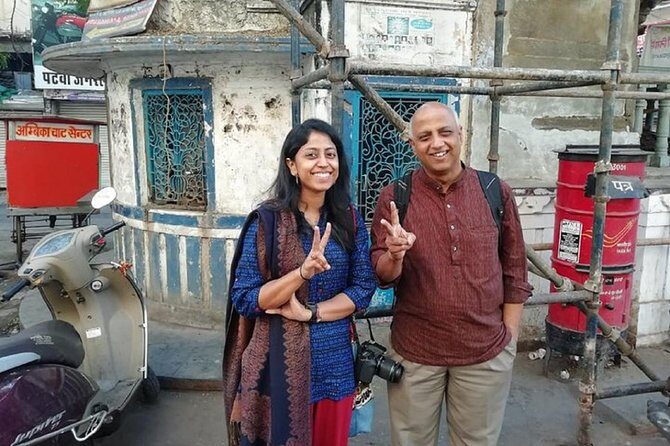
I’ve seen small-group guides make a big difference in pace. When it’s up to 15, you can ask follow-up questions instead of guessing what a stop means. One top-rated experience I heard about specifically praised the guide Atimukta for bringing a great mix of history and friendly conversation. That kind of delivery is exactly what makes a low-cost guided walk feel worth it.
Is it a perfect fit for everyone? Not necessarily. If your idea of value is heavy-ticket entry sites, long museum time, or spending hours inside buildings, you may feel you want more. This tour is built for orientation: big landmarks plus side lanes, all in a tight window.
Still, if you’re trying to spend your time wisely in Udaipur, $13.05 for a guide-led route through City Palace area, Bagore Ki Haveli, temple details, and lake ghats is strong value—especially because you also get recommendations for what to do next.
Practical stuff you’ll want to know before you go
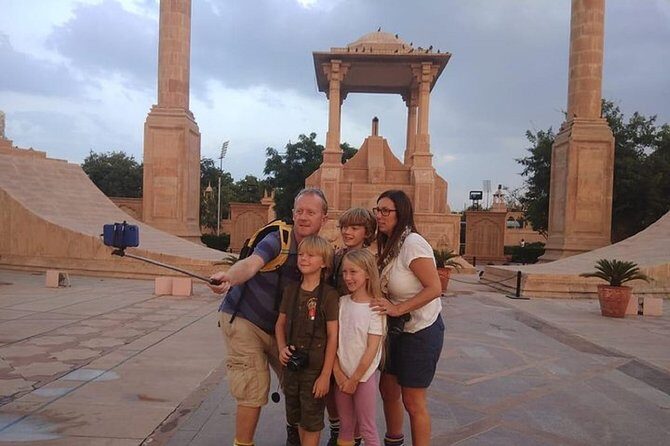
This is a walking tour through the Old City. It runs about 2 hours and you can choose morning or afternoon options. That flexibility matters because Udaipur’s Old City streets are narrow and busy in many areas, and it’s easier to handle crowds when you pick the time that suits your style.
Your starting point is Ghantaghar, Jagdish Temple Rd, Old City, Silawatwari, Udaipur, Rajasthan 313001. You’ll end at Delhi Gate Circle, Bapu Bazar, Udaipur, Rajasthan. Since there’s no hotel pickup or drop-off, plan your own way to the meeting point.
The tour uses a mobile ticket, and it’s near public transportation. Service animals are allowed, and most people can participate (so this isn’t pitched as a specialized, limited-mobility route).
What about food and drinks? They are not included unless specified, so don’t assume you’ll be stopped for a snack. If you’re the kind of person who needs a water break, plan for it before and after the 2-hour walk.
Finally, these tours can book ahead. On average, they’re booked about 15 days in advance, so if you have a tight schedule, don’t wait until the last minute.
Should you book this Heritage & Cultural Walk in Udaipur?
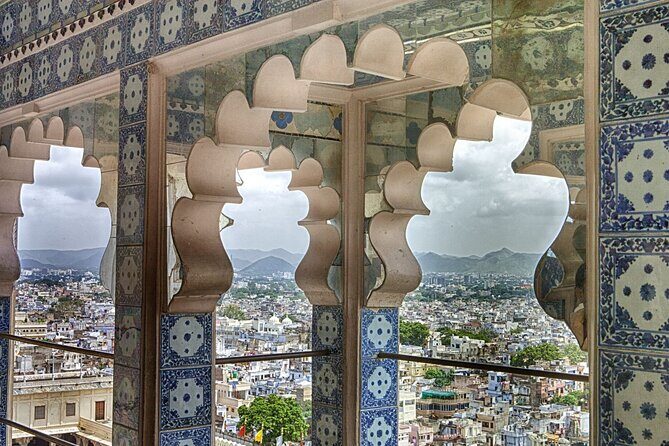
Yes, I’d book it if you want a fast, guided understanding of Udaipur’s Old City—especially if you like architecture and street-level details. The combination of Ghantaghar’s Mewar connection, Jagat Shiromani Temple’s marble features, Bagore Ki Haveli, and the Lake Pichola ghats creates a clear story arc that feels practical, not just sightseeing.
I would skip it only if you strongly prefer long, unhurried self-guided wandering with no structure, or if you’re hoping for a tour filled with long indoor stops and major ticketed entries. This walk is designed to keep moving and help you see the city with a guide’s eye.
One more honest thought: the overall rating is 3.7 based on a small number of reviews. That usually means the experience will be mostly consistent, but it’s not enough to treat it as a guaranteed slam dunk for every style of traveler. If you enjoy conversation, photos, and “why this place matters,” you’re likely to feel it’s money well spent.
FAQ
How long is the Heritage & Cultural Walk of Udaipur?
The tour lasts about 2 hours.
What does it cost?
It costs $13.05 per person.
Where is the meeting point and where does the tour end?
The tour starts at Ghantaghar on Jagdish Temple Rd in the Old City, Udaipur. It ends at Delhi Gate Circle in Bapu Bazar, Udaipur.
How large is the group?
The maximum group size is up to 15 travelers.
What languages does the guide speak?
The guide can speak English and Hindi.
Is hotel pickup or drop-off included?
No, hotel pickup and drop-off are not included.
Is free cancellation available?
Yes. You can cancel up to 24 hours in advance for a full refund.