REVIEW · NEW DELHI
Haridwar and Rishikesh 1 Day Tour from Delhi With Lunch And Guide
Book on Viator →Operated by A Star Tours · Bookable on Viator
That first river glow is the whole point. This full-day trip is built around early Haridwar energy, then a long-but-satisfying push into Rishikesh for famous bridges and the Beatles Ashram. You get hotel pickup and a professional guide, plus lunch and entrance fees handled for you, which matters when the day runs 14 to 15 hours.
Two things I especially like: the way the schedule includes Haridwar’s big aarti moment, and the fact that you’ll have context from a guide instead of just snapping photos and guessing. One thing to consider: it’s a very long day with an early start, so if you’re hoping for a slow, flexible pace, this one will feel tight.
Key takeaways before you go
- 5:30 AM launch from Delhi/Noida/Gurgaon: built for sunrise-time Haridwar.
- Ganga Aarti in Haridwar at night: a highlight designed for the lights-and-diyas crowd moment.
- Haridwar + Rishikesh in one stretch: Har Ki Pauri, Mansa Devi, Lakshman Jhula, Ram Jhula, and more.
- Chotiwala lunch stop: a multi-cuisine, air-conditioned break in the middle of a marathon day.
- Guide support you can feel: one solo traveler specifically called out guide Asim for making them feel safe.
In This Review
- Haridwar Dawn at Har Ki Pauri: the 5:30 AM plan you’ll remember
- Mansa Devi Temple (Bilwa Tirath): wish-fulfillment, plus a pilgrimage logic
- Lakshman Jhula in Rishikesh: a bridge stop with real “where am I?” payoff
- Chotiwala lunch break: air-conditioned sanity on a long day
- Beatles Ashram (Chaurasi Kutia): why a foreign-name place still feels Indian
- Ram Jhula: second bridge, second perspective on the Ganges
- Ganga Aarti at Haridwar: the night scene built for your senses
- What you’re really paying for: value of $200 from Delhi
- Guide and driver quality: why it can make or break a long day
- Who this day trip is best for (and who should skip it)
- Should you book this Haridwar and Rishikesh day trip?
- FAQ
- What time is pickup in Delhi/Noida/Gurgaon?
- How long is the tour?
- What stops are included in the day?
- Is lunch included?
- What’s included in the price?
- Is camera time or camera fees included?
Haridwar Dawn at Har Ki Pauri: the 5:30 AM plan you’ll remember
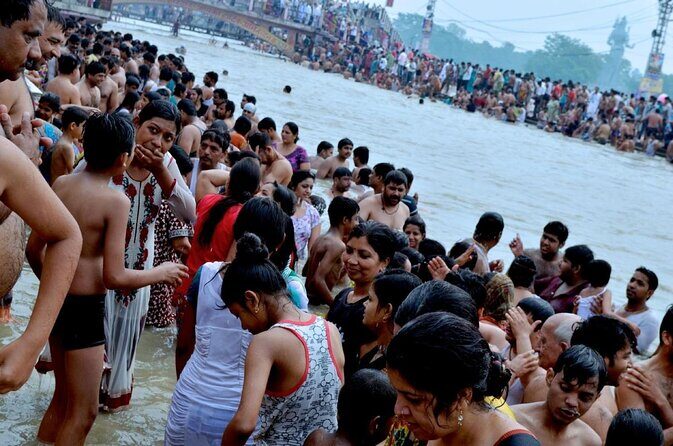
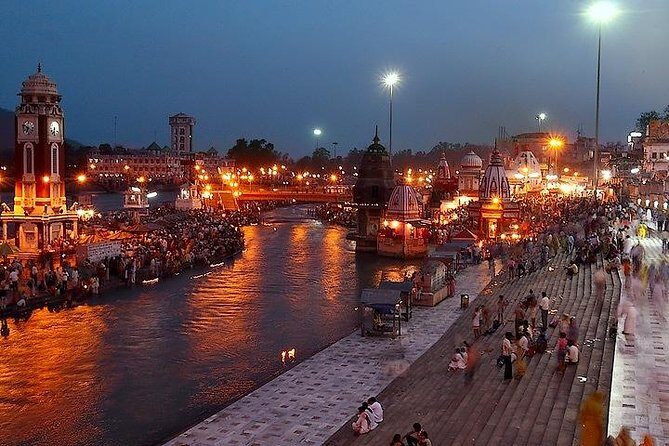
The day starts early—pickup from your Delhi/Noida/Gurgaon hotel at 5:30 AM, then about 4.5 hours by air-conditioned private car to Haridwar. That early timing isn’t just for show. Har Ki Pauri is one of the most important ghats on the Ganges, and being there early gives you a calmer rhythm than arriving later.
At Har Ki Pauri, the experience is less about buying tickets and more about understanding what you’re seeing. Your guide’s commentary helps turn the scenery into meaning—why this place is considered sacred, and what people do there. You’ll have around 1.5 hours here, so you’re not rushed off the steps after a quick look. (Still, plan for standing and moving with the flow.)
Worth knowing: there’s a good chance you’ll be mixing with a lot of people who come with their own routines. If you hate crowds, aim to keep your expectations simple: this is a spiritual hub, and it comes with energy.
Mansa Devi Temple (Bilwa Tirath): wish-fulfillment, plus a pilgrimage logic
Next up is the Mansa Devi Temple, also referred to as Bilwa Tirath. This is one of the “panch tirath” pilgrimage destinations connected with Haridwar, and it’s known as a place where devotees believe wishes can be fulfilled. That belief is part of the emotional engine of the stop, and it’s exactly the sort of thing a guide clarifies so you’re not stuck translating everything in your head.
You’ll have about 1 hour at this stop. That’s a good amount of time for seeing the temple area, observing how people approach the space, and getting your bearings without feeling like the visit is a checkbox.
Potential drawback: temple areas can be visually intense. If you’re sensitive to crowds or constant movement, pace yourself and keep close to your guide, especially in busier sections.
You can also read our reviews of more guided tours in New Delhi
Lakshman Jhula in Rishikesh: a bridge stop with real “where am I?” payoff
After Haridwar, the plan shifts to Rishikesh with a first major landmark: Lakshman Jhula. This is the famous hanging bridge across the Ganges—about 450 feet long and built roughly 70 feet above the river. The details matter because they help you understand why people treat this crossing like more than a viewpoint.
You’ll spend about 1 hour here. That time is long enough to take in the scale, watch daily life on both sides, and get a sense of why Rishikesh is known for spiritual seekers and pilgrims. The bridge also works well for photos, but try to look past only the camera angles. The real value is noticing how the river and the city life mix together.
Consideration: bridges draw crowds, and getting the best views can require patience. If you’re traveling during peak periods, just expect slow movement and plan your time like it’s a gentle traffic jam.
Chotiwala lunch break: air-conditioned sanity on a long day
You get lunch at Chotiwala, described as a multi-cuisine air-conditioned restaurant. This stop is only about 30 minutes in the schedule, but it’s exactly the kind of timed reset that saves the day. After hours of driving and temple and bridge time, having a comfortable place to eat is a real benefit.
Lunch is included, and so is bottled water. I like this structure because it prevents the most common problem on long tours: “We’ll grab something later,” which usually turns into overpriced chaos.
Practical tip: because the day is packed, eat what you can comfortably handle. Don’t try to “save your appetite for the next stop.” You’ll likely want energy for the evening.
Beatles Ashram (Chaurasi Kutia): why a foreign-name place still feels Indian
Next comes the Beatles Ashram, also known as Chaurasi Kutia. It’s near Rishikesh and gained international attention in the period of February to April 1968. That’s the part most visitors know. The more interesting part is what you actually see on site: an ashram setting where international fame never fully erased the underlying devotional atmosphere.
You’ll have about 30 minutes here. That’s short, so you’ll want to use your guide’s context to connect the dots between the story and the space you’re walking through. Instead of treating it like a museum stop, think of it as a cultural meeting point—where a global pop-culture moment overlaps with older spiritual routines.
What could be a drawback: if you’re hoping for a long, slow wander with zero time pressure, 30 minutes may feel tight. This stop works best as a short “meaning stop” before the bridges and the evening ceremony.
Ram Jhula: second bridge, second perspective on the Ganges
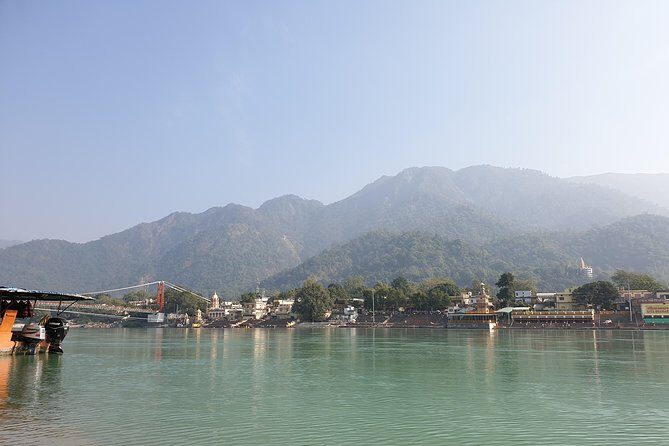
Then you head to Ram Jhula, another iron suspension bridge on the Ganges. Like Lakshman Jhula, it’s a pedestrian-focused structure, and you’ll likely see people biking across. Spending about 30 minutes here gives you a helpful contrast: two bridges, two angles, and a clearer mental map of the river’s importance in everyday life.
This stop is brief, but it adds variety to the day. Without it, the Rishikesh portion would risk feeling like one big bridge moment. With Ram Jhula, you get a better sense of how Rishikesh is arranged around the water.
Small reality check: some of the best views happen when you step aside from the densest foot traffic. Move gently, watch for bikes, and keep your spot-taking quick.
You can also read our reviews of more tours and experiences in New Delhi


Ganga Aarti at Haridwar: the night scene built for your senses
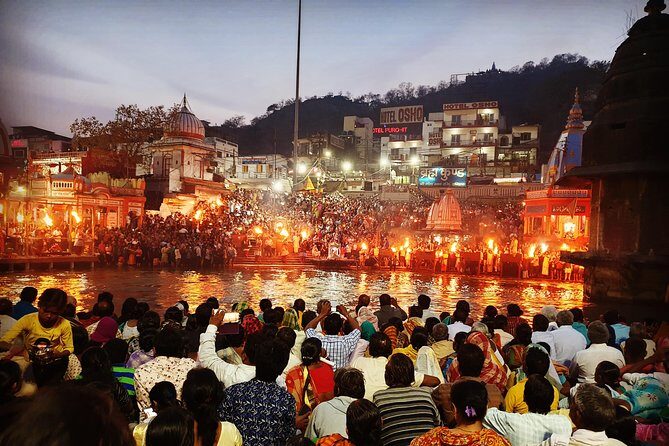
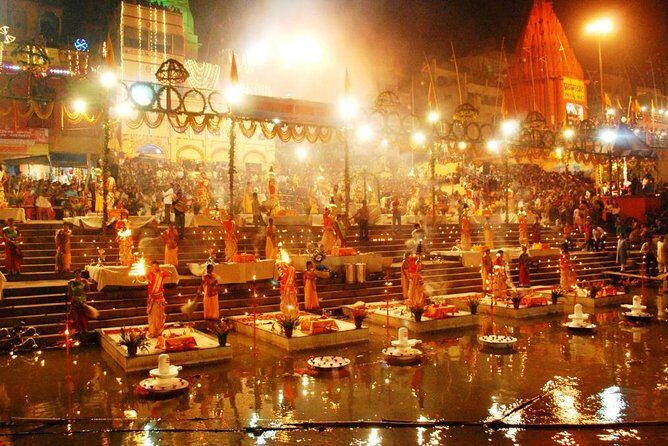
This is the emotional payoff. On the way back, you’ll return to Haridwar specifically to see the Ganga Aarti at night. Your schedule lists about 1 hour for this, and it’s described as a sight where thousands of devotees hold diyas and flowers along the banks of the Ganges.
This is where the guide’s role turns from “explaining landmarks” into “helping you understand what’s happening in real time.” Aarti ceremonies can look similar to outsiders, but the meaning and rhythm are what make it more than a show. You don’t just watch—you learn why the ceremony matters.
Consideration: because this is a major event, expect crowds and lots of movement. Bring patience. If you want great viewing, be ready to adjust where you stand as the crowd shifts.
What you’re really paying for: value of $200 from Delhi
At $200 per person, this tour isn’t cheap—but it’s also not pretending to be one of those “cheap bus day trips.” You’re paying for a private car from Delhi and back, a guide, entrance fees, lunch, bottled water, and a long day that covers multiple major stops.
Here’s what that cost buys you in practical terms:
- Time saved: you’re not coordinating transport for Haridwar and Rishikesh separately.
- Stress reduced: pickups and drop-offs are handled, including hotel access.
- Cost control: lunch, entrance fees, and water are included, so you’re not constantly recalculating your budget mid-day.
- The evening highlight: getting to the Aarti on schedule is a big reason these packaged days work.
One possible minus is mentioned indirectly in the plan: camera fees aren’t included at a few places. If you’re a serious camera person, that’s worth budgeting for so it doesn’t feel like an unexpected add-on.
Guide and driver quality: why it can make or break a long day
The experience is built around a guide who gives insight during the stops—temple meaning, bridge context, and what you’re seeing at Haridwar’s evening ceremony. That matters because the itinerary includes spiritual sites and local traditions that can be confusing if you’re only reading signage.
From one review note, guide Asim was specifically praised for helping a solo female traveler feel safe. That tells me this is the kind of tour where the guide’s presence isn’t just a “nice-to-have.” On a long, packed day, a calm, competent guide helps you keep pace without feeling pushed.
Good fit if you like clarity: If you prefer your sightseeing with explanations, this schedule supports that. If you want pure independence, you might find it feel structured.
Who this day trip is best for (and who should skip it)
This tour fits best if you:
- Want Haridwar and Rishikesh without dealing with multiple transport bookings.
- Like a guided day where you understand what you’re looking at.
- Don’t mind a long schedule and early departure.
- Want the Ganga Aarti experience as part of the plan, not a gamble.
It might be less ideal if you:
- Want slow travel or lots of free time.
- Get exhausted easily by long car rides and standing at ceremonies.
- Expect a deeply flexible itinerary with lots of spontaneous changes.
Should you book this Haridwar and Rishikesh day trip?
If your priority is seeing the major sites—Har Ki Pauri, Mansa Devi, Lakshman Jhula, Ram Jhula, Beatles Ashram, and the Ganga Aarti—while keeping logistics simple, I think booking makes sense. The value is in the full package: private transport, a guide to connect meaning, and included meals and key costs.
If you’re the type who hates early starts or feels drained by crowds and long days, it’s worth thinking twice. This is a do-it-all day, and it rewards people who come in with energy and flexible expectations.
FAQ
What time is pickup in Delhi/Noida/Gurgaon?
Pickup is listed as 5:30 AM from your hotel (Delhi/Noida/Gurgaon) in an air-conditioned private car.
How long is the tour?
The duration is approximately 14 to 15 hours.
What stops are included in the day?
The plan includes Har Ki Pauri, Mansa Devi Temple (Bilwa Tirath), Lakshman Jhula, lunch at Chotiwala, Beatles Ashram (Chaurasi Kutia), Ram Jhula, and Ganga Aarti in Haridwar.
Is lunch included?
Yes. Lunch is included at a multi-cuisine air-conditioned restaurant.
What’s included in the price?
Included items are hotel pickup and drop-off, a professional guide, bottled water, lunch, entrance fees, and all taxes (including express highway toll and parking).
Is camera time or camera fees included?
Camera fees are not included at a few places.