REVIEW · NEW DELHI
Golden Triangle Tour India
Book on Viator →Operated by Indiancircle Tours · Bookable on Viator
A Golden Triangle trip is a lot of temples and clocks.
This one packs Delhi, Agra, and Jaipur into a 6-day loop with private, air-conditioned driving and a guide who keeps things moving. I especially like the straightforward pacing on Day 1 (airport arrival to hotel check-in) and the way Day 4 hits the major Jaipur landmarks in one efficient day. One catch: monument entrance fees are not included, and some days come with a long list of ticketed stops.
What really helps is the “you show up, we run the schedule” style. You get airport arrival support (including a garland welcome), daily bottled water, and breakfast for most of the trip. Just note that lunches, dinners, and many site tickets add up, so the headline price is only part of the total.
In This Review
- Key things that make this tour work
- Golden Triangle Tour: the real value behind $275
- Day 1 in Delhi: arrival support and a hotel reset
- Day 2 Delhi landmarks: India Gate and the Parliament area
- Day 3 Agra: Taj Mahal time, Agra Fort, and the Baby Taj
- A smart budgeting note for Agra
- Day 4 Jaipur: Amber Fort, City Palace, Hawa Mahal, and Jantar Mantar
- The main drawback on Day 4: it’s full
- Day 5: transfer back to Delhi and a real free day
- Day 6 Delhi round-up: Raj Ghat, Chandni Chowk, Red Fort, Lotus Temple, Humayun’s Tomb, Qutub Minar
- How this day feels, in plain terms
- Where your entrance fees really go (and how to avoid sticker shock)
- What’s included (and what you’ll have to cover yourself)
- A simple strategy for food planning
- Your guide and driver support: the human part
- Who should book this Golden Triangle Tour India
- Should you book Golden Triangle Tour India?
- FAQ
- How long is the Golden Triangle Tour India?
- What does the $275 per person price include?
- Are monument entrance fees included in the tour price?
- Do I get airport pickup and private transportation?
- What meals are included and what should I budget for?
- Is there a camera fee at monuments?
- Can I cancel and get a full refund?
Key things that make this tour work
- Private AC transport across three cities, so you’re not stuck with slow public connections
- 5 nights in 3 hotels plus breakfast, which keeps mornings simple
- A very full Day 4 in Jaipur, with forts, palace sights, and an observatory in the same rhythm
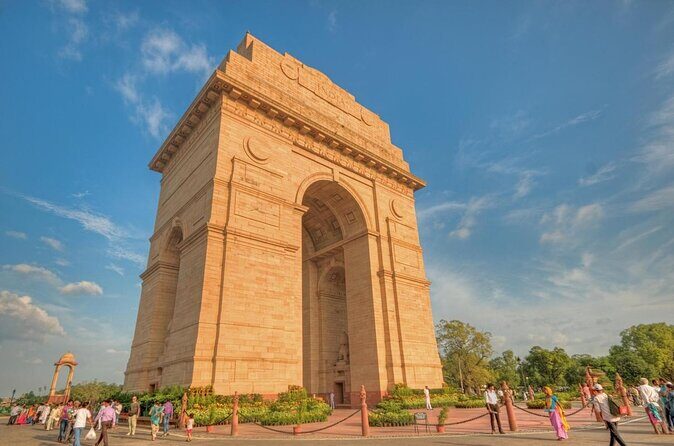
- Delhi’s big hitters on Day 2 and Day 6, including India Gate, Red Fort, Jama Masjid, and Qutub Minar
- On-the-ground support you can actually feel, with driver Kanhaiya and organizer Kishan called out in feedback
Golden Triangle Tour: the real value behind $275
For $275 per person, you’re mostly paying for logistics—transport, drivers, and a guided route that stitches together the classics of North India. If you’re the type who hates planning between cities, this is where the value shows.
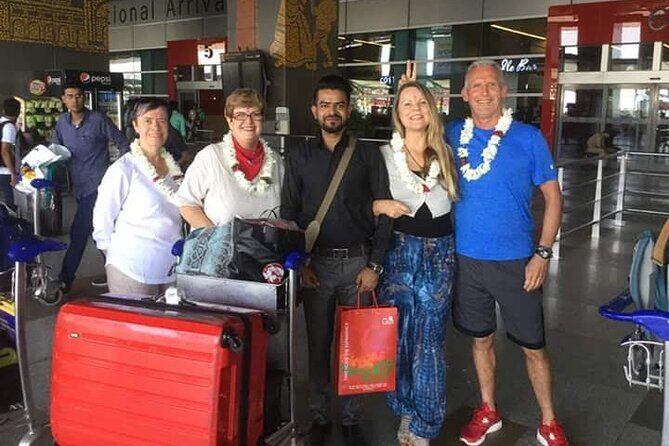
The good news is you’re not getting a bare-bones plan. You’ll have a language guide as per your requirement, private transportation, parking fees handled, and an air-conditioned vehicle for the day-to-day driving. The other good part: you get traditionally welcomed at the airport with a garland, which sets a friendly tone immediately.
The less-fun part is budgeting. The trip price does not include most monument entrances, camera fees, or tips. If you’re expecting “everything included” for the headline price, you’ll want to rethink that before you book.
You can also read our reviews of more tours and experiences in New Delhi.



Day 1 in Delhi: arrival support and a hotel reset
Day 1 is about getting oriented without rushing. After you arrive at Delhi International Airport, you’re met by the tour representative, transferred to your hotel, and checked in. The goal here is simple: land, get your room, and don’t try to “do sights” on day one.
This matters more than it sounds. Delhi traffic can drain you fast, and a real check-in day helps you stay energized for the big days that follow. Plus, you start with a built-in buffer for jet lag, paperwork stress, or just the general chaos of first arrival.
Day 2 Delhi landmarks: India Gate and the Parliament area
Day 2 focuses on Delhi’s “state-and-society” landmarks. You’ll visit India Gate, a war memorial with an arch and a surrounding park where you can pause and get your bearings. Admission is listed as free for this stop, which is always nice.
You’ll also pass Rashtrapati Bhavan (Presidential Residence) and Parliament House. You’re not expected to tour every building in detail here; think of this as a guided orientation to how the city presents itself at the national level—architecture, symbolism, and the grand scale of government Delhi.
This day is a good match if you want context before you hit the major ticketed sites later. It’s not a “rush through everything” day, and that keeps the route from feeling like a sticker-by-sticker checklist.
Day 3 Agra: Taj Mahal time, Agra Fort, and the Baby Taj
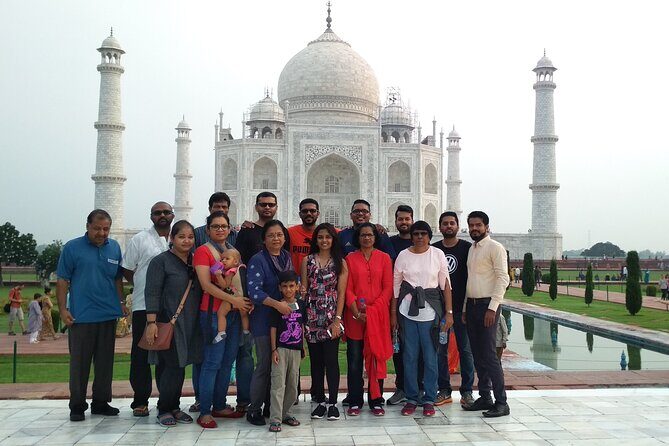
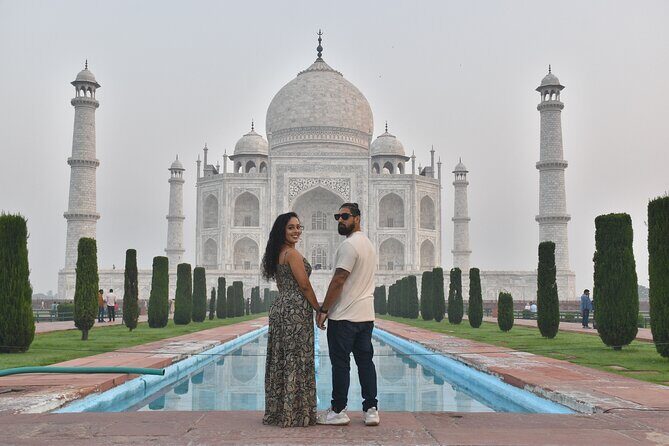
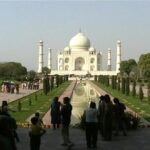
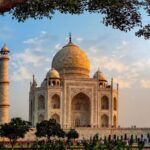
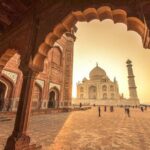
Agra is where the Golden Triangle earns its nickname. You’ll start with the Taj Mahal, an ivory-white marble mausoleum and a UNESCO World Heritage Site. The itinerary gives you up to 2 hours, and it notes that admission isn’t included.
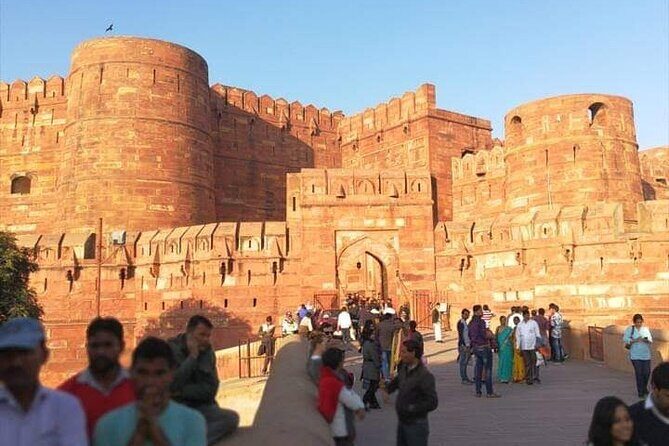
Then you’ll move to Agra Fort, another UNESCO World Heritage Site. The fort is red sandstone and offers royal-era views, including points where you can see the Taj Mahal from certain angles. You get about 1 hour 30 minutes here.
After that, you’ll visit Itmad-ud-Daula (Baby Taj) for about 1 hour. This is a great balance to the Taj Mahal. It’s still Mughal architecture and still UNESCO-level, but the scale feels more intimate—less “movie scene” and more “detail and design.”
A smart budgeting note for Agra
Agra’s ticket list is real. Taj Mahal has a listed entrance fee, and Agra Fort and Itmad-ud-Daula each have their own. There’s also a Mehtab Bagh entrance fee listed even though it’s not described in the short stop list you provided—so if it’s part of your actual package day, confirm at booking so there are no surprises.
If you love photography, note the camera fee is listed at 50 USD for monuments. If you plan to shoot a lot, that changes what the trip costs in practice.

Day 4 Jaipur: Amber Fort, City Palace, Hawa Mahal, and Jantar Mantar
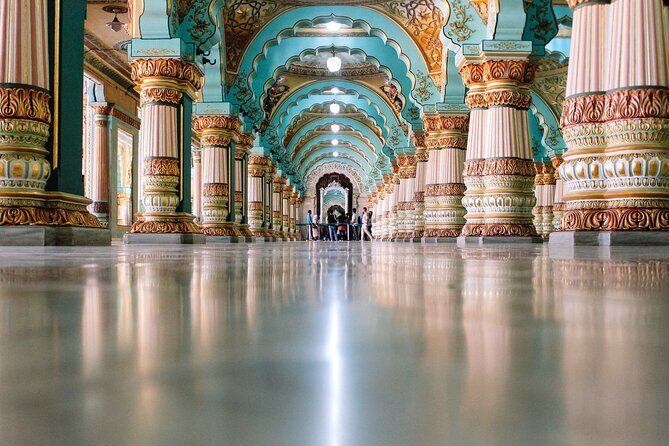
Day 4 is the “Jaipur highlight day,” and it’s packed. You start with Amber Fort, a hilltop fortress with palaces, courtyards, and big panoramic views. Admission isn’t included, and you’ll have about 2 hours.
Next comes Panna Meena Ka Kund, the stepwell known for its geometric design. You get around 30 minutes. It’s not always the first stop people pick in Jaipur, but it’s a nice way to slow down and appreciate architecture that isn’t a palace or a temple.
Then you’ll visit Royal Gaitor Tumbas, where white marble memorials commemorate Jaipur’s royal families. It’s listed as about 1 hour—more reflective than loud.
You’ll also see Jal Mahal, the palace that appears to float on Man Sagar Lake. That one is listed as free admission and gives you a scenic pause in the middle of the day.
After that, you’ll get City Palace for about 1 hour 30 minutes, and then Jantar Mantar (Jaipur) for roughly 1 hour. Jantar Mantar is an astronomical observatory and UNESCO World Heritage Site, so it’s a different kind of “wow.” It’s also a nice break from forts and palaces because it turns ancient science into something you can actually look at.
You’ll then see Hawa Mahal (Palace of Breeze), the iconic façade with 953 windows. Plan about 1 hour. It’s one of those buildings that makes sense once you stand in front of it—why it’s designed the way it is, and how it functioned historically.
Finally, you’ll have stops like Albert Hall Museum (about 30 minutes) and Patrika Gate for photos. The day closes with Rajasthan Cottage Industries, a shopping stop focused on items like gemstones, textiles, and local crafts, listed as about 1 hour.
The main drawback on Day 4: it’s full
This day is long and heavy on walking inside and around complexes. Even if you’re fit, the schedule can feel intense, especially because you’ll have ticketed sites clustered back-to-back. If heat or stamina is a concern for you, bring water (you do get daily bottled water) and plan for breaks when the guide suggests them.
Day 5: transfer back to Delhi and a real free day
Day 5 is refreshing because it gives you space. You’ll check out in the morning and drive back to Delhi. Once you arrive, you’ll be transferred to your pre-booked Delhi hotel and checked in again.
Then it’s free time for your own plans. This is the best day to catch up on rest, do casual street wandering at your own speed, or revisit any Delhi area you liked more than expected.
If you’ve packed your schedule tightly, the value here is obvious. A free afternoon can change the entire trip vibe from “endurance” to “enjoyment.”
Day 6 Delhi round-up: Raj Ghat, Chandni Chowk, Red Fort, Lotus Temple, Humayun’s Tomb, Qutub Minar
Day 6 is another high-energy day, but it’s a smart mix of sacred sites, major monuments, and markets.
You start at Raj Ghat to pay respects to Mahatma Gandhi. Admission is listed as free, and you get about 30 minutes. It’s simple and quiet compared to the crowds you’ll see later.
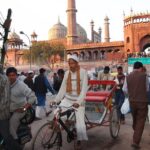
Next is Jama Masjid, one of India’s largest mosques. You’ll have about 30 minutes, and admission isn’t included. The architecture is the point here—look up at scale and details rather than treating it like a quick stop.
Then you’ll visit Chandni Chowk (listed as Pasar Chandni Chowk) for about 30 minutes. It’s described as busy and sensory—narrow lanes, street food options, and a fast-moving market feel. Admission is free here, which helps you keep the budget steady.
After that, you’ll see the Red Fort for about 1 hour. It’s UNESCO World Heritage Site and admission isn’t included.
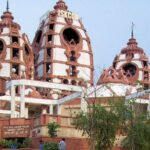
You’ll also visit Lotus Temple (about 1 hour), a Bahá’í House of Worship known for its lotus-shaped design. Again, admission isn’t included, but it’s a calm counterpoint to the older-city streets.
From there, you’ll go to Humayun’s Tomb (about 30 minutes), another UNESCO World Heritage Site, and then Qutub Minar and Complex for about 1 hour 30 minutes. Qutub Minar is one of those sites where the complex feels like a whole timeline of early Islamic architecture.
The day isn’t done yet. You’ll also visit Dilli Haat for about 1 hour—a shopping and culture space. Admission is listed as free.
How this day feels, in plain terms
This is the “big city” day. If you want fewer stops and more time per place, you might find it intense. If you want an organized whirlwind that still hits major landmarks, Day 6 delivers.
Where your entrance fees really go (and how to avoid sticker shock)
The tour price is $275 per person, but the ticket costs are separate. The package explicitly lists monument entrance fees not included, with individual sites priced—for example:
- Taj Mahal: $15.66
- Agra Fort: $7.83
- Itmad-ud-Daula (Baby Taj): $3.73
- Amber (Amer) Fort: $6.02
- Qutub Minar: $7.33
- Red Fort: $7.23
- Humayun’s Tomb: $7.23
- City Palace (Jaipur): $8.43
- Jantar Mantar (Jaipur): $2.41
- Albert Hall Museum: $3.61
On top of that, there’s a camera fee listed as 50 USD for monuments, and tips for your guide/driver are not included.
So the most practical way to budget is this: plan that the final total is your $275 plus a ticket bundle. The good part is you’re told the prices up front for the key sites, so you can estimate instead of guessing.
What’s included (and what you’ll have to cover yourself)
This tour includes:
- 5 nights accommodation in 3 hotels
- Breakfast (5)
- Private transportation in an air-conditioned vehicle
- Parking fees and driver allowances
- Daily drinking water: 2 bottles (500 ml) per person per day
- Traditionally welcome with garland at airport on arrival
- Language guide as per guest requirement
What’s not included:
- Lunch and dinner
- Alcoholic beverages
- Coffee and/or tea
- Snacks
- Monument entrance fees (listed per site)
- Camera fees at monuments (50 USD)
- Any tips for guide or driver
This split is actually pretty common for India sightseeing routes. The benefit is you’re not stuck with meals you don’t want. The drawback is you must budget for daily food on your own.
A simple strategy for food planning
Plan for at least one paid meal per day beyond breakfast. Keep a bit of cash handy for street snacks during market stops like Chandni Chowk, since those moments are part of the experience rhythm—even if the main meal is elsewhere.
Your guide and driver support: the human part
The experience is private, so you’re not sharing your schedule with strangers outside your group. In the feedback, there’s specific praise for the guidance and comfort from the people running the trip, including driver Kanhaiya and organizer Kishan.
That matters on the Golden Triangle. You’re moving fast between cities and dealing with ticket lines, entry points, and city traffic. Having a guide who can explain what you’re seeing—and a driver who knows how to get you there—turns “a list of monuments” into a smoother journey.
Who should book this Golden Triangle Tour India
I’d point you to this tour if:
- you’re seeing Delhi, Agra, and Jaipur for the first time and want a structured route
- you value private AC transport and dislike the stress of navigating between cities
- you like big landmark days, especially the heavy hitters like Taj Mahal, Amber Fort, Red Fort, and Qutub Minar
- you’re comfortable paying entrance fees separately (and possibly camera fees)
I’d think twice if:
- you prefer slow travel with fewer stops per day
- heat, walking, and long days are a concern for you
- you want lunches and dinners fully covered in one price
Should you book Golden Triangle Tour India?
Yes, if you want your Golden Triangle to feel organized and guided, with private transport and hotels handled for you. At $275, you’re paying for convenience and a route that hits the must-sees without forcing you to plan train times, airport transfers, and day-to-day driving.
But book with your eyes open: the ticket costs are real, and so are meal costs since lunch and dinner are not included. If you plan your budget early—especially for major sites like Taj Mahal, Amber Fort, and Red Fort—this tour becomes a solid value.
If you want maximum flexibility, the free time on Day 5 is a great bonus. It gives you room to breathe and adjust without derailing the core highlights.
FAQ
How long is the Golden Triangle Tour India?
It’s listed as 6 days (approx.) with 5 nights of accommodation included.
What does the $275 per person price include?
Included items are GST, parking fees, airport/departure tax, a language guide as per guest requirement, welcome garland, daily bottled water (2 bottles per person), driver allowance, private air-conditioned transportation, 5 nights in 3* hotels, and breakfast (5).
Are monument entrance fees included in the tour price?
No. Monument entrance fees are not included. The tour lists entrance fees for sites such as Taj Mahal, Agra Fort, Qutub Minar, Red Fort, Humayun’s Tomb, Amber Fort, and others.
Do I get airport pickup and private transportation?
Yes. Pickup is offered, and the tour includes private transportation using an air-conditioned vehicle.
What meals are included and what should I budget for?
Breakfast is included (5 breakfasts). Lunch and dinner are not included, and the tour also lists that coffee/tea and snacks are not included.
Is there a camera fee at monuments?
Yes. The tour lists any camera fee at monuments as 50 USD.
Can I cancel and get a full refund?
Yes. It offers free cancellation, with a full refund if you cancel up to 24 hours in advance of the experience start time. If you cancel less than 24 hours before, the amount is not refunded.