REVIEW · NEW DELHI
Five Days Private Golden Triangle Tour To Agra Jaipur From Delhi
Book on Viator →Operated by Kita Private Taxi · Bookable on Viator
A private driver and a tight plan can save you real energy. This Delhi–Agra–Jaipur route is interesting because it mixes classic Mughal power with Rajasthan’s palace-city vibe, and it keeps the logistics simple. I especially like the stress-free setup (pickup help and private transport), and I like that you’re not just rushing through one monument after another. One possible drawback: many stops list tickets as not included, so you should expect to pay some entrance fees along the way.
The pacing works well if you want culture without turning your vacation into a schedule spreadsheet. You’ll see the headline sights plus several “adjacent” landmarks that help the story make sense—mosques, forts, tombs, observatories, and ceremonial spaces. If you’re traveling during peak hours, you may still want to manage your expectations for crowds at the big-name sites.
In This Review
- Key highlights you’ll feel right away
- Golden Triangle tour with private transport: what you’re really paying for
- Price and value: when $239 per person is a smart deal
- Getting started in Delhi: airport welcome and a 6-day rhythm
- Day 2 in Delhi: Old Delhi icons plus the monuments axis
- Jama Masjid and the Old Delhi market feel
- Red Fort and the Republic Day memorial axis
- Humayun’s Tomb, Lotus Temple, Raj Ghat, and Qutub Minar
- Day 3 Agra: Taj Mahal first, then fort and “Jewel Box” details
- Taj Mahal: why it’s still worth your time
- Agra Fort: the “Red Fort of Agra” feeling
- Itmad-ud-Daula: the craftsmanship stop people remember
- Day 4 from Agra to Jaipur: Fatehpur Sikri and Chand Baori on the way
- Fatehpur Sikri: a Mughal capital in miniature
- Chand Baori (Abhaneri): the stepwell that visualizes math and patience
- Day 5 Jaipur city day: Amer, City Palace, Jantar Mantar, Hawa Mahal
- Amer: the fort/heritage start
- Jal Mahal and Royal Gaitor Tumbas: water and memorials
- City Palace and Jantar Mantar: royal living plus science tools
- Hawa Mahal: the facade you can’t stop staring at
- Albert Hall Museum: the art and era stop at the end
- Day 6 back to Delhi: a calm landing after big days
- Guides and comfort: what the experience feels like day to day
- Ticket reality and what to expect at each stop
- Should you book this Delhi–Agra–Jaipur loop with Kita Private Taxi?
- FAQ
- How long is this tour?
- What time does the tour start?
- Is this tour private?
- What’s included in the price?
- Are entrance tickets included?
- Do I get help when I arrive in Delhi?
- How does the tour end?
- Can I cancel and get a full refund?
Key highlights you’ll feel right away
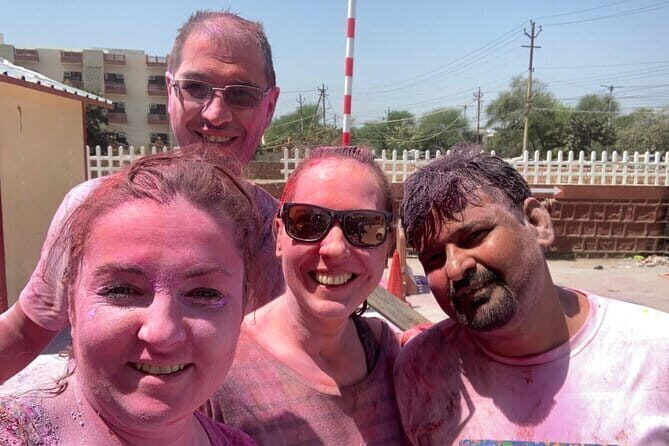
- Private door-to-door transport across Delhi, Agra, and Jaipur, so you’re not negotiating buses or rideshares.
- Airport welcome on Day 1, with a representative helping you get to your hotel smoothly.
- A full loop that matches the Golden Triangle story, not just a random set of photos.
- A strong sightseeing mix in Delhi, from Jama Masjid to Qutub Minar, plus calmer memorial stops.
- Agra’s core trio in one day: Taj Mahal, Agra Fort, and Itmad-ud-Daula.
- Jaipur on two levels: Amer-area sights and then the city core landmarks like City Palace, Jantar Mantar, and Hawa Mahal.
Golden Triangle tour with private transport: what you’re really paying for

At $239 per person, you’re buying more than sightseeing. You’re buying a buffer against the most common Golden Triangle pain: time lost to transit, figuring out what’s where, and getting stuck waiting for trains or buses. With private transportation, the route stays efficient, and you can move between Delhi, Agra, and Jaipur without your day turning into a travel project.
This tour also signals a “service-first” approach. On Day 1, there’s an airport welcome so you’re not left guessing immediately after a flight. By Day 6, the plan is to return you from Jaipur back to Delhi with a vehicle ready after breakfast and checkout.
What helps most is that private doesn’t automatically mean rushed. The day structure is built around recognizable clusters of sights, so you can see a lot while still feeling like you’re moving on purpose.
You can also read our reviews of more private tours in New Delhi



Price and value: when $239 per person is a smart deal
Let’s talk value in plain terms. $239 per person can be a good deal for this kind of multi-city loop when you compare it to the cost of stitching together separate bookings: local transfers, guides for key days, and the hassle factor that often costs time (which costs money too, even if you don’t track it).
The value looks especially strong because:
- The tour is private for your group, which usually makes the experience feel more controlled.
- It includes pickup help and private transport across cities, which is often the biggest expense in a Golden Triangle plan.
- You’re visiting major icons plus “supporting” stops that make the region feel coherent.
The main value consideration is that entrance tickets are not included for many sites. So, your all-in cost will depend on which paid entries you choose and how your guide/tour team times stops. If you hate paying extra, you might feel it more than someone who’s happy budgeting small ticket fees for big sights.
Getting started in Delhi: airport welcome and a 6-day rhythm
The tour starts with a practical setup. When your flight arrives in New Delhi, you’ll get a warm welcome from a tour representative at the airport. They help you reach the hotel smoothly, and if you want, you can relax before the sightseeing days start.
One thing to notice: the tour is described as five days, but the schedule runs about 6 days including arrival and the return to Delhi. That’s not unusual for Golden Triangle tours, and it’s actually helpful. You don’t want your “Day 1” to be a full sightseeing sprint right after flying.
The listed start time is 7:00 pm. That matters if you’re coordinating your arrival plans or connection timing. If your flight lands much earlier, you may still have time to settle in at the hotel before the tour activities kick into gear.
Day 2 in Delhi: Old Delhi icons plus the monuments axis

Day 2 is a classic Delhi blend. You start in Old Delhi with religious and street-life energy, then move toward central landmarks and then out to major tombs and temple architecture. The result is that you don’t only see “one kind” of Delhi—you see how different parts of the city represent different layers of power and belief.
Jama Masjid and the Old Delhi market feel
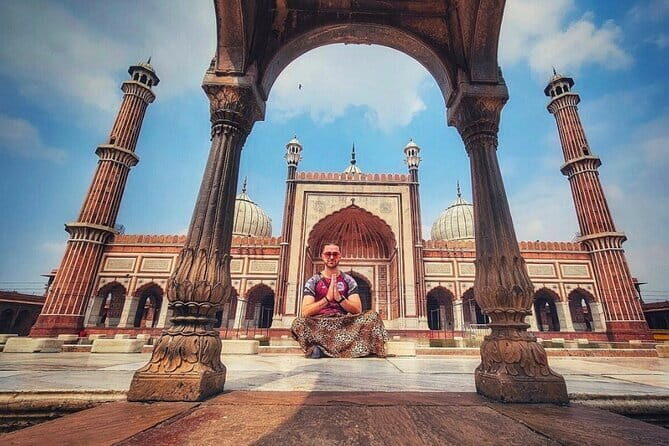
Jama Masjid is a famous mosque built in 1644 using red sandstone and marble. It was commissioned by Mughal emperor Shah Jahan. Standing in that space, you get a sense of how religious architecture was also a symbol of imperial confidence.
Right after, you move through a market area where the atmosphere is packed with people and stalls selling colorful items. This isn’t just a quick photo break. It helps you understand how Delhi’s historic core still lives as a working, shopping neighborhood.
A practical note: old-city streets can feel crowded, so wear comfortable shoes. If you’re sensitive to noise or dense traffic, you may want your guide to set you a route that balances seeing with not getting overwhelmed.
You can also read our reviews of more tours and experiences in New Delhi




Red Fort and the Republic Day memorial axis
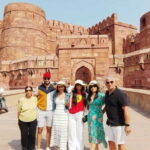
The next big anchor is Red Fort, with majestic towers and walls that define the Old Delhi skyline. Even with a limited time window, it’s a stop that gives you visual context for the era when these fortifications mattered daily.
Then you head to India Gate, a war memorial with the Amar Jawan Jyoti. The timing detail matters: it’s also associated with the Republic Day function on 26 January. Even if you’re visiting on an ordinary day, the site carries that ceremonial weight.
From India Gate, you continue toward major government landmarks like Rashtrapati Bhavan and Parliament House. You’re not going inside (at least from the tour details), but you get the sense of the official “new Delhi” face of the capital.
Humayun’s Tomb, Lotus Temple, Raj Ghat, and Qutub Minar
The day finishes with variety: tomb architecture, a serene faith site, a memorial, and a towering minaret.
- Humayun’s Tomb: a garden tomb built in 1570 with stand-out architecture. The garden layout is often part of why it feels peaceful compared to street-level Delhi.
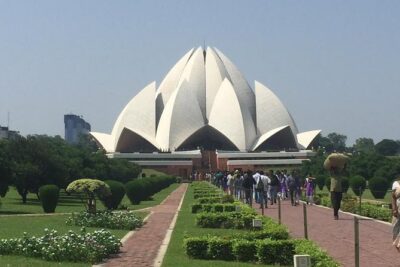
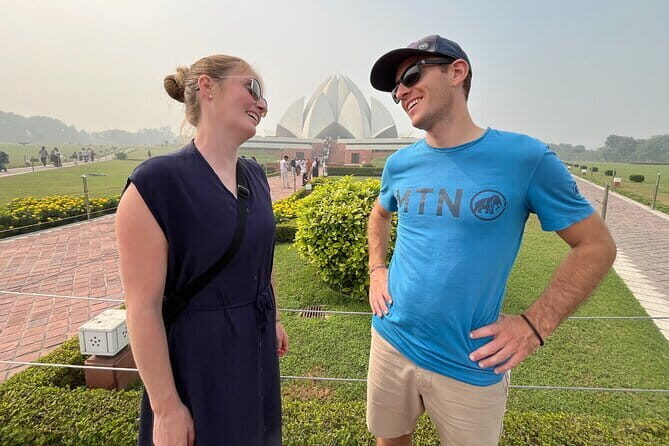
- Lotus Temple: a Baha’i temple shaped like a half-open lotus that appears to float near pools and gardens. The stop is listed as admission free, and it’s a welcome reset when the rest of the day has more intensity.
- Raj Ghat: the memorial where Mahatma Gandhi was cremated. Also listed as free, and it’s short but meaningful.
- Qutub Minar: the 72.5-meter minaret inside the Qutub complex. It’s a must-see if you like architecture and scale. The tour details list tickets as not included.
This mix is one of the better parts of the itinerary. You’re not only seeing big names. You’re seeing how Delhi switches tone—from busy streets to calm memorial space to towering monuments.
Day 3 Agra: Taj Mahal first, then fort and “Jewel Box” details
Agra is built around one main star, and the schedule makes it count. Day 3 focuses on the essentials you’d want in a first visit: Taj Mahal, Agra Fort, and Itmad-ud-Daula.
Taj Mahal: why it’s still worth your time
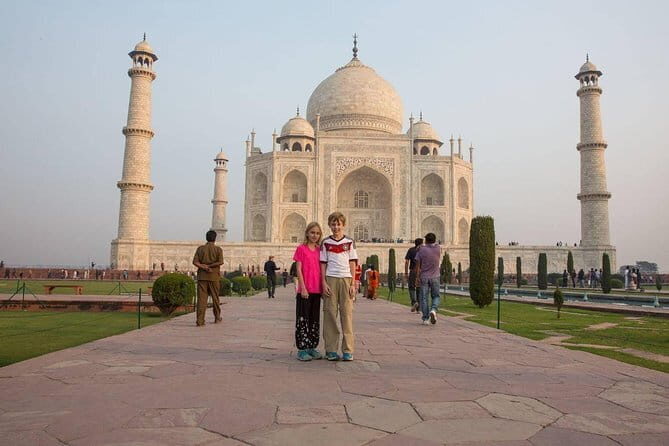
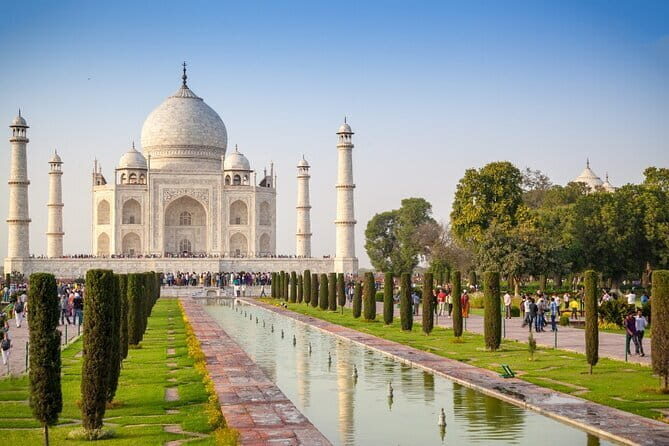
Taj Mahal is described as a world-famous mausoleum made of ivory white marble, constructed in 1632 by Shah Jahan over 17 hectares near the Yamuna River. That’s the headline, and it’s still the reason most people plan Agra at all.
You’ll want to treat it as a full sensory experience, not just a quick glance. The marble, the symmetry, and the surrounding grounds all matter. Even if you’ve seen photos forever, being there usually works better in person than on a screen.
The tour details list admission ticket as not included, so plan for that cost.
Agra Fort: the “Red Fort of Agra” feeling
Next is Agra Fort, included in the UNESCO World Heritage list. It’s often compared to Red Fort in Delhi, and the similarity isn’t random—both represent how rulers used fortifications as political statements.
This stop is listed as 1 hour and ticket not included. If you’re short on time, this is a strong “big picture” stop: you’ll leave understanding why the city mattered strategically.
Itmad-ud-Daula: the craftsmanship stop people remember
Then you go to Itmad-ud-Daula, described as a mausoleum sometimes called the Jewel Box and also nicknamed Bachcha Taj. This is the stop that often makes the day feel deeper because it’s smaller than Taj Mahal but rich in detail and craftsmanship.
For people who enjoy design, inlay work, and architectural texture, this is one of the best value hours in Agra.
Day 4 from Agra to Jaipur: Fatehpur Sikri and Chand Baori on the way
Day 4 is your long transfer day that still gives you real sights. After breakfast in Agra, you head toward Jaipur. The route includes Fatehpur Sikri and then the Abhaneri area, plus a chance to see the countryside context of Rajasthan.
Fatehpur Sikri: a Mughal capital in miniature
Fatehpur Sikri was built by Akbar in the late 16th century and served as the Mughal kingdom’s capital for about 10 years. That fact alone gives this place meaning. You’re not just walking through ruins—you’re looking at what once functioned as a center of power.
The tour details list admission as free for this stop. That makes it a particularly good deal if you like “big story with minimal add-ons.”
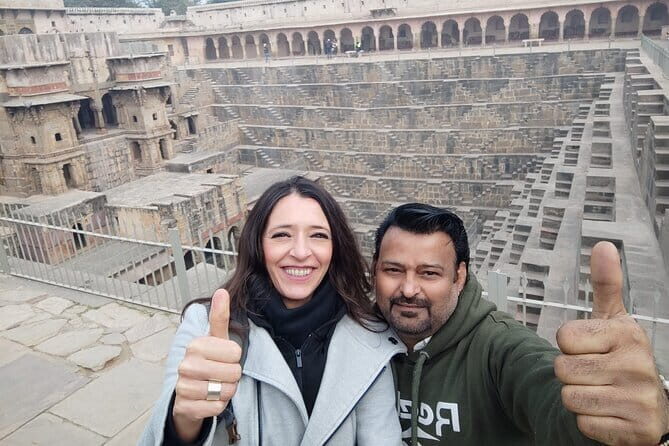
Chand Baori (Abhaneri): the stepwell that visualizes math and patience
After Fatehpur Sikri, you visit Chand Baori in Abhaneri, described as a stepwell: a baori is a stepped water structure, 30 meters below ground level, and listed as large.
Ticket is not included here, but if you like geometry and architecture, you’ll probably enjoy the way it looks from different angles. It also offers a break from the tomb-and-fort rhythm.
Day 5 Jaipur city day: Amer, City Palace, Jantar Mantar, Hawa Mahal
Day 5 is the heart of Jaipur. It begins with the Amer area, then moves into central Jaipur for the iconic city-core sights and ends with Albert Hall Museum.
If you enjoy planning your day around visual variety, this is a strong schedule. It moves from fort/temple energy to civic architecture to astronomy tools to palace facade spectacle.
Amer: the fort/heritage start
Amer is located outside the boundary of Jaipur and is noted as the former capital of Rajasthan before Jaipur became the capital. The stop is listed as admission free in the tour details, and it also has a 2-hour window with a guide accompanying you.
This is a good start because it sets up the rest of the day. You see how Jaipur’s identity ties back to earlier centers of rule.
Jal Mahal and Royal Gaitor Tumbas: water and memorials
You then visit Jal Mahal, a palace in the middle of Man Sagar Lake. It was made in 1699, and that date detail gives you a clear historical anchor.
After that, Royal Gaitor Tumbas: cenotaphs of the Kacchhawa rulers, who ruled Jaipur from 1727 to 1947 AD. This is a shorter stop, but it adds a different tone than palaces and forts.
Ticket details for these stops are not included, so you’ll likely need to budget for entrances if you want to go fully inside each area.
City Palace and Jantar Mantar: royal living plus science tools
City Palace of Jaipur is listed as a 2-hour stop with architecture described as a mix of Mughal-style and Rajput design, built by Maharaja Sawai Jai Singh II. The royal family still lives i—meaning parts of it function as living heritage rather than a museum-only site.
Next is Jantar Mantar, an astronomical observatory in central Jaipur and described as the oldest such observatory globally. Admission is not included in the tour details, but if you like how old science worked, this stop often feels more interesting than it sounds.
Hawa Mahal: the facade you can’t stop staring at
Then comes Hawa Mahal (Palace of Wind), a five-storey palace facade described as having no foundation and reaching maximum height globally. The tour description also emphasizes its design style and layered look.
Even if you’ve seen it in pictures, the real draw is the sheer visual rhythm of the windows and the way the building works like a screen for light.
Albert Hall Museum: the art and era stop at the end
You finish at Albert Hall Museum, built in 1887 by Maharaja Sawai Ram Singh II. It was named after the Prince of Wales, who visited in 1876.
Tickets are listed as not included. Still, ending with a museum makes sense if you want to shift from outdoor architecture to artifacts and interpretation.
Day 6 back to Delhi: a calm landing after big days
Day 6 is the return. The plan is breakfast at the hotel in Jaipur, checkout, and then a vehicle back to Delhi. You’ll reach Delhi and continue your own plan after the drive.
This structure matters. You don’t want your last day packed with one more “must do” while your body is tired from earlier walking days. Here, you get a clean finish.
Guides and comfort: what the experience feels like day to day
The tour is private, so the dynamic is different than hopping between strangers on set routes. That private setup tends to reduce stress, because your time isn’t constantly at the mercy of other groups.
The guide detail that shows up strongly is Kumar. He’s mentioned as both guide and driver, with safe driving and a comfortable car, plus a friendly, knowledgeable style. Even if you don’t know who you’ll get, you can treat the private driver-guide pair as one of the main ingredients here. In a multi-city plan, a good guide helps you pace the day and decide what’s worth your time on the spot.
I’d also keep your expectations realistic. Delhi and major monuments can be busy. Even with a good driver and a plan, you’ll still be walking in crowded zones at certain stops. The advantage is that you’re not standing around trying to solve transport problems.
Ticket reality and what to expect at each stop
A big practical point: many stops list admission tickets as not included. Some are marked free, though, including Lotus Temple, Raj Ghat, Fatehpur Sikri, and Amer (based on the stop notes you’re given).
So, what should you do?
- Plan mentally for some extra spending at entrances.
- Ask your driver/guide to confirm what’s free that day vs. what needs paid entry.
- Use the free stops strategically. For example, Lotus Temple and Raj Ghat can be short resets after heavier walking.
Also, because you’re moving between cities, you’ll likely spend more time in vehicles than you might in a single-city tour. That’s not a flaw—it’s the price of seeing three places without frantic transfers.
Should you book this Delhi–Agra–Jaipur loop with Kita Private Taxi?
If you want a Golden Triangle tour that feels controlled—private transport, pickup help, and a clear path between Delhi, Agra, and Jaipur—this is a solid option. It’s especially worth it if you’re traveling as a couple or family and you want the day to feel smooth rather than stressful.
I’d say book it if:
- You hate logistics work and want someone to handle the moving parts.
- You like the idea of seeing Delhi’s major monuments plus the Agra and Jaipur core sights.
- You’re okay paying entrance fees for some sites (since many are not included).
I’d think twice if:
- You’re trying to keep your total spending extremely tight and entrance tickets would be a deal-breaker.
- You dislike crowd-heavy photo stops and expect everything to feel quiet.
Overall, this tour offers good value for the structure and the private comfort. If you want the Golden Triangle without the usual chaos, it delivers the kind of plan that lets you actually enjoy the monuments instead of negotiating your way between them.
FAQ
How long is this tour?
It’s listed as 6 days (approx.), running from your arrival in Delhi through sightseeing and ending with the return to Delhi.
What time does the tour start?
The start time is listed as 7:00 pm.
Is this tour private?
Yes. It’s a private tour/activity, so only your group participates.
What’s included in the price?
The tour includes private transportation. It also mentions pickup offered and you receive mobile tickets.
Are entrance tickets included?
Many stops are marked as Admission Ticket Not Included, while a few are listed as Admission Ticket Free in the tour details.
Do I get help when I arrive in Delhi?
Yes. On your flight arrival in New Delhi, you’ll receive a welcome from a tour representative at the airport to help you reach the hotel smoothly.
How does the tour end?
On the last day, you return from Jaipur to Delhi. The plan includes breakfast at the hotel, checkout, and a vehicle to Delhi.
Can I cancel and get a full refund?
Yes. Free cancellation is available if you cancel up to 24 hours in advance for a full refund.