REVIEW · NEW DELHI
Full Day Delhi Sightseeing
Book on Viator →Operated by Rakesh Day Tours · Bookable on Viator
Delhi in one long day.
This Full Day Delhi Sightseeing tour strings together the city’s biggest names with private, all-transport convenience and a guide who can steer the day toward what you care about. I like that it’s built for real questions and a slower pace when you want it, not a rush-through checklist. I also like that you get both classic monuments (Qutub Minar, Humayun’s Tomb, Red Fort) and an urban slice of life with a rickshaw-style ride through Chandni Chowk.
One thing to keep in mind: it’s a long day (about 8–10 hours), and monument entrance fees and lunch are not included, so you’ll want to budget for tickets and your own breaks.
In This Review
- Key things that make this day work
- Why a full-day route beats hopping between half-days
- Pickup, start time, and how to plan your morning
- Qutub Minar: the Sultanate-era icon that sets the tone
- Lotus Temple: a quiet reset from stone and crowds
- Humayun’s Tomb: Mughal design you can actually take in
- India Gate and Rashtrapati Bhavan views: war memory meets power
- Red Fort: the big center of gravity
- Swaminarayan Akshardham plus the light-and-sound show
- Price and value: what $57 really covers
- Entrance fees, food, and tips: the budget you should expect
- Private pacing and the guide’s role (especially if you like questions)
- Getting a smoother day: timing, traffic, and what to expect
- Who should book this tour
- When you might want to choose differently
- FAQ
- FAQ
- How long is the Full Day Delhi Sightseeing tour?
- Is pickup included, and where does the tour start?
- Are monument entrance fees included?
- Is lunch included?
- Is this a private tour?
- What happens if my day is Monday?
- Should you book this private Delhi highlights day?
Key things that make this day work
- Private tour for your party only with a guide who tailors commentary to your interests
- All transportation provided in a private vehicle, starting at the airport area (9:00am listed)
- Big-hit Delhi stops packed into one route: Qutub Minar, Lotus Temple, Humayun’s Tomb, India Gate, Red Fort, Akshardham
- Chandni Chowk time via rickshaw ride for a more local feel than just monuments
- Akshardham includes time for the light-and-sound show (timing and ticket needs can affect what you catch)
Why a full-day route beats hopping between half-days
Delhi can feel spread out. A well-made day like this helps you avoid the worst part of sightseeing: backtracking. You start in New Delhi and move through the main clusters—Sultanate-era ruins at Qutub Minar, Mughal-era grandeur at Humayun’s Tomb, imperial symbols at India Gate and Red Fort, and then the modern spiritual campus at Swaminarayan Akshardham.
The real advantage is not just “seeing places.” It’s having a guide to connect the dots as you go. If you’re curious about architecture, you’ll get context. If you just want the best photo spots, you can ask for that too. This is the kind of route where commentary helps you understand what you’re looking at instead of walking past details you might miss.
You can also read our reviews of more tours and experiences in New Delhi.



Pickup, start time, and how to plan your morning
The tour lists Indira Gandhi Intl Airport as the start point, with a 9:00am start time. It also says pickup is offered, and transportation is included by private vehicle. In practice, that means you should plan to be ready early—Delhi traffic can be unpredictable, and your day is built to flow without long gaps.
Tip: when you confirm, make sure you’re clear on where the driver meets you. The day runs on a schedule, so you’ll want to have your phone charged and your ID/ticket details handy for the mobile ticket portion.
Qutub Minar: the Sultanate-era icon that sets the tone
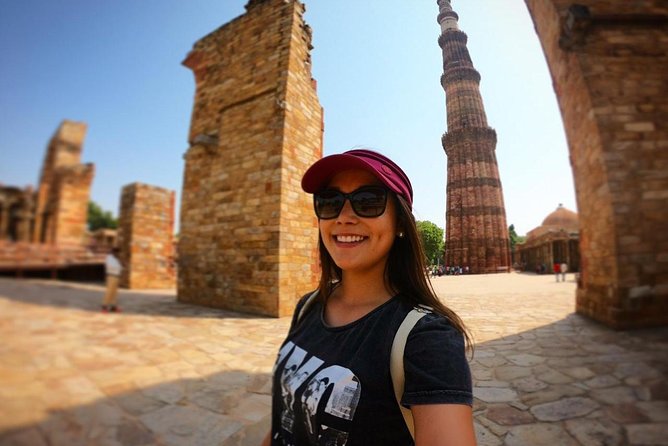
Your first stop is Qutub Minar. It’s tied to early Delhi Sultanate rule, with the tower commissioned by Qutb-ud-din Aibak and completed by his successor Iltutmish. Even the naming story has a twist: it’s not fully known whether it was named after Aibak or another figure, Qutbuddin Bakhtiyar Kaki.
Why this stop is worth prioritizing: Qutub Minar isn’t just a pretty tall structure. It’s a gateway into the early layers of Delhi, where styles and eras overlap. The tower’s scale gives you an instant sense of why this area mattered.
Practical note: the itinerary lists about 40 minutes at this stop, and admission is not included. With the time window being tight, use your time well: walk in, orient yourself, and then decide if you want to spend extra minutes taking photos or reading plaques.
Lotus Temple: a quiet reset from stone and crowds

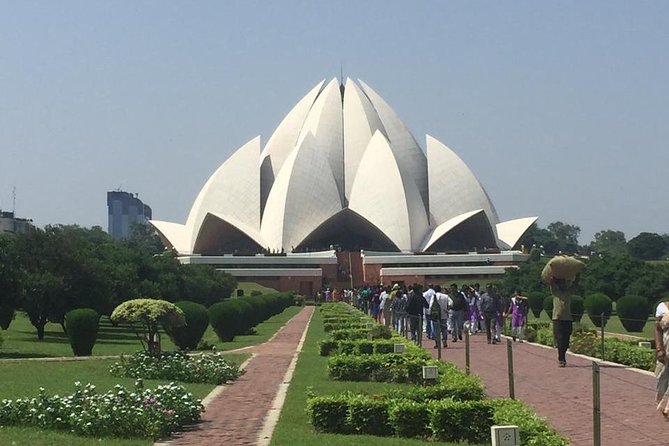
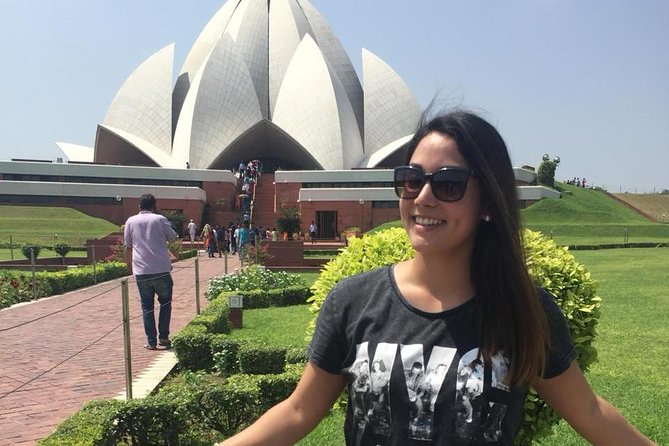
Next is Lotus Temple (Bahá’í House of Worship). It opened to public worship in December 1986 and has drawn enormous visitor numbers since then. The takeaway for your day is the contrast: after the heavier, older monument vibe, Lotus Temple is calmer and more inward.
The itinerary lists about 30 minutes here. That’s enough to look around, observe how the space feels, and get your bearings. Since admission ticket fees aren’t included in the listing, you should be ready for potential ticket costs if they apply on the day.
What I like about this kind of pacing: it prevents “monument fatigue.” You’re still sightseeing, but your brain gets a break.
Humayun’s Tomb: Mughal design you can actually take in
Humayun’s Tomb is scheduled for around 1 hour. This isn’t just a tomb you pass by—it’s a Mughal-era statement. The tomb was commissioned by Humayun’s first wife, Bega Begum (Haji Begum), in 1569–70, designed by Mirak Mirza Ghiyas, a Persian architect chosen by Bega Begum.
That backstory helps you understand the place. You can look at the layout and think about purpose: symmetry, gardens, and the idea of a monumental resting place. If you like architecture, this stop is often where the guide’s explanation really pays off.
Entrance fees are not included, so budget separately. Also, allow a bit of breathing room—this is the kind of site where you’ll want to look slowly, not just snap and go.



India Gate and Rashtrapati Bhavan views: war memory meets power
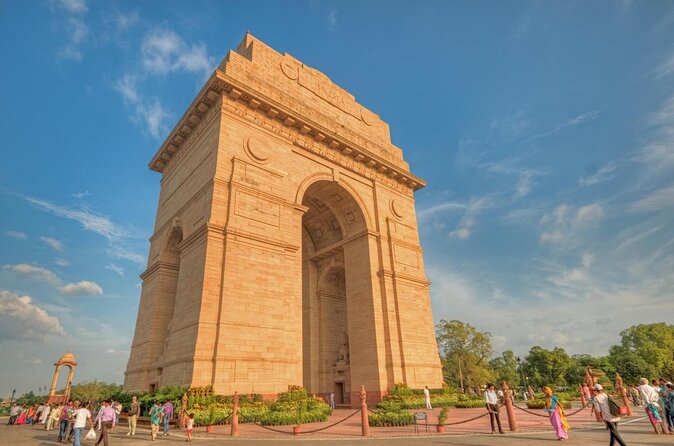
Your day then shifts to India Gate, with about 20 minutes. India Gate is connected to the Imperial War Graves Commission established in May 1917 for First World War memorials. That context changes how you read the monument. It’s not only a grand landmark; it’s part of a larger memorial system.
After that, there’s a stop for the Rashtrapati Bhavan area, described as the president’s residence and praised for its architecture. The listing doesn’t give a neat time box here, but this part of the day typically works as a photo-and-view moment—short, efficient, and useful for your understanding of New Delhi’s layout.
Practical consideration: this segment is quick. Use it for photos and high-level orientation, and save any deep reading for when you’re back at a museum-style stop or when the guide has time for longer explanations.
Red Fort: the big center of gravity
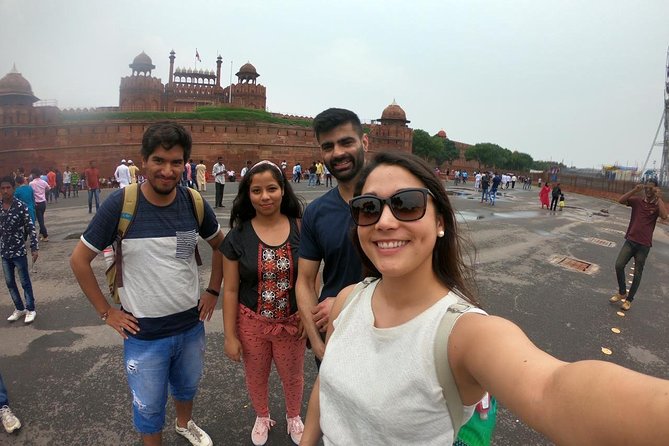
Next is Red Fort, scheduled for about 1 hour. It served as the main residence of Mughal emperors for nearly 200 years, up until 1856, and today it houses museums.
This is a stop where “time math” matters. You can easily lose 20 minutes just wandering, especially if your guide points out specific areas you should notice. So I suggest treating the hour like a mini-visit: walk the key sections first, then decide whether you want to add museum time based on your interest.
Admission isn’t included on the listing, so you may pay ticket fees on-site. If you’re traveling with limited time, tell your guide early that you’d like a priority route through the fort.
Swaminarayan Akshardham plus the light-and-sound show
The final major monument is Swaminarayan Akshardham (also called Akshardham Temple). The itinerary lists about 2 hours. This complex is described as a Hindu mandir and a spiritual-cultural campus in New Delhi, with exhibits of traditional elements.
One of the standout mentions in the overall tour description is the light and sound show at Akshardham. Here’s the practical reality: show schedules can affect what you actually catch, and the tour listing says monument entrance fees are not included, so the show portion may have separate ticket costs. Still, the structure of the day is clearly meant to leave you enough time to experience the complex, and if you time it right, the show can add a memorable finale.
What I’d do: when you arrive, ask your guide about show timing immediately. Then decide how you want to spend the rest of the two hours—exhibits first, or show first, depending on what’s offered and when.
Price and value: what $57 really covers
At $57, this tour sits in the “good value if you want organization” category. What you’re paying for is not just driver time. You’re paying for:
- Professional guide service
- Private vehicle transport
- All taxes, fees, and fuel/GST handling
That combination matters in Delhi. If you were to DIY this route, you’d spend time figuring out transport between clusters and negotiating your way through ticket lines and route planning. Here, the day is structured so you don’t have to.
The trade-off is that you’re not getting “everything included.” Entrance fees, lunch, and tips are not included. So if you’re expecting the price to cover tickets and meals, you’ll be surprised later. If you plan for those costs, the overall day feels like a solid deal for the number of major stops you hit.
Entrance fees, food, and tips: the budget you should expect
Based on the itinerary notes, admission tickets are not included for Qutub Minar, Lotus Temple, Humayun’s Tomb, Red Fort, and Akshardham. India Gate is listed as free.
Food isn’t included either. Lunch is explicitly listed as not included, and drinks aren’t included unless specified. That means you’ll need to plan for at least one meal break on your own.
And yes, tips for the driver/guide are not included. In a private tour, tipping is a normal part of how the day feels. It’s also one of the easiest levers you have to improve the day if you’re happy with the service.
Simple budgeting rule: count on tickets plus one or two meals. Then the rest is smooth sailing.
Private pacing and the guide’s role (especially if you like questions)
This is a private tour for your party only. That changes the emotional experience. There’s no need to match someone else’s rhythm or wait for the slowest group member.
The listing also emphasizes that the guide tailors the itinerary and commentary to your interests. In a city full of monuments, that matters. If you’re the kind of person who likes to ask why a building looks the way it does, you’ll appreciate having that flexibility. If you’re more practical—where to stand for photos, how long to spend, what to skip—you can ask for that too.
One extra bit of value: the tour is built with multiple “mood shifts,” from tombs to gates to spiritual campuses. A good guide keeps those shifts from feeling random.
Getting a smoother day: timing, traffic, and what to expect
Even with a private vehicle, Delhi depends on road conditions. Your day is long enough that you’ll likely spend time simply traveling between major sights. That’s normal and part of why the tour price includes transport.
Also note: all sightseeing monuments are closed on Monday. If your dates land on a Monday, you’ll want to choose another day or ask how the operator adapts the route.
Who should book this tour
This works best if you want:
- A single-day highlights plan that doesn’t require you to coordinate transport
- A guide-led explanation of what you’re seeing at each major stop
- More comfort than using public transit between distant sights
- A blend of top monuments and at least one more local-feeling moment (the rickshaw ride through Chandni Chowk is included in the tour description)
It’s also a good fit if you’re traveling with a photographer or you care about maximizing photo time. In past bookings tied to this operator, drivers and managers were described as punctual and supportive, and one name that came up was Mr. Yogesh for courteous driving and vehicle cleanliness. Another name you might hear connected to coordination was Raghav.
When you might want to choose differently
If you hate long days or you prefer slow museum time, this itinerary may feel packed. You’re hitting many “big ticket” monuments in one stretch, so you’ll get broad coverage, not deep study.
Also, if you’re traveling on a tight budget for entrance fees, the pricing may feel less “all inclusive” once you factor tickets and lunch. Entrance fees vary, and the tour listing is clear they aren’t included.
FAQ
FAQ
How long is the Full Day Delhi Sightseeing tour?
It runs about 8 to 10 hours.
Is pickup included, and where does the tour start?
Pickup is offered, and the listed start point is Indira Gandhi Intl Airport with a 9:00am start time.
Are monument entrance fees included?
No. The itinerary notes admission tickets are not included for multiple stops (Qutub Minar, Lotus Temple, Humayun’s Tomb, Red Fort, and Swaminarayan Akshardham). India Gate is listed as free.
Is lunch included?
No. Food and drinks are not included, and lunch is listed as not included unless specified.
Is this a private tour?
Yes. It’s a private tour/activity, and only your group participates.
What happens if my day is Monday?
The tour information says all sightseeing monuments are closed on Monday.
Should you book this private Delhi highlights day?
If you want an organized, high-coverage day with a guide and private transport, I’d book it. It’s priced in a way that makes sense when you factor in guidance plus private vehicle transport, and the route hits major Delhi must-sees without you having to plan every hop.
I’d skip or reschedule only if your day falls on a Monday (monuments closed) or if you strongly prefer meals and entrances to be fully included in the base price. If you can handle separate ticket and lunch costs, this is a practical way to see a lot of Delhi in one go.