REVIEW · NEW DELHI
Delhi: Old & New Delhi Full or Half Day Tour
Book on Viator →Operated by Sameday Taj Mahal Tour · Bookable on Viator
Big Delhi, one focused day.
This Old & New Delhi tour strings together major faith sites and UNESCO-grade monuments, with a pre-arranged driver and guide to help you make sense of what you’re seeing as you move city to city. I especially like how it puts Old Delhi landmarks right at the start, including Jama Masjid and Red Fort, so you’re catching the strongest historic contrast early.
I also like the careful mix of “Old” and “New,” with stops like India Gate and the exterior of Rashtrapati Bhavan that show you a different side of Delhi beyond the lanes. The main thing to plan for: admission tickets aren’t included at several stops, and the schedule includes stairs and walking, so it can feel full if you prefer long, slow museum-style breaks.
In This Review
- Key highlights you’ll feel right away
- How this Old & New Delhi circuit saves you time
- Jama Masjid: start in Old Delhi with the grand mosque and the climb
- Red Fort: 2 hours inside a UNESCO World Heritage monument
- Gurudwara Bangla Sahib: architecture plus the langar experience
- India Gate and Rashtrapati Bhavan exterior: New Delhi’s formal side
- Humayun’s Tomb: Mughal mastery with UNESCO-level focus
- Akshardham Temple complex and Lotus Temple: faith, design, and quick contrasts
- Qutub Minar: the tallest brick minaret and a stop worth finishing strong
- Price and value for $47.66 per person on an 8-hour guided route
- Who this tour fits best (and who should tweak expectations)
- Should you book this Old & New Delhi tour?
- FAQ
- What sites are included in the Delhi Old & New tour?
- Are entrance tickets included?
- Is pickup included?
- Is this tour private or shared?
- How long is the tour?
- Can I cancel for a full refund?
- Is this tour suitable for most people?
Key highlights you’ll feel right away
- Jama Masjid minaret views: one of the largest mosques in India, plus the chance to climb for panoramas of Old Delhi.
- Red Fort time to look: about 2 hours at a UNESCO World Heritage Site with serious Mughal presence.
- Gurudwara Bangla Sahib langar: you get a window into Sikh community culture, not just architecture photos.
- New Delhi landmarks on the same route: India Gate and Rashtrapati Bhavan help balance the day’s “past vs. present” story.
- Three UNESCO hits: Red Fort, Humayun’s Tomb, and Qutub Minar are all on the itinerary.
How this Old & New Delhi circuit saves you time
Delhi can be tricky to navigate on your own. Streets are busy, distances add up, and it’s easy to miss context once you’re sitting in traffic or standing in the wrong courtyard. This tour is built around an 8-hour flow that connects major sites in both Old and New Delhi, so you spend more time looking and less time figuring out what comes next.
Another practical plus is that this is a private tour/activity for your group. That means you’re not squeezed into a giant herd where you can’t ask questions or pause for a moment of quiet at the best viewing angles. You also get pickup offered, which is helpful in a city where “meeting somewhere central” can turn into a scavenger hunt.
You can also read our reviews of more tours and experiences in New Delhi.



Jama Masjid: start in Old Delhi with the grand mosque and the climb

Jama Masjid is the kind of place that resets your expectations. It’s one of the largest mosques in India, and it immediately tells you you’re stepping into a major religious center rather than a small sightseeing stop. The tour includes about 45 minutes here, enough time to absorb the scale and still do the classic action: climb the minaret for panoramic views.
If you choose to climb, treat it like a workout. Stairs go upward, and you’ll want shoes that handle stone steps comfortably. Also note: admission tickets aren’t included, so budget for entry when you check in.
What I like most about beginning at Jama Masjid is the “entry point” effect. You land in Old Delhi’s rhythm first—crowds, community energy, and the big architecture—then the rest of the day feels like it’s building on that foundation instead of repeating similar landmarks.
Red Fort: 2 hours inside a UNESCO World Heritage monument
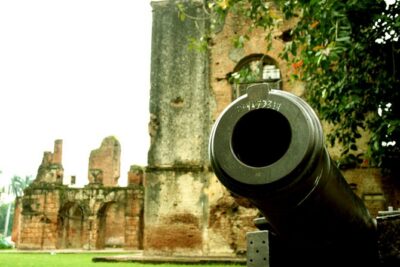
From the mosque to the fort is a smart shift. Red Fort (Lal Qila) isn’t just a pretty facade; it’s a symbol of imperial power and a UNESCO World Heritage Site. The schedule gives you around 2 hours, which is important because the fort rewards pacing. You’ll want time to walk between key areas and understand how the complex was designed to function as both a political center and a stronghold.
Admission tickets aren’t included here either, so factor that into your day’s total spend. The good news is that 2 hours gives you room for both the broad overview and the “wait, look closer” moments—like noticing how different sections relate to each other across open spaces.
If you’re short on time in Delhi, Red Fort is also one of those places where a guide really earns their keep. The structures can look confusing at first glance, but with the right explanations you start recognizing patterns and purpose.
Gurudwara Bangla Sahib: architecture plus the langar experience

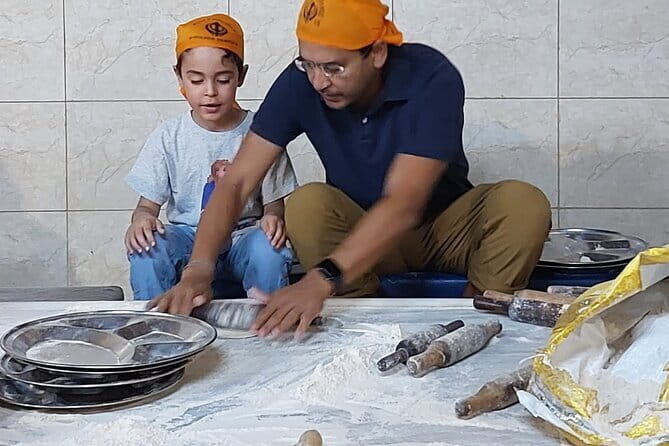
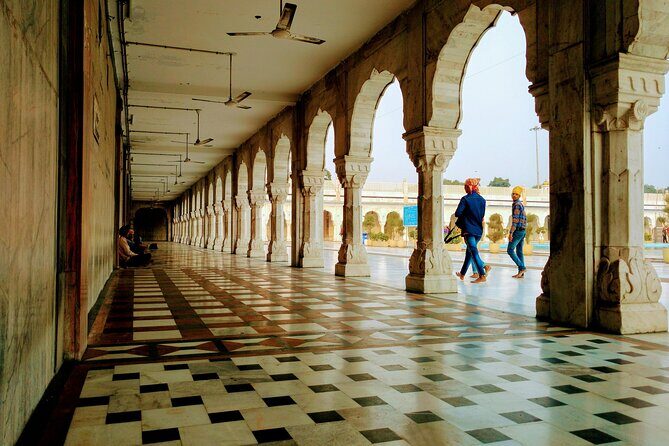
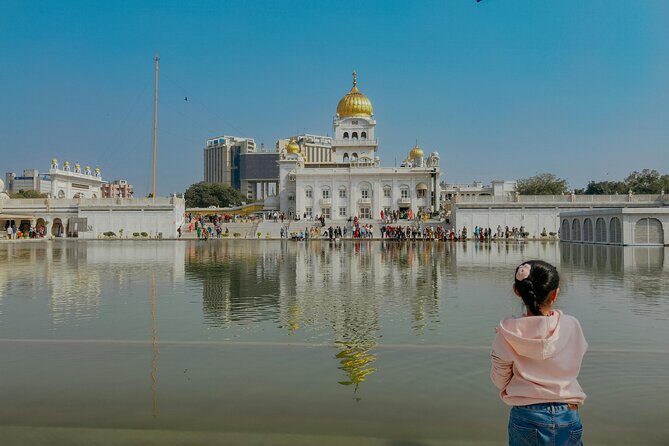
After the fort, the tour shifts to Gurudwara Bangla Sahib, one of Delhi’s prominent Sikh gurdwaras. You get about 45 minutes, which works well because you’re not just sightseeing—you’re observing a working religious site. The highlight here is the community kitchen, known as langar, which reflects Sikh values through food and service.
Admission tickets aren’t included for this stop. Still, come prepared for practical rules that typically apply at places of worship—quiet behavior, respect for sacred spaces, and any dress guidance you’re given on arrival. The best part of Gurudwara stops like this is that you experience culture through everyday action, not staged demonstrations.
This stop also balances the day’s architecture-heavy rhythm. Mosques, forts, and mausoleums can start to blend if you’re not careful with variety. Langar brings a different kind of meaning into the picture—human and communal.
India Gate and Rashtrapati Bhavan exterior: New Delhi’s formal side

Then you pivot toward New Delhi, with a 30-minute stop at India Gate. It’s a war memorial dedicated to Indian soldiers who died during World War I, and the setting gives you room for a slower walk. Even if you’re not a big memorial-person, the open lawns and the straight-on views help you understand why India Gate became a landmark in the first place.
From there, you’ll also explore the impressive architecture of Rashtrapati Bhavan, the official residence of the President of India. The tour frames this as an architectural viewing moment. Even when you’re only seeing it from the outside, it helps you connect the dots between the city’s older imperial past and the government center shaped by more recent national identity.
One consideration: 30 minutes at India Gate is enough for orientation and a short stroll, but not for deep lingering if you’re the type who likes long photo sessions and slow reads. If you want to stretch the time here, it helps to be ready with what you want to capture quickly so you don’t eat the clock.



Humayun’s Tomb: Mughal mastery with UNESCO-level focus
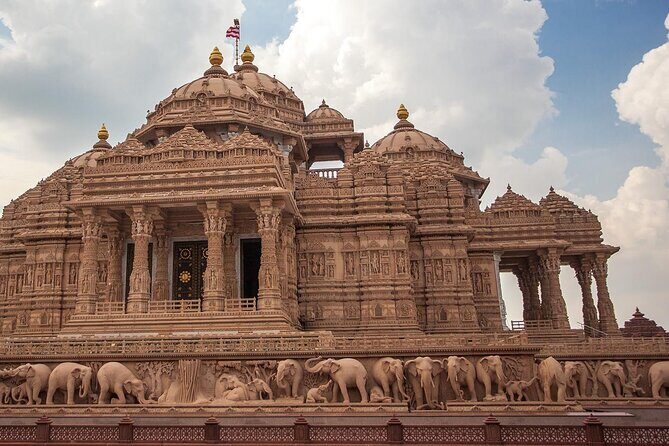
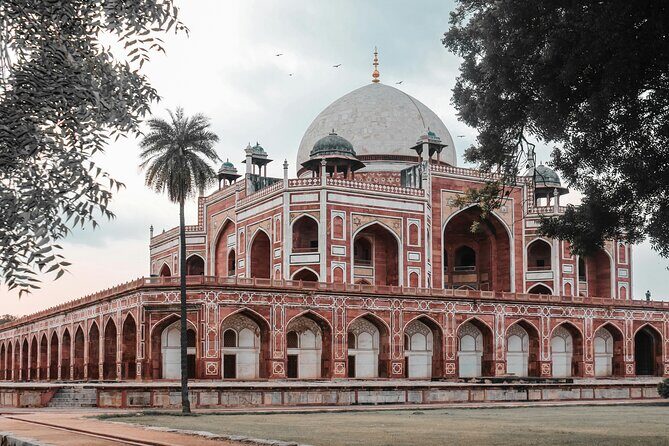
Humayun’s Tomb is another UNESCO World Heritage Site, and it’s one of the Mughal-era monuments that teaches you how symmetry and garden planning work together. The tour gives about 1 hour 30 minutes here, which is a solid chunk for exploring gardens and the mausoleum itself.
Admission tickets aren’t included, so again, plan on extra cost at the gates. Where this stop becomes worth it is in how the gardens structure your viewing. You don’t just look at buildings; you look at the relationship between pathways, open space, and the central tomb design.
If you enjoy architecture more than shopping streets, Humayun’s Tomb is a key reason this tour fits people with limited time. You get a meaningful UNESCO stop without having to choose between Old Delhi classics and New Delhi icons.
Akshardham Temple complex and Lotus Temple: faith, design, and quick contrasts
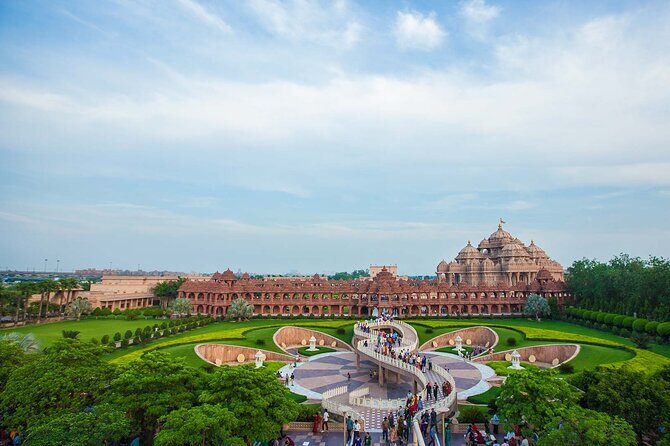
After Humayun’s Tomb, the itinerary includes Swaminarayan Akshardham, a Hindu temple complex known for stunning architecture and intricate carvings. The time listed here is extremely short, so I treat this stop as a “see and reset your brain” moment rather than a full deep visit. You’ll get the main visual impression, but you won’t have the leisurely pace you might want if this is your top priority.
Next comes the Lotus Temple, a Bahá’í House of Worship. The tour includes about 1 hour here, giving you time to appreciate the lotus-shaped design and the calm atmosphere people associate with the building. Admission tickets aren’t included, so check costs ahead of time so you don’t feel surprised mid-day.
This pair makes the day feel balanced. Akshardham gives you intense sculptural detail, while Lotus Temple shifts the mood toward simplicity and quiet geometry. Even if you’re not religious yourself, these are architecture-and-spaces stops that make Delhi feel layered instead of just crowded.
Qutub Minar: the tallest brick minaret and a stop worth finishing strong
To close out, you’ll visit Qutub Minar, known as the tallest brick minaret in the world and also a UNESCO World Heritage Site. The tour schedule allows about 30 minutes, which is short, but enough for a focused visit if you arrive ready to look.
Admission tickets aren’t included here. Since time is limited, I’d use the guide’s context to orient your attention—what you should notice on the minaret, how the monument fits with the surrounding complex, and what makes it historically important beyond the height claim.
Finishing with Qutub Minar works because it’s a distinct visual “marker” of Delhi’s architectural timeline. After mosques, forts, and tomb gardens, you get a vertical landmark that helps your brain store the day as a clear sequence.
Price and value for $47.66 per person on an 8-hour guided route
At $47.66 per person for an ~8-hour day with pickup offered, guide help, and a private setup for your group, this can be good value—especially if you’d otherwise pay for separate guide time or spend your energy on transport navigation. The tour’s core strength is efficiency: multiple high-impact sites across Old and New Delhi, all in one run.
The catch is straightforward: admission tickets aren’t included for several major stops. India Gate is free, but places like Jama Masjid, Red Fort, Humayun’s Tomb, Lotus Temple, and Qutub Minar are marked as not included. So your total cost depends on what you choose to pay for at each location.
My practical advice: budget for entrance fees as an extra line item, then treat the paid portion as the cost of having the day managed for you—timing, routing, and explanations that make architecture and monuments easier to read.
Who this tour fits best (and who should tweak expectations)
This is a strong fit if you:
- Have limited time and want a structured tour of Old and New Delhi highlights.
- Like architecture and landmark history more than shopping lanes.
- Prefer a private group setup with pickup offered, so your day feels controlled.
It may be less ideal if you:
- Want extremely detailed, slow-paced visits at every stop (the itinerary moves).
- Don’t handle stairs and walking comfortably, since Jama Masjid includes a minaret climb and many sites involve uneven surfaces.
One detail worth noting from the tour’s guide reputation: when time is tight, Tabrej has been credited for getting groups to the requested sites efficiently. If you have a short stay and your priority is “see the right things,” you can ask your organizer whether Tabrej is available for your date.
Should you book this Old & New Delhi tour?
If your goal is to cover both Old Delhi and New Delhi in one day—with Jama Masjid, Red Fort, Humayun’s Tomb, Lotus Temple, India Gate, and Qutub Minar—this is the kind of plan that saves you from decision fatigue. The private group format and pickup offered also help you avoid the usual Delhi friction.
I’d book it if you’re comfortable paying some entrance fees on top and you’re okay with a tight rhythm. Pass or choose a slower option if you want deep time inside each site and hate the idea of short stops like the one at Akshardham.
FAQ
What sites are included in the Delhi Old & New tour?
You’ll visit Jama Masjid, Red Fort, Gurudwara Bangla Sahib, India Gate, Rashtrapati Bhavan (architecture viewing), Humayun’s Tomb, Swaminarayan Akshardham, Lotus Temple, and Qutub Minar.
Are entrance tickets included?
Admission tickets are not included at several stops, including Jama Masjid, Red Fort, Gurudwara Bangla Sahib, Humayun’s Tomb, Akshardham, Lotus Temple, and Qutub Minar. India Gate is listed as free.
Is pickup included?
Pickup is offered as part of the experience.
Is this tour private or shared?
This is a private tour/activity, so only your group participates.
How long is the tour?
The duration is about 8 hours.
Can I cancel for a full refund?
Yes. Free cancellation is available up to 24 hours in advance for a full refund.
Is this tour suitable for most people?
Most travelers can participate, based on the tour data provided.