REVIEW · NEW DELHI
Day Tours Delhi-Full Day Private Old and New Delhi Tour
Book on Viator →Operated by Day Tours Delhi · Bookable on Viator
Delhi in one day takes smart planning. This private tour strings together Old Delhi icons like Jama Masjid and Chandni Chowk with New Delhi landmarks, riding in an air-conditioned vehicle. I especially like the government-licensed English guide and the included rickshaw ride through the spice market lanes. One thing to consider: monument entry fees are not included, so a few stops can add extra cost.
You’ll also appreciate the logistics: pickup and drop-off from Delhi, Noida, or Gurugram (or the airport) cuts down on stress and taxi time. The day runs about 8 hours, so the pace is efficient rather than slow and wandering. Guides with names like Manu, Rajindeer, and Asim come up often for clear explanations and smooth timing, which matters a lot on a full day that can swing with road traffic.
In This Review
- Key highlights to look forward to
- Why this Old and New Delhi mix works for first-timers
- Pickup, air-conditioning, and how the day stays on track
- Jama Masjid and Chandni Chowk to Khari Baoli: Old Delhi in about 70 minutes
- Humayun’s Tomb: UNESCO garden-tomb with real architectural clues
- Rajpath moments: India Gate and Rashtrapati Bhavan
- Lotus Temple and Agrasen Ki Baoli: calmer stops in between
- Qutub Minar and what to know about monument entry
- Price and time: what $40.36 really buys you
- Who should book this private day tour
- Should you book Day Tours Delhi’s full day private tour?
- FAQ
- Is this a private tour?
- How long is the tour?
- Where do I get picked up from?
- Is the vehicle air-conditioned?
- Do I get an English-speaking guide?
- Is a rickshaw or tuk-tuk ride included?
- Are monument entry fees included?
- What else is included besides transport and the guide?
- Do I need a mobile ticket?
- What happens if the weather is bad?
Key highlights to look forward to
- Private, air-conditioned transport between Old and New Delhi with a designated chauffeur
- Government-licensed English guide who sets context while you walk and transfer
- Old Delhi rickshaw ride that gets you through Chandni Chowk and toward Khari Baoli
- Humayun’s Tomb visit at UNESCO level, including the garden-tomb story
- A focused mix of iconic sites and quieter contrasts like Lotus Temple and Agrasen Ki Baoli
Why this Old and New Delhi mix works for first-timers
The best thing about this tour is the balance. You get Old Delhi’s major landmarks and market energy, then you pivot to New Delhi’s grand government-and-monument spaces the same day.
That structure matters if you only have a limited window in the city. Instead of spending your time trying to plan routes, you can spend it on understanding what you’re seeing, from mosque architecture to empire-era memorials and modern religious design.
I also like that you don’t just “check boxes.” The guide’s job here is to connect the dots—why certain structures were built, what influenced later ones, and how different parts of Delhi reflect different eras of rule, faith, and city planning.
The one trade-off is time. Because the day covers a lot, some stops are brief. If you want to linger and photograph for long stretches, you’ll need to be comfortable with a faster rhythm.
You can also read our reviews of more private tours in New Delhi



Pickup, air-conditioning, and how the day stays on track
This tour is built around convenience. Pickup and drop-off are included to hotels anywhere in Delhi/Noida/Gurugram or to the airport, and you’re traveling in a private, air-conditioned vehicle with a chauffeur.
In practice, that means you don’t have to negotiate transport repeatedly or worry about where to meet next. It also helps on days when Delhi traffic is unpredictable; the tour keeps moving because the car is already arranged.
You also get complimentary bottled water, which sounds basic until you’re doing multiple walks in warm weather. Small detail, big comfort.
You’re also guaranteed a private experience: only your group participates. That’s a real advantage in Delhi’s crowded areas, because it’s easier to move at your pace without constantly waiting for others.
Jama Masjid and Chandni Chowk to Khari Baoli: Old Delhi in about 70 minutes
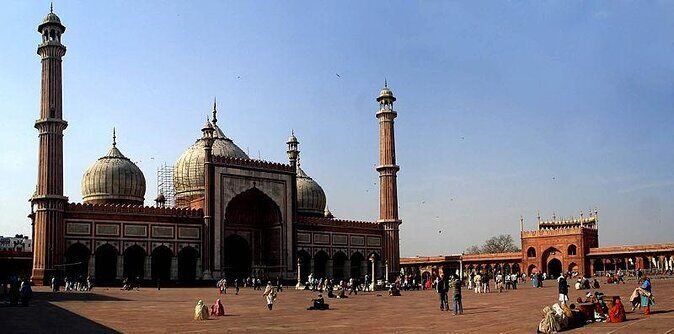
Old Delhi hits fast, and this tour starts you at Jama Masjid. It’s Shah Jahan’s last big architectural statement, and it’s the largest mosque in India. The scale is the point here, so the short stop works if you want to orient yourself quickly—then keep going.
Expect about 20 minutes at Jama Masjid. Entry isn’t included, so you’ll want to budget for monument fees. Because the visit is short, focus on the big visual cues: the frontage, the courtyard feel, and the way the mosque dominates the Old Delhi skyline.
Next comes the real sensory payoff: Chandni Chowk. You explore on foot, then the tour includes a rickshaw ride that helps you glide through tight lanes instead of getting stuck walking the entire way.
You’ll spend about 50 minutes here, with a route leading toward Khari Baoli, a famous wholesale spice market. The practical value of having a guide is simple: you don’t just see shops—you understand what you’re looking at. Spices, nuts, herbs, and food products blur together if you don’t have context.
A consideration: Old Delhi walking can feel intense. If you’re sensitive to crowds or prefer slower movement, wear comfortable shoes and don’t try to rush your photos. The rickshaw helps, but it doesn’t turn the day into a quiet museum visit.
Humayun’s Tomb: UNESCO garden-tomb with real architectural clues

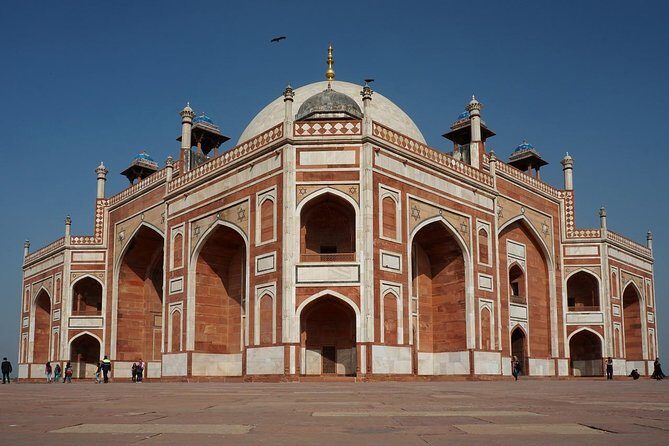
Humayun’s Tomb is the kind of stop that pays off when you have only one day. It’s a UNESCO site and often described as the first garden tomb in Asia. The big idea for your visit is the way this complex influenced later architecture—especially the later Mughal tradition you’ll hear referenced again and again in Agra.
You’ll get about 1 hour here. Entry isn’t included, so plan for ticket time and fees. Still, the length is solid: enough time to appreciate the gardens and the symmetry, and enough time to understand what makes this complex historically important.
The guide’s explanation is what turns it from pretty to meaningful. Pay attention to design elements like the layout and how the tomb sits within the garden space. The structure is built for viewing from multiple angles, and you’ll see those angles best when you’re not rushing.
If you’re the type who likes architecture more than crowds, this is one of the calmer stretches of the day. Compared with Old Delhi markets, you’ll likely feel the difference immediately.
Rajpath moments: India Gate and Rashtrapati Bhavan
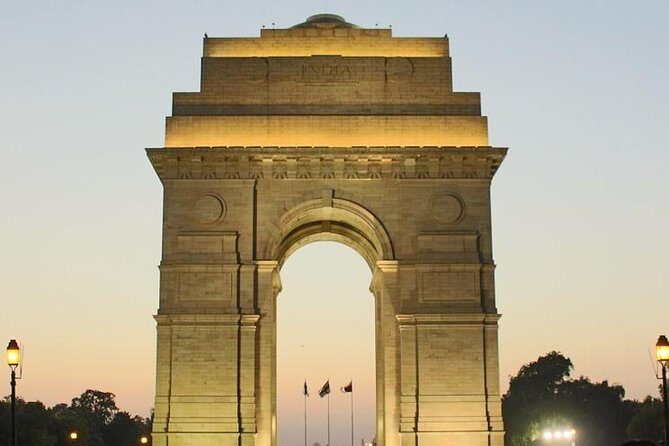
After the quieter tomb stop, the tour heads into New Delhi’s ceremonial axis. You’ll visit India Gate, originally the All India War Memorial on Rajpath (formerly Kingsway).
Expect about 20 minutes, with no admission fee. India Gate is best as a pause-and-look moment. It’s a memorial, so give it a few quiet minutes to take in the scale and the names conceptually, even if you’re not reading every detail.
Then the tour includes Rashtrapati Bhavan, the official residence of the President of India, formerly known as the Viceroy’s House. This stop is a big part of the New Delhi story because it represents how the city’s monumental design reflects political power and planning.
Because the exact on-foot time isn’t specified in the details you have, think of this as a guided explanation stop as much as a photo stop. Use it to connect the city’s layout to what you’ve already seen.
This section of the day is also a good place to reset. After moving fast through crowded streets, your brain likes the open space and straight lines.
You can also read our reviews of more tours and experiences in New Delhi






Lotus Temple and Agrasen Ki Baoli: calmer stops in between
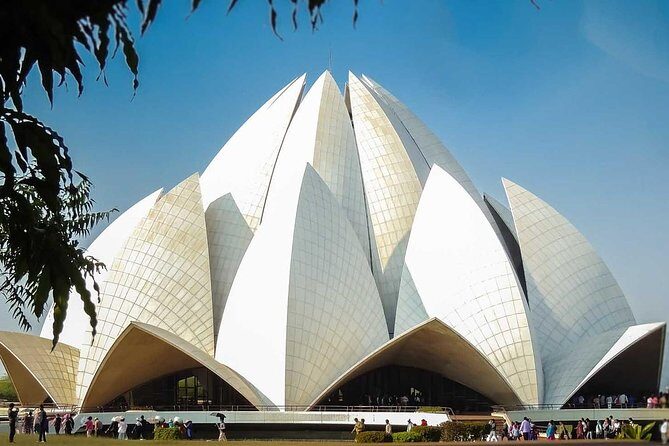
Next up is Lotus Temple, famous for its lotus-shaped design. It’s free to enter, and the tour gives you about 40 minutes, which is a comfortable window for a slower look and a few thoughtful photos.
This is a nice counterpoint to the older Mughal and British-era monuments. It helps you see Delhi as more than one historical chapter. The design is modern, but the temple experience still feels spiritual and contemplative—especially because the architecture is so distinct that you can understand it even without deep background.
From there, you’ll stop at Agrasen Ki Baoli, a protected historical stepwell near Connaught Place. You get around 15 minutes, and it’s free.
Stepwells can feel like an “extra” if you don’t know why they matter, but here the value is the setting and the survival of an older city practice. Even if you only see a portion of the structure, you’ll leave with a clear sense that Delhi used to be shaped by water storage and everyday infrastructure—not just monuments.
If you’re short on time but want variety, these two stops deliver it. If you’re looking for the biggest monumental wow factor, Qutub Minar will likely win. But for variety and pacing, Lotus Temple and Agrasen Ki Baoli do a great job.
Qutub Minar and what to know about monument entry
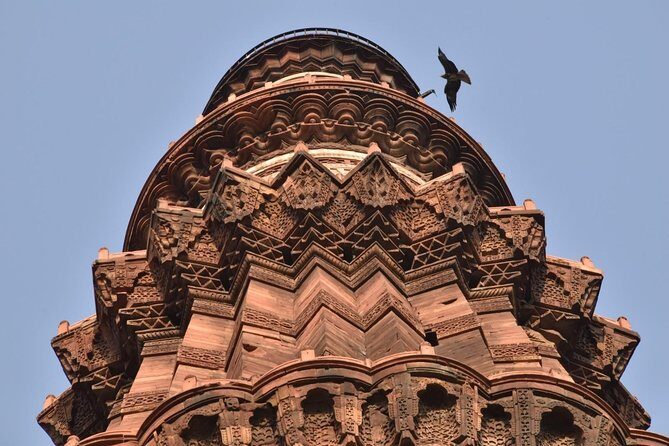
The final major history anchor is the Qutub Minar area, part of the Qutub Complex. This is one of Delhi’s most famous archaeological zones, with red sandstone architecture and the towering minaret as the headline.
You’ll spend about 1 hour 20 minutes here, and entry isn’t included. This is important for planning: you’ll want to account for ticket costs and any queue time so the visit doesn’t feel rushed.
Qutub Minar works best when you let the guide’s context do some heavy lifting. The monument isn’t just tall—it’s part of a whole complex, and the story connects different phases of Delhi’s past.
A practical tip for your experience: because this is a bigger site, wear shoes that handle uneven ground. Also keep your camera ready for when the view opens up—some of the best angles are only obvious once you’re positioned in the right spot.
This is also the moment to decide how you want to spend your remaining energy. If you like architecture and details, you’ll use the full time. If you’re more tired than you expected, focus on the main tower views and don’t over-plan side stops.
Price and time: what $40.36 really buys you
At about $40.36 per person for a roughly 8-hour private day, the price is competitive when you compare what’s included.
Here’s what you’re getting for the money:
- private air-conditioned transport and a chauffeur
- round-trip pickup and drop-off from Delhi/Noida/Gurugram or the airport
- a government-licensed English guide
- parking, tolls, fuel, and taxes
- complimentary water bottles
- and the rickshaw/tuk-tuk ride in Old Delhi
That’s the value: not just sightseeing, but built-in “city solving.” Delhi is not a place where you want to wing the logistics on a short trip. Having transfers arranged and a guide to coordinate timing is what saves your day.
The main cost you still need to plan for is monument entry. The details clearly note admission isn’t included for Jama Masjid, Humayun’s Tomb, and Qutub Minar. By contrast, places like India Gate, Lotus Temple, and Agrasen Ki Baoli are free in this plan.
So you’ll likely spend extra, but you’ll also understand exactly what’s covered and what’s not. That’s a better deal than a tour that includes only the “viewing” and makes you chase every fee at the curb.
Who should book this private day tour
This tour fits best if:
- you’re seeing Delhi for the first time and want Old and New Delhi in one structured day
- you prefer a private experience over joining a bus with strangers
- you want an English-speaking guide to explain the “why” behind mosques, tombs, and memorials
- you want comfort from an air-conditioned vehicle between longer walking stops
It may be less ideal if you want a slow, reading-heavy pace at every monument. This schedule is efficient. You’ll get meaningful time at Humayun’s Tomb and Qutub Minar, but some of the headline stops are shorter.
Also, consider your energy for walking in Old Delhi. Even with the rickshaw segment, you’ll be on your feet for part of the day.
If your trip lines up with a major Indian public holiday, traffic and crowd patterns can change. Having a guide and chauffeur who can keep the day moving becomes even more valuable then.
Should you book Day Tours Delhi’s full day private tour?
I’d book it if your goal is a high-quality sampler of Delhi—serious monuments, a real market experience in Old Delhi, and the modern contrast of Lotus Temple—without turning your day into a transport puzzle.
Book it with eyes open if you hate entry fees or prefer long stays at fewer sites. In this plan, you’re paying for smart routing, expert guidance, and comfort more than you’re paying for lots of “free time.”
One last practical thought: plan your day around good weather. This experience is described as requiring good weather, so if conditions are poor, you may need a date change or refund option.
If your schedule is tight and you want Delhi to make sense fast, this is a strong way to do it.
FAQ
Is this a private tour?
Yes. It’s described as a private tour/activity, meaning only your group will participate.
How long is the tour?
It runs for about 8 hours (approximately).
Where do I get picked up from?
Pickup and drop-off are included from anywhere in Delhi/Noida/Gurugram, including hotels, and the airport.
Is the vehicle air-conditioned?
Yes, you’ll ride in an air-conditioned private vehicle.
Do I get an English-speaking guide?
Yes. The tour includes a government-licensed English tour guide.
Is a rickshaw or tuk-tuk ride included?
Yes. A rickshaw/tuk-tuk ride in Old Delhi is included.
Are monument entry fees included?
No. Admission tickets for some sites are not included, including Jama Masjid, Humayun’s Tomb, and Qutub Minar. Other stops like India Gate, Lotus Temple, and Agrasen Ki Baoli are listed as free.
What else is included besides transport and the guide?
Parking fees, tolls, fuel, taxes, and complimentary water bottles are included.
Do I need a mobile ticket?
Yes. A mobile ticket is included.
What happens if the weather is bad?
The experience requires good weather. If it’s canceled due to poor weather, you’ll be offered a different date or a full refund.