REVIEW · NEW DELHI
Delhi Agra Jaipur & Varanasi Tour – Taj Mahal & Ganga Aarti
Book on Viator →Operated by vwitours · Bookable on Viator
Some tours feel like a checklist.
This one strings together the Golden Circuit (Delhi–Agra–Jaipur) plus sacred Varanasi, so you get big-name sights and real cultural rhythm in one week. It also gives you a bit of flexibility, since it’s set up as a private tour you can tailor.
I especially liked two things. First, you’re not left to wrestle maps and taxis all day; you get hotel pickup and private transportation with guided stops. Second, the Varanasi segment lands the emotional payoff with Ganga Aarti at sunset, plus an early-morning look at the river and ghats.
One watch-out: you still need to budget for monument entry fees (not included), and dates matter for the Taj. In one reported case, the Taj Mahal visit collided with the weekly Friday closure for prayer, which can throw off the whole day.
In This Review
- Key points worth clocking before you go
- Golden Triangle plus Varanasi: why this route works
- Delhi’s Mughal power day: Raj Ghat, Red Fort, Jama Masjid, Qutub Minar
- Jaipur arrival and the Amber Fort plus Jal Mahal combo
- Jaipur’s full-day architecture hit list: Hawa Mahal, City Palace, Jantar Mantar, Albert Hall, Birla Mandir, Monkey Temple
- Agra in one intense day: Taj Mahal, Itmad-ud-Daula, Agra Fort, Mehtab Bagh
- Varanasi starts with Sarnath, then hits you with Ganga Aarti at sunset
- Sunrise on the Ganges: boat cruise timing, Dashashwamedh Ghat, and Bharat Kala Bhavan
- Final Delhi sights in a calm-ish morning: Humayun’s Tomb, India Gate, Lotus Temple
- Price and value: what $366.16 buys, and what it doesn’t
- Where this tour shines, and where you should take control
- Who should book this Delhi Agra Jaipur Varanasi tour
- Should you book it?
- FAQ
- How long is the tour?
- Where does the tour start and what cities are included?
- What is the tour price?
- Does the tour include hotel pickup and transportation?
- Are entrance fees included for monuments like the Taj Mahal and Red Fort?
- Is the Ganga Aarti included?
- Are boat rides on the Ganges included?
- Are train tickets included?
- What’s the cancellation policy?
- What should I do about the Taj Mahal closure for prayer?
Key points worth clocking before you go
- Private-guided sightseeing across four cities means less time figuring it out and more time seeing.
- Taj Mahal timing can break your day if your date hits the weekly prayer closure.
- Sunrise and sunset Ganga moments are the real standouts: early river views, then Ganga Aarti.
- Long sightseeing-to-driving days happen, so build in patience (and snacks).
- Most hotels are 4-star level, but quality can vary—so don’t assume every stop will match the best one.
Golden Triangle plus Varanasi: why this route works
I like how this itinerary groups places by geography and theme. Delhi is your Mughal and early-monument intro. Jaipur follows with Rajput-era architecture. Agra concentrates the “Taj corridor” with a few key Mughal sites nearby. Then you switch gears hard to Varanasi, where the day is built around the Ganges.
The value here is not only the famous stops (Taj Mahal, Red Fort, Amber Fort). It’s the logistics package: 6 nights with breakfast, private local guides, and AC sedan/SUV private transport for the city legs. You’re paying so you don’t spend your days bouncing between ticket lines, uncertain meeting points, and “which bus is this?” moments.
That said, this is a full-on circuit. It’s not slow travel. You’ll move each day, often with sightseeing taking up most of the daylight. If you’re the type who likes breathing room, you’ll want to manage your energy from the start.
You can also read our reviews of more tours and experiences in New Delhi.



Delhi’s Mughal power day: Raj Ghat, Red Fort, Jama Masjid, Qutub Minar
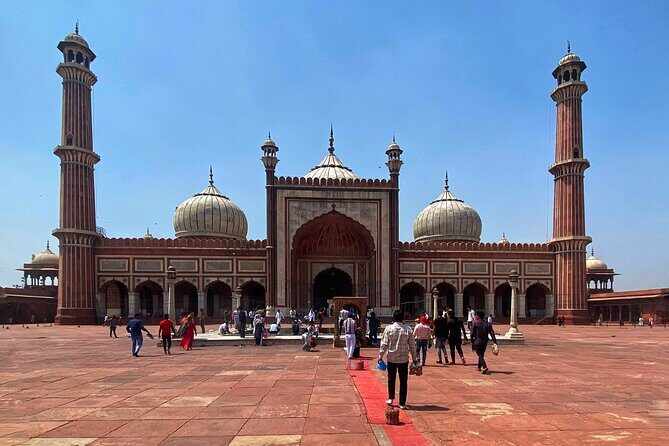
Day 1 is a classic Old Delhi-to-South Delhi sweep. You start with a visit to Raj Ghat, then step straight into the Mughal story with Red Fort (Lal Qila) and Jama Masjid, before finishing at Qutub Minar.
Here’s why this works: these sights are from different chapters of Delhi. Raj Ghat gives you a quieter, reflective opening. Red Fort shows imperial scale and state power. Jama Masjid brings you into the everyday-feeling rhythm of a major mosque. Then Qutub Minar closes the loop with a towering landmark from the medieval era.
Time-wise, you’re looking at short blocks at each stop (around 30 minutes for the first two city sights and about 1 hour for Jama Masjid, with Qutub Minar taking about 1 hour). That means you won’t get a deep-dive at any single site, but you will get a fast orientation: where the major monuments sit, how the neighborhoods feel, and what kind of architecture to look for next.
Practical note: admission tickets aren’t included for these Delhi monuments. So even if the tour guides help with timing and pacing, you’ll still want to carry budget for entry.
Jaipur arrival and the Amber Fort plus Jal Mahal combo
On Day 2 you check out in the morning and drive to Jaipur, reaching around 2:00 p.m. (about a 5-hour ride). Once you arrive, the afternoon plan is a good mix: Amber Fort for the full fort-and-palace experience, then Jal Mahal for that picture-perfect “palace on the lake” vibe.
Amber Fort is the star. The plan gives it about 2 hours, and that time matters because it’s not just a gate-and-out. This is where you see why forts were built as whole systems—royal power, defense, and daily life all wrapped together. After lunch, you’re in the right spot to focus, because you’re not trying to absorb everything from morning to night.
Jal Mahal is shorter (about 15 minutes), and that’s exactly what it should be. It’s a breather between big stops—enough time for views and photos, without turning the afternoon into a never-ending march.
Like Delhi, monument entry fees aren’t included here (Amber Fort specifically is marked as admission not included). Still, having a private driver and local guide helps: you avoid the stress of coordinating transport and you get context about what you’re looking at.
Jaipur’s full-day architecture hit list: Hawa Mahal, City Palace, Jantar Mantar, Albert Hall, Birla Mandir, Monkey Temple
Day 3 in Jaipur is a full schedule, and it reads like a greatest-hits list done properly: Hawa Mahal, City Palace, Jantar Mantar, Albert Hall Museum, Birla Mandir, and Monkey Temple (Galta area).
What I like about this spread is that it covers multiple angles of Jaipur. Hawa Mahal is the famous face. City Palace is where you see the larger royal complex and understand how the city was meant to function around power. Jantar Mantar adds a different kind of genius—the Rajput king Sawai Jai Singh II built 19 astronomical instruments, and the monument completed in 1734 gives you that “wait, they built science like this?” feeling.
Albert Hall Museum adds the modern twist: it began as a concert hall in 1876 and later became a museum with architectural ties people compare to the Victoria and Albert Museum in London.
Then you close with Birla Mandir and Monkey Temple. Birla Mandir is listed as free admission and is built of white marble (construction referenced as 1988). Monkey Temple is around a 30-minute stop and gives you a more relaxed, hillside-feeling break from the harder “museum and fort” rhythm.
If you’re thinking, That’s a lot—yes. One review flagged that the pattern of long sightseeing hours followed by long driving can feel exhausting. This day is sightseeing-heavy on purpose, so bring a mindset that it’s normal to feel tired. If you want to enjoy it more, you’ll need to pace your own attention: spend more time where you care, and don’t try to “win” every stop equally.
Agra in one intense day: Taj Mahal, Itmad-ud-Daula, Agra Fort, Mehtab Bagh
Day 4 is Agra packed into a single block: Taj Mahal, Itmad-ud-Daula (Baby Taj), Agra Fort, and Mehtab Bagh.
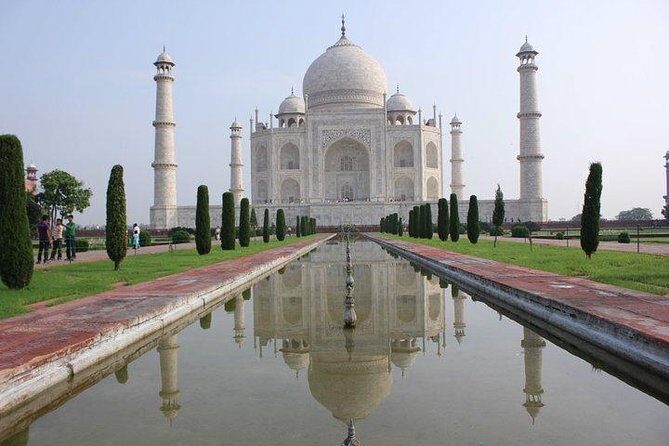
The Taj Mahal itself is the big emotional target: the plan describes it as the most photographed monument in the world and gives it about 2 hours in the day. Two hours is plenty to do the main viewpoints and still pause. It’s also long enough to notice details if you slow down a bit instead of rushing through like a race.
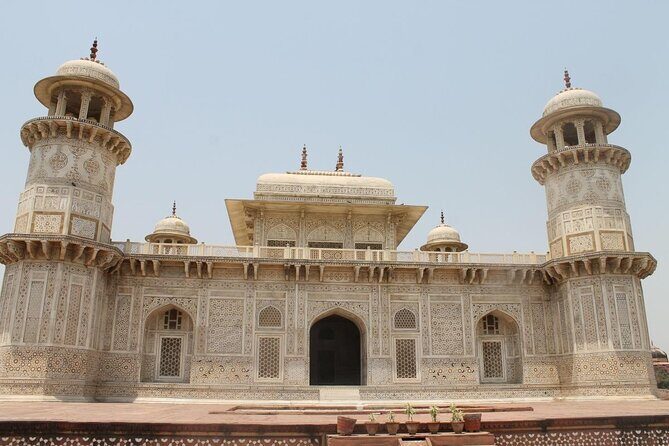
Then you get a clever follow-up with Itmad-ud-Daula, often called Baby Taj in common talk. It’s marked as about 30 minutes and is a great choice because it changes the mood. The Taj is massive and iconic; Itmad-ud-Daula is more intimate and decorative in a way that helps your eyes learn what to look for.
Agra Fort takes about 1 hour, which matters because it gives you the Mughal setting beyond the tomb. You’re not just seeing where someone was buried—you’re seeing the fort context around Mughal life.
Mehtab Bagh (also about 30 minutes) gives you the garden-and-view angle across the river. Even when you’re not a garden person, it’s a nice change of pace after indoor tomb time.
Here’s the key consideration: Taj Mahal date timing can matter. In one reported problem, the Taj visit date lined up with the weekly Friday closure for prayer, and the tour had to be adjusted. If your dates land on that closure, you could lose the centerpiece. I’d treat the Taj visit as the anchor you verify first.


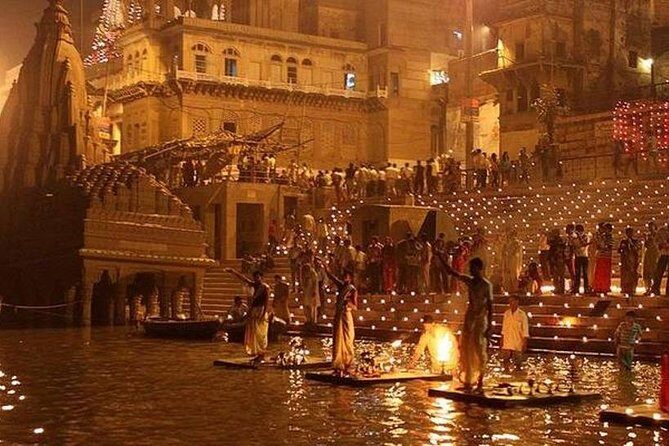
Varanasi starts with Sarnath, then hits you with Ganga Aarti at sunset
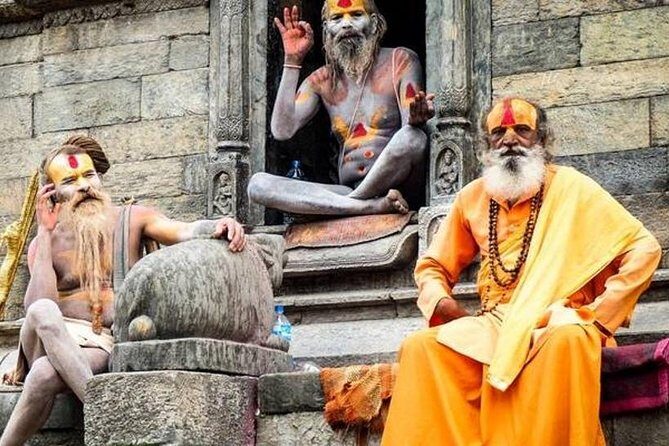
Day 5 moves from Agra/Jaipur style sightseeing to Varanasi’s spiritual cadence. The plan starts with Sarnath and then shifts to the river for Ganga Aarti.
Sarnath is handled with a reception at the Varanasi Railway station, then a drive to the hotel for check-in, followed by a day component at Sarnath (time listed as about 30 minutes). Even with limited time, Sarnath helps you understand why Varanasi is not just about rituals but also about deeper religious roots.
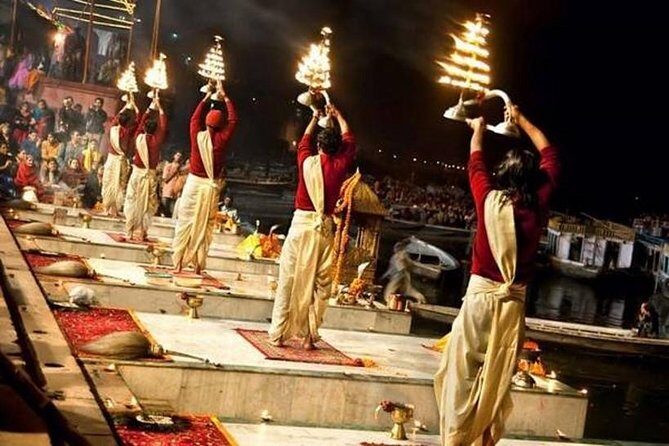
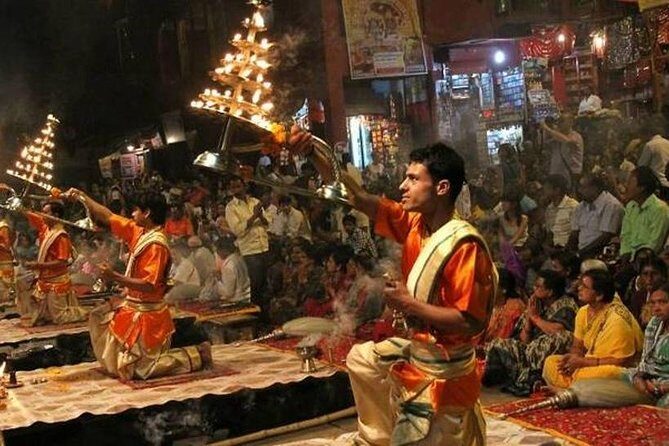
Then comes the moment you booked for: Ganga Aarti. The tour lists a sunset cruise on the Ganges and also says the Aarti/ceremony ticket is included on that stop. This is the part that usually becomes the “I can’t believe I saw that” memory, because you’re there at the time when everything is lit and timed for ceremony.
One more detail that’s important: the included sightseeing here is timed. The difference between seeing the Ganges during daylight vs sunset is enormous. This tour doesn’t leave that choice to chance.
Sunrise on the Ganges: boat cruise timing, Dashashwamedh Ghat, and Bharat Kala Bhavan
Day 6 is when Varanasi starts to feel less like a tour stop and more like a daily life lesson. The schedule includes an early morning meeting, then a drive to a boat cruise for sunrise and a look at historical ghats along the river.
Here’s where you need to read the fine print in your own booking: boat rides in Varanasi are listed as optional in the not-included section. Yet the day plan describes the sunrise cruise. So plan for the idea of a boat option, and confirm in your confirmation notes whether your cruise is included or an add-on.
After the river time, you head to Dashashwamedh Ghat, labeled as a well-known ghat and marked as about 1 hour, with admission noted as included for that stop. This is one of the places where the whole Ghat system becomes real: people doing routines, ceremony rhythms, and the river as a living centerpiece.
The day also includes Bharat Kala Bhavan, an art and architecture museum. The description says it houses paintings, Hindu and Buddhist sculptures, and archaeological materials, with about 1 hour set aside. I appreciate adding this because it cools down the intensity of the ghats. It gives your brain something structured after all that sensory river time.
Then the plan indicates travel back toward Delhi by train, with an overnight stay element mentioned at the end of Day 6. Day 7 is set up in Delhi, which tells you the overnight train segment is the bridge between Varanasi and your final Delhi sights.
Final Delhi sights in a calm-ish morning: Humayun’s Tomb, India Gate, Lotus Temple
Day 7 focuses on three Delhi landmarks: Humayun’s Tomb, India Gate, and Lotus Temple.
Humayun’s Tomb takes about 1 hour and is described as a mausoleum built in memory of Emperor Humayun, the second Mughal ruler. This stop works as a nice bookend after Agra. You see another layer of Mughal grandeur, but in a different style and scale than the Taj corridor.
India Gate is next, about 30 minutes, and it’s framed as a war memorial for soldiers who died in the First World War and the third Anglo-Afghan war (with more than 70,000 mentioned in the description). It’s a break from palace and tomb time—more reflective and civic.
Then Lotus Temple closes the tour with an architectural stop. It’s described as a lotus-shaped building and noted for awards and recognition linked to its style, religion concept, and beauty.
This last day is also a reality check: after a full week, you might feel the mileage. But the stops are spaced in short blocks, so you get closure without another marathon schedule.
Price and value: what $366.16 buys, and what it doesn’t
At $366.16 per person for a ~7-day loop, the value is strongest when you count what’s included and what isn’t.
What you get: hotel pickup/drop-off, private transportation in an AC sedan/SUV, private local tour guides for sightseeing, and AC first class or second class train tickets. You also get 6 breakfasts, taxes and service charges, and the comfort of 4-star hotel accommodation for 6 nights.
What you don’t get: monument entry fees. The itinerary marks admission tickets as not included for most stops, and the not-included section confirms entry/admission fees are extra. Also, Varanasi boat rides are listed as optional. So your real budget should include a buffer for entrance fees and any optional river ride.
One reason this still may be worth it: doing this route on your own would likely mean buying separate train tickets, coordinating drivers between cities, and hiring guides one place at a time. Here, the tour compresses that into one service. That matters on a route with big distances and tight schedules.
The other value piece is flexibility inside a private structure. Because it’s set up as private (only your group), you can often adjust the pacing to match your comfort—especially helpful if you find one day too intense.
Where this tour shines, and where you should take control
This is the kind of tour that works best when you accept two truths: the itinerary is full, and the guide/driver team is the difference between exhausting and enjoyable.
The most praised element in the material you provided is the service quality. A driver named Siri is specifically mentioned as calm, patient, and safe, and the overall tone from multiple positive notes is that guides and drivers are attentive and friendly across cities. That kind of steady, low-stress handling is not flashy, but it’s priceless on long days.
Where you should take control is pacing. One negative experience pointed out that sightseeing all day followed by a 5–6 hour drive can be exhausting. So if you book this, I’d decide ahead of time what you want to “spend your attention on” each day, instead of trying to memorize everything.
Also, verify the Taj Mahal date. If your travel dates overlap with the weekly Friday prayer closure, the centerpiece can be affected. If you’re paying attention early, you can reduce the odds of your whole plan getting derailed.
Finally, hotel quality can vary. One note said most hotels were good, but the Agra hotel wasn’t as strong as the rest. If hotel standards matter to you, ask which exact property you’ll use in Agra and what level it matches.
Who should book this Delhi Agra Jaipur Varanasi tour
This tour fits you if:
- You want a private, guided Golden Triangle circuit that continues to Varanasi.
- You care more about seeing the big sights with context than spending time planning.
- You’re okay with a fast pace and long travel days between major cities.
- You want Ganga Aarti at sunset as a planned experience, not a last-minute gamble.
It might not fit you if:
- You hate “busy day” schedules and want lots of spare time.
- You’re very sensitive to disruptions if one landmark visit (like the Taj) is impacted by closure timing.
- You expect every hotel night to be identical in quality.
Should you book it?
I’d book this if you want structure, private transport, and guided context, and you’re excited by the contrast between Mughal monuments and the river rituals of Varanasi. The combination of Taj Mahal + Agra Fort + a planned Ganga Aarti sunset moment is exactly the kind of pairing that turns a week into a real story.
But book with your eyes open. Confirm your Taj Mahal date. Budget for entry fees. And don’t let the schedule bully your energy—choose what matters most each day and let the rest be scenery.
If that sounds like your style, this tour is a solid way to get through India’s north without turning your vacation into logistics work.
FAQ
How long is the tour?
It’s listed as 7 days (approx.).
Where does the tour start and what cities are included?
It starts in New Delhi and the route includes Delhi, Agra, Jaipur, and Varanasi.
What is the tour price?
The price is $366.16 per person.
Does the tour include hotel pickup and transportation?
Yes. The inclusions say there is hotel or airport pick-up and drop-off, plus private transportation in an AC sedan/SUV.
Are entrance fees included for monuments like the Taj Mahal and Red Fort?
No. Entry/admission fees are listed as not included, and most stops in the plan note admission tickets not included.
Is the Ganga Aarti included?
Yes. The Ganga Aarti stop is shown as having admission ticket included.
Are boat rides on the Ganges included?
Boat rides in Varanasi are listed as optional in the not-included section, even though a river cruise appears in the itinerary.
Are train tickets included?
Yes. The inclusions list AC first class or second class train tickets.
What’s the cancellation policy?
Free cancellation is offered. You can cancel up to 24 hours in advance for a full refund. If you cancel less than 24 hours before, the amount paid is not refunded.
What should I do about the Taj Mahal closure for prayer?
The information you provided includes a case where the Taj Mahal visit date conflicted with the weekly Friday closure for prayer. If your dates fall on that closure, it can affect the Taj visit, so it’s worth checking before you go.