REVIEW · NEW DELHI
New Delhi: Sanjay Colony Slum Tour with Locals
Book on Viator →Operated by Delhi by Locals · Bookable on Viator
A slum tour shifts how you see Delhi. This Sanjay Colony walk is local-led and built around everyday stories, from work and school to home life and faith, in an area where about 60,000 people live. It also feels practical, with a guided route that helps you stay oriented instead of wandering without context.
I love how the guides bring real names and real projects into the conversation, like Badal, and how the tour stays respectful even when the topics are hard. A second standout is the Learning by Locals stop, where you get to connect education work with the people who are living it day to day, plus the kind of questions your guide, such as Sukhmani, will help you ask.
One drawback to consider: this is not a postcard-style sightseeing stop. You’ll learn about daily challenges like finding water and the realities of livelihoods linked to recycling and clothing work, so if you want only light, fluffy history, this may feel heavy.
In This Review
- Key things you’ll notice on this tour
- Entering Sanjay Colony with locals: what makes this tour different
- Price and logistics: how $12 turns into a meaningful local experience
- Stop 1: Harkesh Nagar Okhla Metro Gate no. 2 and the quick orientation
- Stop 2: Learning by Locals and why education is the heart of the story
- Stop 3: s.d.m.c primary school from the outside
- The story thread through Sanjay Colony: work, religion, water, and home life
- How to get the most out of it (without being that person)
- Who should book this Sanjay Colony tour
- Should you book this Sanjay Colony slum tour with locals?
- FAQ
- How long is the Sanjay Colony slum tour?
- How much does it cost?
- Where does the tour start?
- Is pickup available?
- What stops are included?
- What’s included in the price?
- How big are the groups?
- Is the tour suitable for most people?
- Can I cancel for a refund?
Key things you’ll notice on this tour
- Small group size (max 6 per booking, up to 10 total) makes it easier to ask questions
- Local guides like Badal and Sukhmani share personal stories and community projects
- Tea and a water bottle keep you comfortable during the walk (about 1 hour 45 minutes)
- Learning by Locals adds meaning by connecting the neighborhood to education and youth empowerment
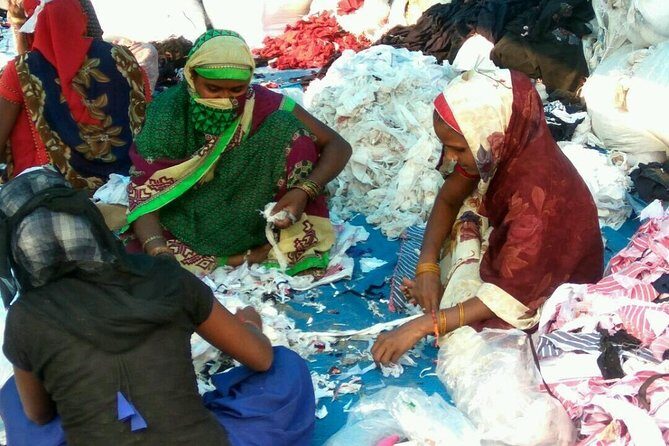
- You’ll see work tied to recycling and the clothing industry, not just housing and streets
Entering Sanjay Colony with locals: what makes this tour different
New Delhi has hundreds of informal communities, and Sanjay Colony is one of them. The point of this tour isn’t to treat the area like a dramatic backdrop. It’s to help you understand how daily life works when resources are limited, and how people still build routines, skills, and community goals.
I like that the experience is framed as a safe, guided way to explore with locals rather than a rushed checklist of sights. You’re not dropped in and told to figure it out. You have a guide who can explain what you’re seeing and answer the questions that pop up fast—about school, religion, family life, work, and what makes each day harder or easier.
You’ll also get the “human scale” that most city tours miss. Sanjay Colony is described as home to roughly 60,000 people, which can sound like a statistic. On the walk, it lands as everyday neighbors, visible effort, and community systems you can actually point to.
You can also read our reviews of more tours and experiences in New Delhi.



Price and logistics: how $12 turns into a meaningful local experience
At $12 per person, this is priced like a value ticket, not like a high-margin museum tour. What makes it feel worth it is what’s bundled with the guide time: local tea and a water bottle, plus a local guide throughout.
Also, it’s not a giant group. The tour caps at 6 people per booking, with a maximum of 10 travelers for the overall activity. That matters because slum tours can easily become “line up and move on” experiences. Here, the smaller format makes it easier to slow down, ask, and listen without feeling like you’re interrupting a parade.
Logistics are straightforward: the start is at Harkesh Nagar Okhla Metro Gate no. 2. The tour includes pickup offered, and if you book a private option with a car, you’ll be dropped back to your hotel. Otherwise, you’re dropped at the metro station area near Harkesh Nagar Okhla.
The duration is about 1 hour 45 minutes. That’s long enough to understand the themes (work, water, schooling, religion), but short enough that you’re not stuck in one place all day.
Stop 1: Harkesh Nagar Okhla Metro Gate no. 2 and the quick orientation
The tour begins at Harkesh Nagar Okhla Metro Gate no. 2. This kind of start point is more useful than it sounds. You’re anchored in a known landmark, so you don’t spend the early minutes confused about where to meet.
In the first moments, you should expect a “set the frame” approach. Your guide will help you understand what you’ll be looking at as you move through Sanjay Colony: livelihoods, daily struggles (including basics like water), and the way faith and family life show up in everyday choices. This is the moment to ask anything that’s been on your mind since you saw the tour description.
One practical consideration: since the meeting point is at a metro gate, you’ll want to plan to arrive with buffer time. Metro stations can be busy, and gate numbers matter. The tour aims to keep things smooth, but you’ll make life easier for yourself by showing up early.
Stop 2: Learning by Locals and why education is the heart of the story
The second stop is Learning by Locals, a local NGO. It’s scheduled for about 15 minutes, and admission to this stop is included. This is where the tour shifts from observation to purpose.
What I find powerful here is how education isn’t treated as a separate topic. It’s presented as part of the same neighborhood story: what youth need, what support exists, and how empowerment can be practical, not theoretical. In the same short window, you’ll understand how Learning by Locals fits into the community’s daily reality.
You may also have a chance to meet students or interact in a way that makes the work feel personal rather than abstract. In my view, this is one of the best ways to avoid the “poverty-tour” trap. When you connect the dots to learning and youth leadership, you’re not just seeing challenges—you’re seeing response.
A drawback to note: this stop is brief. It’s not a long visit or a full program tour. If you want more time inside the education work, you should be ready for it to feel like a focused highlight, not a deep appointment.
Stop 3: s.d.m.c primary school from the outside
Next up is the s.d.m.c primary school stop. It’s about 5 minutes, and the entry here is free. You’ll view the school from outside, which is important to understand going in: this is not framed as a full classroom visit.
Still, it’s a key part of the tour because it helps you connect what you heard at Learning by Locals to what schooling looks like on the ground. Your guide should help you understand the education system in the area and how it intersects with daily schedules and household realities.
This short stop can feel quick, but it does two helpful things:
1) It gives you a visual anchor.
2) It turns education from a topic into something you can actually locate in the neighborhood.
If your expectation is to tour buildings and classrooms for an hour, you might feel slightly underwhelmed. If you’re happy with a guided, contextual walk, it works well as a final schooling beat before the rest of the neighborhood themes wrap up.



The story thread through Sanjay Colony: work, religion, water, and home life
Even though the itinerary has clear stop points, the real value comes from what your guide connects between them. The tour is designed to teach you daily challenges of living in Sanjay Colony and the systems people rely on to get through ordinary days.
One big theme is water—not in a dramatic, movie-scene way, but in the real sense of finding and using it. When your guide explains this piece, you start to understand why daily life can feel stretched even for basic needs.
Another theme is livelihood, including work connected to recycling and the clothing industry. The tour description explicitly points to clothing-industry work, and in practice, your guide should help you see how labor and resources connect: what gets processed, what gets sold, and how people build income strategies within the neighborhood economy.
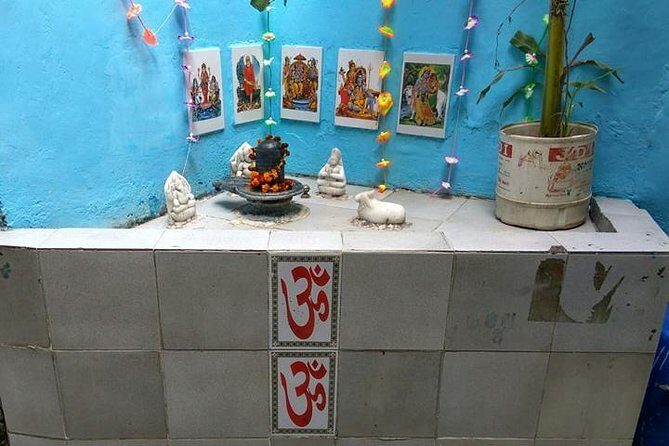
Religion and temple life also show up as part of everyday rhythm. This matters because faith isn’t presented as a separate cultural add-on. It’s part of the social fabric—how people gather, how they mark time, and how community bonds stay strong.
If you’re worried about safety or discomfort, the tone of the tour is the main clue. The experience is positioned as a respectful, informative way to see the neighborhood without turning residents into props. You’ll still be exposed to tough realities, but you’ll have a guide to interpret them, and you’ll be able to ask questions as you go.
How to get the most out of it (without being that person)
If you want a good experience, your mindset matters as much as your camera roll.
First, treat this as a conversation, not a performance. Your guide will share stories about education, religion, home life, and daily challenges. The best approach is to listen first, ask second, and keep your questions grounded in understanding.
Second, remember that this is not about spectacle. When the tour touches topics like water access or the realities of work, it’s easy to accidentally turn a serious subject into a curiosity game. If you’re unsure, ask something simple like what your guide thinks is the biggest misconception visitors have, or what part of daily life most shapes residents’ routines.
Third, use the hydration provided. You’re given local tea and water, which is a small detail that makes a big difference on a walk-based experience, especially in Delhi’s heat. It’s easy to forget to drink enough while you’re focused on learning. This tour solves that for you.
Finally, come prepared to be humbled. Not in a guilt-trip way. Just in the sense that you’ll see how young people and community organizations, like those connected to Learning by Locals, are pushing for better futures while managing immediate constraints.
Who should book this Sanjay Colony tour
This is a great fit if:
- You want a local-led, small-group experience in New Delhi, not a generic drive-by.
- You care about how education and community projects work, not just how a city looks.
- You’re open to hearing about daily challenges and seeing the practical side of livelihoods tied to recycling and clothing work.
It might be less ideal if:
- You want only mainstream attractions and don’t want to process difficult topics.
- You’re hoping for a long, in-depth visit inside schools or community buildings, since the stops are short and guided.
Also, it suits solo travelers or pairs who like asking questions. The small group size makes it easier to keep your experience personal, and your guide can adapt explanations to the pace of your questions.
Should you book this Sanjay Colony slum tour with locals?
Yes, if you want an honest, guided look at Sanjay Colony that connects daily life to education work and community projects. The strong value is that you get a local guide, tea and water, and a meaningful stop at Learning by Locals—all within about 1 hour 45 minutes, and in a small group that supports conversation.
You should book if you’re willing to trade the comfort of checklist sightseeing for the realness of lived experience. The payoff is seeing how a neighborhood functions, where challenges are real, and where local effort—especially around education—gives the story direction.
You might skip it if you need a lighter schedule or you know you don’t handle serious topics well. In that case, save your energy for New Delhi sights that feel purely celebratory.
FAQ
How long is the Sanjay Colony slum tour?
It runs for about 1 hour 45 minutes (approx.).
How much does it cost?
The price is $12.00 per person.
Where does the tour start?
The meeting point is Harkesh Nagar Okhla Metro Gate no. 2.
Is pickup available?
Pickup is offered. The tour can also drop you back at the metro station area, and if you book a private option with a car, you’ll be dropped back to your hotel.
What stops are included?
You’ll start at Harkesh Nagar Okhla Metro Gate no. 2, visit Learning by Locals, and then see the s.d.m.c primary school from outside.
What’s included in the price?
Local tea, a water bottle, and a local guide are included. You’ll also have a mobile ticket.
How big are the groups?
It’s a small group tour, with a maximum of 6 people per booking and a maximum of 10 travelers for the activity.
Is the tour suitable for most people?
The tour notes that most travelers can participate.
Can I cancel for a refund?
Yes. There is free cancellation, and you can cancel up to 24 hours in advance for a full refund.