REVIEW · AGRA
Agra: Taj Mahal Living History Private Experience
Book on GetYourGuide →Operated by Travel With Us - TWX · Bookable on GetYourGuide
Some monuments are famous. This one has context.
This private Living History experience is built for people who want more than quick photos: you get a licensed heritage guide who ties together imperial ambition, symbolism, and the craft behind the Taj Mahal. I like that it’s flexible, so you can choose a start time that fits your day instead of being dragged along by a fixed-group schedule.
Two things I really like: first, the pace is designed for real understanding, with guided time at both the Taj Mahal and Agra Fort. Second, the guide help is hands-on, including practical photo guidance from guides such as Ali Akbar and Saif, who are noted for explaining things clearly and helping with great pictures.
One consideration: if you choose the basic format, entry tickets and lunch are not included, so you’ll want to factor that in (the guide can help with ticket purchase, but it’s still an extra step).
In This Review
- Key things to know before you go
- Taj Mahal through stories, not just signs
- Choosing your start time: mid-day calm vs sunrise energy
- The Taj Mahal: gardens, geometry, and inlay work up close
- Agra Fort after the Taj: royal courts and succession drama
- All-inclusive vs basic: tickets and lunch math that actually matters
- Private vehicle pacing: 4 hours that don’t feel rushed
- What kind of traveler should book this?
- Practical tips that make the day easier in Agra
- Should you book this Living History experience?
- FAQ
- How long is the Agra Taj Mahal Living History Private Experience?
- Where is pickup provided?
- What stops are included in the tour?
- Is lunch included?
- What’s included in the basic Living History option?
- What’s included in the all-inclusive upgrade?
- What start times are available?
- Is the Taj Mahal open every day?
- Which languages are offered for the live guide?
- Are large bags allowed?
Key things to know before you go

- Flexible start times (morning, mid-day, afternoon) help you avoid the usual rush
- Taj Mahal + Agra Fort in one smooth 4-hour private plan, with meaning behind the sights
- Geometry and symbolism explained in the gardens and marble details, not just read off a sign
- Optional all-inclusive choice adds tickets and a curated lunch break
- Private vehicle in Agra with hotel pickup and drop-off for a calmer day
- English and multiple other languages available for clearer storytelling
Taj Mahal through stories, not just signs

The Taj Mahal can feel like a highlight reel: gorgeous, famous, done in a hurry. This experience is different because the guide turns it into a story you can actually follow. You spend time with an expert heritage storyteller who connects the monument to the real mechanics of power—who wanted what, why it was built, and how artistry became political messaging.
I love the focus on how the Taj was designed, not just how it looks. You’re given architectural insights that help you notice details you might otherwise miss, especially around how the complex layout guides your movement and attention. And because it’s private, the guide can adapt the pacing to what you care about: architecture, symbolism, photography, or the political side of Shah Jahan’s era.
If you’re a first-timer, this format is also great for orientation. A standard tour often assumes you already know where to look. Here, you’re shown what to notice and why.
You can also read our reviews of more private tours in Agra



Choosing your start time: mid-day calm vs sunrise energy
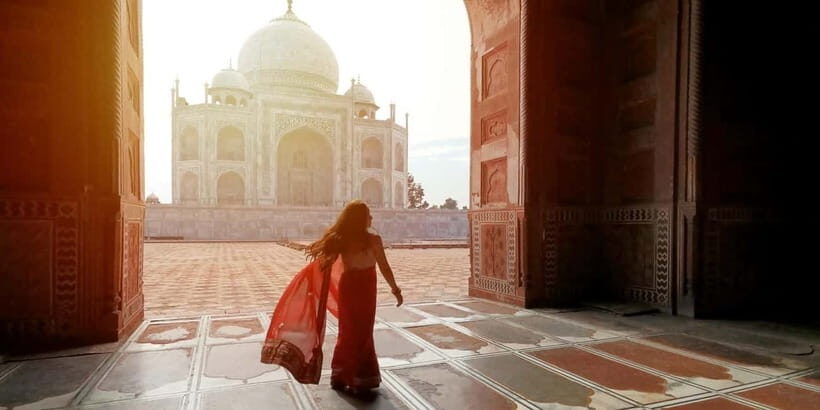
One smart part of this plan is that you pick your start time. Morning, mid-day, or afternoon all work, so you’re not stuck with one departure that might clash with your hotel location, jet lag, or plans for the rest of the day.
There’s also a special option if you choose the 5:30 AM start. That converts the visit into a sunrise experience, and sunrise shifts the meal plan: you get a buffet breakfast instead of lunch. In winter, though, fog can affect sunrise timing and the visit may shift toward daytime for better visibility. It’s worth keeping that flexibility in mind when you plan your day.
Practical tip: if you hate crowd pressure and you want that quieter-feeling approach, earlier start times usually help. If you prefer comfortable light for photos and less early-morning stress, mid-day or afternoon can be a better fit—especially when winter fog is a factor.
The Taj Mahal: gardens, geometry, and inlay work up close

The guided Taj Mahal portion takes about 2 hours, and the point is to slow down just enough to see the logic in the design. You don’t just walk from one photo spot to the next. The guide helps you understand the formal Mughal gardens and how geometry, spirituality, and power are stitched into the layout.
You’ll also get time to observe intricate marble inlay work up close. The guide explains how artisans achieved precision centuries ago, which changes the way you look at the surface. Instead of thinking, sure, it’s beautiful, you start thinking, how did they get that alignment so perfect? That shift is exactly why this kind of tour feels more satisfying than the usual speed-run.
Photography note: the Taj Mahal is popular for a reason, but that doesn’t mean every angle is worth your time. With a guide’s help, you can spend your energy on viewpoints that match your goals—wide shots, detail shots, or a more calm-flow way to capture the monument without constantly stopping and restarting.
What to watch for: comfortable walking shoes matter. The experience is built around walking and observation, so don’t plan to do this in thin sandals.
Agra Fort after the Taj: royal courts and succession drama
After the Taj Mahal, you head to Agra Fort for about 1 hour of guided exploration. This is a key pairing. The Taj is the monument that gets all the attention, but Agra Fort is where you get the bigger picture: the center of Mughal governance and royal life.
The guide walks you through royal courts, private chambers, and riverside balconies. And instead of presenting it like a museum display, the storytelling connects spaces to what was happening in the background—succession, power struggles, and Shah Jahan’s final years from a vantage point that looks out over the Taj Mahal.
This stop has a different emotional tone than the Taj. At the Taj, you’re surrounded by marble beauty and carefully controlled symmetry. At the fort, you’re in a place that feels like decisions were made. That contrast is part of why this combined plan works so well.
Time management note: one hour goes fast here, so focus on what you want most—courtyards and layout, or the narrative about the royal periods and the political context. If you’re a detail person, you’ll get a lot out of the guide pointing out what to notice as you move.
All-inclusive vs basic: tickets and lunch math that actually matters
You have two formats, and the difference is simple:
Living History Experience (basic)
You get the private air-conditioned vehicle, hotel pickup and drop-off in Agra, a licensed storytelling guide, and guided visits at both the Taj Mahal and Agra Fort. Entry tickets and lunch are not included.
Living History All-Inclusive Experience
Same tour, but entry tickets are included, plus a curated lunch at a carefully selected premium restaurant.
For value, I look at two things. First: if you hate logistics, the all-inclusive choice reduces the number of decisions you have to make mid-day. Second: you get a planned lunch window instead of having to improvise food after the fort. That can be a real quality-of-life win in Agra.
If you’re comfortable handling tickets on the day, the basic option may feel better for your budget. Just know the guide will assist with ticket purchases at the monument, and some ticket counters may accept cash in INR only. Also, because the activity includes help to skip the usual waiting, you’re not left standing around—just be mentally prepared that ticket handling may be part of the basic flow.
Meal timing note: the itinerary includes lunch, but in sunrise mode you switch to breakfast instead. So make sure your start time matches the type of meal you prefer.
You can also read our reviews of more historical tours in Agra






Private vehicle pacing: 4 hours that don’t feel rushed

This runs about 4 hours total, and the private vehicle makes a big difference. You’re picked up from your hotel within Agra city limits, and the driver comes in a clean air-conditioned vehicle. You’ll typically wait in your hotel lobby about 10 minutes before pickup, and your driver will ask for your name at reception.
Group size also affects the car choice. For smaller groups you’ll use a 3-seater sedan (like a Toyota Etios or similar). Larger groups move into a 6-seater wagon (like a Toyota Innova) or a 10-seater van (Tempo Traveler or similar). Translation: you won’t be crammed into a vehicle that makes you hate the day before you start sightseeing.
Why this matters: with the private format, you can spend more time on what you actually care about and less time reacting to group pace. That flexibility is the hidden engine of the experience.
Also, the tour concludes with a comfortable drop-off back at your hotel in Agra. That matters in a city where finding your way back can sometimes eat time.
What kind of traveler should book this?

This is a smart fit for culture lovers and first-time explorers who want context. If you care about architecture, the guide’s explanation of gardens, geometry, and marble inlay will make the Taj feel less like a postcard and more like a designed statement. If you’re into political history, the move from the Taj to Agra Fort is especially effective because it links the monument to the center of power.
It’s also a strong choice for couples and small families because the experience is private and the pacing can adapt. If you’re a photo-focused person, the guides noted for taking great photos and giving helpful directions can help you get images that look intentional, not accidental.
Who might not love it: if you want a fully unstructured wander with no guidance at all, you may feel boxed in by the guided plan. And if you hate walking, you’ll need to lean on the wheelchair-accessible pathways at the Taj Mahal and plan carefully, since the experience includes guided movement on-site.
Practical tips that make the day easier in Agra

A few small details can improve your comfort a lot:
- The Taj Mahal remains closed every Friday, so don’t build a Friday plan around it.
- Luggage or large bags are not allowed, so travel light.
- Bring sunglasses and sunscreen if you’re going in warmer months; the day can get bright fast.
- Wear comfortable walking shoes. You’ll be on your feet, and comfort buys you better attention.
- If you need special assistance, there are wheelchair-accessible pathways at the Taj Mahal—tell the provider in advance so the route can be planned.
Also, if you’re picky about meal plans, choose your start time thoughtfully. Sunrise swaps lunch for breakfast, which can be great if you’re an early-morning person, but it changes your midday schedule.
Finally, don’t underestimate how much clarity a good guide adds. With guides like Ali Akbar and Saif noted for clear explanations and photo help, you can spend less time figuring things out and more time actually seeing.
Should you book this Living History experience?

Yes, if you want the Taj Mahal and Agra Fort to make sense as a connected story. This tour is built for depth without turning the day into a lecture. The flexible start times help you avoid the most stressful parts of a typical sightseeing schedule, and the private vehicle keeps the pace human.
Book it if you fall into any of these buckets:
- You’ve seen photos of the Taj but want the design and symbolism explained clearly
- You want to pair the Taj with the political setting of Agra Fort
- You prefer a guide who can help with smart photo stops, not just announcements
- You’d rather pay for a calmer plan than manage every ticket and timing step
Skip it only if you want the cheapest option and you’re comfortable handling everything yourself. If you choose basic format, you’ll trade convenience (tickets and lunch not included) for a lower total spend.
Bottom line: if you’re the kind of traveler who likes meaning behind monuments, this is one of the better ways to experience Agra without rushing, and without turning the day into checklist tourism.
FAQ
How long is the Agra Taj Mahal Living History Private Experience?
The duration is 4 hours.
Where is pickup provided?
Pickup is available from all hotels and accommodations within Agra city limits.
What stops are included in the tour?
You visit the Taj Mahal and Agra Fort with a licensed heritage storytelling guide.
Is lunch included?
Lunch is included only if you select the Living History All-Inclusive Experience. The basic format does not include lunch.
What’s included in the basic Living History option?
The basic option includes a private air-conditioned vehicle, hotel pickup and drop-off, a licensed guide, and guided visits to the Taj Mahal and Agra Fort. Entry tickets are not included in the basic option.
What’s included in the all-inclusive upgrade?
The all-inclusive upgrade includes Taj Mahal and Agra Fort entry tickets plus a curated lunch at a selected premium restaurant.
What start times are available?
You can choose from morning, mid-day, or afternoon start times. A 5:30 AM start becomes a sunrise visit.
Is the Taj Mahal open every day?
No. The Taj Mahal remains closed every Friday.
Which languages are offered for the live guide?
The live guide is available in English, German, Russian, French, and Spanish.
Are large bags allowed?
No. Luggage or large bags are not allowed.