REVIEW · NEW DELHI
8 Days Tour of Essential India & Classic Nepal – Golden Triangle with Kathmandu
Book on Viator →Operated by EXPERT TOURS & TRAVELS · Bookable on Viator
Planning India and Nepal feels suddenly simple. This 8-day route strings together the Golden Triangle of Delhi, Agra, and Jaipur with Kathmandu’s major UNESCO sites, so you get the headline places without spending your vacation time sorting tickets. I especially like how the plan includes entrance fees at many key monuments (not just a sightseeing drive-by), and how it’s set up as a private group experience with a chauffeur-driven AC vehicle. One consideration: the pace is busy and you’ll be on the move often, and meals are only partially covered (dinner is listed, plus breakfast for 7 days).
What makes this itinerary feel practical is the way it blends big monuments with real local texture—Old Delhi markets, Sikh and Hindu religious sites, and then Kathmandu’s stupa-and-durbar-square rhythm. You’ll also appreciate the included flight from Jaipur to Kathmandu via Delhi, which keeps the India-to-Nepal handoff from turning into a long travel slog. Just know that a sunrise visit to the Taj Mahal depends on weather, and some religious sites have day-of-week closures.
In This Review
- Golden Triangle + Kathmandu: quick hit of what matters most
- The rhythm of this 8-day plan (and why it works)
- Delhi: Humayun’s Tomb, Mughal forts, and the Old Delhi “wow” factor
- Qutub Minar and the Delhi temples: mixing ancient stone with modern grandeur
- Agra: Taj Mahal sunrise planning plus Agra Fort and Mehtab Bagh
- Fatehpur Sikri and the step-well stop: breaking up the drive into Jaipur
- Jaipur: Amer Fort, Hawa Mahal photos, and the City Palace + Jantar Mantar combo
- From Galta Ji to Kathmandu: the flight leg that saves your sanity
- Kathmandu Valley UNESCO day: Swayambhunath, Durbar Square, and Boudhanath
- Patan, Bhaktapur, and Pashupatinath: the valley’s historic core beyond one square
- Dhulikhel: Himalayan views without a marathon
- Price and logistics: what $1,796 per person is really buying
- Who this tour fits best
- Should you book this 8-day Essential India & Classic Nepal tour?
- FAQ
- What cities are included in this tour?
- Are hotels and breakfasts included?
- Is the flight from Jaipur to Kathmandu included?
- Are entrance fees included?
- Will I be able to visit the Taj Mahal at sunrise?
- What Kathmandu sites are covered?
- Is this a private tour?
- What meals are included?
- Do I need a visa in advance for India and Nepal?
- What cancellation timeframe is offered?
Golden Triangle + Kathmandu: quick hit of what matters most
- Entrance fees handled for many of the big-ticket sights, so you’re not hunting for tickets mid-day
- Private touring with your own guide and chauffeured AC vehicle for the full sequence
- Taj Mahal support transport includes a battery bus/golf cart return to cut walking time
- Jeep option at Amer Fort if you don’t want to walk up
- Kathmandu Valley UNESCO focus across Swayambhunath, Kathmandu Durbar Square, and Boudhanath
- Clever cross-border timing with an included scheduled flight from Jaipur to Kathmandu
The rhythm of this 8-day plan (and why it works)
This is the kind of trip that’s built for first-time visitors who want the landmarks, but don’t want to spend every morning “figuring out the day.” The structure is straightforward: early sightseeing starts in India, then a smooth transition to Kathmandu with an included flight, and finally a guided sweep through the Kathmandu Valley’s most meaningful historic and religious spaces.
That means you’ll see a lot, but it’s also paced with real breaks built in. For example, some stops are short photo moments (like several Jaipur views), while others are longer guided experiences (like Taj Mahal and Jaipur’s main fort and palace areas). If you love the feeling of getting your bearings fast and then going deeper, this format tends to fit.
The biggest tradeoff is stamina. Even with vehicles and included transport help at a couple of major sites, you’ll still do a fair amount of walking through streets, courtyards, and monument grounds. If you plan your days with comfortable shoes and a light bag, it feels manageable rather than frantic.
You can also read our reviews of more tours and experiences in New Delhi.



Delhi: Humayun’s Tomb, Mughal forts, and the Old Delhi “wow” factor
Your first days in Delhi hit a powerful mix: Mughal-era architecture, religious landmarks, and a market that’s basically a sensory workout.
Humayun’s Tomb is the entry point that sets the tone. It’s the kind of site where the details matter, and it’s included with an admission ticket, with a guided stop time that’s long enough to actually look rather than just pass through.
Then you move into Old Delhi’s Mughal core:
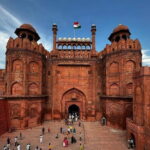
- Red Fort (mentioned as the seat of power built by Mughals in the 17th century) gives you the political backstory behind the streets.
- Jama Masjid is one of the largest mosques in India, built by Shah Jahan between 1644 and 1656 (also the Taj Mahal builder).
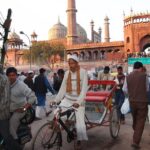
- Chandni Chowk is your payoff for all that history. It’s a century-spanning market experience—spices, dried fruit, silver jewelry, and saris—with a free market stop designed for you to wander.
Between the big mosques and forts, you also get religious variety that adds depth without turning the day into a lecture:
- Gurudwara Bangla Sahib (Sikh temple) is a calm, white-stone contrast in the middle of the city’s motion.
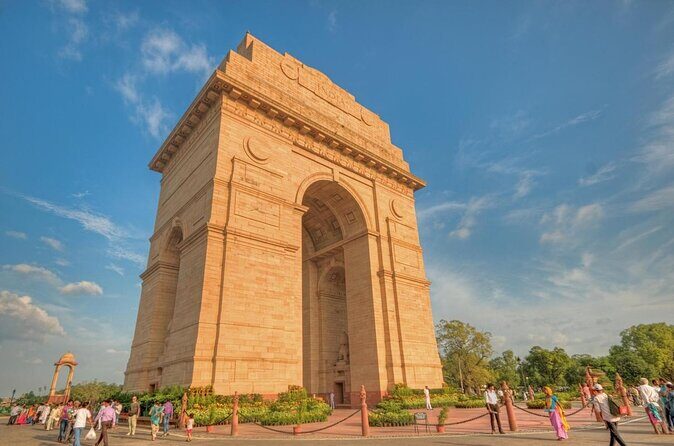
- India Gate is a short pause at the 1931 war memorial.
A perfect closer is Qutub Minar, a UNESCO World Heritage Site and a 73-meter-tall brick minaret in the Qutub Complex. If you’re into architecture and scale, Qutub Minar is the kind of stop that makes photos look flat unless you’re standing close.
Practical tip: Old Delhi days can be hot, crowded, and noisy. Bring sunglasses and plan for slower movement around Chandni Chowk.
Qutub Minar and the Delhi temples: mixing ancient stone with modern grandeur
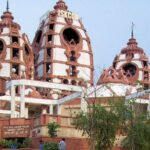
One of the smart things about this tour is that it doesn’t treat Delhi as only one era. After the Old Delhi and heritage landmarks, you also get Swaminarayan Akshardham Temple, which belongs to the Swami Narayan sect and is listed as one of the largest Hindu temples in the world.
That’s a different flavor from the Mughal monuments. You’re switching from stone-era craftsmanship to a massive modern religious complex, and the guided stop time is enough for you to orient yourself and appreciate the scale. If you only see one style of architecture, Delhi can feel lopsided. This adds balance.
Also note the built-in closure rule: Akshardham is closed on Mondays, and if your scheduled day falls on a Monday, you’ll visit it the day before. That kind of contingency matters, because it reduces the chance of a wasted morning.
Agra: Taj Mahal sunrise planning plus Agra Fort and Mehtab Bagh

Agra is built around the obvious icon—the Taj Mahal—but the plan makes it more than a one-and-done photo stop.
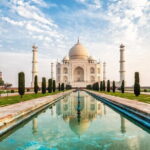
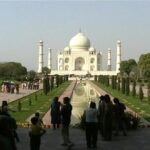
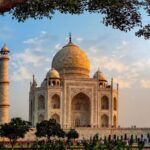
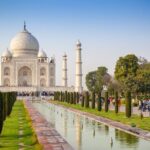
The Taj Mahal visit is set as an early day with a plan for tea/coffee beforehand and then meeting the guide for the monument visit. Importantly, there’s a reminder that Taj Mahal remains closed every Friday, and if your visit falls on Friday you’ll go a day prior. Add to that the real-world factor: a sunrise visit is subject to weather conditions, so you’re not going to be shocked if the exact light changes.
What I like here is that the experience includes battery bus/golf cart return at the Taj Mahal. Taj Mahal visits are often physically demanding because of the walking distance. This helps you keep your energy for photos, viewpoints, and actually enjoying the details.
Then you add two Agra companions that make the Taj feel less lonely:
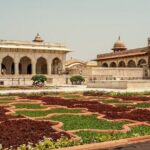
- Agra Fort: a UNESCO World Heritage Site cluster in the city’s Mughal past, with an included admission ticket.
- Mehtab Bagh: the Moonlit Gardens across from the Taj Mahal. Even if your timing isn’t perfect, the idea of viewing the Taj from the opposite bank gives you a second framing. The tour includes admission here too.
Practical tip: Wear breathable layers. You’ll be outside for key photo angles, and you’ll appreciate being comfortable during sunrise-or-early-timing days.
Fatehpur Sikri and the step-well stop: breaking up the drive into Jaipur
After the Taj Mahal morning, the route moves outward to Fatehpur Sikri, a UNESCO World Heritage Site. This is a good “reset” stop: it’s less about a single famous building and more about the feel of a historical complex.
It also comes with a free admission ticket in the plan, which is nice on days when you want to spend less time on entry procedures and more time on seeing.
Next comes Chand Baori in Abhaneri. This step-well is included with an admission ticket and gives you a chance to slow down. Wells and step-wells are easy to underestimate until you’re standing in front of the geometry—how the light drops into the structure, and how the levels guide your eyes.
This stop is valuable because it’s distinct from both Mughal monuments and Jaipur’s palace scenes. It adds variety without requiring a long detour.

Jaipur: Amer Fort, Hawa Mahal photos, and the City Palace + Jantar Mantar combo
Jaipur is where the tour leans into Rajasthan’s iconic visuals—forts, palaces, and that famous pink city look. But it’s not only “stand here, snap photo, move on.”
A major highlight is Amber Fort. The plan gives it a long guided window (3 hours) and includes an admission ticket. Even better for comfort: there’s an included jeep ride to/from Amer Fort in Jaipur if you don’t want to go up by walking. That detail matters. It can be the difference between enjoying the day and arriving at palace courtyards already tired.
Then you get classic Jaipur picture moments:
- Jal Mahal for a photo stop at the Water Palace in the Man Sagar lake area.
- Hawa Mahal for the Palace of Breeze exterior view, famous for its many small windows.
After those quick hits, the tour turns more “in-depth” again:
- City Palace with an included admission ticket. The plan describes the fusion of Rajasthani and Mughal architecture and notes it’s still connected to the royal family.
- Jantar Mantar: a UNESCO-listed stone astronomical observatory, with nineteen stone instruments and an admission ticket included.
The day is finished with Patrika Gate, a newer photo location with painted archways representing Rajasthan’s monuments and culture.
Practical tip: Several Jaipur stops are outdoors. Bring sunscreen and plan for bright midday light if you want the crispest pictures.
From Galta Ji to Kathmandu: the flight leg that saves your sanity
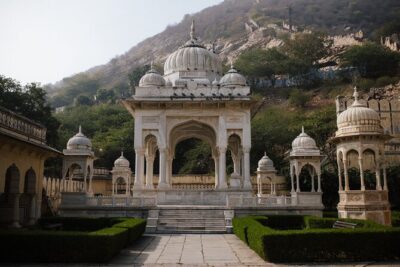
One of the more thoughtful transitions happens on the day your India segment ends. You start with Galtaji Temple, set in a hilly area and bounded by a gorge—something that feels more like a local spiritual landscape than a busy city monument.
After that, you head to the Jaipur airport to connect on a flight to Kathmandu via Delhi using scheduled commercial airlines. This saves you from a long overland slog. The plan also notes an included baggage allowance: 20 Kgs for the flight, so pack with that limit in mind rather than assuming you’ll be able to bring extra.
When you arrive in Kathmandu, you’ll get transferred to your hotel, then head out for the Thamel area for a first taste of the city. Thamel is the kind of neighborhood where you can quickly get oriented—shops, guesthouse-style streets, and lots of people moving around.
Kathmandu Valley UNESCO day: Swayambhunath, Durbar Square, and Boudhanath
Kathmandu Valley is where the tour shifts from India’s fort-and-palace visuals to Nepal’s stupa-and-durbar-square rhythm.
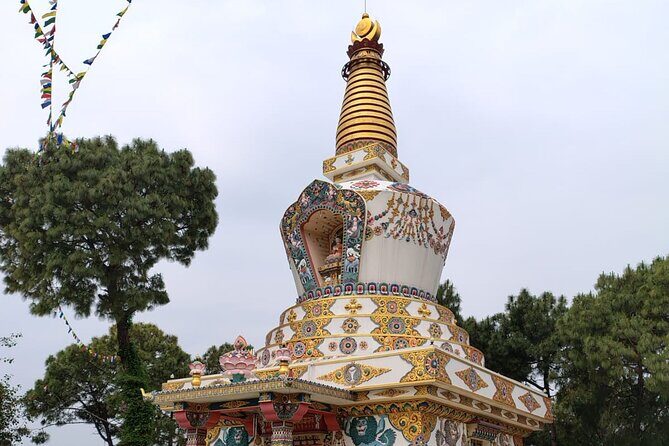
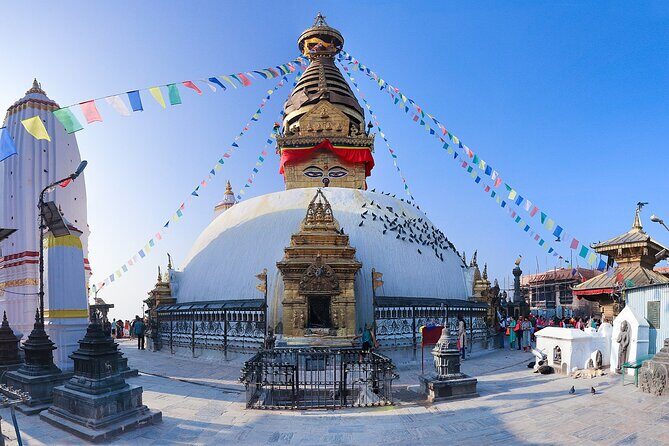
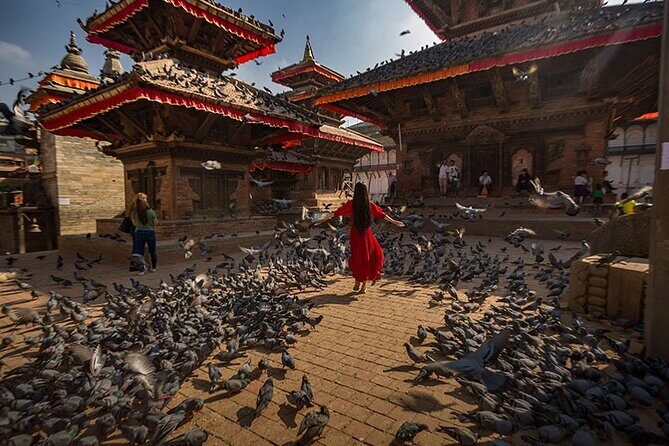
A first big stop is Swayambhunath, a holiest Buddhist stupa site. It’s included with an admission ticket and a guided stop time that’s long enough to explore.
Then you move to Kathmandu Durbar Square, a UNESCO World Heritage Site and an important ritual space for both Buddhist and Hindu traditions. The tour includes an admission ticket and guided time.
Next is Boudhanath Stupa, described as one of the most impressive structures in Kathmandu and visible as soon as you approach the airport. It’s included with an admission ticket too. If you want one place in Kathmandu where the spirituality feels instantly “physical,” Boudhanath is it.
There’s also an optional-feeling cultural add-on in the plan:
- Singing Bowl in Nepal is listed as not included and is described as a meditation session practice connected to Buddhist monasteries.
- Nepali Chulo is included, and it’s framed as a Nepalese cultural food experience.
That mix is smart. You’re not only looking at temples; you’re getting a chance to experience Nepal as a lived culture.
Practical tip: You’ll likely do stairs and uneven ground at stupa and durbar-square areas. Shoes with grip help more than you’d think.
Patan, Bhaktapur, and Pashupatinath: the valley’s historic core beyond one square
After the main Kathmandu Valley day, the tour expands outward in a way that helps you see the region as a connected system.
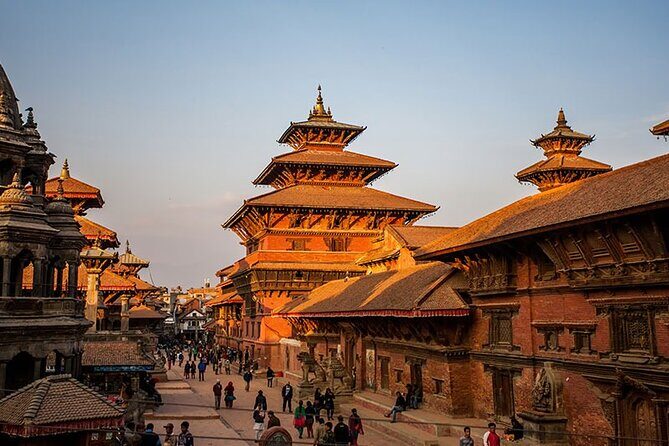
You’ll visit Patan (Lalitpur), including Patan Durbar Square (free in the plan) and time for the crafts and ancient art techniques connected to the area.
Then it’s on to Bhaktapur Durbar Square, listed as not included for admission. Even so, the stop time is set (and the tour gives context in the plan about it being one of the three main durbar squares in the valley).
Finally, there’s a major spiritual landmark: Pashupatinath Temple, dedicated to Shiva and listed as one of Nepal’s UNESCO sites. It’s included with an admission ticket and a guided stop.
This trio is valuable because it keeps you from getting “stuck” in only one viewpoint of Kathmandu’s history. You see how the valley’s cities share religious architecture themes while still feeling distinct.
Dhulikhel: Himalayan views without a marathon
On the final day, the tour adds a viewpoint break outside the busiest core with Dhulikhel, about 30 km from Kathmandu Durbar Square and 15 km from Bhaktapur Durbar Square.
The plan frames Dhulikhel as having a reputation for Himalayan views, and it includes a guided stop time. After viewing snow-capped peaks (weather permitting, like any Himalayan view), you head back for breakfast and the tour services end with a drop-off at Kathmandu airport or your Kathmandu location.
This final morning is a nice emotional landing. Instead of only finishing with more stones and carvings, you get to look outward toward the mountains.
Price and logistics: what $1,796 per person is really buying
At $1,796 per person for an 8-day route across India and Nepal, the value depends on what you hate most while traveling: planning, waiting, or paying for add-ons.
This package tries to reduce all three:
- You get chauffeured air-conditioned vehicle transportation throughout the trip at disposal.
- You get unlimited bottled mineral water in the vehicle.
- You get guide services for the sight seeing and city tours as mentioned.
- Many key monuments include entrance fees.
- You get special mobility helpers: jeep ride at Amer Fort if you choose not to walk, plus battery bus/golf cart return at Taj Mahal and Fatehpur Sikri.
- You also get the flight from Jaipur to Kathmandu via Delhi (scheduled commercial airlines), plus a listed baggage allowance of 20 Kgs.
Not everything is included. The plan lists dinner and breakfast (7), but it also says any other meals or items aren’t included. That’s normal for multi-country trips, but it does mean you should budget for lunches and any snacks you want during the day.
The other logistics you should be aware of are built into the schedule:
- Taj Mahal is closed Fridays, and Akshardham is closed Mondays.
- Sunrise timing is weather-dependent.
- Transport times are approximate and depend on traffic.
If you’d rather pay a bit more and avoid friction, this tends to feel like a solid deal. If you love solo planning and don’t mind ticket lines, you might find cheaper DIY options—but you’ll be doing more work yourself.
Who this tour fits best
This is a good match if:
- You want the headline sites in India (Delhi, Agra, Jaipur) and the major Kathmandu Valley UNESCO stops without juggling details.
- You prefer a private group format where only your party is participating.
- You’d rather have help with entry tickets and monument transport aids at tough-walk locations.
- You like guided context at big monuments, not just photo stops.
It may be less ideal if:
- You want tons of free time to roam alone every day (this tour is structured).
- You strongly dislike early mornings, since the Taj Mahal visit is planned early with sunrise timing subject to weather.
Should you book this 8-day Essential India & Classic Nepal tour?
I’d book it if you want a guided “greatest hits” trip that still respects your time and comfort—especially with the included flight and the support transports at Amer Fort and the Taj Mahal area. The UNESCO concentration in both countries is also a strong point: you get a lot of globally important sites without the headache of stitching them together yourself.
I wouldn’t book it if you’re hoping for a slow, laid-back pace or if you need a meal plan that covers lunch and all snacks. Also, check your calendar for Friday/Monday closures of Taj Mahal and Akshardham, because those rules can shift which day you see specific sights.
If your goal is seeing the icons with less stress and you’re okay with a busy itinerary, this one makes sense.
FAQ
What cities are included in this tour?
The tour covers Delhi, Agra, Jaipur in India, and Kathmandu and the Kathmandu Valley in Nepal, with the experience starting and ending in Kathmandu.
Are hotels and breakfasts included?
Hotel accommodation is included for 7 nights on twin sharing if you booked an option including hotels. Breakfast is included for 7 days.
Is the flight from Jaipur to Kathmandu included?
Yes. The package includes a flight from Jaipur to Kathmandu with a connection in Delhi, using scheduled commercial airlines.
Are entrance fees included?
Entrance fees are included at the monuments listed in the itinerary for each stop that shows admission tickets included.
Will I be able to visit the Taj Mahal at sunrise?
A sunrise visit to the Taj Mahal is part of the plan, but it is subject to weather conditions. Also, Taj Mahal is closed for visitors every Friday, and if your scheduled day is a Friday, the visit is moved to the day before.
What Kathmandu sites are covered?
The plan includes Swayambhunath, Kathmandu Durbar Square, Boudhanath Stupa, Patan Durbar Square, Bhaktapur Durbar Square, and Pashupatinath Temple, plus Dhulikhel on the final day.
Is this a private tour?
Yes. It is listed as a private tour/activity, and only your group participates.
What meals are included?
Dinner is listed as included, and breakfast is listed as included (7). Other meals and beverages are not specified as included.
Do I need a visa in advance for India and Nepal?
All foreign travelers require a valid visa prior to arrival in India. Nepal visa can be obtained upon arrival at Kathmandu airport. Visa fee to enter in Nepal is not included.
What cancellation timeframe is offered?
You can cancel up to 3 days in advance of the experience for a full refund. If you cancel less than 3 full days before the experience start time, the amount paid will not be refunded.