REVIEW · NEW DELHI
8-Day Golden Triangle & Rajasthan Private Tour from Delhi
Book on Viator →Operated by vwitours · Bookable on Viator
That first taste of India matters.
This private 8-day route strings together Delhi, Agra, Jaipur, Bikaner, Jaisalmer, Jodhpur, and Udaipur with private transport and a guide, so you spend less time figuring things out and more time seeing the real highlights. I like that you get included breakfasts for easy starts, and I also like the specific add-ons like the Jama Masjid-area rickshaw ride, a camel safari at Sam Dunes, and a boat ride on Lake Pichola. The main thing to watch is the pace: it’s a lot of driving plus early starts, and many major monument entries aren’t included.
Because it’s private, it feels efficient, not crowded.
You get hotel pickup in Delhi, hotel drops as you move between cities, and clear day-by-day sightseeing blocks anchored around iconic places like Qutub Minar, Amber Fort, Mehrangarh Fort, and City Palace Udaipur. One driver and guide setup also means you’re less likely to get stuck translating or hunting for the right route when timing matters (especially for sunrise).
One possible drawback is budgeting and timing flexibility.
If you’re hoping every ticket is covered, you’ll want to plan ahead—several sights list admission as not included, including Taj Mahal.
In This Review
- Key points worth highlighting
- How this Golden Triangle and Rajasthan plan saves your energy
- Day 1 in Delhi: Jama Masjid, Qutub Minar, Raj Ghat, Humayun’s Tomb, Lotus Temple
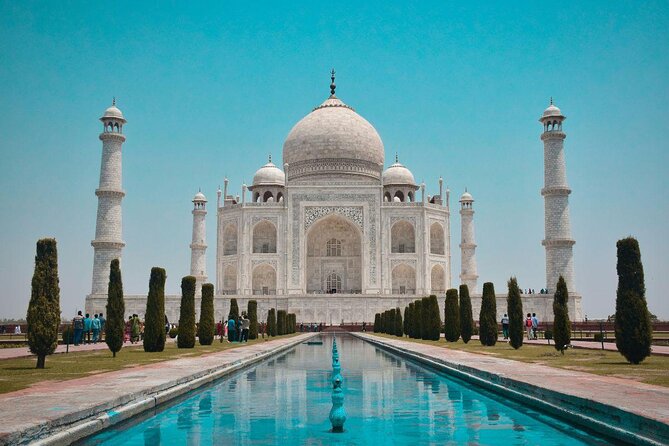
- Day 2: Sunrise Taj Mahal plus Agra Fort and Baby Taj
- Day 3 Jaipur: Amber Fort, Jal Mahal, City Palace, Jantar Mantar, Hawa Mahal
- Day 4 Bikaner: Junagarh Fort, Karni Mata, and Lalgarh Palace
- Day 5 Jaisalmer to Sam Dunes: Forts, havelis, Gadisar Lake, then desert magic
- Day 6 Jodhpur: Mehrangarh Fort, Jaswant Thada, Ghanta Ghar, Umaid Bhawan Museum
- Day 7 Udaipur: Lake Pichola boat ride, City Palace, temples, and evening Bagore Ki Haveli
- Price and what you’re really getting for $492.41 per person
- Comfort, pacing, and the practical stuff that matters
- Should you book this private 8-day tour?
- FAQ
- What is included in the tour price?
- Are hotel breakfasts included?
- Is this tour private or shared?
- Does the tour include pickup in Delhi?
- Are entry tickets for major monuments included?
- What desert and water activities are included?
- How does the tour end?
Key points worth highlighting
- Private guide and car: one setup for the whole trip means less friction across cities
- Sunrise Taj Mahal: a photography-friendly start time that also avoids the day’s heat
- Old Delhi flavor: the Jama Masjid rickshaw ride adds a fun, local rhythm
- Desert day in Jaisalmer: camel safari + jeep safari + folk performances at Sam Dunes
- Udaipur from the water: a Lake Pichola boat ride sets the tone for the City Palace area
- Strong value if you like structure: transport, logistics, and key activities are handled for you
How this Golden Triangle and Rajasthan plan saves your energy
The Golden Triangle (Delhi–Agra–Jaipur) is already a lot to take in. What makes this tour work is that it keeps the logistics tight while adding Rajasthan’s big names farther west. You’re not just hopping between cities—you’re moving with a private air-conditioned car and a private guide, which is exactly what you want when traffic, distances, and ticket lines can chew up a day.
You also control the accommodation tier: the trip lists 3-star / 4-star / 5-star hotels depending on what you book. That’s a simple way to match the trip to your budget without changing the itinerary backbone. I like that your mornings start with breakfast included (7 times), which removes one daily decision and keeps you from losing time searching for food after a drive.
Price-wise, the headline number can look modest for a private, multi-city package—especially because transport, guiding, and several activity inclusions are stated up front (rickshaw ride, camel safari, and the Lake Pichola boat ride). The trade-off is that you still need to handle monument entry fees where they’re listed as not included, and the schedule expects you to move efficiently.
You can also read our reviews of more tours and experiences in New Delhi.


Day 1 in Delhi: Jama Masjid, Qutub Minar, Raj Ghat, Humayun’s Tomb, Lotus Temple
Delhi on day one is built to “get your bearings fast.” You’re met in Delhi at the airport or hotel, then transferred to your overnight accommodation. After that, the sightseeing mix covers distinct eras of the city.
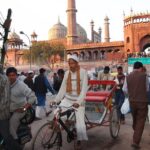
Start with Jama Masjid in Old Delhi. This is where the tour’s included rickshaw ride in the Jama Masjid area helps you slow down without wasting time—plus it gives you that close-up street feel right away, rather than treating Old Delhi like just another photo stop.
Then you pivot to the monumental side with Qutub Minar in the Qutb complex. This is the kind of stop where a guide helps you connect the dots between the older fortified city site and the minaret itself, instead of only reading signs.
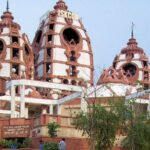
You also hit Raj Ghat, dedicated to Mahatma Gandhi, which adds a quieter pause between major sights. After that comes Humayun’s Tomb, a Mughal-era landmark that’s a big deal architecturally, and then the Lotus Temple, known for its lotus-like shape and calm setting.
One small practical note: Delhi has traffic and crowd patterns that can shift the day’s flow. A private guide and car help, but keep a relaxed mindset—this first day is about coverage and orientation.
Day 2: Sunrise Taj Mahal plus Agra Fort and Baby Taj
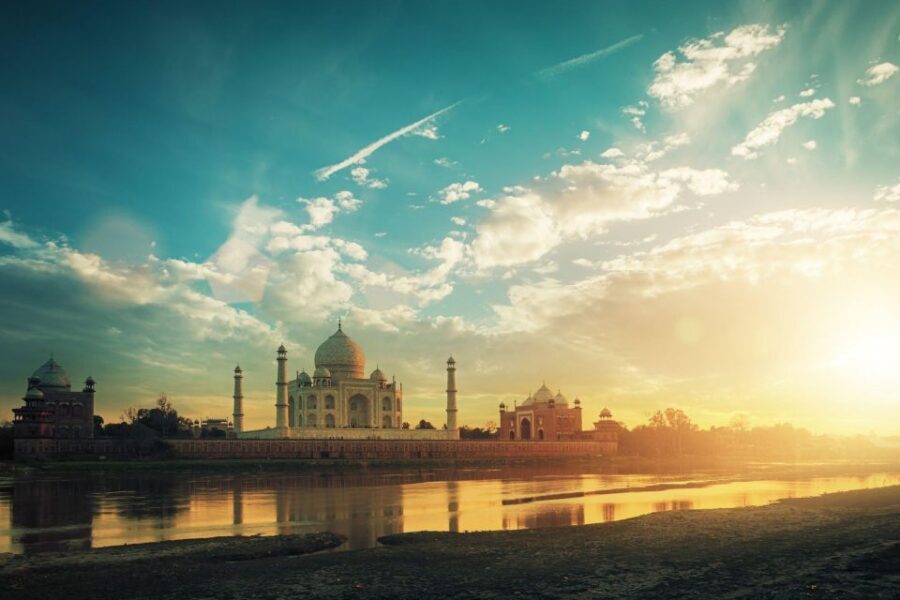
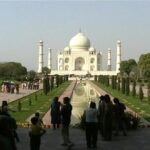
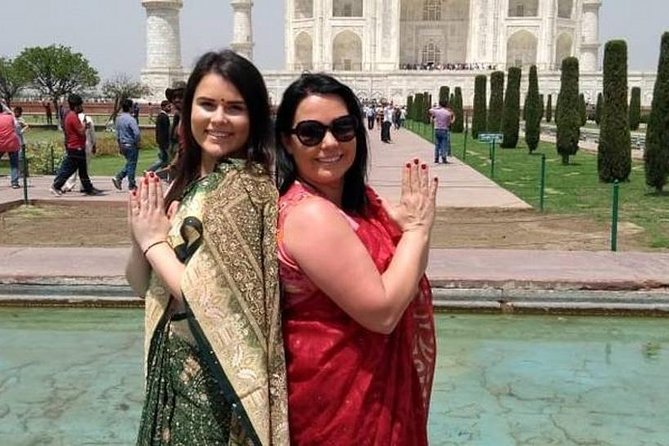
The best move in Agra is timing, and this tour plans for it. You go out for a sunrise Taj Mahal tour with the guide meeting you around 5:30 a.m. The payoff is twofold: you get great light for photos, and you start before the city heats up and crowds typically thicken.
The Taj Mahal itself is the obvious centerpiece, but what I like is that the day doesn’t stop there. You also visit Agra Fort, which served as a power base for Mughal emperors before the capital shifted to Delhi. That perspective makes your Taj Mahal visit feel more grounded—like you’re seeing the whole court-life picture, not just the monument.
After lunch, you head to Itmad-ud-Daula, often called Baby Taj. It’s smaller than the main star, but it’s a strong follow-up because the design details reward a slower look, especially when you’ve already learned what to notice from the morning.
The day finishes with Mehtab Bagh viewpoint, positioned across the Yamuna. Even when it’s not a full tour of gardens, the viewpoint concept gives you a different angle on the Taj Mahal area and helps break up the day’s intensity.
Budget note: Taj Mahal admission is listed as not included here, so keep some rupees aside for entry fees and any local extras.
Day 3 Jaipur: Amber Fort, Jal Mahal, City Palace, Jantar Mantar, Hawa Mahal
Jaipur is often described as a Pink City, but on this day the tour focuses on variety: forts, palaces, and the city’s famous architecture.
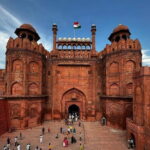
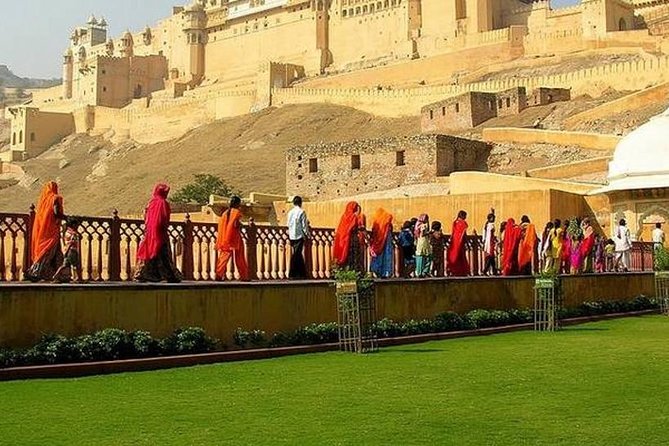
You start with Amber Fort, a top-choice visit because it’s not just scenery—it’s a whole complex that gives context for Jaipur’s royal era. After that comes Jal Mahal, the palace sitting on the lake. The stop lists admission ticket free, which is a nice bonus: you get a memorable visual without paying additional entry.
Then it’s into royal power with City Palace of Jaipur. This is where you see how the city’s rulers blended governance with display—again, it makes the overall trip feel connected instead of random sightseeing.
Next is Jantar Mantar, the astronomical instruments built by Sawai Jai Singh. Even if you’re not a science person, the guide can help you appreciate that these aren’t just old objects—they’re tools meant to measure and predict.
Finish with Hawa Mahal (Palace of Wind). It’s one of those landmarks that looks best when you understand why it exists: it’s tied to the palace design and the way it projected visibility and ventilation.
A practical tip: Jaipur can feel fast and hot in the afternoon. Plan to carry water (the tour includes bottled water) and wear shoes that work on uneven ground in forts and palace courtyards.
Day 4 Bikaner: Junagarh Fort, Karni Mata, and Lalgarh Palace
After Jaipur, the tour reaches Bikaner, with the drive time listed as about 4.5 hours. That’s a real chunk of road time, so I like that day’s sightseeing is spaced with a sensible structure: you check in around midday and then start sightseeing without rushing yourself into exhaustion.
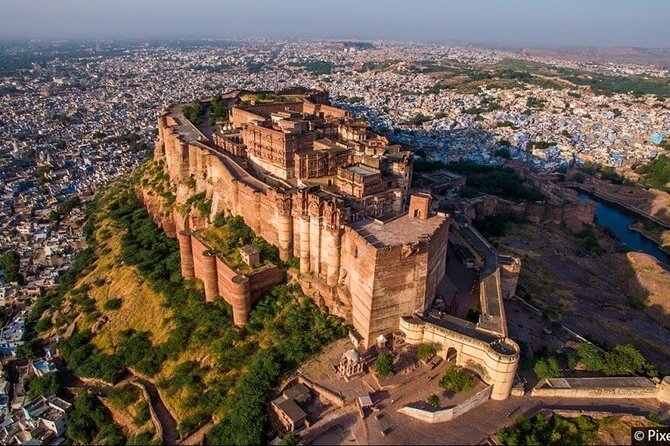
Your first big stop is Junagarh Fort (Bikaner Fort). Forts in Rajasthan tend to be different from each other, and Junagarh is worth it because it’s a strong defensive and royal statement. A guide helps you notice details that you’d otherwise miss when you’re just walking.
Then you visit Karni Mata Temple, which is famous for the local belief around Goddess Durga’s incarnation. It’s a quick stop, listed as free, but it’s also an atmospheric one—part religious stop, part cultural snapshot.
The day also includes Lalgarh Palace and Museum. It’s described as Indo-Saracenic and built between 1902 and 1926. That architectural blend is exactly the kind of contrast that makes a multi-city itinerary feel richer.



Day 5 Jaisalmer to Sam Dunes: Forts, havelis, Gadisar Lake, then desert magic
This is the day that gives you the most “Rajasthan wow” per hour.
You begin with Jaisalmer Fort, then move through a haveli circuit: Patwon-ki-Haveli and Salim Singh-ki Haveli. These are intricate, carved buildings that show what wealth looked like during the mercantile era. If you like architecture, this is where the tour earns its keep.
Next is Gadisar Lake, an artificial lake area that’s listed as free. It’s a good reset between the dense, detailed haveli interiors and the outdoor desert transition.
Then you shift gears into the desert. Around 3:30 p.m, you drive to Sam Dunes for the desert activity. The tour includes a camel safari, plus a jeep safari, and also cultural and folk dance performances. That combination matters: a camel gives the traditional pace, while the jeep helps you cover ground and get back to the schedule smoothly.
After that, you drive onward to Jodhpur (listed as about 3.5 hours).
This is also the one day where you’ll want to pack smart: desert temps can swing, and you’ll be spending time outdoors.
Day 6 Jodhpur: Mehrangarh Fort, Jaswant Thada, Ghanta Ghar, Umaid Bhawan Museum
Jodhpur’s sightseeing focuses on heights, memory, and city landmarks.
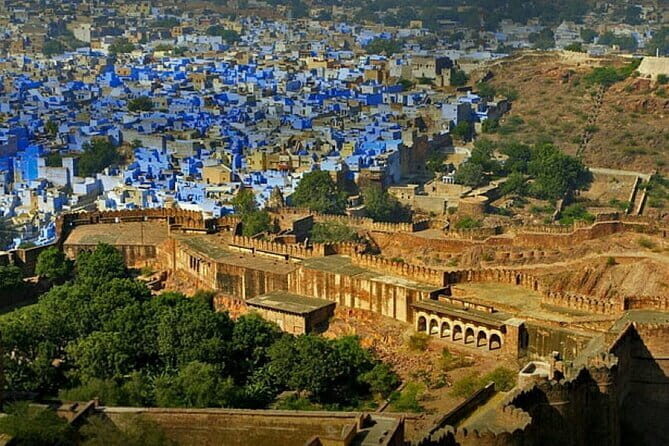
You start with Mehrangarh Fort, a major fort stop that sits above the city. Forts like this work best when you take your time with viewpoints—your guide can point out why the fort’s position mattered.
Next is Jaswant Thada, a cenotaph built in memory of Maharaja Jaswant Singh II. It’s a memorial stop, but it’s not dreary; it’s a designed space meant for remembrance.
Then you see Ghanta Ghar (the clock tower). It’s a quick, landmark-style stop, but it helps you picture how the city organizes around public spaces.
Finally, you visit Umaid Bhawan Museum, part of the palace complex. The tour notes Umaid Bhawan Palace is a major private residence with a connection to Taj Hotels, which gives you an interesting angle: this is a place where royal architecture ties into modern life.
A day like this is a nice balance after the desert hustle—less time in transit once you’re settled, more time focused on city landmarks.
Day 7 Udaipur: Lake Pichola boat ride, City Palace, temples, and evening Bagore Ki Haveli
Udaipur is where the tour shifts toward slower, scenic moments.
The day starts with Lake Pichola and an included boat ride. This is a smart inclusion because Udaipur’s best visuals often come from the water. It also makes the rest of the day feel connected: once you see the palaces and ghats from the lake, land visits like City Palace click better.
After the boat ride, you visit City Palace Udaipur, then Jagdish Temple just outside the palace complex area. The temple is described as continuously in worship since 1651, so it’s not just an architectural stop—it’s an active cultural one.
Next is Sahelion Ki Bari, the gardens with fountains, kiosks, a lotus pool, and marble elephants. After forts and desert, a garden stop feels like a breath.
You also visit Fateh Sagar Lake and then end with Bagore Ki Haveli Museum in the evening. The tour notes it’s at Gangori Ghat waterfront on Lake Pichola and includes an evening experience tied to the haveli.
If you’re the type who enjoys pacing, this is the day to put your phone away a bit and just watch the water and people.
Price and what you’re really getting for $492.41 per person
At $492.41 per person for about 8 days and 7 nights, the value here hinges on what you typically pay separately in India: private transport, private guiding, and the logistical “glue.”
This package includes:
- Hotel accommodation for 7 nights (3/4/5-star tier as booked)
- Private air-conditioned car with driver
- Meet & greet in Delhi
- Private guide for sightseeing
- Rickshaw ride in the Jama Masjid area
- Camel safari at Sam Dunes
- Boat ride on Lake Pichola
- Breakfast every day listed (7)
- Bottled water and ground handling like taxes, tolls, parking, and service charges
What’s not included is also clearly part of the math: many monument entries list admission as not included, including big-ticket sights like Taj Mahal and several others. So your real “all-in” cost depends on how many entry tickets you purchase during your visits.
This is why I think the price works best if you want a structured route and hate the daily planning headache. If you’re an independent traveler who already plans ticket calendars and prefers public transport, you might find cheaper ways. If you want the comfort of a private setup across seven cities, this is a straightforward deal.
Comfort, pacing, and the practical stuff that matters
This trip is private, which usually means:
- fewer waiting headaches
- easier coordination when someone wants a bathroom break or extra time for photos
- a guide who can keep you from wandering into dead ends
Still, you’re covering multiple regions, so be ready for a road-trip rhythm. Day-to-day, the schedule includes long transfers (like the ~4.5-hour drive to Bikaner and the ~3.5-hour drive to Jodhpur after Sam Dunes). You’ll enjoy the sightseeing more if you pack with comfort in mind: a light layer for early mornings, a small day bag, and shoes that won’t slow you down on fort steps.
Also, I like how the trip includes a few free or low-cost stops listed as admission ticket free (for example Jama Masjid, Raj Ghat, Lotus Temple, Jal Mahal, and Gadisar Lake). It helps keep the per-day ticket cost from ballooning.
One “care” detail from feedback: a driver named Amit is praised for being caring and skilled. That kind of person-to-person attention is the difference between feeling rushed and feeling taken care of on a fast-moving itinerary.
Should you book this private 8-day tour?
Book it if you want a structured, private Golden Triangle plus Rajasthan experience that handles transport, guiding, and key activities for you. It’s especially a good fit if you like early starts when they make sense—like sunrise Taj Mahal—and if you want set-piece experiences such as a camel safari and a Lake Pichola boat ride without having to organize them yourself.
I’d think twice if:
- you strongly dislike long driving days
- you’re hoping most monument admissions are included (they’re often not)
- you want a super flexible schedule with lots of free time to wander without an anchor plan
If your goal is to see a lot, avoid planning fatigue, and get the big Rajasthan moments in a single trip, this one is a solid choice.
FAQ
What is included in the tour price?
The tour includes 7 nights of hotel accommodation, a private air-conditioned car with driver, meet & greet in Delhi, a private guide for sightseeing, rickshaw ride (Jama Masjid area), camel safari (Jaisalmer/Sam Dunes), boat ride (Lake Pichola), breakfast (7), bottled water, plus taxes, tolls, parking, and service charges.
Are hotel breakfasts included?
Yes. Breakfast is included for 7 days.
Is this tour private or shared?
It’s private. Only your group participates, with your own guide and driver.
Does the tour include pickup in Delhi?
Yes. There is meet & greet at Delhi Airport/Hotel, and you start with transfers to your hotel.
Are entry tickets for major monuments included?
Not all of them. Several stops list admission ticket not included, including Taj Mahal. Some stops are listed as free, like Raj Ghat and Lotus Temple.
What desert and water activities are included?
You get a camel safari (and the program also mentions a jeep safari and folk dance performances at Sam Dunes) plus a boat ride on Lake Pichola in Udaipur.
How does the tour end?
After breakfast on the last day, you check out and get dropped off at Udaipur airport or station.