REVIEW · NEW DELHI
6 Days: Golden Triangle With Ranthambore Tour With 5 Star Hotels
Book on Viator →Operated by Unseen Tours and Travels · Bookable on Viator
Tigers and the Taj in one sweep. This is a fast, well-structured North India loop from Delhi to Jaipur, Ranthambore, and Agra, with local guides at the big sites and comfortable private car time between them. I like the way they handle the day-to-day running so you’re not stitching together transport, hotels, and tickets yourself. The one catch to plan for: monument entry fees are not included unless you choose the 5-star option, so a few key tickets may be extra.
If you want the highlights without living in a spreadsheet, this works. You’ll do major UNESCO sights in Delhi and Agra, get deep into Jaipur’s forts and royal buildings, and spend the wildlife day in Ranthambore looking for Bengal tigers and other animals. The trade-off is pace: it’s a tight 6 days, so you’ll spend more hours “moving between places” than lingering.
In This Review
- Key highlights that make this tour worth a look
- Price and what $387 buys you in Delhi to Ranthambore
- Getting oriented in Delhi with Mughal-era landmarks
- Jaipur’s royal loop: Amber Fort, City Palace, Jantar Mantar, Hawa Mahal
- Hotel nights with the right kind of comfort (and when lunch is on you)
- Fatehpur Sikri: a detour that explains Mughal reach
- Agra’s big two: Taj Mahal plus Agra Fort
- Ranthambore National Park tiger safari day: what you can expect
- Private car, local guides, and how your days stay organized
- Who should book this Golden Triangle plus Ranthambore tour?
- Should you book this 6-day Golden Triangle with Ranthambore?
- FAQ
- How much does the tour cost?
- How long is the tour?
- Where does the tour start and end?
- What type of transportation is included?
- What hotel options are available?
- Is a safari included in Ranthambore?
- Are monument entry fees included?
- What meals are included besides breakfast?
- What is the cancellation policy?
Key highlights that make this tour worth a look
- Private AC transport with an experienced driver keeps the long stretches manageable
- Guided sightseeing in Delhi, Jaipur, Fatehpur Sikri, and Agra so you get context fast
- Golden Triangle plus Ranthambore packs big-ticket sights into one trip
- Sharing safari in Ranthambore (with hotel options) for a tiger-focused day
- Two meal moments beyond hotel breakfasts: one with a Jaipur family and one dinner in Ranthambore
- 5-star option may include monument entry fees, which can reduce surprise costs
Price and what $387 buys you in Delhi to Ranthambore
At $387 per person for about 6 days, you’re paying for more than sightseeing. You’re also buying the quiet convenience of round-trip logistics from Delhi, private air-conditioned transport, and local guiding at several key stops, plus hotel nights with breakfast.
Here’s the value angle that matters: entrance tickets can change the real cost. The tour notes monument entry fee is included only with the 5-star option, while the day-by-day sight descriptions list many tickets as not included. If you’re the type who hates extra lines at the counter, the 5-star option is the one to price-check first.
You can also read our reviews of more tours and experiences in New Delhi



Getting oriented in Delhi with Mughal-era landmarks
Delhi is a strong start because you hit four major sites that tell one continuous story: Mughal power, grand architecture, and the city’s old heart.
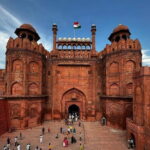
You begin with the Red Fort (Lal Qila), commissioned by Emperor Shah Jahan on 12 May 1638 after shifting his capital from Agra to Delhi. The focus here isn’t just photos. It’s the sense of scale—this was a main residence, not a side project.
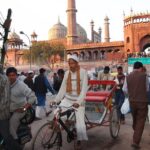
Next comes Jama Masjid, built by Shah Jahan between 1650 and 1656 and inaugurated by its first Imam. It’s one of those places where you feel how Delhi’s religious life and royal patronage were linked.
Then you move to Qutub Minar, part of the Qutb complex and a UNESCO World Heritage site. The tour treats it as a quick, efficient stop—about 30 minutes—so you’ll want to keep your questions ready: why it was built, what it signals, and how it connects to the older fortified city site.
Finally, you close the Delhi portion with Humayun’s Tomb, commissioned in 1558 by Empress Bega Begum and designed by Persian architects Mirak Mirza Ghiyas and his son Sayyid Muhammad. This is a good counterpoint after the Fort and mosque, because it shifts from living space and worship to monumental burial and legacy.
You also have a brief pass at the Parliament House area in New Delhi (near Sansad Marg). It’s not the “main event,” but it helps you get a sense of what’s modern here, especially on day one when your brain is still adjusting to city scale.
Practical note: most of these stops list ticket admission as not included, so factor that into your budgeting if you’re not in the 5-star entry-fee option.
Jaipur’s royal loop: Amber Fort, City Palace, Jantar Mantar, Hawa Mahal
Jaipur comes in as a classic royal sweep, and the tour keeps your time smart. You see the highlights, but you also get enough structure that each site clicks instead of blurring together.
Your day often starts with Amber Fort, located in Amer, about 11 kilometres from Jaipur. The tour gives you the key makers: Raja Man Singh originally built it, with later additions by Sawai Jai Singh. Plan on using that background as your lens while you’re there. Ask your guide what changed over time and why.
Then you slip through the quieter visual moments in Jaipur’s old-town skyline, including Jal Mahal on Man Sagar Lake. It’s described as a palace originally constructed in 1699, later renovated and enlarged in the 18th century by Maharaja Jai Singh II. Even if you only get about an hour and change at that broader area, it’s a memorable contrast: water, palace, and a different rhythm than fort walls.
The tour also brings you to the City Palace of Jaipur, established as the court moved from Amber to Jaipur in 1727 by Maharaja Sawai Jai Singh II. This is important because it explains why Jaipur’s royal identity is built into the city plan, not just into one isolated monument.
You then hit Jantar Mantar, a UNESCO World Heritage site and a collection of 19 astronomical instruments. The monument is completed in 1734, and it includes the world’s largest stone sundial. If you like seeing how people measured the sky before modern tech, this is a great use of time. It’s not just “standing next to rocks.” It’s built for observation.
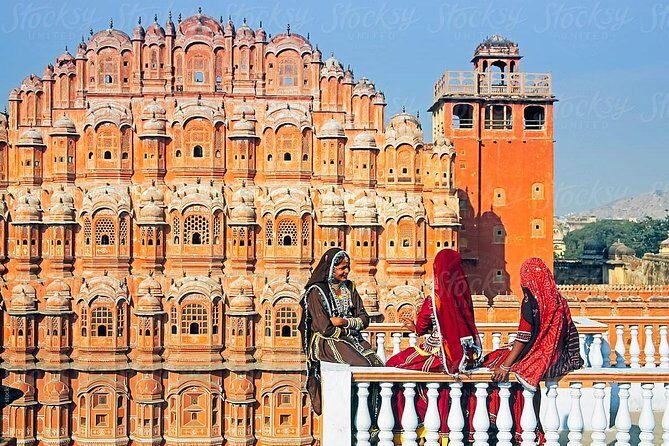
You round out with Hawa Mahal, built from red and pink sandstone and positioned on the edge of the City Palace. The description also notes it extends to the Zenana, or women’s chambers—so you’re seeing a building designed for a specific kind of visibility and daily life.
Hotel nights with the right kind of comfort (and when lunch is on you)
This tour is built around breakfast included across the hotel nights, listed as Breakfast (5). You’ll also have dinner on two different occasions: one traditional dinner with an Indian family in Jaipur, and one dinner at the hotel in Ranthambore.
What’s not included is lunch, and the “Lunch Or Dinner (Unless Specified)” note means you should plan to pay for meals between stops. That’s not a flaw—it’s normal for these kinds of packed schedules. Just don’t assume every hour you’re hungry will be covered.
Hotel standard depends on your selection: 4-star or 5-star hotels for 5 nights. If you pick 5-star and that option includes monument entry fees, you may feel less financial friction overall. If you pick 4-star, you’ll probably save money upfront, then spend more on site tickets. Either can be a good choice; it just depends on how you handle “unknowns.”
Fatehpur Sikri: a detour that explains Mughal reach
One of the smarter parts of this trip is the stop at Fatehpur Sikri, a small city west of Agra founded by a 16th-century Mughal emperor. The tour describes the setting clearly: red sandstone buildings clustering around a central core.
You’ll pass by Buland Darwaza gate, described as the entrance to the Jama Masjid mosque. Nearby you’ll find the marble Tomb of Salim Chishti, plus the Diwan-E-Khas hall with its carved central pillar. You’ll also see Jodha Bai’s Palace, noted as a mix of Hindu and Mughal styles, beside the five-story Panch Mahal that overlooks the site.
This stop works for two reasons. First, it gives you a different flavor than Jaipur and Agra’s main showpieces. Second, it’s a “how empire built space” lesson in one place, without needing extra detours.
It’s also scheduled with about 1 hour 30 minutes, so you’ll want to be ready to move when the driver says go.






Agra’s big two: Taj Mahal plus Agra Fort
Agra is where the trip slows just enough for the most famous payoff.
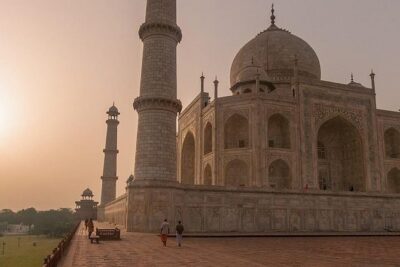
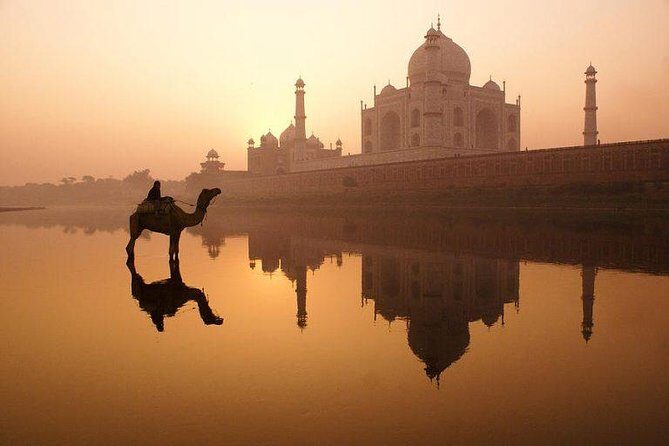
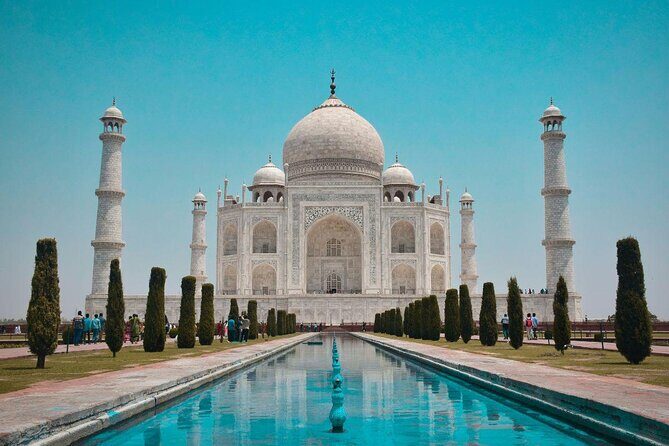
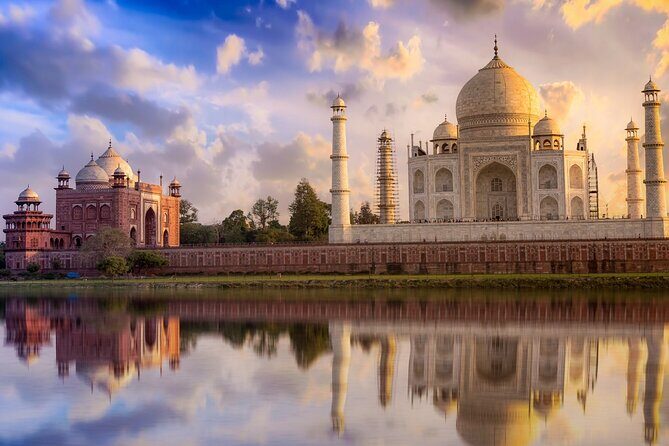
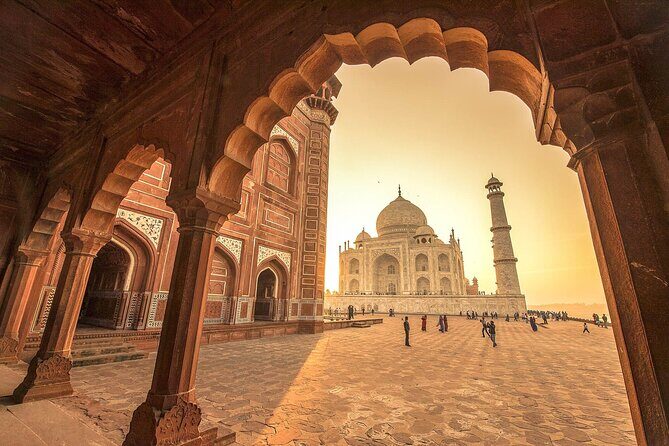
The day includes the Taj Mahal, described as an ivory-white marble mausoleum on the right bank of the Yamuna. It was commissioned in 1632 by Shah Jahan for Mumtaz Mahal’s tomb, and it also houses Shah Jahan’s own tomb. That’s the core fact set the tour uses, and it’s enough to guide your visit. If you know what you’re looking at, you’ll enjoy it more.
A key detail for your budgeting: the Taj Mahal admission is listed as not included on the day’s sights. But there’s a big “if” tied to the package: monument entry fees are included only with the 5-star option.
After that, you head to Agra Fort, built during 1565–1573 for Akbar. The description adds the political timeline: it was a main residence for the rulers of the Sikarwar clan of Rajputs until Mughals occupied it, and then it remained a Mughal seat until 1638 when the capital shifted to Delhi. That timeline detail turns the fort into more than a wall-and-gate photo stop.
Agra Fort gets a shorter visit time (about 40 minutes), so use that block to focus on structure and context rather than trying to see every corner.
Ranthambore National Park tiger safari day: what you can expect
Ranthambore is the wildcard day, in the best way.
The park is described as a vast wildlife reserve near Sawai Madhopur in Rajasthan. It’s a former royal hunting ground and is home to tigers, leopards, and marsh crocodiles. Landmarks inside the reserve include the 10th-century Ranthambore Fort on a hilltop and the Ganesh Mandir temple, plus Padam Talao Lake known for water lilies.
This tour highlights the goal: looking for Bengal tigers. Since sightings aren’t guaranteed, the value here is that the day is specifically designed around wildlife searching, not sightseeing-by-clock.
You also get a sharing safari (only with the hotel options). That matters because it signals a different style of day than the guided monument blocks. It’s less about a checklist and more about being patient, alert, and ready for quick movement.
If you’re the kind of traveler who wants wildlife first and photos second, this day will feel like the heart of the trip.
Private car, local guides, and how your days stay organized
The engine of this tour is simple: private AC vehicle plus driver time. Between Delhi, Jaipur, Ranthambore, Fatehpur Sikri, and Agra, that comfort turns long routes from tiring into tolerable.
Guiding is another big part of the experience. The tour lists local guides for Delhi, Jaipur, Fatehpur Sikri, and Agra. That means you’re not wandering museum-to-museum with no context. You’ll get explanations tied to what you’re actually looking at.
The tour also includes pickup offered in the start city and ends with you being dropped at New Delhi at your desired destination after breakfast on the final day. That last detail matters if you’re connecting onward and don’t want to wrestle with transport after a big wildlife day.
Finally, there’s a small tech comfort: mobile ticket. It’s a minor thing, but it helps when you’re jumping between multiple sites.
Who should book this Golden Triangle plus Ranthambore tour?
This tour fits you best if you want a lot of famous sights without the stress of planning transport and hotels. It’s especially good if it’s your first time in North India and you want a clean overview of Delhi, Jaipur, Agra, and tiger country.
You should also consider it if you like structured days with guided stops at major monuments. The tour’s design is built for momentum: short site blocks, clear priorities, and a driver who keeps the schedule from collapsing.
If you hate rushed timelines, or if you prefer long stays and slow meals at every stop, you might feel the pace. This is a 6-day highlights sprint, not a “settle in and live like locals” trip.
Should you book this 6-day Golden Triangle with Ranthambore?
If you want the best value, I’d make your decision on one question: do you want entrance fees handled for you? The tour says monument entry fee is included only with the 5-star option, while many specific monuments list tickets as not included. If you pick 5-star, you may reduce surprise costs and planning.
Otherwise, book it if you value private comfort, guided context, and a dedicated tiger safari day. This is the kind of route that works well for people who want big moments in one trip: Mughal landmarks in Delhi, royal architecture in Jaipur, the Taj in Agra, and wildlife searching in Ranthambore.
One more practical tip: since lunch is not included unless specified, plan to budget extra for midday food. That way the schedule feels fun instead of annoying.
FAQ
How much does the tour cost?
The price is $387.00 per person.
How long is the tour?
It runs for about 6 days.
Where does the tour start and end?
It starts in New Delhi and is described as round-trip from Delhi, with the last day dropping you at New Delhi to your desired destination.
What type of transportation is included?
You get private air-conditioned vehicle transportation with an experienced driver.
What hotel options are available?
You can choose 4-star or 5-star hotels, with 5 nights of accommodation included and breakfast included.
Is a safari included in Ranthambore?
A sharing safari is included only with the hotel options.
Are monument entry fees included?
Monument entry fees are included only with the 5-star option. The day’s monument descriptions also list many admissions as not included.
What meals are included besides breakfast?
The tour includes dinner: one dinner with a family in Jaipur, plus one dinner at the hotel in Ranthambore.
What is the cancellation policy?
You can cancel up to 6 days in advance of the experience for a full refund, with a 50% refund available for cancellations made 2–6 days before. Less than 2 days before is not refunded.