REVIEW · NEW DELHI
6-Day Private Golden Triangle Tour – Explore Delhi, Agra & Jaipur
Book on Viator →Operated by Crystal India Holidays · Bookable on Viator
Golden Triangle, run like a VIP plan.
What makes this tour work is the mix of private pacing and a tight hit list across Delhi, Agra, and Jaipur, with local guides in each city. I like that you get door-to-door pickup and your own vehicle matched to your group size, so you’re not squeezing into someone else’s schedule. You’re also not left guessing what to do next, which matters on days built around big monuments and real traffic.
One thing to consider: monument entrance fees are not included (the tour lists an entrance fee total of ₹6,000 per person), and drive times are approximate because Delhi and the highway can slow you down.
In This Review
- Key things that make this tour feel smart
- Door-to-door Delhi start: less chaos, more sightseeing time
- Old Delhi street scenes: Jama Masjid, Chandni Chowk, and spice-market energy
- UNESCO gardens and iconic towers: Humayun’s Tomb to Qutub Minar
- The Agra drive that actually saves time: Yamuna Expressway
- Taj Mahal at first light plus Agra Fort: two different kinds of awe
- Jaipur day built for variety: Amber Fort, stepwell stops, and water palace photos
- Jantar Mantar and Hawa Mahal: science-and-royalty contrasts
- Day 6 wrap-up: drive back to Delhi with options
- Price and value: what you’re paying for at $236.70 per person
- Who should book this, and who should skip it
- Should you book this Golden Triangle?
- FAQ
- What cities are included in this 6-day Golden Triangle tour?
- Does the tour include hotel stays and breakfast?
- Are entrance fees to monuments included in the price?
- What kind of transport will I use between Delhi, Agra, and Jaipur?
- Is there a rickshaw ride in the tour?
- How does the tour handle getting to and from the Taj Mahal parking area?
- What are the approximate driving times between the cities?
- Can I cancel for a full refund?
Key things that make this tour feel smart
- True private transportation (group-size matched) so you’re not sharing a vehicle with strangers
- Delhi street-level routing with an Old Delhi rickshaw ride and spice-market time at Khari Baoli
- Taj Mahal logistics handled for you, including a battery-powered bus ride from the parking area
- A good blend of major UNESCO sights and “in-between” stops like stepwells and temples
- 4- or 5-star hotel options with breakfast for 5 nights, when booked with the hotel option
- Flexible add-ons if you want shopping, food, or a different pace
Door-to-door Delhi start: less chaos, more sightseeing time
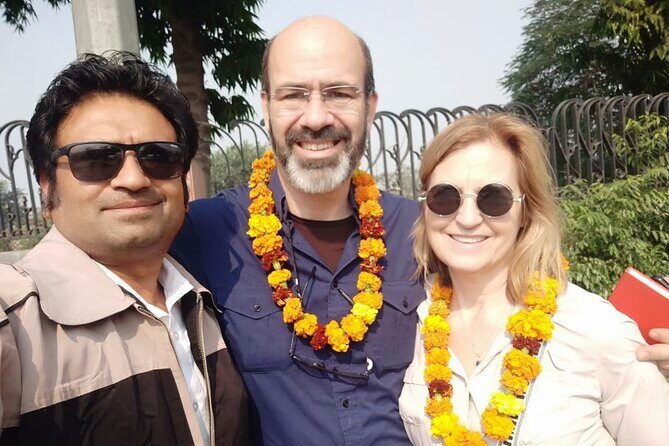
Day 1 is your reset day. You’ll get pickup from the airport, railway station, hotel, or any location you choose within Delhi, Noida, or Gurugram. Then it’s a straightforward transfer to your hotel and check-in, with the rest of the day left open for you to relax or explore nearby.
This matters because Delhi is not a city where you want to start “figuring it out” from zero. A planned arrival also helps you avoid the classic problem: you lose your first hours to finding phones, cards, directions, and the right route through traffic. With private pickup, you can actually get your bearings fast.
If you arrive early, you can use Day 1 as a low-stress warm-up. If you arrive late, you still get a clean plan for the next morning.
You can also read our reviews of more private tours in New Delhi
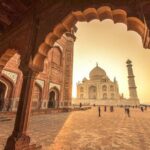


Old Delhi street scenes: Jama Masjid, Chandni Chowk, and spice-market energy
Day 2 is where the tour goes full sensory. You start with Jama Masjid, built by Mughal emperor Shah Jahan in 1656. It’s one of the largest mosques in India, and the highlight is the views from its minarets.
Next comes the Old Delhi rickshaw ride through the lanes around Chandni Chowk, a 17th-century market that still runs on crowds, color, and constant motion. The rickshaw part is especially nice because you get a local-feeling experience without spending the whole day navigating narrow streets on your own.
Then you head to Khari Baoli, described as Asia’s largest spice market. Expect piles of spices and dry fruits, plus the kind of visual overload that makes photos easy—but also makes good behavior important (keep your bag secure and give people room).
A few quieter stops break up the intensity:
- Agrasen Ki Baoli, an ancient stepwell with arched niches
- Gurudwara Bangla Sahib, known for its peaceful sarovar (holy water pond) and the langar, where community meals are part of the tradition
- India Gate, a 42-meter war memorial that’s great for a short stop and photos
You’ll also pass a British-era government building and get a view from outside of a UNESCO Mughal monument symbol (the itinerary lists these as view stops rather than full museum-style time). These are useful because they help you connect the dots between empires, architecture, and what you see later.
Finally, you wrap Day 2 back in Delhi with an overnight stay. It’s a long day, but it’s structured so you keep moving forward.
UNESCO gardens and iconic towers: Humayun’s Tomb to Qutub Minar
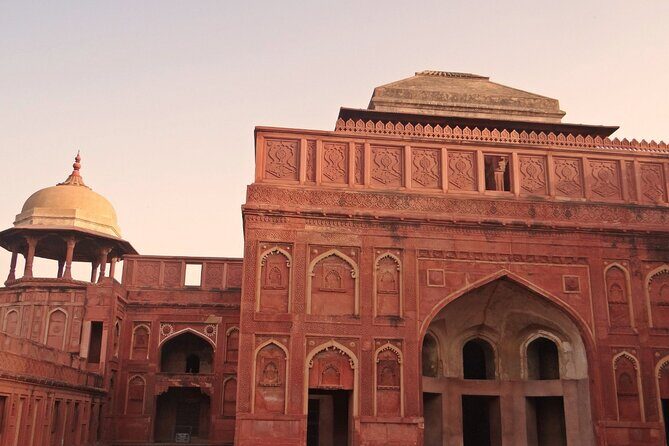
Day 2 doesn’t end with street life. You also go through some of Delhi’s most important landmark architecture.
You’ll visit Humayun’s Tomb, a UNESCO World Heritage Site and the first garden tomb in India. The key detail here is how the tomb’s Mughal design uses red sandstone and white marble, and how the gardens create a calmer rhythm after the chaos of Old Delhi.
Then you’ll add modern spiritual architecture with Lotus Temple, a Bahá’í House of Worship famous for its lotus-shaped design and meditative quiet.
Gandhi Smriti follows—Gandhi’s house where he spent his final days, now a memorial. It’s one of those stops that feels simple on the surface, but it lands emotionally because you’re in the place itself.
And then you finish with Qutub Minar, a tall tower of victory (73 meters) built in 1193 and part of a UNESCO site. The itinerary lists the admission for Qutub Minar as not included, so plan on paying monument fees for it—but the payoff is the landmark scale. You can see why it became a reference point for Delhi’s skyline.
If you like your sightseeing with context, this day delivers. If you prefer lighter days, think of this as the day you do most of your “big monuments” and then you allow Day 3 to be more about getting to the next city.
The Agra drive that actually saves time: Yamuna Expressway
Day 3 starts with the drive from Delhi to Agra using Yamuna Expressway, listed at about 3.5–4 hours. That’s the kind of route choice that matters because the Golden Triangle is partly about logistics.
Once you arrive, the schedule is timed for sightseeing without turning your whole day into a checklist. You’ll include a Taj Mahal view point across the Yamuna River for sunset views, plus a stop at Itmad-ud-Daula—also called the Baby Taj—famous for intricate marble and inlay work.
This is a smart way to “warm up” to the Taj Mahal. Itmad-ud-Daula is smaller, more intimate, and full of detail. It gets your eye trained on marble patterns and craftsmanship before you see the big showpiece.
Taj Mahal at first light plus Agra Fort: two different kinds of awe
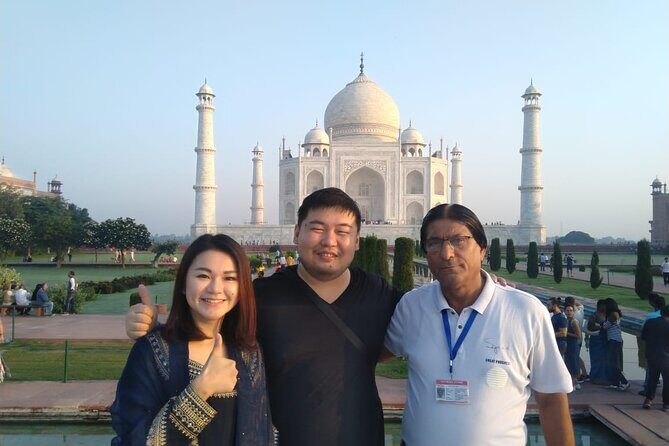
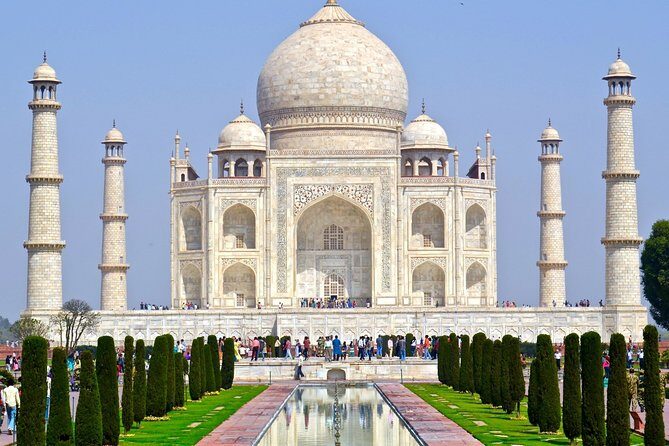
Day 4 is the big one. You go to Taj Mahal, timed for the visual magic of the first rays of sunlight hitting the white marble. The tour lists Taj Mahal time as about 2 hours, and admission is not included in the package price.
If you’ve got limited stamina, keep your expectations realistic: Taj Mahal is impressive, but it’s also a popular place with crowds and heat depending on the season. Private guiding and timing helps you spend your energy looking, not wandering.
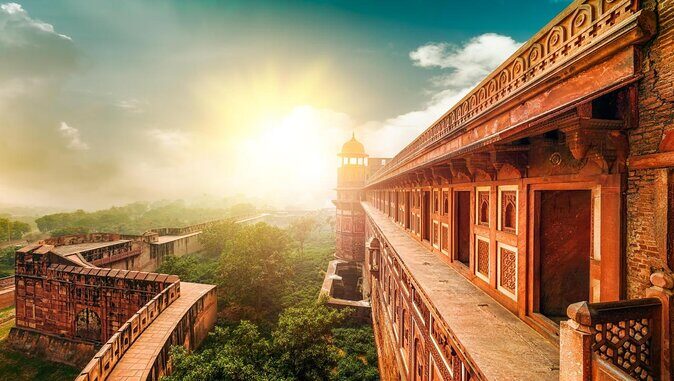
After Taj Mahal, you go to Agra Fort, another UNESCO World Heritage Site. This one is different. Instead of focusing only on marble beauty, it’s about fortifications and imperial residences—palaces, audience halls, and Mughal gardens inside the fort complex.
Then you drive to Jaipur after the Agra tour. The schedule lists the transfer time at about 5 hours. You arrive, check in, and you’re done for the day except for rest.
You can also read our reviews of more tours and experiences in New Delhi





Jaipur day built for variety: Amber Fort, stepwell stops, and water palace photos
Day 5 is a full Jaipur day, and it moves with a clear flow: fort first, then smaller architectural gems, then royal complexes, then observatories, then the iconic façade.
You begin at Amber Palace. It’s described as a majestic hilltop fort blending Rajput and Mughal architecture. Inside, you’ll have time for the Sheesh Mahal (Mirror Palace) and Diwan-i-Aam. Plan on enjoying details—this is where reflective surfaces and palace design show off.
Next is Panna Meena ka Kund, a stepwell with a striking symmetrical stair pattern. The itinerary labels it as a short stop with admission listed as free. It’s also the kind of place that doesn’t need a ton of time to be memorable, which is great when you’re balancing a long day.
Then comes Jal Mahal, the water palace sitting in Man Sagar Lake. You’re not there for hours; it’s a photo stop, and the setting is the point.
Gaitore Ki Chhatriyan follows, described as royal cremation grounds with intricately carved cenotaphs. It’s a different side of Jaipur’s royal story—less about pageantry, more about the architecture of memory.
After that, you move to City Palace of Jaipur. The itinerary notes it’s still used by the royal family, with courtyards and museums inside. That “still in use” detail is key: it doesn’t feel like a dead exhibit.
Jantar Mantar and Hawa Mahal: science-and-royalty contrasts
Still on Day 5, you visit Jantar Mantar, a UNESCO-listed astronomical observatory. The tour description highlights the world’s largest stone sundial and 19 other scientific instruments. This stop is a nice break from the typical fort-palace rhythm, and it often makes people slow down and look longer.
Then you end at Hawa Mahal, Palace of Wind. You’ll get time for the five-story façade with 953 windows, designed for royal women to watch street festivals from behind screens. Even if you don’t catch the festivals in the moment, the architecture tells you why the façade was built the way it was.
This day ends with an overnight stay in Jaipur.
Day 6 wrap-up: drive back to Delhi with options
On Day 6, you start with breakfast and then return to Delhi, listed at about 5 hours. The itinerary also says you can be dropped off at any desired location in Jaipur if you’re continuing your journey elsewhere.
That flexibility is useful if your plans don’t match the standard end point.
Also, because you’re using the same private setup, there’s no awkward scramble for last-minute transport. It’s just a clean close to the loop.
Price and value: what you’re paying for at $236.70 per person
At $236.70 per person for a roughly 6-day private Golden Triangle, the value is mostly in the structure and comfort—not just the sights.
Here’s what you’re getting that typically costs you time and effort if you plan it yourself:
- Private guided sightseeing in each city
- Private, air-conditioned vehicle with an experienced driver
- Hotel stays for 5 nights in 4- or 5-star options if you choose the hotel package, with daily breakfast
- Door-to-door pickup and drop-off between Delhi and your chosen end point
- Bottled mineral water during car journeys
- The battery-powered bus ride to and from Taj Mahal parking
- Taxes and service charges listed as included, aiming to reduce surprise fees
Now the trade-off: monument entrance fees are not included. The tour lists an entrance fee total of ₹6,000 per person for all monuments. In practice, that means you should budget for tickets even if many stops in the day are labeled free (like India Gate, Gandhi Smriti, Lotus Temple, and several Jaipur sights).
Also, your room setup is generally twin-sharing. If you book three people, rooms default to triple-sharing unless you pay for two rooms. That’s one of those details that can matter for comfort, so double-check it for your group size.
Finally, one important note: the tour overview mentions a tiger sanctuary. The day-by-day itinerary you have here doesn’t list a specific tiger sanctuary stop, so I’d confirm directly with the provider whether it’s included as a separate add-on or if it’s meant to replace/adjust another activity.
Who should book this, and who should skip it
This tour is a good match if you want:
- A private experience with no shared vehicle
- A logical route across three cities with minimal decision-making
- Time-saving help for Taj Mahal logistics
- Comfort-minded travel, with vehicle choice based on group size and 4- or 5-star hotels available
You might want a different option if:
- You’re extremely budget-driven and want to skip monument fees
- You prefer to slow down with lots of unscheduled wandering rather than a set route
- You want a very flexible plan without any organized sequencing (this is organized, on purpose)
If your goal is to see the key icons—Qutub Minar, Amber Fort, Hawa Mahal, and the Taj Mahal—without turning your trip into a transport puzzle, this is a strong, practical way to do it.
Should you book this Golden Triangle?
I’d book it if you like your India trip with clear structure and comfort built in. The private vehicle setup, daily breakfast where included, and the way the schedule handles Taj Mahal access make it a low-friction choice for a first (or second) Golden Triangle.
Before you say yes, do two quick checks:
1) Confirm how the tiger sanctuary mention fits with the exact itinerary you’ll receive.
2) Budget for entrance fees (₹6,000 per person) so you’re not surprised later.
FAQ
What cities are included in this 6-day Golden Triangle tour?
The tour covers Delhi, Agra, and Jaipur over approximately 6 days.
Does the tour include hotel stays and breakfast?
It includes five nights of accommodation and daily breakfast if you book the tour with the hotel option. You can also book without hotels if you already have your own accommodations.
Are entrance fees to monuments included in the price?
No. Entrance fees are not included. The tour lists an entrance fee total of ₹6,000 per person for all monuments.
What kind of transport will I use between Delhi, Agra, and Jaipur?
You’ll travel in a private air-conditioned vehicle with an experienced driver. The type of vehicle is matched to your group size (sedan, MPV, or van).
Is there a rickshaw ride in the tour?
Yes. The itinerary includes a traditional rickshaw ride in Old Delhi.
How does the tour handle getting to and from the Taj Mahal parking area?
The tour includes a battery-powered bus ride to and from the Taj Mahal parking area.
What are the approximate driving times between the cities?
The tour lists about 3.5–4 hours from Delhi to Agra, about 5 hours from Agra to Jaipur, and about 5 hours from Jaipur back to Delhi (exact times depend on traffic and time of day).
Can I cancel for a full refund?
Yes. There is free cancellation up to 24 hours in advance for a full refund. Cancel at least 24 hours before the experience start time to get your full payment back.