REVIEW · NEW DELHI
4-Days Private Luxury Golden Triangle Tour Agra Jaipur New Delhi
Book on Viator →Operated by Golden Triangle Tours India · Bookable on Viator
Golden Triangle tours can feel like a sprint. This one is set up to feel calmer, with private A/C transfers and tight, guided sightseeing in three of India’s biggest hits. I like the daily breakfast included (when you choose the hotel option), and I like how the plan layers famous monuments with the kind of context you only get from a real guide. One drawback to keep in mind: monument entrance tickets are not included, and you should budget for them.
What makes this itinerary work is the flow. You move city to city with a driver, then you focus on sights instead of street math, rickshaw negotiations, and figuring out where the ticket lines start.
The tour is truly private, so you’re not squeezed into someone else’s schedule. Just know you’ll likely start early on the Taj Mahal day for sunrise, and some key entrances (like inside the Taj, Forts, and several Jaipur sites) are ticketed separately.
In This Review
- Key Things That Make This Tour Worth It
- A Smooth Golden Triangle Loop With Real Guide Time
- Price Breakdown: What You’re Actually Paying For
- Day 1 in New Delhi: Qutub, Lotus, Old Delhi, and Humayun’s Tomb
- Qutub Minar
- Lotus Temple
- India Gate and Parliament House
- Jama Masjid and Chandni Chowk (Old Delhi flavor)
- Agrasen Ki Baoli
- Humayun’s Tomb
- End of Day 1: Drive to Agra
- Day 2 Agra: Sunrise Taj Mahal Plus Forts and the Baby Taj
- Taj Mahal sunrise and guided interior visit
- Agra Fort
- Itmad-ud-Daula (Baby Taj)
- Chand Baori stepwell
- Arrival in Jaipur
- Day 3 Jaipur: Amber Area, Jal Mahal Photos, and Major City Palace Stops
- Panna Meena ka Kund
- Jaipur city / Amber-area fort highlight
- Jal Mahal photo stop
- City Palace
- Jantar Mantar (UNESCO)
- Hawa Mahal quick hit
- Albert Hall Museum (quick look)
- Patrika Gate and Royal Gaitor
- Day 4 Jaipur: Birla Mandir Latticework and Galtaji Monkey Temple
- Birla Mandir Temple
- Galtaji Temple (Monkey Temple)
- Hotels, Guides, and Transfers: How the Luxury Part Actually Helps
- Entrance Fees and Time Planning: The Part People Forget
- Quick Guide to Who This Tour Fits Best
- Should You Book This 4-Day Private Luxury Golden Triangle?
- FAQ
- What is the duration of the Golden Triangle tour?
- Does the tour include pickup and drop-off?
- Are private air-conditioned transfers included?
- Is hotel accommodation included?
- Are breakfast meals included?
- Are monument entrance tickets included in the price?
- Is the Taj Mahal area accessed with a special transport?
- Is cancellation free?
Key Things That Make This Tour Worth It
- Door-to-door A/C transport with parking, fuel surcharges, and taxes handled
- Private local guides throughout, with an English-speaking guide included
- Optional hotel upgrade for 3 nights plus a daily breakfast to start your days right
- Battery bus ride to Taj Mahal parking, which saves time and walking
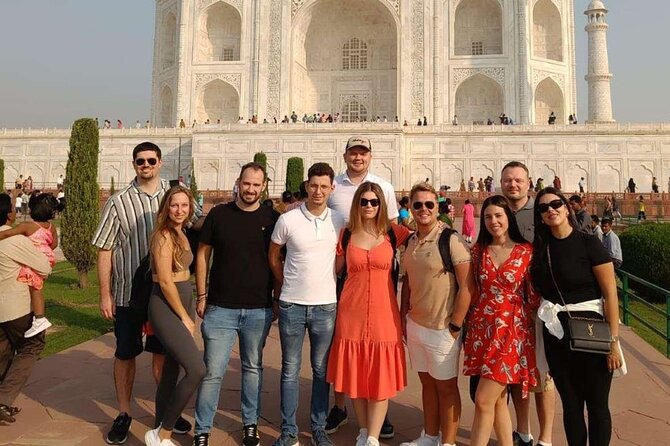
- Taj Mahal sunrise + guided interior visit (admission not included)
- Strong customer support, with fast correction when booking dates get mixed up
A Smooth Golden Triangle Loop With Real Guide Time
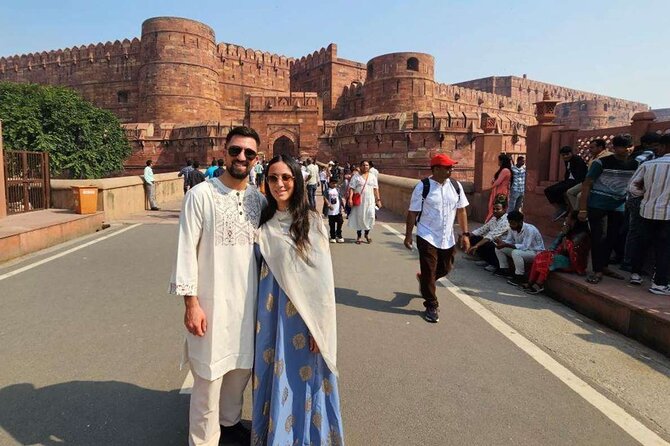
The Golden Triangle is famous for a reason. Delhi, Agra, and Jaipur stack major sights on top of each other—so you can’t really “wing it” unless you love logistics chaos. This tour is built for people who want the famous moments, but also want meaning while they’re there.
I like that the day-to-day structure is guided. That matters because India’s monuments reward context. A guide can explain why a building looks the way it does, what power group built it, and what changed over centuries. Without that, you can still take photos. With it, you understand what you’re seeing.
Also, this isn’t a “bus tour.” It’s private. Your group has its own vehicle and driver, and your guide guides your pacing. That’s a big deal when traffic is heavy, roads shift, or you want to pause for a better view.
You can also read our reviews of more private tours in New Delhi


Price Breakdown: What You’re Actually Paying For
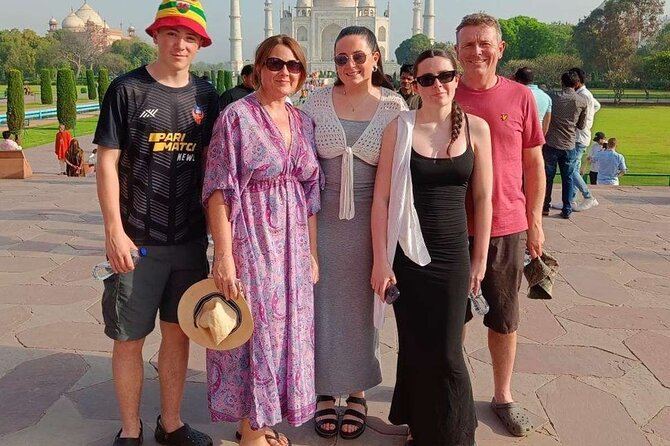
This tour lists at $173.07 per person. That number looks low for a private 4-day plan—until you factor in what’s included versus what you buy separately.
Here’s the big value story:
- Private, air-conditioned car with driver for city days and transfers
- Guided sightseeing with private local guides
- Bottled mineral water during journeys
- Parking and fuel surcharges, plus taxes
- Pickup from the airport, railway station, hotel, or other Delhi pickup locations
- Optional hotel upgrade (3 nights) with breakfast (3)
Here’s what you should budget for separately:
- Monument entrance tickets (listed as about $90 per person)
- Lunch and dinner (not included)
- Tips for the driver and guide (not included)
When you add it up, you’re paying for comfort and time savings. The private vehicle and guides reduce the biggest “hidden costs” of independent travel: time lost figuring out transport, ticket logistics, and what to prioritize. If you want to see a lot without burning hours, that’s where your money goes.
Day 1 in New Delhi: Qutub, Lotus, Old Delhi, and Humayun’s Tomb
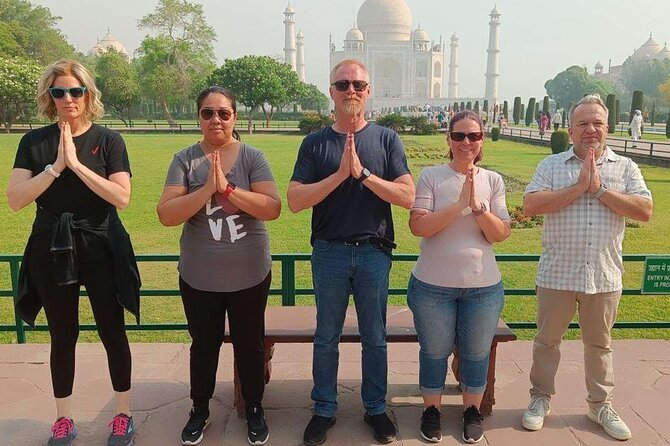
New Delhi can hit you all at once. This day is a smart mix of “wow factor” monuments and a quick taste of Old Delhi energy.
Qutub Minar
You start at Qutub Minar, a UNESCO World Heritage site and one of Delhi’s signature vertical landmarks. It rises about 73 meters and dates to the early era of the Delhi Sultanate, commissioned by Qutub-ud-din Aibak. The architecture here is iconic—look closely and you’ll notice the layered design style.
Ticket note: admission isn’t included.
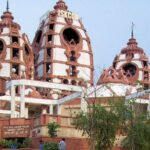
Lotus Temple
Next is the Lotus Temple, with its flower-like shape and a welcoming mission that keeps it open regardless of religion. It’s the kind of stop that helps you breathe after the intensity of the city.
Ticket note: admission is free.
You can also read our reviews of more tours and experiences in New Delhi






India Gate and Parliament House
Then you roll past the India Gate memorial area near Rajpath. It’s short on time but strong on atmosphere—also a popular picnic spot for locals. A few minutes later, you get a quick view of Parliament House (Sansad Bhavan), designed around a circular motif inspired by the Ashoka Chakra.
Ticket note: free for both.
Jama Masjid and Chandni Chowk (Old Delhi flavor)
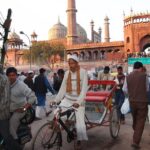
In Old Delhi, you’ll hit Jama Masjid, one of the largest mosques in India, built between 1650 and 1656 by Shah Jahan. Plan for this to feel like a full cultural moment, not just a picture stop.
Then comes Chandni Chowk, a dense market area known for spices, dried fruit, silver jewelry, and saris. It’s a good place to slow down and just watch how the city moves.
Ticket note: Jama Masjid admission isn’t included; Chandni Chowk is free.
Agrasen Ki Baoli
You also stop at Agrasen Ki Baoli, a protected stepwell site with a long, narrow form. It’s short, but it’s also one of those “how is this still not on everyone’s must-see list?” moments—especially if you’re interested in older water structures.
Ticket note: free.
Humayun’s Tomb
You finish the day with Humayun’s Tomb, another Mughal-era landmark. This is the kind of site where the gardens, symmetry, and mausoleum scale start to make sense as you’ve seen more of Delhi’s layers.
Ticket note: admission isn’t included.
End of Day 1: Drive to Agra
After lunch time (not included) you’ll head out via the Yamuna Expressway and arrive in Agra to check in and rest. The driving stretch is about 3 hours, and traffic can move the exact timing.
Practical tip: if you’re prone to motion sickness, keep something handy. The highway ride is manageable, but you’ll still be in a car for a while.
Day 2 Agra: Sunrise Taj Mahal Plus Forts and the Baby Taj

Agra is about one thing for most people: the Taj Mahal. This day is built around it, including a sunrise moment.
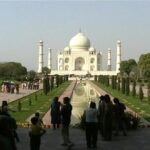
Taj Mahal sunrise and guided interior visit
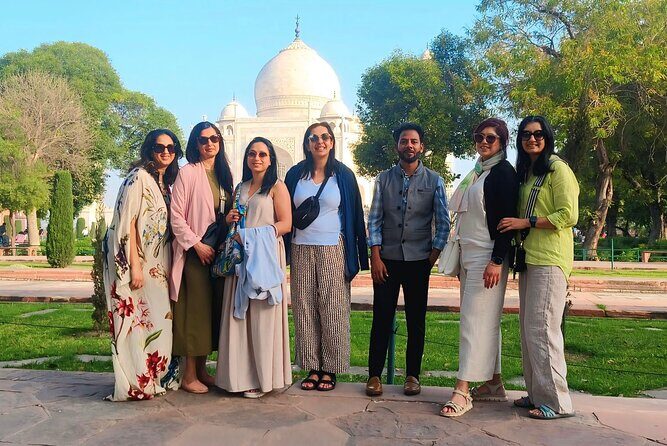
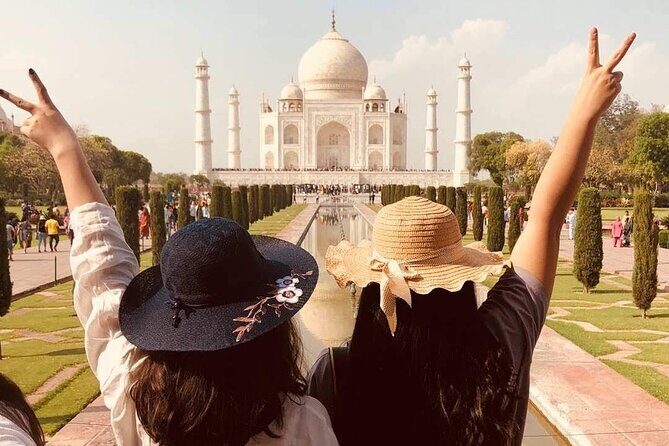
You’re set up to watch the sun rise over the Taj Mahal. Sunrise matters here because the light changes the marble quickly. Then you’ll have a guided tour inside for around two hours, with your guide explaining the story of the monument commissioned by Mughal Emperor Shahjahan in the 1630s.
Ticket note: entrance isn’t included.
Also included: a battery bus ride to and from the Taj Mahal parking lot. That reduces walking on day 2, and it’s worth it when you’re arriving before crowds fully surge.
Agra Fort
Next is Agra Fort, a UNESCO site and a major power-center location in Mughal times. You’ll focus on palaces, balconies, and gardens while your guide connects the fort’s layout to the people who lived and ruled there.
Ticket note: admission isn’t included.
Itmad-ud-Daula (Baby Taj)
Then you visit Itmad-ud-Daula, often called the Baby Taj. It’s a Mughal mausoleum with outbuildings and gardens that feel smaller than the Taj but still very detailed. Great if you like architecture work and ornamentation.
Ticket note: admission isn’t included.
Chand Baori stepwell
You end with Chand Baori, the famous stepwell reached by 3,500 steps. The stepwell is mostly about the geometry and how the space drops away, so come in expecting “visual math.”
Ticket note: admission isn’t included.
Arrival in Jaipur
After you move on from Agra, you check in at your Jaipur hotel and the day ends. That Jaipur arrival gives you a chance to reset—handy because Day 3 is full.
Day 3 Jaipur: Amber Area, Jal Mahal Photos, and Major City Palace Stops
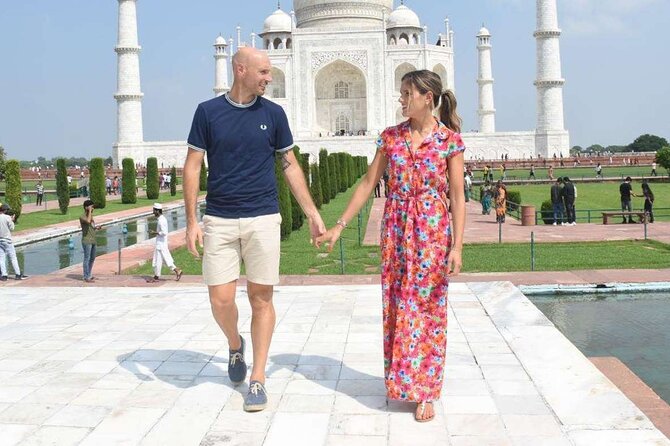
Jaipur rewards you for being curious. This day hits the best-known sites, but the order helps you keep energy for the places you’ll want to linger.
Panna Meena ka Kund
You start with Panna Meena ka Kund, a step well near Amber Fort. It’s short time, but it’s visually strong—a good warm-up for the day’s theme: how Rajasthan built clever structures for water, power, and living.
Ticket note: free.
Jaipur city / Amber-area fort highlight
Then you move to Jaipur’s famous fort area for a guided visit (about two hours). It’s described as the capital until 1728, and you’ll see palaces, squares, and monuments through your guide.
Ticket note: free for this stop in the plan.
Practical note: this is the point where comfy shoes matter. Jaipur has lots of short climbs and uneven surfaces.
Jal Mahal photo stop
Next is Jal Mahal, the palace that sits in the lake. You’ll get a photo opportunity. Even if you can’t linger like you want, this is a great framing moment for Jaipur’s “water-and-palace” story.
Ticket note: free; time on-site is short.
City Palace
Then you’re at Maharaja’s City Palace for about one hour. City Palaces are more than a building. They’re an administrative, ceremonial, and residential record of how rulers displayed power.
Ticket note: admission isn’t included.
Jantar Mantar (UNESCO)
You also visit Jantar Mantar, a UNESCO World Heritage site built in 1734. It includes nineteen astronomical instruments tied to Rajput king Sawai Jai Singh II. If you like science and old-world engineering, this is one of the most satisfying stops of the trip.
Ticket note: admission isn’t included.
Hawa Mahal quick hit
Then comes Hawa Mahal, the Palace of Breeze, famous for its honeycomb-style windows in pink and red sandstone. Time is short here, about 15 minutes, but you’ll see why it’s shaped like a five-storey pyramid.
Ticket note: free.
Albert Hall Museum (quick look)
Next is Albert Hall Museum, the state’s oldest museum. Time here is brief, so think of it as a taste rather than a full museum afternoon.
Ticket note: admission isn’t included.
Patrika Gate and Royal Gaitor
You wrap with Patrika Gate for photos, then Royal Gaitor Tumbas for an hour of looking at carved tomb structures and temples within the complex.
Ticket notes:
- Patrika Gate is free.
- Royal Gaitor Tumbas admission isn’t included.
By the end of Day 3, you’ll have a Jaipur mix: forts, royal spaces, science, and photo-worthy architecture. It’s not a slow museum day, but it’s a strong overview.
Day 4 Jaipur: Birla Mandir Latticework and Galtaji Monkey Temple
Day 4 keeps a lighter feel. It’s still sightseeing, but it shifts toward temples and shorter stops rather than long fort interiors.
Birla Mandir Temple
You start at Birla Mandir, known for intricate white marble latticework. It’s dedicated to Lord Vishnu in the plan. The stop is only about 30 minutes, but the look of the temple is the point—clean lines and detail.
Ticket note: free.
Galtaji Temple (Monkey Temple)
Then you head to Galtaji Temple, also called the Monkey Temple. It’s known for three sacred pools of water and a complex layout. Expect a lively atmosphere, even if you only spend half an hour.
Ticket note: free.
At the end, the tour returns to the meeting point, which is back at the starting location in New Delhi (or your original pickup point as stated).
Hotels, Guides, and Transfers: How the Luxury Part Actually Helps
This package is “luxury” in the ways that matter on the ground:
- You’re in an air-conditioned private car every day
- Your guide handles the sightseeing flow, so you’re not hunting for routes
- Pickup is offered from airport, railway station, hotel, or another Delhi location
- Battery bus access to Taj area reduces effort and saves time
- Bottled water is included during journeys
Hotel notes (important if you upgrade):
- The tour includes 3 nights when you choose the hotel option.
- Rooms are typically twin-sharing.
- If you book for 3 people, it defaults to triple-sharing, and you can choose 2 rooms with an extra charge.
One small but meaningful point: it’s listed as a private tour with only your group participating, which helps if you don’t want to be stuck waiting for strangers.
Also, the plan mentions fully vaccinated private driver and private guides. If that matters to you for peace of mind, it’s good to see it explicitly stated.
Entrance Fees and Time Planning: The Part People Forget
The biggest budgeting surprise on Golden Triangle tours is entrance fees and timing. Here, admission fees are clearly not included, and the plan estimates $90 per person for monument tickets.
Your itinerary also marks some stops as free and others as paid. That means you’ll still get a lot of value even after paying tickets, but you should carry cash or card for what’s required.
A smart approach:
- Treat monument entry as a separate line item from the tour price.
- Plan to pay for timed entries like major interiors (Taj interior, Agra Fort, and several Jaipur paid sites) without expecting the tour cost to cover them.
- Use the guides’ help: the plan says your guide will help you buy entrance fees so you don’t have to wait in lines.
For meals: lunch and dinner are not included. There is time set aside for lunch on Day 1, but you’ll be choosing where to eat. If you have dietary needs, tell your guide early so they can point you to workable options nearby.
Quick Guide to Who This Tour Fits Best
This is a great match if:
- you want a private Golden Triangle experience without stress
- you prefer guided context over self-guided wandering
- you want A/C comfort and fewer transfer headaches
- you’re okay budgeting for monument entrance tickets separately
It may be less ideal if:
- you want everything fully included (including meals and entrances)
- you hate early starts—because Taj Mahal sunrise is part of the plan
Should You Book This 4-Day Private Luxury Golden Triangle?
I’d book this if you want the big names—Qutub Minar, Lotus Temple, Old Delhi markets, Humayun’s Tomb, Taj Mahal sunrise, Agra Fort, Jaipur’s forts and palaces—but you don’t want to turn your trip into a logistics project.
The price makes sense when you value private transport, daily guidance, and the time saved by not figuring out routes on the fly. The sunrise Taj day is the kind of moment that feels worth the effort, and the included battery bus support helps keep it from turning into a walking marathon.
One last nudge: because entrance fees and meals aren’t included, read your budget carefully before you commit. If you’re ready for that, this is a strong, well-paced way to see India’s most famous highlights across three cities without burning vacation time.
FAQ
What is the duration of the Golden Triangle tour?
The tour runs for 4 days (approx.).
Does the tour include pickup and drop-off?
Yes. Pickup is offered from Indira Gandhi Intl Airport, railway station, hotel, or other pickup locations in Delhi. The tour ends back at the meeting point.
Are private air-conditioned transfers included?
Yes. You get private, air-conditioned car transfers with a driver each day.
Is hotel accommodation included?
Hotel accommodation is included only if you choose the option that includes hotels. It covers 3 nights.
Are breakfast meals included?
Yes. Breakfast is included 3 times (one each morning for the 3-night hotel option).
Are monument entrance tickets included in the price?
No. Entrance fees are not included. The plan estimates $90 per person for admission tickets, and tickets for each monument vary.
Is the Taj Mahal area accessed with a special transport?
Yes. You get a battery bus ride to and from the Taj Mahal parking lot up to the monument.
Is cancellation free?
Yes, it offers free cancellation up to 24 hours in advance for a full refund.