REVIEW · NEW DELHI
5 Day Private Luxury Golden Triangle Tour to Delhi Agra Jaipur
Book on Viator →Operated by A-1 Tours India - Private Day Tours · Bookable on Viator
Five days. Three cities. Zero stress. This Golden Triangle trip feels interesting because it moves fast across the big icons of Delhi, Agra, and Jaipur, but you do it with a private air-conditioned vehicle and English-speaking driver plus guides at major monuments. You get a clear route through Mughal and Rajput highlights, with enough flexibility to start sightseeing when you want.
I love the built-in comfort details: meet-and-greet pickup, bottled water, and a plan that includes the Taj Mahal battery bus so you’re not stuck with the longest walk from the parking area. I also like the simple morning win—breakfast at the hotel is included—so you can focus on temples and tombs instead of figuring out meals first.
One consideration: the schedule is packed. You’ll hit many stops with short windows, and lunch and dinner aren’t included, so you’ll want to budget extra time (and cash) for food runs and water along the way.
In This Review
- Key highlights that matter in real life
- Delhi in one day: Humayun’s Tomb, Lotus Temple, and two major forts
- Old Delhi to New Delhi: what the guide time actually gives you
- Agra: Taj Mahal comfort plus Agra Fort payoff
- Fatehpur Sikri to Jaipur: a powerful stop on the way
- Jaipur’s royal loop: Amber Fort, City Palace, and Jantar Mantar
- Comfort and logistics: why pickup, guides, and bottled water matter
- Price and value: what you’re really paying for at $194
- Rooms, groups, and how the tour handles sharing
- Should you book this Golden Triangle tour?
- FAQ
- What does the tour cover?
- Is pickup and drop-off included?
- Will I have a driver and guide who speak English?
- Are meals included?
- Are monument entrance fees included?
- Is the Taj Mahal access handled differently?
- What if I need to cancel?
Key highlights that matter in real life
- Private, air-conditioned vehicle with an English-speaking driver for smooth timing between cities and sights
- Taj Mahal battery bus ride included to cut down on hassle near the complex
- Hotel breakfast (4) plus bottled water daily helps keep the days comfortable
- Guides at locations explain what you’re seeing and connect the dots between sites
- Admissions handled as listed (for example Taj Mahal and several Delhi/Agra forts) while other stops are marked free
- Good coordination signals, including fast WhatsApp contact with Javed and a driver like Sultan Singh praised for professionalism and helpful restaurant tips
Delhi in one day: Humayun’s Tomb, Lotus Temple, and two major forts
Delhi can feel like a blur on your own. This tour reduces the chaos by grouping the day’s stops in a sensible order and getting you from point to point in a dedicated car. The key win here is that you don’t lose your morning to transit puzzles.
You start with arrival support. If you’re landing at Indira Gandhi Intl Airport (or coming from your hotel), you’re met by a representative holding your name card. After that, you transfer to the hotel and get going on a mix of New Delhi and Old Delhi highlights.
In New Delhi, the stops include Birla Temple, India Gate, and the President’s residence area (Rashtrapati Bhavan). Birla Temple is a straightforward early stop, and India Gate is more than a photo spot—it’s a war memorial, built under British rule with the Imperial War Graves Commission context. The point of starting here is to get oriented: you’ll quickly understand why Delhi’s landmarks feel so layered.
Then you shift into the Mughal story with Humayun’s Tomb. It’s commissioned by Humayun’s first wife, Empress Bega Begum, in 1558, and designed by Mirak Mirza Ghiyas and Sayyid Muha. Humayun’s Tomb works well in a tight schedule because it gives you a strong “before Taj” reference point for the rest of the trip.
Right after that, Lotus Temple adds a totally different visual mood. It’s a Bahá’í House of Worship with the lotus-like shape, dedicated in December 1986. It’s also a nice pause between heavy fort and tomb days—an easy way to reset your eyes and camera settings before moving into Old Delhi.
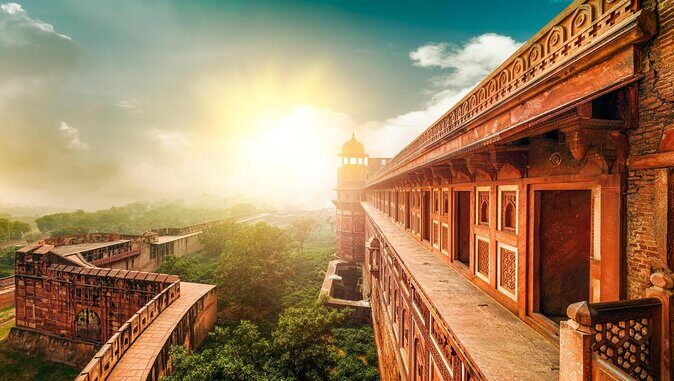
For classic Old Delhi impact, you’ll visit Red Fort and Jama Masjid. Red Fort is described as a historic fort in Old Delhi and the main residence of Mughal emperors, commissioned by Shah Jahan on 12 May 1638. Jama Masjid comes later as one of the largest mosques in Delhi, built by Shah Jahan between 1650 and 1656. Seeing these close together helps you understand how architecture and power show up in everyday city space.
Qutub Minar rounds out the day with a UNESCO World Heritage Site vibe. It’s listed as being built between 1199 and 1220, which means it anchors your Delhi day in a timeline that runs much deeper than the Mughal period you’ll keep seeing. If you like monuments that feel like they’ve been absorbing the city for centuries, Qutub Minar is the kind of stop that earns your attention.
You also get Raj Ghat and a close look at Gandhi’s memorial in Delhi. It’s a memorial dedicated to Mahatma Gandhi, and it connects to the idea that Old Delhi used to have a historic ghat area nearby. That makes the day feel less like a checklist and more like a tour of changing meanings across the same ground.
Practical tip: you’ll notice several stops are either short or marked as ticket included versus free. That’s good news for pacing—especially if you don’t want to spend your whole day standing in lines. The guides and timing plan are what keep the day from turning into a paperwork exercise.
You can also read our reviews of more private tours in New Delhi



Old Delhi to New Delhi: what the guide time actually gives you

On a multi-stop day, the difference between a good tour and a frustrating one is how the information is handled. Here, you’re not just dropped at gates. The plan includes a professional, friendly guide at each location to share history and context.
That matters most at the places where the details aren’t obvious. For example, with Humayun’s Tomb and Red Fort, it helps to know who commissioned what and why. The guide time makes your photos better, because you’ll know what to frame and what to look for.
Even with quick stops—like the 15-minute India Gate stop or the brief pass at Raj Ghat—you get just enough background to keep the day meaningful. Without that, those monuments can turn into “I took a picture, I guess that’s it.”
Agra: Taj Mahal comfort plus Agra Fort payoff
Agra is where the tour hits its emotional peak. The day starts after breakfast, and you travel to Agra, check into the hotel, then head out for sightseeing.
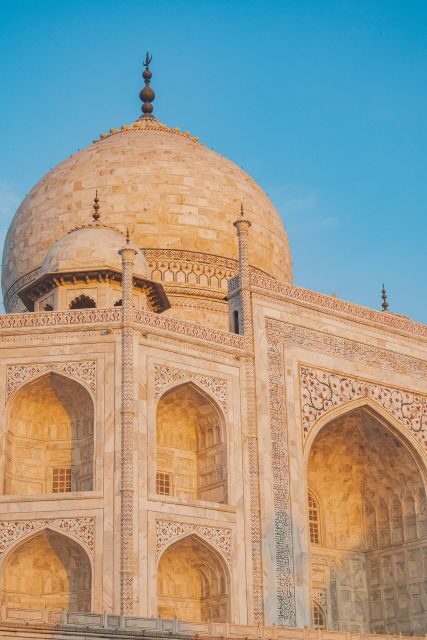
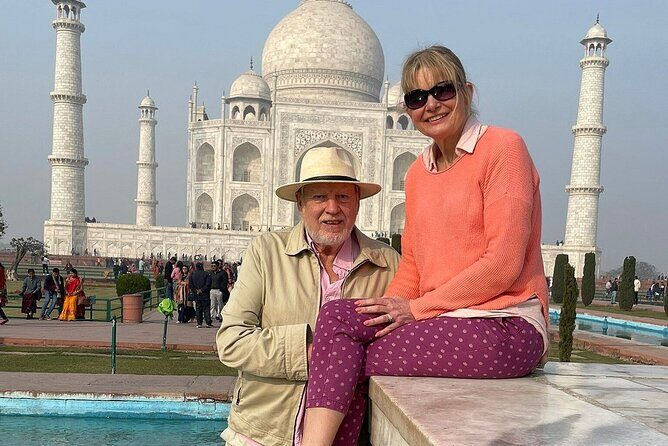
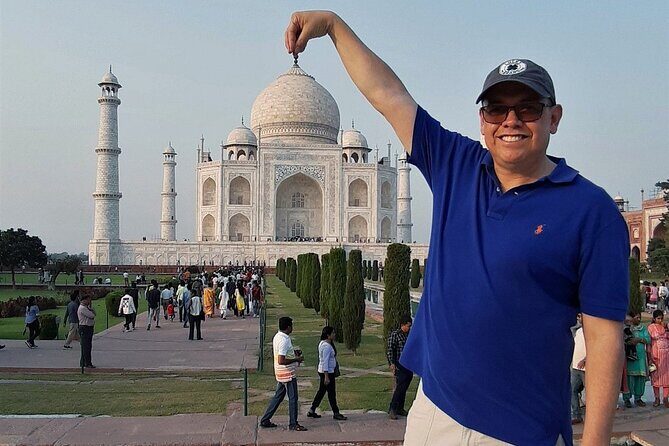
The first major target is the Taj Mahal. The tour frames it as the symbol of love: an ivory-white marble mausoleum on the Yamuna’s right bank, commissioned in 1631 by Shah Jahan to house Mumtaz Mahal’s tomb, and also housing Shah Jahan’s own tomb. That’s a lot to hold in your head, which is exactly why having a guide helps. The place is iconic, but understanding what it represents makes the experience feel personal instead of only dramatic.
A practical bonus: you get the battery bus ride to and from Taj Mahal parking lot up to Taj Mahal. That’s one of those small logistics wins that you feel immediately once you’re there. Even when you’re excited, long walks in heat and crowd conditions can drain your energy. This arrangement keeps you fresher for the viewing time.
Agra Fort follows later as the second “big moment.” It’s described as Agra’s Red Fort, and it notes Humayun’s coronation there and Akbar’s renovation in 1565, with present-day structure dating from that period of rebuilding. This stop works well after the Taj because it gives you a different angle on Mughal power—more defensive, more political, and less romantic.
Practical tip: Taj and Agra Fort are both ticket-marked in the plan (Taj Mahal is listed as admission ticket included, and Agra Fort as admission ticket included). That means you’re less likely to waste time negotiating entry rules on-site.
Fatehpur Sikri to Jaipur: a powerful stop on the way
Day 3 is a travel-and-discovery combo. After breakfast, you head toward Jaipur and make a meaningful stop at Fatehpur Sikri.
Fatehpur Sikri is described as Akbar’s old capital. You’ll see Buland Darwaza (listed as the world’s largest entrance gate) and the Shrine of Sheik Salim Chisti. Even if you’re not trying to memorize dates, this is the kind of stop that helps you understand how a “capital city” concept worked in practice—monuments weren’t isolated; they were part of a planned center.
Then Panch Mahal is included as well. The plan says it’s 37 km from Agra, built by Jalal-ud-din Mohammad Akbar in honor of Sheikh Salim Chisti. It’s listed with an admission ticket included, which usually means you’ll spend time in places where you can actually read the structure rather than just pass by from outside.
When you arrive in Jaipur, you check into your hotel for overnight. This is a good place for the tour to slow slightly. After Taj-level intensity and fort intensity in Agra, Fatehpur Sikri and then Jaipur lodging helps you avoid the burnout that can happen when every day is only monuments.
Jaipur’s royal loop: Amber Fort, City Palace, and Jantar Mantar
Jaipur is where the trip turns into a proper royal circuit. After breakfast, the day starts with an excursion to Amber Fort on the outskirts of Jaipur. Amber Fort is described as the classic romantic Rajasthan fort palace, construction started by Man Singh I in 1592. That alone tells you what kind of visuals you’ll get: fortress-meets-palace drama.
You also get time for Amber Fort inside access, with the plan marking admission ticket included and listing about 2 hours for the stop. That’s a fair chunk of time for a site like this, especially when it’s one of the highlights of the entire Golden Triangle.
From Amber, you continue to Jal Mahal, the Water Palace in the middle of Man Sagar Lake. The plan notes it was originally constructed in 1699 and later renovated. The stop is short in the schedule (10 minutes), which is fine. Jal Mahal is the kind of place where a quick viewpoint can still deliver a strong payoff.
Next comes the City Palace of Jaipur. It’s listed as a royal residence and former administrative headquarters of Jaipur State rulers, with construction completed in 1732. It now houses Maharaja Sawai Man Singh II. If you want a calmer shift away from big courtyards and forts, City Palace tends to do that—it gives you museum-like structure and built-in context.
Then you hit Jantar Mantar, the observatory. The plan says it has 19 astronomical instruments built by Rajput king Sawai Jai Singh, and the monument was completed in 1734. It also lists the world’s largest stone sundial. This is a great contrast stop in a Rajasthan day because it’s not only about royal architecture. It’s science built into stone.
Hawa Mahal is also included. The plan describes it as a palace made from red and pink sandstone, extending to Zenana women’s chambers, built in 1799. Even when your stop is brief, the sheer face-and-balcony pattern is easy to spot once you’re there.
To round out the day, Albert Hall Museum and Birla Mandir Temple appear as shorter add-ons. Albert Hall Museum is listed as the oldest museum of the state, designed by Samuel Swinton Jacob, opened as public museum. Birla Mandir is listed as a white marble Lakshmi Narayan Temple built by the B.M. Birla Foundation in 1988.
Practical tip: This is one of those full-day blocks where you’ll want to pace yourself. Start strong at Amber, then let the later stops be more about visuals and atmosphere rather than trying to absorb every detail. Guides help a lot, but your feet and patience still matter.
You can also read our reviews of more tours and experiences in New Delhi






Comfort and logistics: why pickup, guides, and bottled water matter
What makes this tour feel “private luxury” in practice isn’t the label. It’s the daily friction removed.
You get a private air-conditioned vehicle sized to your group: a 4-seater sedan for 1–2 people, a 6-seater MUV for 3–4, and a 10-seater van for 5–10. That matters because you avoid the cramped shuffle that turns sightseeing into fighting for elbow space.
You also get English-speaking professional driver support and guides for the Delhi–Agra–Jaipur parts. On a route like this, the driver’s value is timing and navigation, especially when you’re bouncing between monuments and crossing city traffic.
Meals are handled in one key way: breakfast is included (4 breakfasts listed). That sets you up for long days without improvising your first meal each morning. Bottled water is also included, listed as 2 bottles of 500 ml per person per day. It’s not glamorous, but it keeps the day simple.
Another subtle win is flexibility. The tour notes you can start sightseeing at your desired time. That’s helpful if you’re dealing with an early arrival, a late wake-up, or you want to build in a slower pace on a specific day.
Price and value: what you’re really paying for at $194
At the listed price of $194, the big question is: does it feel fair for a 5-day private Golden Triangle? Based on what’s included, the answer depends on what you personally hate most about travel.
You are paying for:
- a private AC vehicle between Delhi, Agra, and Jaipur
- professional English-speaking driver time
- guides at monuments to explain history
- hotel breakfast (4)
- multiple admission tickets and listed entrance fees
- battery bus ride for Taj Mahal
- bottled water each day
- pickup and drop-off at airport/hotel (as described)
Lunch and dinner are not included, and that’s your main “hidden” cost. Gratuities are also optional. So if you plan to eat casually and budget for meals, the package can feel like a good deal.
If you’re traveling with 3–4 people or more, the private-vehicle element can also feel smarter. The itinerary is built around moving from one major site to another with minimal downtime. In that sense, you’re buying back time.
Rooms, groups, and how the tour handles sharing
The tour is private, meaning it’s just your group. Rooms are generally on double or twin sharing basis. If you book 3 people, it defaults to triple sharing. If you want 2 rooms for 3 guests, there may be an additional charge, and the guidance suggests booking for 4 people if you prefer two rooms.
If you’re sensitive about sleep comfort, consider how you want the room split. The tour can work well for couples and small friend groups, but it’s worth aligning expectations early so nobody ends up with a surprise.
Should you book this Golden Triangle tour?
You should book this if you want a high-structure trip through Delhi, Agra, and Jaipur without spending your days on navigation, ticket planning, or hunting for the best route. I especially like the way it includes practical logistics like pickup support, breakfast, bottled water, and the Taj Mahal battery bus. Those are the details that keep a famous itinerary from becoming annoying.
You might skip it if you prefer a slow, do-it-yourself travel style where you control every stop and linger without a timed rhythm. This tour is made for efficiency, and it’s best for people who like seeing the big icons in a single sweep.
If you want an easy first Golden Triangle experience and don’t want to think about how to connect the cities, this one makes sense. Just plan for lunch and dinner on your own, bring comfortable walking shoes, and use the guides’ explanations to turn the photos into real understanding.
FAQ
What does the tour cover?
It covers New Delhi, Agra, and Jaipur as a 5-day Golden Triangle route with sightseeing at major monuments in each city.
Is pickup and drop-off included?
Yes. Free airport/hotel/railway station pickup and drop-off is included, and you can share your drop point in Jaipur or New Delhi airport or your hotel for the driver to take you there.
Will I have a driver and guide who speak English?
Yes. The tour includes an English-speaking professional driver and English speaking guides for Delhi, Agra, and Jaipur.
Are meals included?
Breakfast is included (4 breakfasts are listed). Lunch and dinner are not included.
Are monument entrance fees included?
Entrance fees are included as per what’s mentioned in the plan, with some attractions marked ticket included and others marked as free.
Is the Taj Mahal access handled differently?
Yes. A battery bus ride is included to and from the Taj Mahal parking lot up to the Taj Mahal.
What if I need to cancel?
You can cancel up to 3 days in advance for a full refund. If you cancel less than 3 full days before the experience start time, the amount paid isn’t refunded.