Seeing the Golden Triangle fast is easier.
This 3-day route ties together Delhi, Agra, and Jaipur with a dedicated private guide, air-conditioned driving, and a plan built around the big icons: Taj Mahal at dawn, plus Qutub Minar, Hawa Mahal, and more. I also like the way the schedule mixes famous landmarks with real daily-life stops like Old Delhi’s markets. One thing to consider: the days are packed, so you’ll want comfy shoes and the patience for a lot of moving.
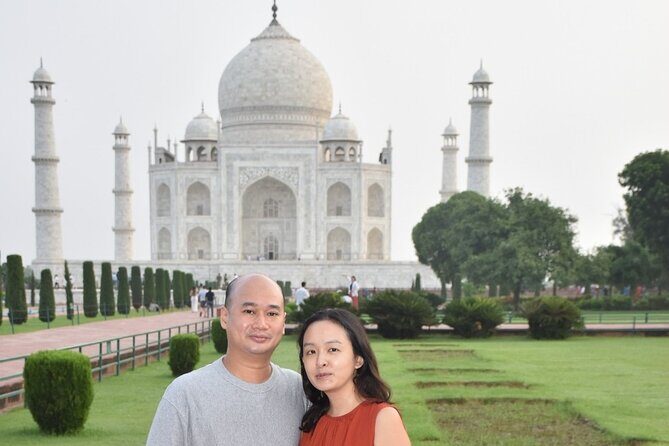
Two highlights I really like are the photo-friendly pacing and the transport support. Getting to the Taj Mahal for the dawn viewpoint makes the experience feel calmer, and the package includes a battery bus/golf cart return from the parking area. I also like that guides you may get, including Riyaz and Ali, are praised for being helpful with pictures and videos, so you’re not stuck figuring out angles on your own.
The main drawback is simple: meals beyond breakfast are on you. Lunch and dinner aren’t included, and the itinerary only says you’ll have time for lunch at a local restaurant on the way to Agra, so budgeting matters if you’re trying to keep costs steady.
In This Review
- Key points that make this tour worth a look
- Golden Triangle in 3 Days: what this pace really means
- From Delhi pickup to Lotus Temple: day one starts strong
- Qutub Minar, India Gate, and the Delhi government buildings you’ll notice
- Humayun’s Tomb plus Old Delhi: how the route balances eras
- Jama Masjid and the Red Fort: plan your energy for the late-day shift
- Drive to Agra and your first rest: a day that sets up Taj morning
- Taj Mahal at dawn plus the battery bus return: the best use of your time
- Agra Fort and Itmad-ud-Daula: the Mughal details most people rush past
- Jantar Mantar, City Palace, and Hawa Mahal: Jaipur in one efficient sweep
- Jal Mahal and Panna Meena ka Kund: the quieter Jaipur moments
- Price and logistics: what $16 per person really means for value
- Who should book this Golden Triangle tour (and who might not)
- Should you book this 3-day Golden Triangle with Golden India Tour?
- FAQ
- How long is the 3-day Golden Triangle tour?
- Which cities are included?
- Do you get pickup from Delhi?
- Is the tour private?
- Are entrance tickets included?
- Are meals included?
- Is there accommodation included?
- Is there a mobile ticket?
- What’s special about the Taj Mahal stop?
- What is the cancellation policy?
Key points that make this tour worth a look
- Taj Mahal at dawn for a more relaxed start and better photo chances
- Private guide + air-conditioned vehicle for the full Delhi–Agra–Jaipur loop
- Entrance fees included in the right option for the sights listed in the plan
- Old Delhi time at Chandni Chowk and Jama Masjid, not just monuments from a bus window
- Battery bus/golf cart return included for the Taj area
- Guide names like Riyaz and Ali come up often for knowledge and picture help
Golden Triangle in 3 Days: what this pace really means
This is the classic Golden Triangle, but tightened into 3 days. You’re not touring at a slow museum pace. You’re going from landmark to landmark with a guide explaining what you’re seeing and a driver handling the road stress.
That packed timing is the value. In a single trip, you get Delhi’s major sights, Agra’s Mughal highlights, and Jaipur’s royal architecture. The trade-off is that you’ll spend more time on the move than lingering, so it helps to arrive with a clear priority list: Taj Mahal, Qutub Minar, and Hawa Mahal are the obvious anchors.
You can also read our reviews of more tours and experiences in New Delhi



From Delhi pickup to Lotus Temple: day one starts strong
The day begins with a pickup from Delhi Railway Station or the airport. From there, you’ll head into sightseeing right away, with the tour arranged as a private group activity so you’re not being juggled with strangers.
A great first stop is the Lotus Temple. It’s listed as a world heritage visitor site with admission included, and it’s one of the best ways to reset your senses after travel. The architecture is distinctive, and it gives you a breather before the more intense monument days.
Then you move into the “big shapes” of Delhi: Qutub Minar is next, and it’s the kind of landmark that rewards paying attention to details your guide can point out. Expect a steady flow of short-to-medium visits rather than long hangs.
Qutub Minar, India Gate, and the Delhi government buildings you’ll notice
Qutub Minar is included for about 2 hours, with admission tickets part of the plan. It’s described as the best and tallest monument in Delhi, and even if you’ve seen it in photos, being there changes how it feels. You can also use this time to orient yourself, since Delhi’s monuments often sit in clusters that make more sense after you’ve seen the main tower complex.
Next comes India Gate. It’s presented as a victory memorial for those who died in World War 1, and that context helps the stop feel more meaningful than a quick photo stop. You’ll have around 2 hours here as well, so it’s enough time to read the story, then move on.
After that, the itinerary includes stops for Parliament House (Sansad Bhavan) and Rashtrapati Bhavan. These are iconic government buildings with strong visual identity. One practical note: since the plan doesn’t spell out interior access, treat these as guided sightseeing stops where you’ll learn the design and significance, rather than expecting a full museum-style visit.
Humayun’s Tomb plus Old Delhi: how the route balances eras
Humayun’s Tomb is a key Mughal stop, listed for about 1 hour with admission included. The tour description names it as the tomb of Emperor Humayun, commissioned in 1558 by his consort Empress Bega Begum. This is a “foundation” sight: you start seeing the Mughal style that later culminates at the Taj Mahal.
Then the tour shifts into Old Delhi. Chandni Chowk is on the list with admission marked free, and Jama Masjid follows with admission included. Chandni Chowk is described as a busy shopping area with spices, dried fruit, silver jewelry, and vivid saris, plus narrow side streets with small shops and essential oils.
This part of the day is where you should slow your mind down. Old Delhi moves fast. If you want memorable photos without stress, stay close to your guide and use the included time to get your bearings, then decide where to step in and where to just watch.
Jama Masjid and the Red Fort: plan your energy for the late-day shift
Jama Masjid is listed as one of India’s largest mosques, built by Shah Jahan between 1650 and 1656, with about 1 hour planned. It’s included with an admission ticket in the plan. This is a strong stop for understanding how scale and faith architecture work in real space.
Then you’ll have the Red Fort on the schedule. It’s described as the Mughal residence for nearly 200 years, with museums inside. Your stop duration isn’t clearly specified in the notes, but it’s listed as a formal part of the Delhi sightseeing arc before the drive toward Agra.
After that, you’ll head for lunch time and then begin the drive. The itinerary notes a local restaurant lunch option and includes a 3-hour segment tied to the transfer toward your Agra hotel.
You can also read our reviews of more tours and experiences in New Delhi




Drive to Agra and your first rest: a day that sets up Taj morning
Once you’ve eaten, you’ll set off via expressway to Agra. The plan calls out time for the drive and then check-in at the hotel, with the rest of the day free. The itinerary explicitly mentions an overnight stay at your hotel.
That free time is not nothing. After a full Delhi day, you’ll likely appreciate a chance to reset before the early Taj Mahal start. You can use the evening to figure out the next morning’s basics: where you’ll meet the guide, where you’ll store bags, and what time you’ll need to leave.
This is also a good moment to hydrate. Bottled water is included, but hot weather and packed schedules can still catch you off guard.
Taj Mahal at dawn plus the battery bus return: the best use of your time
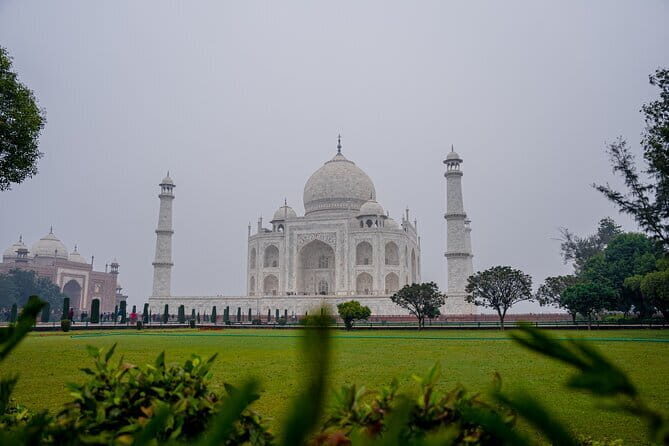
If you only remember one piece of this trip, make it the Taj Mahal timing. The plan says you’ll be picked up early to catch the dawn viewpoint. You’re given about 2 hours at the Taj, with admission included.
This matters for two reasons. First, the Taj is best when light changes the look of the marble. Second, the dawn timing helps with the stress level of crowds, so you can actually appreciate the design rather than just “survive the visit.”
The package also includes a battery bus/golf cart return ride from parking to the Taj area. That’s a small detail that pays off, because it reduces walking fatigue when you’re already doing an early start.
Agra Fort and Itmad-ud-Daula: the Mughal details most people rush past
After the Taj Mahal, the itinerary includes Agra Fort for about 2 hours, with admission included. It’s described as a spot linked to red sandstone and marble, plus “secret spots” and areas connected to the Mughal story. Even if you’re not into every architectural element, Agra Fort gives you the bigger defensive frame around the Mughal world.
Then comes Itmad-ud-Daula, listed for about 30 minutes with admission included. The notes highlight three things that make it special: it was the first Mughal structure fully from marble, it used pietra dura extensively, and it’s a tomb built on the banks of the Yamuna. Even in a short visit, that combination makes it a worthwhile contrast to the Taj’s scale.
If you want value from limited time, this is the move: Taj Mahal for impact, Agra Fort for context, Itmad-ud-Daula for craftsmanship.
Jantar Mantar, City Palace, and Hawa Mahal: Jaipur in one efficient sweep
Jaipur day is built around major landmarks with included admission and guided time. Jantar Mantar is listed for about 2 hours and is described as an alternative attraction experience. You get breakfast in the plan before this part, which helps keep you from starting Jaipur sightseeing hungry.
Next is City Palace for about 2 hours. It’s described as one of Jaipur’s grand attractions and now functions as a museum, so it’s both a monument visit and a story lesson about royal life.
Then you’ll see Hawa Mahal, also listed for about 2 hours. It’s described as Jaipur’s most lovely landmark, and it’s known for its high screen wall and design connection with other city sites. This is one of those places where a guide helps you see the purpose behind the shape, not just admire it from the outside.
Jal Mahal and Panna Meena ka Kund: the quieter Jaipur moments
The itinerary includes Jal Mahal for about 2 hours. It’s described as a landmark situated in the main issue of water, often called the water place, and it’s noted for lovely looks. Even if you don’t spend the full time just staring, it’s a nice break from the stone-and-courtyard rhythm.
After breakfast, you’ll also visit Panna Meena ka Kund, a step well located near Amber Fort. It’s listed with free admission and a short time (about 15 minutes). Because it’s brief, treat it as a quick color-and-texture stop. Look for the geometry and the way the steps create patterns in photos.
This combination is why Jaipur feels like more than just one big photo wall. It gives you both the headline sights and the smaller shapes that show how the city thinks about water, light, and daily life.
Price and logistics: what $16 per person really means for value
The listing price is shown as $16.00 per person, and it’s booked about 17 days in advance on average. That’s surprisingly low for a 3-day plan that includes transport, guides, and entrance fees depending on the option.
Here’s how I’d judge value using what the plan says, not just the number:
- If you choose the option that includes monument entrance fees, you’re already covering a chunk of the biggest daily costs in India sightseeing.
- The tour includes private driver in an air-conditioned vehicle, bottled water, parking fees, and (when hotel options are selected) 2 nights with breakfast.
- Some stops are marked free, like Chandni Chowk and Panna Meena ka Kund, while other sights show admission included.
So the smart move is to confirm what your selected option includes before you pay. If you’re only getting transport and guide time, the cost may still be good, but your total day spend for tickets and hotels will change. At this price point, the details of the chosen package level matter.
Who should book this Golden Triangle tour (and who might not)
This tour is a good fit if you want:
- A private guide to explain the Mughal and royal story quickly
- A structured plan that takes care of driving, parking, and daily logistics
- Early Taj Mahal timing with support like the battery bus return
It may not be ideal if you prefer:
- A slower tempo with fewer stops and more time per site
- Independent wandering where you control every minute without a set route
- Fully included meals beyond breakfast
Should you book this 3-day Golden Triangle with Golden India Tour?
I’d book it if your main goal is to see the big landmarks of Delhi–Agra–Jaipur without the planning headache, and if dawn Taj Mahal is on your must-do list. The included guide time, air-conditioned private transport, and the Taj support details (like the battery bus return) are the kind of small comforts that add up fast.
I’d hesitate only if you’re very meal-sensitive or you need a super relaxed pace. Because the schedule is tight, you’ll want to show up ready for long days and keep your expectations realistic: this is about covering the triangle efficiently, not doing one site in depth for half a day.
If you’re flexible, it’s a strong way to get your bearings in India’s most iconic circuit and to leave with photos and context that actually make sense.
FAQ
How long is the 3-day Golden Triangle tour?
The tour is about 3 days.
Which cities are included?
It covers New Delhi, Agra, and Jaipur.
Do you get pickup from Delhi?
Yes. The representative meets you at Delhi Railway Station/Airport.
Is the tour private?
Yes. It’s described as a private tour/activity, with only your group participating.
Are entrance tickets included?
Entrance fees for monuments are included if you select the option for monument entrance fees. Many listed stops show admission tickets included.
Are meals included?
Breakfast is included (2). Lunch and dinner are not included.
Is there accommodation included?
There are 2 nights of accommodation on a twin-sharing basis with breakfast if you book with the option that includes hotels.
Is there a mobile ticket?
Yes. The tour includes a mobile ticket.
What’s special about the Taj Mahal stop?
You go early in the morning to catch the dawn viewpoint, and there is a battery bus/golf cart return ride included.
What is the cancellation policy?
Free cancellation is available. You can cancel up to 24 hours in advance for a full refund, but if you cancel less than 24 hours before the start time, there’s no refund.