REVIEW · NEW DELHI
3-Night Private Tour to The Taj Mahal and Agra with Varanasi from Delhi
Book on Viator →Operated by Hire Taxi India · Bookable on Viator
Agra and Varanasi in one trip is a shock.
This private 3-night route is interesting because you don’t just tick off monuments—you glide between worlds: Mughal grandeur at the Taj Mahal, then Hindu and Buddhist sacred life along the Ganges. I like that you get a full-time private guide and driver, so you waste less time and spend more time actually looking. I also like that the schedule balances big sights with small breathing room, like a midday lunch stop in Varanasi.
One thing to consider: the overnight train is efficient, but it can be a comfort gamble. One review reported a mismatch between the advertised AC2-style setup and a more open, curtain-less sleeper arrangement on their departure. I’d treat the train as part of the adventure—but I’d also ask your operator what to expect for cabin layout before you commit.
In This Review
- Key Highlights That Matter in Real Life
- First Morning Out of Delhi: The 7:00 AM Start That Saves You
- Entering the Taj Mahal: What You’ll Love (and What to Watch)
- Agra Fort After the Taj: Akbar’s Red Sandstone City
- A Quick Agra Shopping Detour: Marble and Softstone Inlay
- Evening Train Transfer to Varanasi: Fast, Efficient, and a Bit Unpredictable
- Varanasi Check-In Day: Noon Hotel Time and Temple Stops
- Rickshaw Ride to the Ganges Aarti: Evening Light, Serious Atmosphere
- Sunrise Ganges Boat Ride: Pilgrims, Ghats, and Early-Start Patience
- Sarnath: Buddhist Beginnings and Museum Artifacts
- Back on the Overnight Train: Another Night, Another Tradeoff
- Price and Value: Does $776 Make Sense for This Mix?
- Who This Tour Fits Best (and Who Might Want Something Else)
- Should You Book This 3-Night Private Taj Mahal + Varanasi Tour?
- FAQ
- What time does the tour start in Delhi?
- How long is the drive from Delhi to Agra?
- Is the Taj Mahal included, and is it ever closed?
- What sights do you see in Agra?
- What happens after Agra in the evening?
- Where do you stay in Varanasi?
- What religious or cultural sites do you see in Varanasi?
- Do you get a boat ride on the Ganges?
- Is Sarnath part of the tour?
- What is included in the price besides tickets and guides?
Key Highlights That Matter in Real Life
- Private guide + private vehicle: less waiting, more time on the ground with context
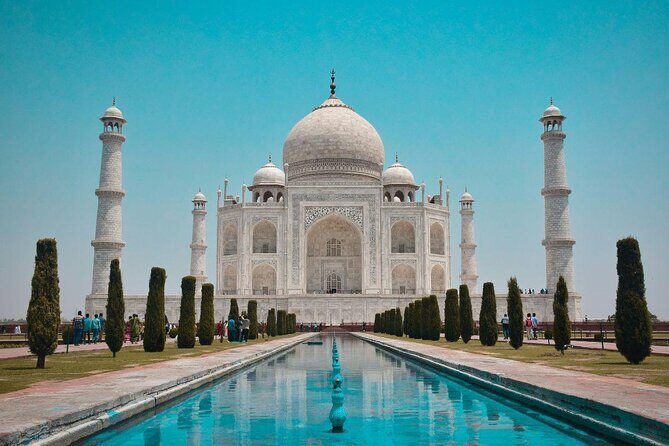
- Taj Mahal access details: admission is included, plus a golf cart transfer to save your legs
- Ganga moments you can’t fake: sunrise boat time and the evening aarti on the riverbank
- Agra Fort with real architectural context: built by Akbar, with visible cultural blending
- Sarnath after Varanasi: a calm pivot to Buddhist roots and museum artifacts
First Morning Out of Delhi: The 7:00 AM Start That Saves You
You kick off early—pickup around 7:00 am from your hotel in Delhi and nearby areas. The drive to Agra is roughly three hours via the Yamuna Express Highway, which is a practical way to beat the slow part of the day. You’re not just racing. You’re buying yourself better light for the Taj Mahal and more energy for the long day that follows.
This is one of those tours where logistics matter. A private vehicle means you’re not stuck with random group pacing. You also have a guide with you from the first stop onward, so you’re learning what you’re looking at instead of wandering with a translation app.
If you’re sensitive to early mornings, this is the one moment you’ll feel it. But once you’re standing at the Taj, the early start makes sense.
You can also read our reviews of more private tours in New Delhi



Entering the Taj Mahal: What You’ll Love (and What to Watch)
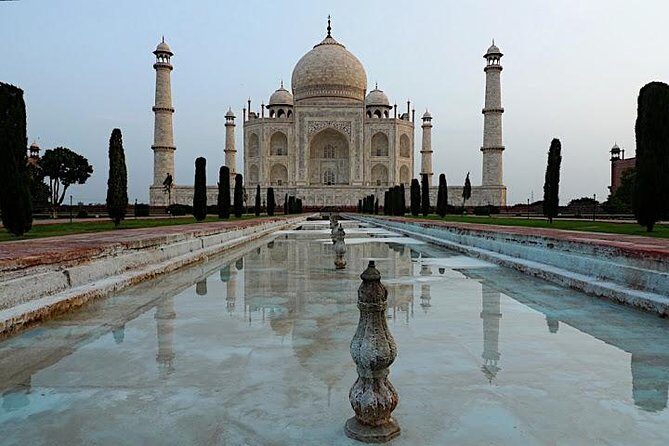
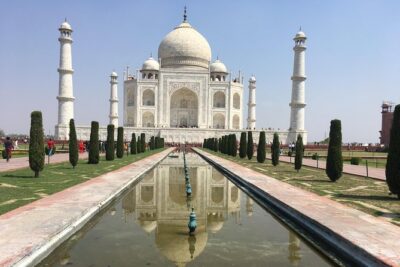
Your first major stop is the Taj Mahal in Agra. It’s listed as closed on Fridays, so if your dates land there, you’ll want to confirm the plan early and adjust if needed. Admission is included, and you’ll get a golf cart ride to and from the Taj grounds. That small detail matters more than you’d expect. The complex involves walking, and saving time on transfers helps you avoid arriving already tired.
I like the way the Taj Mahal visit is framed: it’s not presented like a photo op. The guide context is what turns those first minutes into real understanding. You get the sense of it as a massive undertaking—history, design, and the human effort behind it. And yes, the view is still the view. Even if you’ve seen pictures for years, the scale hits you in person.
Practical reality check: you’ll likely deal with crowds and security lines depending on the day. Going with a guide helps because you spend less time figuring out where you should be and more time looking. Dress smart casual is the rule, and comfortable shoes are a smart idea because the ground can be uneven.
Agra Fort After the Taj: Akbar’s Red Sandstone City
Next comes Agra Fort, another UNESCO World Heritage site. This fort was built by Emperor Akbar in 1565 AD, and you’ll notice it’s made of red sandstone. The interior is described as reflecting a synthesis of Hindu and Central Asian architectural styles, which is a useful clue for how to look at the details.
This is a great pairing with the Taj Mahal because the mood shifts. The Taj is romantic and iconic. Agra Fort is strategic and defensive—with layers. If you care about how rulers projected power, you’ll appreciate walking through a place that feels like it was designed to last and intimidate.
The stop is shorter than the Taj, around an hour for the fort itself, which means you should plan to focus. Ask your guide what elements connect the different styles. If you like learning on your feet, this is where a guide earns their keep.
A Quick Agra Shopping Detour: Marble and Softstone Inlay
After the main monuments, you get time for shopping at Sanskriti’s Imperial Gems. It’s not forced downtime—it’s optional, and it’s in the area where Agra’s famous crafts make sense. The focus here is on marble and softstone inlay work, a tradition with Mughal patronage behind it.
If shopping isn’t your thing, you can treat this like a short reset. You’ll have a guide, so you’re not drifting into confusion. If you do want a souvenir, this is the kind of stop that can be genuinely useful because it connects materials to place.
Just keep your expectations realistic. Craft quality varies, and you’ll want to compare what you see rather than buying the first thing that looks pretty.
Evening Train Transfer to Varanasi: Fast, Efficient, and a Bit Unpredictable
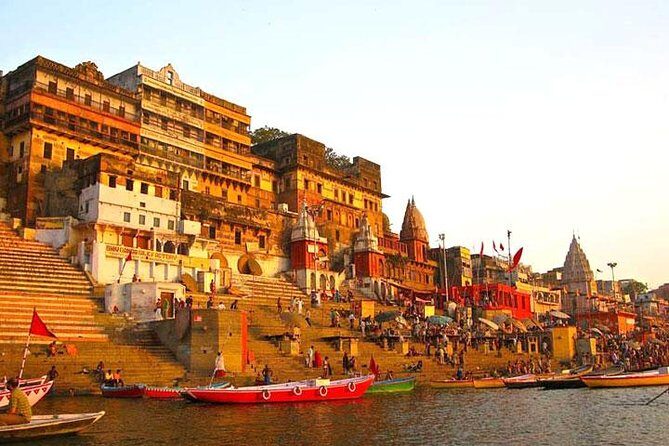
In the evening, you board an overnight train from Agra Fort / Tundla Railway Station. The tour includes train tickets in 2nd AC for Agra–Varanasi and Varansi–Delhi, and the booking includes two nights of accommodation on the overnight train plus one night of hotel accommodation.
Now, the big caution: overnight train comfort is not only about the category written on paper. One negative review described being placed in a class 3 sleeper car with no curtain, more open berths, and a shared bathroom setup that made the experience feel less private than expected. That doesn’t mean your trip will be identical. It does mean you should treat the train layout as something you need clarity on.
My advice: before departure, ask your operator to confirm what cabin layout you’ll actually get and whether there will be privacy features like curtains. If they can’t answer clearly, mentally prepare for less-than-perfect privacy and plan your own coping strategy—earplugs, a sleep mask, and a light change of clothes help.
Still, there’s a reason people do this route. It’s time-efficient. You turn travel time into a night of sleeping so you can spend more days in the cities.
You can also read our reviews of more evening experiences in New Delhi




Varanasi Check-In Day: Noon Hotel Time and Temple Stops
The next morning you arrive at Varanasi Railway Station, then drive to your hotel. Check-in time is around noon, which gives you a good rhythm: arrive, check in, and recharge before the rest of the day.
A lunch break comes next at a local restaurant. You’ll appreciate this because Varanasi can be intense on foot and by sight. Having a guided plan keeps you from just wandering in the chaos without a purpose.
Then you visit temples, starting with Bharat Mata Temple. What makes it interesting is the big relief map of India in marble. It’s an unusual way to think about spirituality—more geographic and symbolic than ornate-only. From there you continue to the Durga Temple and the Tulsi Manas Mandir.
The value here is pacing and focus. You’re not trying to sprint through Varanasi in one afternoon. You’re learning the religious landscape in a sequence that feels connected.
If you prefer less indoor religious time, this part might feel more structured than you expect. But if you like meaning and symbolism, you’ll likely find these stops satisfying.
Rickshaw Ride to the Ganges Aarti: Evening Light, Serious Atmosphere
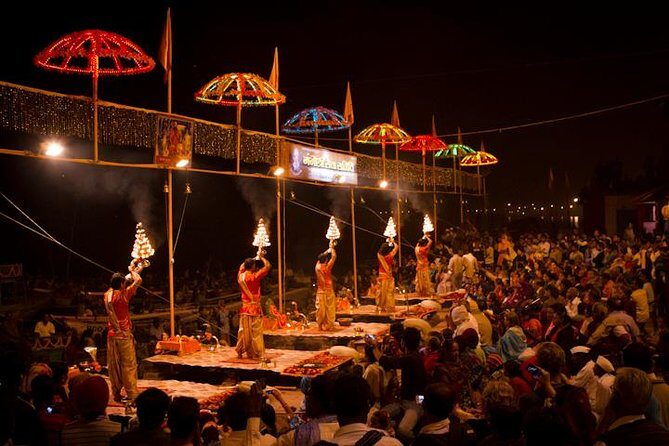
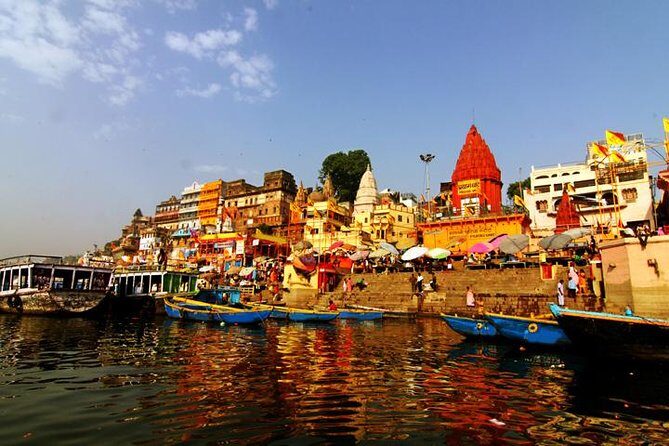
In the evening, the tour shifts into the kind of Varanasi experience most people remember. You’ll do a rickshaw ride through the busy streets and bazaars to reach the holy river Ganges. Then you cruise to witness the aarti ceremonies with hundreds of lighted candles and flower offerings.
This is one of the most valuable parts of the trip because it’s timed. Sacred ceremonies in Varanasi are not like random performances. Light and sound create the atmosphere, and the river becomes the stage. A guide helps you time it properly and understand what you’re seeing.
A small practical note: night air can feel cooler than you expect. Bring something light you can wear over your layers. Also, keep your phone secure and your hands free—crowds near river edges get close.
The rickshaw itself is part of the story, too. It’s not just transport. It’s your first real taste of Varanasi street energy while still moving toward a planned destination.
Sunrise Ganges Boat Ride: Pilgrims, Ghats, and Early-Start Patience
Early the next morning you’re up for the boat ride on the Ganges. The timing is before dawn, and you’ll step onto a rustic boat as the boatman casts off. The purpose is to observe pilgrims’ way of life by the ghats—the stairways leading down to the water.
This stop has real “sensory memory” potential. You’ll see human routines tied to faith—bathing, preparing, gathering. I like that it’s described as watching life unfold rather than just seeing a landmark. You’re not only looking at the river; you’re watching how people use it.
The boat ride is listed as about 3 hours, which is a long-ish window. That can feel like a lot if you’re not ready for early mornings. Bring patience, water, and something simple to snack later. Your guide and timing help, but the early day is still early.
Sarnath: Buddhist Beginnings and Museum Artifacts
After the boat ride, you head to Sarnath, where the Buddha preached his first sermon after enlightenment. This is a powerful contrast to Varanasi: same region, different spiritual direction—less river drama, more historical focus.
You’ll visit the Sarnath temple and the Archaeological Museum, both described as containing Buddhist art treasures. Entrance fees are included, which matters because these sites often have separate ticket lines and time windows.
Sarnath is best for readers who like connecting dots. If you’ve wondered how Buddhism took shape beyond legend, this is the place where the story gains physical anchors. And because it comes right after the Ganges experience, your brain gets a natural storyline shift—from living ritual to historical roots.
Back on the Overnight Train: Another Night, Another Tradeoff
After Varanasi sightseeing, you board an overnight train from Varanasi to New Delhi. The tour includes the return ride, with tickets covered and another night of overnight accommodation included.
This is where you accept the tradeoff: comfort varies, privacy varies, and sleep quality depends on the exact car assignment. If the train assignment you get aligns with AC2 expectations, you might sleep fine. If not, at least you’ll know what to anticipate now.
Bring what you need for sleep comfort because you’ll likely be tired from the boat and early mornings. The good news is that your guide and driver handle the transitions, so you’re not doing station logistics alone.
Price and Value: Does $776 Make Sense for This Mix?
$776 for a private, multi-day plan can look steep at first. But when you break it down, the value gets clearer. You’re paying for a bundle: pickup, private air-conditioned vehicle, a professional private live guide, monument entrance fees, water bottles, golf cart transfers at the Taj, a rickshaw ride, a morning boat ride, and included train tickets in 2nd AC (Agra–Varanasi and Varanasi–Delhi), plus one hotel night.
You’re also getting fewer wasted hours between stops. Guides and vehicles are not just perks here—they directly reduce friction. Instead of figuring out timing, tickets, and routes, you’re moving from sight to sight with a plan.
Where the price can feel less satisfying is if the overnight train comfort doesn’t match what you expected. Because one reported experience included a cabin category mismatch, I’d consider the overnight train the main variable that can affect your perception of value.
Still, if you want Taj Mahal plus Varanasi plus Sarnath without juggling transport yourself, this package is doing real work for you.
Who This Tour Fits Best (and Who Might Want Something Else)
This tour suits you if you want structure with authenticity—big sights, guided context, and well-timed river ceremonies. It’s especially good if you prefer not to manage stations, tickets, and schedules in two crowded, fast-moving cities.
It’s also a solid choice for couples or small groups who like privacy but don’t want to travel completely unsupported. The private setup means you control pacing through your guide’s attention and the tour plan isn’t diluted by strangers.
If you hate early mornings, you’ll feel the schedule. Sunrise boat time and early drives are core parts of the experience. If you’re extremely sensitive to overnight train sleeping conditions or need maximum privacy, you should confirm the train cabin details carefully before booking.
Should You Book This 3-Night Private Taj Mahal + Varanasi Tour?
I’d recommend booking if you want a guided, time-saving route that pairs the Taj Mahal with Varanasi’s Ganges ritual life and then gives you the calm historical pivot of Sarnath. The private guide and the included ground transfers make it feel easier than it looks on paper.
Before you click confirm, do one smart thing: ask for clarity on the overnight train cabin setup (privacy features, bed configuration, and what “2nd AC” means in practice for your departure). If that checks out, the rest of the trip reads like a well-built plan with standout moments you can’t easily recreate alone.
FAQ
What time does the tour start in Delhi?
Pickup starts at 7:00 am from your hotel in Delhi and NCR.
How long is the drive from Delhi to Agra?
The drive to Agra is about 3 hours (approx.), via the Yamuna Express Highway.
Is the Taj Mahal included, and is it ever closed?
Yes, the Taj Mahal is included and it is closed on Fridays, so dates matter.
What sights do you see in Agra?
You’ll visit the Taj Mahal, Agra Fort, and you may have optional time for shopping at Sanskriti’s Imperial Gems.
What happens after Agra in the evening?
You board an overnight train to Varanasi from Agra Fort / Tundla Railway Station.
Where do you stay in Varanasi?
You get 1 night of hotel accommodation with twin sharing basis and breakfast, with check-in around noon.
What religious or cultural sites do you see in Varanasi?
You visit Bharat Mata Temple, Durga Temple, and Tulsi Manas Mandir, plus you experience a Ganga aarti ceremony area in the evening.
Do you get a boat ride on the Ganges?
Yes. You’ll take a morning boat ride on the Ganges to observe pilgrims’ way of life at the ghats.
Is Sarnath part of the tour?
Yes. You visit Sarnath, including the temple and the Archaeological Museum.
What is included in the price besides tickets and guides?
The tour includes private vehicle transfers, monument entrance fees, rickshaw ride, morning boat ride, golf cart rides for the Taj Mahal, water bottles, lunch (3), and breakfast. It also includes train tickets in 2nd AC and overnight train accommodation.