REVIEW · NEW DELHI
2 Days Tour of Agra (Taj Mahal) & Delhi City Tour
Book on Viator →Operated by Taj Mahal Private Tours · Bookable on Viator
Two days, no whiplash. This 2-day route is built for seeing the big icons of Agra and New Delhi without cramming every minute. You get a professional English-speaking guide, a private air-conditioned car, and a plan that groups the highlights so you’re not bouncing all over town.
I especially like the slow, guided Taj Mahal time—you’re not just walking in and out. I also like that the tour keeps pairing monuments with the right context, from Mughal architecture in Agra to Delhi’s mix of imperial, religious, and modern landmarks. One thing to consider: the long drives are real (about 3.5 hours each way), and not everything is automatically included the same way, like food and possibly entry tickets depending on the option you choose.
In This Review
- Key highlights worth your attention
- The two-day rhythm: how the Delhi–Agra drive fits the sightseeing
- Taj Mahal: more than a photo stop (and what to watch for)
- Agra Fort: where Mughal power becomes physical
- Itimad-ud-Daulah (Baby Taj): the hidden lesson in “precursor”
- Lunch break in Agra: plan for food as an extra cost
- Heading back to Delhi: use the car time smartly
- Qutub Minar: tall, historic, and easy to appreciate fast
- Lotus Temple and Jama Masjid: two religious worlds, one guided day
- India Gate, Parliament, and President House: what you’ll actually get
- Swaminarayan Akshardham: a major modern temple stop
- Guide quality is the secret sauce here
- Cost and value: is $100 per person a fair deal?
- Who this tour is best for (and who should think twice)
- Should you book this Taj Mahal and Delhi two-day tour?
- FAQ
- What is the duration of the tour?
- Where do you get picked up?
- Is this a private tour or shared group?
- What transportation is included?
- Are monument entrance tickets included?
- Is lunch included?
- Does the tour include hotel drop-off in Delhi?
- Is cancellation free?
Key highlights worth your attention

- Taj Mahal plus Agra Fort plus Itimad-ud-Daulah in one efficient Day 1 plan
- Private air-conditioned car with hotel/airport pickup in Delhi and return drop-off
- English-speaking guide (you’ll hear clear explanations, and guides like Vinny, Deepak, Naeem Bobby, Ali, and Majid Khan have been singled out for their skill)
- Delhi’s major sites in a sensible order: Qutub Minar, Lotus Temple, Jama Masjid, and more
- Mineral water included, plus a group discount structure and mobile ticket convenience
The two-day rhythm: how the Delhi–Agra drive fits the sightseeing
This tour is designed around a simple idea: do Agra first, then shift to Delhi. You’ll start with pickup from your Delhi hotel or the airport and head to Agra by road, using the Yamuna Expressway for the transfer. That’s a practical setup because it reduces the stress of finding transport on your own.
The pacing is meant to feel calmer than DIY. Each key stop has a planned visit time, which matters for the Taj Mahal—there’s a lot to look at, and it’s easy to rush it if your schedule isn’t protected.
The main “real life” drawback is distance. The drive is roughly 3.5 hours each way, so the tour works best if you can handle long sitting time. If you’re sensitive to travel fatigue, pack water, simple snacks, and something for the car ride.
You can also read our reviews of more city tours in New Delhi


Taj Mahal: more than a photo stop (and what to watch for)

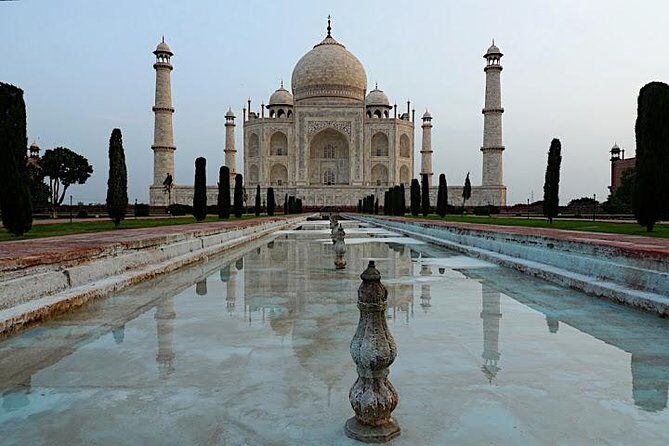
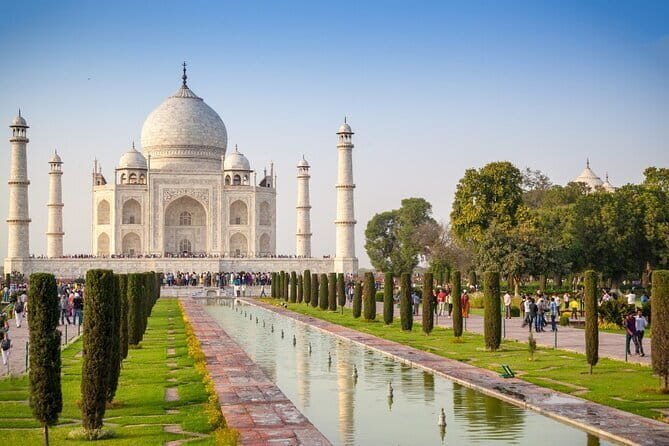
The Taj Mahal visit is the anchor of the whole trip, and it’s built into the Day 1 flow right after arrival in Agra. Your guide meets you and brings the visit into focus, not just with dates and names, but with the building details you’re likely to miss if you’re wandering solo.
You’ll get about 2 hours at the Taj Mahal with admission included (if you booked the option that covers tickets). That time is enough to walk the main viewing areas, take photos without feeling hunted by a clock, and notice the marble’s changing look in different light.
From the guide experiences shared, the biggest advantage is how well your guide can explain what you’re seeing. Guides like Vinny are praised for clear English and for giving visitors full time inside. Naeem Bobby is also noted for balancing history with thoughtful care of guests, and that’s exactly what helps at a place like this—Taj Mahal details are easier to understand when someone points to what matters.
A small but smart tip: if your guide is able to time things for early light, ask about a sunrise-style visit. Deepak, for example, has been specifically credited for showing travelers the Taj Mahal at sunrise, and early timing can make the marble feel almost different from the usual midday look.
Agra Fort: where Mughal power becomes physical
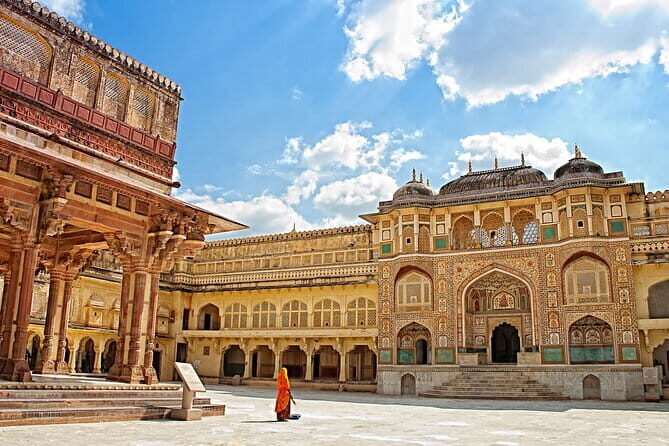
After your lunch break in Agra, you shift to Agra Fort. This is one of those stops that changes how you understand the region. Taj Mahal is the romance; Agra Fort is the authority and control.
Plan for about 2 hours here, with admission included if your option includes tickets. The fort was constructed by Mughal Emperor Akbar in 1565 A.D, and the visit also includes highlights like Moti Masjid and Musamman Burj. Even if you’re not a fortress enthusiast, it’s a strong contrast to the Taj Mahal’s famous white marble elegance.
One practical reason this stop is valuable on a tight schedule: it keeps your Day 1 from being only about one masterpiece. Instead, you get a second lens on Mughal architecture and how the rulers shaped Agra’s skyline.
Itimad-ud-Daulah (Baby Taj): the hidden lesson in “precursor”
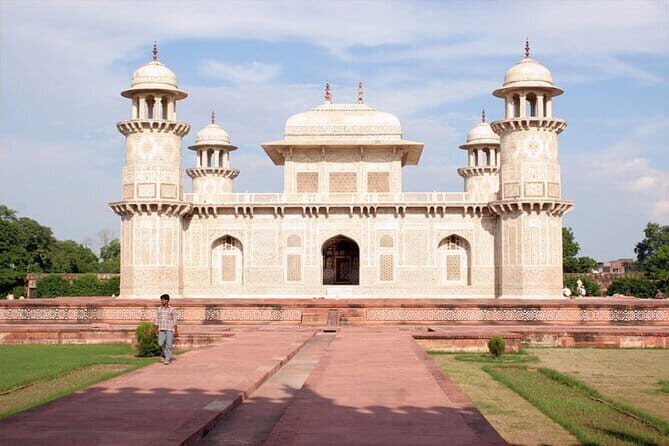
Then you’ll visit Itimad-ud-Daulah, often called Baby Taj. The nickname can make people expect a smaller version of the main event, but the better way to think of it is as a lesson in artistic progression.
This stop runs about 1 hour with admission included (again, depending on your ticket option). The tomb is described as highly ornate, and it’s often seen as an important predecessor to the Taj Mahal in terms of elaborate carvings and inlay work. That’s exactly the kind of detail that makes a guided stop worth it: your eyes learn how to read the designs across multiple buildings.
This is also where a good guide earns their fee. The carvings and stonework reward attention, and a guide who explains what you’re looking at makes the experience much more satisfying than simply taking quick photos and moving on.
Lunch break in Agra: plan for food as an extra cost

After the Taj Mahal, you’ll have a lunch stop at a famous restaurant/hotel in Agra, with time built in. The schedule gives you a 1-hour slot, but the tour pricing information says food and drinks are not included as a general rule.
So treat lunch as a budget line item, not a guaranteed included meal. If you have dietary needs, ask your driver or guide during the ride so you don’t lose time later.
You can also read our reviews of more tours and experiences in New Delhi






Heading back to Delhi: use the car time smartly
After Agra Fort and Itimad-ud-Daulah, you’ll return to Delhi with a drop-off at your hotel. The drive again is about 3.5 hours, which is long enough that you’ll want to make it easy on yourself.
If you like photography, bring something to do with breaks: a camera battery charger, a small tote for bottled water, or even just a printed notes page about what you saw. When you’re back in Delhi, you’ll be ready for the next day’s monument hopping without feeling like you skipped sleep.
This is also where private transport helps. You’re not managing public transit, and you’re not guessing routes in unfamiliar traffic—your driver handles the road, and your guide keeps the visit flow.
Qutub Minar: tall, historic, and easy to appreciate fast
Day 2 begins with Qutub Minar. This site is called out as strong evidence of Mughal architectural excellence, and it’s also noted as one of India’s tallest minarets at about 72.5 meters.
You’ll have about 1 hour here, with admission included if you booked tickets. That time is a good match for Qutub Minar because you can enjoy the height and surrounding structures without getting stuck in an endless loop of trying to see everything.
Even better, this stop helps you connect the dots between Mughal-era and earlier influences in the area. If you’ve just spent Day 1 learning about Mughal craftsmanship at Agra’s tombs and fort, Qutub Minar gives you a different angle on how rulers used monumental building.
Lotus Temple and Jama Masjid: two religious worlds, one guided day
Next up is Lotus Temple. It’s associated with the Bahai faith and is described as a place where people of all sects come to meditate. It’s also framed as a symbol of peace, and the architecture is famous for its distinctive flower-like form.
You’ll have about 1 hour there, with admission included based on the ticket option. The value here is simple: it’s a breather stop between “heavy history” sites. Even if you’re not religious, you’ll likely appreciate the calm and the design choices.
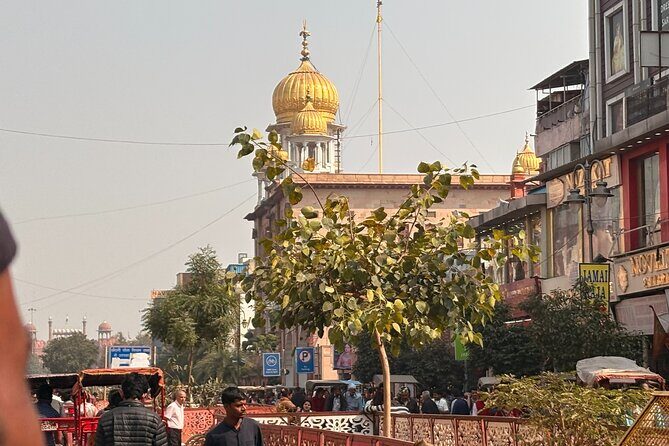
Then you move to Jama Masjid in Old Delhi. This is one of the biggest mosques in India and is described as being constructed in 1650 A.D by Shahjahan. Expect a more intense street atmosphere than you saw in Agra—Old Delhi has a different energy.
You’ll have about 1 hour for Jama Masjid, with admission included. The combination of Lotus Temple and Jama Masjid is a smart balance: one is for contemplation in a modern-feeling setting, and the other is tied to historic Old Delhi life and architecture.
India Gate, Parliament, and President House: what you’ll actually get
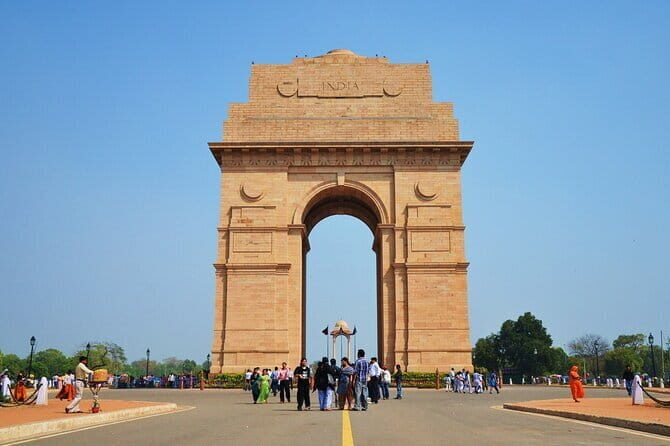
In the middle of the Day 2 route, you’ll also pass key government and memorial landmarks: India Gate, the Parliament House complex, and the President House.
India Gate is described as the All India War Memorial, built to commemorate martyrs of the First World War, and it was designed by Sir Edwin Lutyens. The Parliament House stop notes it includes both the Rajya Sabha and Lok Sabha and is a colonnade structure. The President House is noted as the residence of the first citizen since independence, originally the official residence of the British Viceroy.
These stops are valuable because they show you how Delhi carries layers: imperial-era design, post-independence identity, and public memory. Just be realistic: with a tight two-day window, you’ll likely see the landmarks as sightseeing stops rather than doing deep, long visits.
Still, they’re worth it because Delhi isn’t only forts and tombs. It’s also a living political city, and these landmarks help you understand the modern side of the capital.
Swaminarayan Akshardham: a major modern temple stop
The final listed monument stop is Swaminarayan Akshardham. It’s described as one of the biggest and most famous temples in the Delhi NCR region, with a focus on Indian art, heritage, rituals, and spiritual values.
Your itinerary allocates about 1 hour and marks entry as admission free for this stop. That’s a nice advantage if you’re trying to keep costs predictable on a two-day schedule.
This stop works well at the end of the tour because it’s an “experience” building, not only a historical structure. If you want a visual and cultural finish that feels different from Mughal tombs and forts, this is a good match.
Guide quality is the secret sauce here
This kind of itinerary lives or dies by interpretation. And the standout pattern from the experience write-ups is the guides’ English clarity, patience, and ability to point out what to notice.
Vinny is praised for being excellent in Agra, with clear Taj Mahal explanations and extra attention to good places for shopping and food. Deepak is also singled out as a solid guide, with the kind of calm professionalism that makes the day feel easier. Naeem Bobby is credited with smart recommendations and strong history knowledge, plus photo help. Majid Khan is praised for well-explained sites in English and for being available and pleasant, with an explicit tip to ask him to shoot photos if that matters to you.
Even if you don’t know what kind of guide you’ll get on your date, this is a tour where the guide role is front and center. That matters because the monuments are crowded and visually complex. A good guide turns that chaos into a story you can follow.
Cost and value: is $100 per person a fair deal?
At $100 per person, this tour can feel like a bargain if you’re comparing it to private transport plus a professional guide for two days. The package includes transportation by private air-conditioned car, hotel pickup and drop-off in Delhi, English-speaking guide time, tolls/parking/driver allowances, and mineral water.
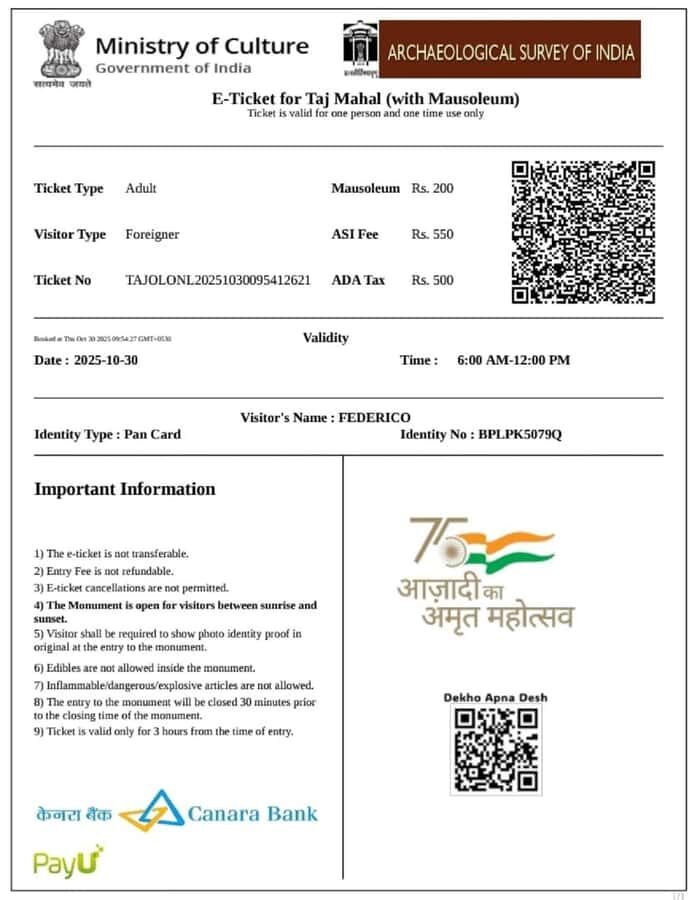
Monuments entry tickets are included only if you book the option that covers them. That’s important because Taj Mahal and other major sites can add cost if you’re paying at the gate. Food and drinks are also listed as not included, so lunch and any water beyond what’s provided will be your responsibility.
So the value equation is simple:
- If you pick the ticket-inclusive option, you’ll likely feel like you got a lot for the price.
- If tickets are not included, you’ll need to budget separately.
- Either way, the biggest “value” is time saved: you’re not organizing intercity logistics from scratch while also trying to navigate Delhi’s traffic.
This tour can also be a smart pick for families and solo travelers. It’s described as private, meaning it’s only your group. That can make the day feel more flexible and less stressful than a shared bus.
Who this tour is best for (and who should think twice)
This trip is ideal if you want:
- A focused 2-day route that covers Taj Mahal, Agra Fort, and Baby Taj plus Delhi’s big landmarks
- A guide-led experience where you understand what you’re seeing
- Private pickup in Delhi and a direct, comfortable car transfer
It may be less ideal if:
- You hate long driving days and want minimal time on the road
- You want to spend many hours in each place with no pressure to move on
- You need a food package included in the price (because food and drinks aren’t covered)
Should you book this Taj Mahal and Delhi two-day tour?
If you’re trying to do Agra and Delhi in one short window and you want the stress removed, I’d book it. The structure is practical: you start with the Taj Mahal-centered day, then you finish with Delhi’s landmark mix, and you’re not left guessing about transport.
Choose carefully if you care about entry fees. Make sure you’re clear on whether monument tickets are included in your selection. Also, plan for food as an extra cost and treat the car rides as part of the deal, not a surprise.
If you’re hoping for the best experience, request a guide known for clear explanations—and don’t be shy about asking for photo help if it matters to you. With the right guide, this is exactly the kind of compact itinerary that turns two days into real sightseeing momentum.
FAQ
What is the duration of the tour?
It’s about 2 days, covering Agra and New Delhi monuments across two days.
Where do you get picked up?
Pickup is offered from your hotel or the airport in Delhi.
Is this a private tour or shared group?
It’s a private tour/activity, meaning only your group participates.
What transportation is included?
The tour includes transportation by a private air-conditioned car, including tolls, parking, and driver allowances.
Are monument entrance tickets included?
Monument entry tickets are included only if you book the option that includes them.
Is lunch included?
Lunch is part of the Day 1 schedule, but food and drinks are listed as not included, so you should plan to pay for meals yourself.
Does the tour include hotel drop-off in Delhi?
Yes. The chauffeur drops you back at your hotel in Delhi.
Is cancellation free?
Yes. You can cancel up to 24 hours in advance for a full refund.