REVIEW · NEW DELHI
10 Days Private Golden Triangle Tour with Amritsar and Rishikesh
Book on Viator →Operated by Golden Triangle Tours India · Bookable on Viator
This private route strings together Delhi, Agra, Jaipur, Amritsar, and Rishikesh with private local guides and lots of UNESCO-grade stops, without the feeling of being herded. I like that you get to see the Taj Mahal from different angles and at different times of day, plus you finish with the calmer, spiritual rhythm of Rishikesh. The one catch: monument entry fees are not included, so you’ll still want to budget for tickets once you’re on the ground.
What I really like is how the tour smooths the logistics: pickup and drop-off (including from Indira Gandhi Intl Airport), bottled water on the move, and a private car with a driver matched to group size. A possible drawback is simple timing math—two big cities of India (Delhi and Jaipur) plus major sites mean long days in transit and at attractions, even with a private setup.
In This Review
- Key things I’d prioritize before you book
- How the 10-day Delhi–Agra–Jaipur–Amritsar–Rishikesh route plays in real life
- Agra starts with a hotel check-in, then you build into the big Taj Mahal day
- The Taj Mahal sunrise block (Day 2)
- The Taj Mahal sunset viewpoint plan (Day 1)
- More than one Taj Mahal moment: Agra Fort and Itimad-ud-Daula for the details
- Agra Fort (about 1 hour)
- Itmad-ud-Daula, the Baby Taj (about 1 hour)
- Fatehpur Sikri and Chand Baori before Jaipur: a detour that changes the mood
- Jaipur palace-and-science day: Amber, City Palace, Jantar Mantar, Hawa Mahal
- Panna Meena ka Kund and the Amber area approach
- Jal Mahal photo stop
- City Palace, Jantar Mantar, and Hawa Mahal
- Jaipur temples on Day 4: Birla Mandir and Galtaji Monkey Temple
- Birla Mandir Temple (about 30 minutes)
- Galtaji Temple, the Monkey Temple (about 30 minutes)
- Delhi in one long day: Qutub Minar, Humayun’s Tomb, Jama Masjid, and Chandni Chowk
- Qutub Minar (UNESCO World Heritage Site)
- Lotus Temple
- India Gate and Parliament House viewpoints
- Jama Masjid and Humayun’s Tomb
- Agrasen ki Baoli and Chandni Chowk
- Amritsar: Golden Temple time + a well-timed Wagah Border ceremony
- Golden Temple (about 3 hours)
- Wagah Border at the late afternoon rush
- Rishikesh: bridges, ashram calm, and riverfront ritual at Triveni Ghat
- Ram Jhula and Lakshman Jhula
- Parmarth Niketan Ashram
- Triveni Ghat
- Private transport and local guiding: what you actually get for your money
- Price and value: why $588.46 can feel fair (and when it might not)
- Who this trip fits best (and who should rethink the pace)
- Should you book this private Golden Triangle with Amritsar and Rishikesh?
- FAQ
- Is this a private tour or a shared group experience?
- What cities are included in the 10-day trip?
- Are hotel stays included in the price?
- Do I pay monument entry fees separately?
- How do you handle transport between cities and sites?
- Is pickup included?
- What special transport is included for the Taj Mahal?
- What’s the cancellation rule?
Key things I’d prioritize before you book
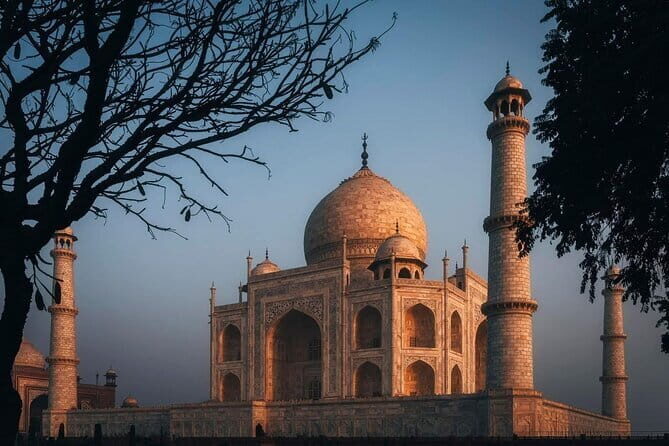
- Two Taj Mahal moments (sunrise and sunset-view time): You get more than one “wow” without trying to sprint.
- Battery bus access to Taj Mahal parking: It saves a chunk of walking before you reach the monument area.
- Private guides for every sightseeing block: You’ll spend less time guessing and more time understanding what you’re seeing.
- Amritsar + Wagah Border on the same trip: Religious centerpiece in the morning/afternoon, border ceremony timing in the late afternoon.
- Rishikesh’s bridge-and-ghat loop: Easy walking distances between Ram Jhula, Lakshman Jhula, and the riverfront rituals.
- Vehicle size scales with your group: 4-seater sedan (1–2), 6-seater wagon (3–4), 10-seater minivan (5–10).
How the 10-day Delhi–Agra–Jaipur–Amritsar–Rishikesh route plays in real life
This is a classic India first-timer route, but with a smart twist: you don’t stop at the Golden Triangle. You keep going into Amritsar and then finish in Rishikesh, where the pace shifts from palace-and-temple sightseeing to river rituals and evening atmosphere.
You’ll start in New Delhi (the meeting point is Indira Gandhi Intl Airport). From there, you’re on a private, air-conditioned vehicle with a driver, and you’ll check into hotels most nights before the next day’s sightseeing. That setup matters. It reduces the mental load: you’re not coordinating transit, buying separate tickets for guides, or trying to time arrivals in unfamiliar cities.
The route also gives you an easy way to handle energy levels. Some days are temple-heavy and walking-friendly. Other days are more about monument clusters and photos. You’ll feel that rhythm as the tour moves from Mughal-era icons to Rajput-era forts and palaces, then to Sikh and Himalayan spirituality.
You can also read our reviews of more private tours in New Delhi


Agra starts with a hotel check-in, then you build into the big Taj Mahal day
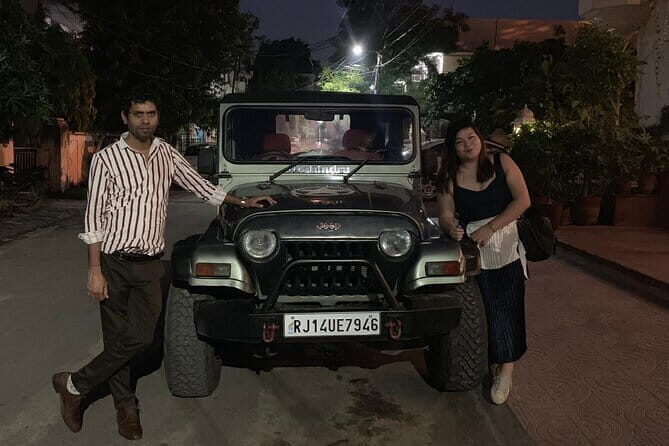
On Day 1, you drive from the New Delhi area to Agra after lunch, check into your hotel, and then keep the rest of the day open for leisure. That matters more than it sounds. Agra is intense once you start sightseeing, so having a lighter first day helps your legs catch up.
Then Agra becomes a two-day Taj Mahal sequence.
The Taj Mahal sunrise block (Day 2)
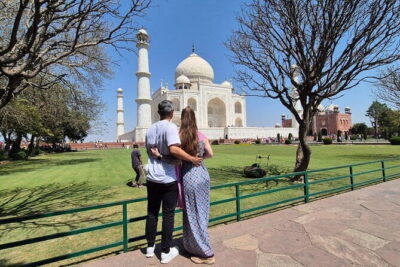
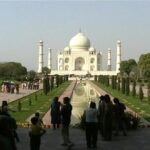
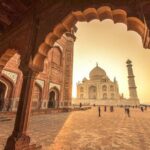
You’ll head out early for Taj Mahal with sunrise, with about two hours set aside for the experience. Sunrise at the Taj Mahal tends to feel different from daytime: the light is softer, shadows move slowly, and the crowds often feel more manageable than peak hours.
You also get that battery bus ride to and from the Taj Mahal parking area up to the monument zone. It’s a small detail, but it’s the kind you feel in your knees after a long drive and a hot afternoon later.
The Taj Mahal sunset viewpoint plan (Day 1)
On Day 1 you also get a dedicated Taj Mahal Sunset View Point stop for about two hours. You’re described as viewing across the river from a spot that’s away from the densest visitor areas. This is smart because you’re not locked into only one angle. If you like photography, this is where you can grab a calmer background and wider perspective before the main monument visit.
Practical tip: Bring a light layer for early mornings. Even when it’s warm later, dawn can feel cooler than you expect.
More than one Taj Mahal moment: Agra Fort and Itimad-ud-Daula for the details
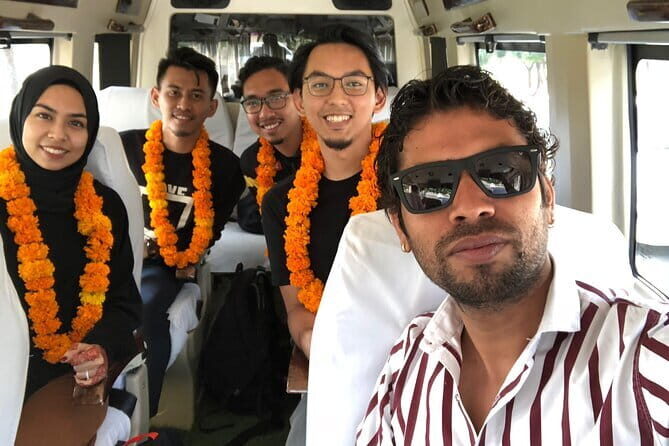
People often treat Agra as a single-photo stop. This itinerary gives you time for two other Mughal landmarks on Day 1:




Agra Fort (about 1 hour)
Agra Fort is described as the Red Fort of Agra and is a UNESCO World Heritage Site in the tour notes. You’ll be walking through layered Mughal-era stories tied to emperors like Akbar and Shah Jahan. For many first-time visitors, the Taj Mahal gets all the attention, but Agra Fort helps you understand the political and architectural world that made those monuments possible.
The possible downside is that Fort visits can feel like “more walking, more heat.” If you’re sensitive to long sun exposure, take breaks and keep water close. The tour includes bottled water during journeys, but you’ll still want to pace yourself inside the sites.
Itmad-ud-Daula, the Baby Taj (about 1 hour)
The Tomb of I’timād-ud-Daulah—often called the Baby Taj—is a strong contrast to the grandeur of the main monument. It’s positioned as a stunning Mughal mausoleum, sometimes described as a jewel-box style site. For anyone who likes the craftsmanship side of travel (patterns, stonework, symmetry), this stop pays off.
What you’ll notice: It feels intimate compared to the Taj Mahal scale. That can be exactly what you want after two big-ticket days.
Fatehpur Sikri and Chand Baori before Jaipur: a detour that changes the mood
After the sunrise Taj Mahal, Day 2 shifts gears. You’ll go to Fatehpur Sikri (about one hour), described as Akbar’s City of Victory and a former capital of the Mughal Empire. Even in a shorter time block, Fatehpur Sikri helps you expand beyond one family and one monument. It’s a reminder that the Mughal story wasn’t only Taj Mahal-sized.
Then comes Chand Baori, a stepwell stop for about 30 minutes, located in Abhaneri. The description calls it one of the largest and deepest stepwells in India and notes it extends roughly 30 meters into the ground. Stepwells are one of those things that sound odd until you’re standing there. The scale and geometry do the talking.
Finally, you travel to Jaipur, check in, and overnight. That means you’re not stuck trying to “do Jaipur” on arrival day. You arrive, park yourself, and then sightseeing starts properly the next morning.
Jaipur palace-and-science day: Amber, City Palace, Jantar Mantar, Hawa Mahal
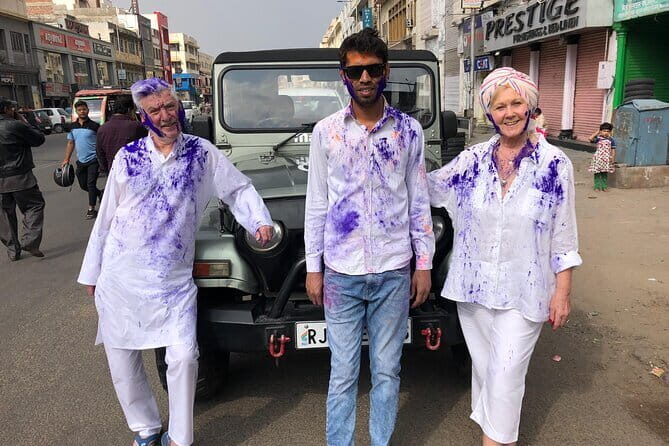
Jaipur gets a guided block that mixes forts, palaces, and something surprising: astronomy instruments.
Panna Meena ka Kund and the Amber area approach
Your Jaipur morning includes Panna Meena ka Kund, a stepwell near Amber Fort (about 15 minutes). It’s a quick photo and orientation stop that fits the theme of “Jaipur as a place of engineering tricks,” not only royal drama.
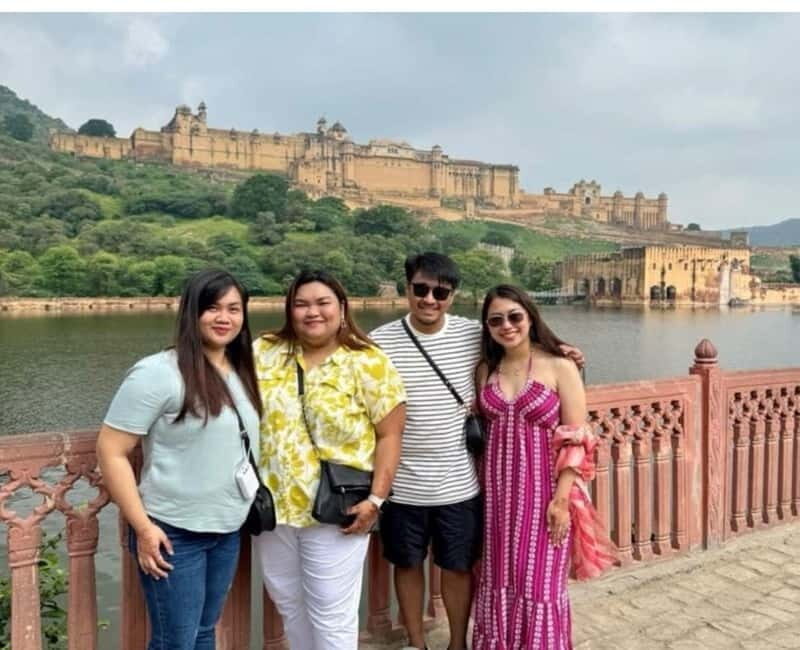
Then you head to Amber Palace for about two hours. It’s framed as the capital until 1728, built by Raja Man Singh I, with notable artistic elements. The big value here is that a guide can connect the architecture to the politics of the era, rather than leaving it as “pretty buildings.”
Jal Mahal photo stop
Jal Mahal is presented as a palace floating on Man Sagar Lake, with a short photo stop (about 15 minutes). It’s not long, but it gives you that iconic “palace on water” shot that makes Jaipur feel instantly recognizable.
City Palace, Jantar Mantar, and Hawa Mahal
You then go to Maharaja’s City Palace (about 1 hour), followed by Jantar Mantar (UNESCO World Heritage Site, about 1 hour). Jantar Mantar is described as a collection of 19 architectural astronomical instruments built in 1734. If you think of Jaipur as only forts and pink stone, this is the moment you see how science and royal planning show up in the city’s layout.
Next is Hawa Mahal (about 30 minutes), the Palace of Breeze, described as a five-storey pyramidal monument made of red and pink sandstone. Even if you’re not going deep into the details, the exterior is memorable because it looks like a honeycomb of windows.
Finally, you have a short stop at Albert Hall Museum (about 15 minutes), called the oldest museum of Rajasthan in the tour notes. It’s a quick taste, not a long museum day.
Practical tip: Wear shoes you can walk in for a few hours. Jaipur sightseeing days add up fast even when each stop is “only” 30 to 60 minutes.
Jaipur temples on Day 4: Birla Mandir and Galtaji Monkey Temple
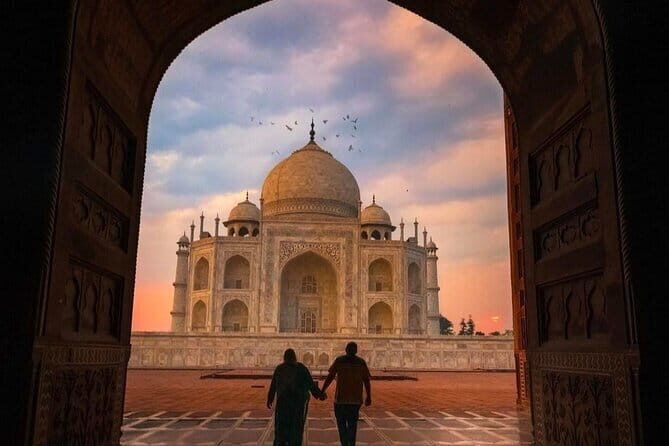
Day 4 starts with a more spiritual, less palace-focused break.
Birla Mandir Temple (about 30 minutes)
Birla Mandir is noted for intricate latticework in white marble and is dedicated to Lord Vishnu. This stop is on the lighter side in time, so it fits well when you want a calm pause between major sights.
Galtaji Temple, the Monkey Temple (about 30 minutes)
Then you go to Galtaji Temple, described as the Abode of Monkeys. The notes mention three sacred pools of water. Even if you don’t connect deeply with the ritual side, this place is visually different from the sandstone forts and palaces.
A simple consideration: temple sites can involve crowds and animals. Keep your bag zipped and avoid dangling snacks.
After this, you travel to New Delhi and check in for overnight, setting you up for a major Delhi day.
Delhi in one long day: Qutub Minar, Humayun’s Tomb, Jama Masjid, and Chandni Chowk
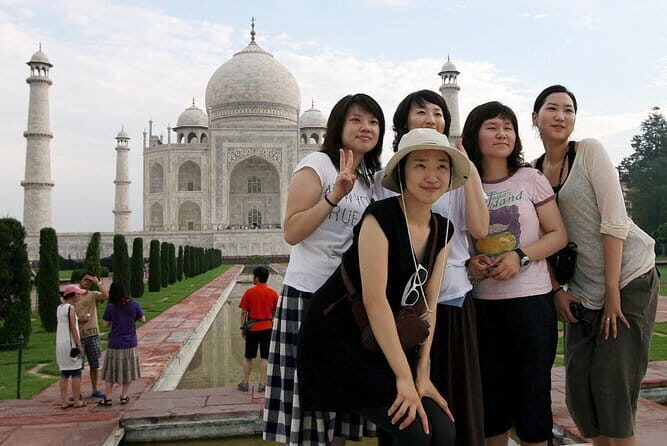
Delhi gets a packed but well-scaffolded sightseeing day.
Qutub Minar (UNESCO World Heritage Site)
You’ll start with Qutub Minar, described as a 73-meter tall five-storey tower built in 1193 by Qutub-ud-din Aibak, with design comparisons to the Minaret of Jam. This is a classic “first time seeing a tall historical monument” moment.
Lotus Temple
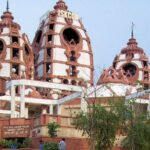
Next is Lotus Temple, described as flower-like and built in 1986, open to everyone regardless of religion. It’s a good reset between older stone monuments and busier market areas.
India Gate and Parliament House viewpoints
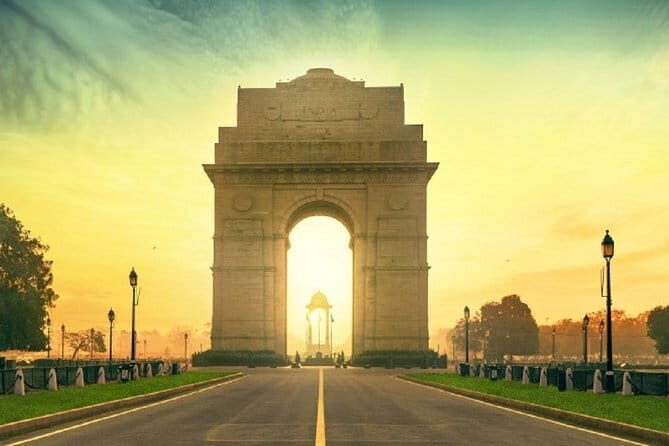
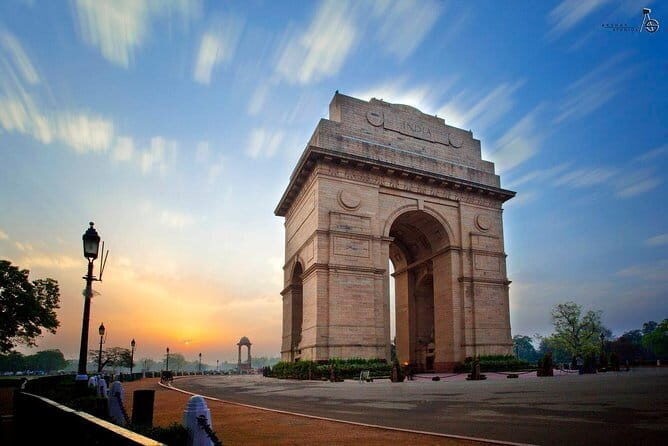
Then you visit India Gate, framed as a war memorial and a picnic spot. You also pass by Parliament House (Sansad Bhavan), described as shaped like the Ashoka Chakra. This isn’t a long stay stop, but it anchors Delhi as a living capital, not only a museum city.
Jama Masjid and Humayun’s Tomb
You’ll go to Jama Masjid, built by Mughal emperor Shah Jahan between 1650 and 1656, then Humayun’s Tomb, commissioned in 1558 by Empress Bega Begum. Humayun’s Tomb gives you another Mughal design reference point that makes later Mughal sites in Agra feel more connected.
Agrasen ki Baoli and Chandni Chowk
You also stop at Agrasen ki Baoli, described as a protected monument and a long stepwell structure (60 meters long, 15 meters wide). It’s a great photo and cooling break if the day is hot.
Then comes Chandni Chowk, described as Old Delhi’s busy shopping area with spices, dried fruit, silver jewelry, and saris. It’s about time spent walking and people-watching as much as buying anything.
Consideration: Delhi’s Old City can get intense. If you feel overwhelmed easily, tell your driver and guide to keep you moving through the lanes at a steady pace.
Amritsar: Golden Temple time + a well-timed Wagah Border ceremony
Amritsar begins with a travel day. You arrive, check in, and overnight.
Golden Temple (about 3 hours)
On Day 7, you spend about three hours at the Golden Temple (Sri Harimandir Sahib). The notes emphasize it as a symbol of human brotherhood and equality, with access open regardless of caste or creed. This is one of the most meaningful parts of the whole tour because it’s not only sightseeing. It’s a living religious center with rules and real atmosphere.
Wagah Border at the late afternoon rush
Then you go to the Wagah Border ceremony. The tour notes say you should be there at 3:00 pm to prepare, while the flag down ceremony starts at 5:00 pm. You’ll have about two hours set aside for the border experience.
What I like about this pairing: You get quiet, reflective time at the Golden Temple, then you shift to a highly choreographed spectacle at Wagah.
Practical note: Border ceremonies can be strict about what you bring and where you stand. Keep your schedule tight and follow instructions from staff and your guide.
Also, on the human side, some travelers have been supported by drivers named Surendra and Vinod, and at least one Amritsar guiding mention includes someone named Vijay. That’s a nice reminder that the quality of the experience often comes from the people managing the timing.
Rishikesh: bridges, ashram calm, and riverfront ritual at Triveni Ghat
Rishikesh is the spiritual decompression phase of this trip. You arrive, check in, and overnight.
Ram Jhula and Lakshman Jhula
On Day 9, you do Ram Jhula (about 30 minutes) and Lakshman Jhula (about 30 minutes). Both are described as suspension bridges over the Ganges. This gives you an easy “river views + quick walk” rhythm without exhausting you with long climbs.
Parmarth Niketan Ashram
Then you visit Parmarth Niketan Ashram, about 30 minutes. The notes specify it’s along the banks of the Ganges and was founded in 1942 by Pujya Swami Shukdevanandji Maharaj. If you’re interested in spiritual institutions, this is a concrete, named place rather than a vague “temple stop.”
Triveni Ghat
Finally, you hit Triveni Ghat, about 30 minutes. The description calls it the biggest and most famous ghat in Rishikesh, and says it can be overcrowded with devotees taking ritual baths to cleanse themselves of sins. Plan your expectations accordingly. It’s a visual place, and it can be crowded in a way that’s hard to avoid.
Private transport and local guiding: what you actually get for your money
This tour is private, with an air-conditioned vehicle and driver. Vehicle type scales with your group size: a 4-seater sedan for 1–2 people, a 6-seater wagon for 3–4, and a 10-seater minivan for 5–10. That keeps logistics smoother than squeezing into the wrong car size.
You also get:
- hotel or airport pickup and drop-off
- private local guides for the sightseeing blocks
- bottled mineral water during journeys
- daily hotel breakfast if you book the option that includes hotels
- mobile ticket (so you’re not hunting for paper)
That guide-and-vehicle combo is what turns “a list of famous places” into a travel day you can enjoy instead of endure. Your guide can connect the why behind the what, and the driver keeps your transfers realistic between cities and major sites.
One practical consideration: monument entry fees and camera/film fees are not included. That means you’ll want to carry a method of payment and some cash, depending on the site rules.
Price and value: why $588.46 can feel fair (and when it might not)
The listed price is $588.46 per person for a 10-day private experience. It’s not a budget backpacker deal, but it’s also not priced like luxury.
Here’s what you’re paying for that supports value:
- private, air-conditioned transport with a driver for multi-city travel
- pick-up and drop-off from Indira Gandhi Intl Airport
- private local guides during sightseeing
- included comfort items during travel, like bottled mineral water
- the battery bus ride to and from Taj Mahal parking up to the monument area
- daily hotel breakfast when hotels are included
- 9 nights of accommodation when booking the hotel option
The big “not included” bucket is monuments entry, plus camera and video fees. So if you love museums and want to film a lot, your total spend will rise. On the flip side, if you mostly want iconic sights and photos, you can manage costs by planning ahead for tickets.
Also, this tour is often booked about 82 days in advance on average. That’s a sign you should book early if your dates are fixed, especially around peak travel periods.
Who this trip fits best (and who should rethink the pace)
This tour fits best if you:
- want a first-time style itinerary across major North India highlights
- prefer private guiding so you can ask questions and move at a sensible pace
- like variety: palaces and forts, then a meaningful cultural day in Amritsar, then a calmer end in Rishikesh
- don’t want to plan trains or drive yourself between cities
You might rethink it if you:
- hate packed days and long sightseeing bursts
- want fully included monument tickets (this one doesn’t include entry fees)
- plan to spend hours at each site with no time for transfers
Should you book this private Golden Triangle with Amritsar and Rishikesh?
If you want one plan that covers the headline sites and still gives you breathing room at key moments, I’d say yes—especially for the mix of Taj Mahal timing, Amritsar’s Golden Temple, and the river-and-bridge set in Rishikesh.
Before you book, check your own style:
- Are you fine paying monument entry fees on top of the tour price?
- Do you enjoy guided context more than wandering on your own?
- Will you be comfortable with some long travel days between cities?
If the answers lean yes, this is a strong way to see a lot of India without feeling frantic.
FAQ
Is this a private tour or a shared group experience?
It’s a private tour/activity, which means only your group participates. You’ll also travel with a private vehicle and private local guides during sightseeing.
What cities are included in the 10-day trip?
The route includes New Delhi, Agra, Jaipur, Amritsar, and Rishikesh, with return driving back to New Delhi on the final day.
Are hotel stays included in the price?
The itinerary includes 9 nights of accommodation if you book the option that includes hotels. Daily hotel breakfast is included in that same option.
Do I pay monument entry fees separately?
Yes. Monument entry is not included, and the tour also notes that camera/film/video fees (if applicable) are not included.
How do you handle transport between cities and sites?
You travel in a private, air-conditioned vehicle with a driver. The car type depends on group size: 4-seater sedan for groups of 1–2, 6-seater wagon for 3–4, and a 10-seater minivan for 5–10.
Is pickup included?
Yes. Hotel or airport pick-up and drop-off are included, with the meeting point listed at Indira Gandhi Intl Airport in New Delhi.
What special transport is included for the Taj Mahal?
The tour includes a battery bus ride to and from the Taj Mahal parking lot up to the Taj Mahal monument.
What’s the cancellation rule?
Free cancellation is available. You can cancel up to 24 hours in advance for a full refund; if you cancel less than 24 hours before the experience starts, the amount paid isn’t refunded.