REVIEW · NEW DELHI
Old & New Delhi Full or Half Day Private Sightseeing Tour
Book on Viator →Operated by Tripstro · Bookable on Viator
Delhi in one day needs a plan.
This private Old and New Delhi tour is a smart mix of famous monuments and street-level experiences, with a personal guide and air-conditioned car to keep your day moving. I like the “see it all, without wrestling logistics” feel, especially when you’re going from Old Delhi’s mosques and markets to New Delhi’s big landmarks. You’ll get Jama Masjid up close, then jump into the chaos of Chandni Chowk by rickshaw, with a guide doing the explaining so it doesn’t turn into random sightseeing.
My favorite part is how the route balances big photo stops with quieter, reflective breaks. You hit Gurudwara Bangla Sahib for a calmer pause, then move to Humayun’s Tomb with its garden-mausoleum setup, and later end with two major icons in New Delhi: the Lotus Temple and Qutub Minar. One possible drawback: this is a packed day, and Old Delhi street sections can feel hectic, so you’ll want good shoes and some patience for crowds.
One more thing to consider: food and drinks are not included. The tour provides free water bottles, but you’ll still need to plan your own meals and tips, so budget a little extra if you don’t want to snack-hunt between stops.
In This Review
- Key highlights to expect
- How the private tour flows (4 to 8 hours, AC car, pickup, and a driver)
- Jama Masjid: stepping into one of India’s largest mosques
- Chandni Chowk by rickshaw: market energy with a plan (and optional wedding-shopping detours)
- Gurudwara Bangla Sahib: a calmer reset in the middle of the day
- Humayun’s Tomb (UNESCO): the garden-mausoleum stop that rewards time
- India Gate and Parliament House on the drive: how New Delhi’s power axis feels
- Lotus Temple: a quiet, open-to-all House of Worship
- Qutub Minar: the towering finish with Indo-Islamic architecture
- Price and value at $24.95 per person: what feels like a win
- What to bring and how to handle Delhi crowds on this route
- Who should book this tour (and who might not love it)
- Should you book this Old & New Delhi Private Sightseeing Tour?
- FAQ
- How long is the private sightseeing tour?
- Is pickup available, and where do we start?
- Is this tour private?
- What transportation is included?
- Are monument entry tickets included?
- Is a tuk tuk ride included in Old Delhi?
- Is food or drinks included?
- Can I cancel for free?
Key highlights to expect
- Private guide for a route that actually makes sense, not just a list of places
- Old Delhi tuk-tuk option (if selected) plus a rickshaw ride from Jama Masjid
- AC car + driver for getting between Old and New Delhi efficiently
- UNESCO sites at Humayun’s Tomb and Qutub Minar with dedicated time
- Balanced stops: historic monuments, then calmer spiritual spaces like Gurudwara Bangla Sahib and Lotus Temple
How the private tour flows (4 to 8 hours, AC car, pickup, and a driver)
You’re looking at a flexible day that runs about 4 to 8 hours. That range matters in Delhi, because time can disappear fast once you’re in traffic or waiting for crowd control at big sites. With a private setup, you’re not stuck with a slow group, so your guide can keep your pace realistic.
The big comfort win is the air-conditioned car with a driver. You’ll use it to move between Old Delhi and New Delhi without spending your whole day stuck in stops and starts outdoors. You’ll also get free water bottles, which is genuinely useful when you’re walking in warm weather and switching between sun and shaded courtyards.
Also, you’ll get pickup offered, with the start point listed as Delhi, India. In practice, this is the difference between enjoying your day and spending the morning figuring out where to meet and how to get there.
You can also read our reviews of more tours and experiences in New Delhi.



Jama Masjid: stepping into one of India’s largest mosques
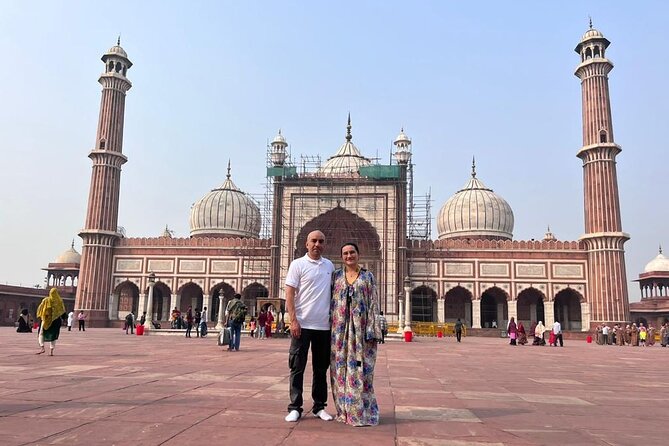
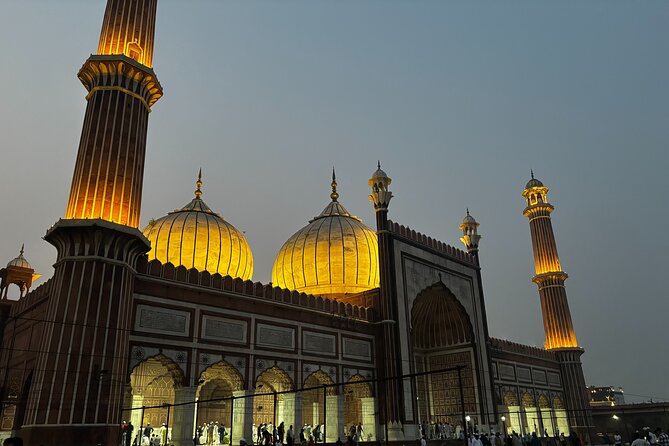
Your Old Delhi story starts at Jama Masjid, built by Emperor Shah Jahan between 1650 and 1656. The mosque’s red sandstone and white marble design is the kind of contrast that looks even better in person than in photos, especially when you see the scale of the courtyard and the layered architecture.
Expect the guide to help you notice details that most people miss when they just rush through for pictures. With an admission ticket included for this stop, you can focus on the visit instead of scrambling for entry logistics. Plan on about one hour here, which is enough time to take in the main areas and still feel like you’re not being herded along.
A practical consideration: Jama Masjid is a place of worship. Dress and behavior matter. If you’re unsure, follow your guide’s cues, and keep movement respectful so the visit stays comfortable for you and others.
Chandni Chowk by rickshaw: market energy with a plan (and optional wedding-shopping detours)
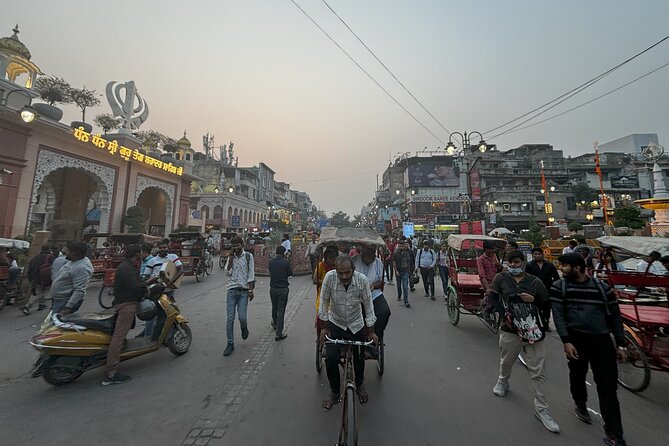
After Jama Masjid, you’ll hop on a rickshaw and head into Chandni Chowk, the famous old-market corridor of Old Delhi. This is where Delhi’s street life becomes real: you’ll see crowds, shop fronts, delivery bikes, and people moving fast in every direction.
What makes this stop worth it on a tour is that you’re not just dropped at the entrance. You’ll move through specific areas that have their own “why”:
- Cham Cham Gali, known for wedding shopping
- Parathe Vali Gali, where the name points to the food lane you’ll smell long before you see it
The schedule shows about 30 minutes for this market segment, which is short but workable if you don’t try to shop for everything at once. I’d treat this as a taste-test for your senses, not a full market expedition.
If you selected the option, you may also get a tuk-tuk ride in Old Delhi. That’s a fun way to see the lanes from a different angle and break up the walking. Either way, wear shoes you can walk in for 30–90 minutes of stop-and-go traffic on foot.
Gurudwara Bangla Sahib: a calmer reset in the middle of the day

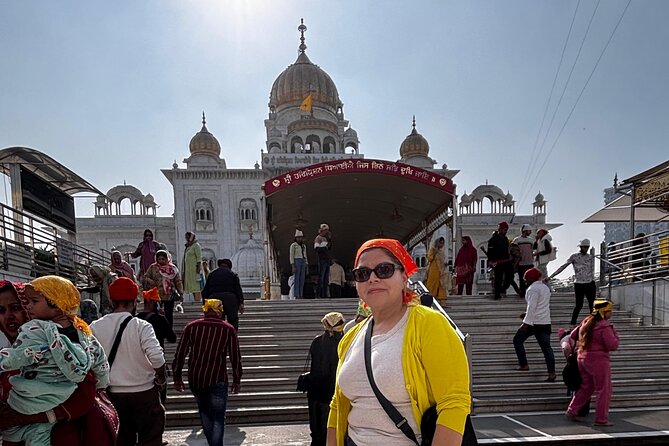
Next comes Gurudwara Bangla Sahib, a major Sikh place of worship. The site has a story that makes it more meaningful than a quick photo stop: it began as a bungalow, and later became important after Guru Har Krishan resided there in 1664 and helped people during that time.
You’ll have about one hour here, with an admission ticket included. This stop is valuable because it slows your pace. When Delhi gets loud, a place of worship like this gives you a different rhythm—standing quietly, watching how people move through the space, and seeing faith expressed in everyday actions.
Practical note: this is still a working spiritual site, so follow the flow and instructions you’re given. If you want a peaceful moment during a packed day, this is one of the better chances on the route.
Humayun’s Tomb (UNESCO): the garden-mausoleum stop that rewards time
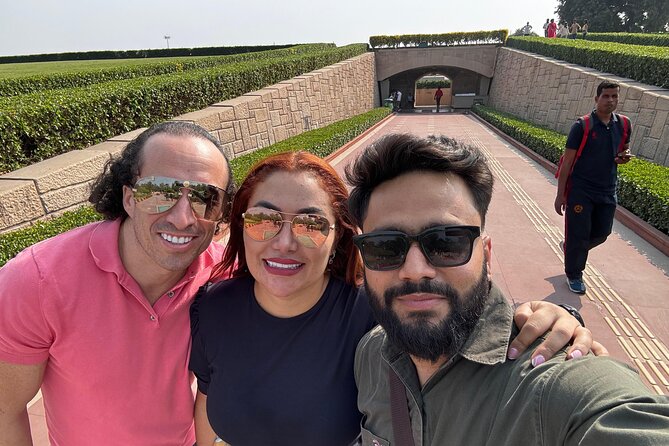
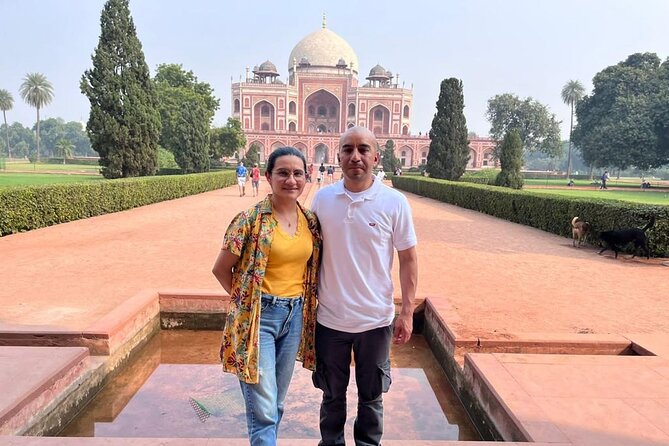
Then you shift toward Humayun’s Tomb, a UNESCO World Heritage Site and one of the big “wow” moments in central Delhi. This is a 16th-century mausoleum, commissioned by Humayun’s first wife, Empress Bega Begum. It’s often called the first garden-tomb concept in the region, and you feel that in the way the grounds are laid out—space, symmetry, and careful alignment.
You’ll get about one hour here, and the entry ticket is included for this stop. That time length is important. With Humayun’s Tomb, the best views come when you pause and let your eyes adjust from the street-side approach to the interior layout.
A minor drawback: if you’re doing this in the busiest part of the day, you may share sightlines with other photographers. That’s normal for UNESCO sites in India. Your guide can help you time the better angles during the time window you have.



India Gate and Parliament House on the drive: how New Delhi’s power axis feels
New Delhi is where the geometry changes. Instead of crowded lanes, you get broader avenues and the feel of planning. The tour’s overview includes seeing landmarks like India Gate and Parliament House, and you’ll typically encounter them as part of the drive and sightseeing route between major monuments.
I like these pass-by or roadside segments because they help you understand what Delhi looks like when the city switches from older Mughal-era spaces to modern government-era sightlines. Even if you don’t spend hours inside every building, seeing these locations sets the context for the rest of the New Delhi stops.
Don’t rush these moments. If your guide offers a quick historical pointer, take it. It turns “I saw it” into “I get why this matters.”
Lotus Temple: a quiet, open-to-all House of Worship
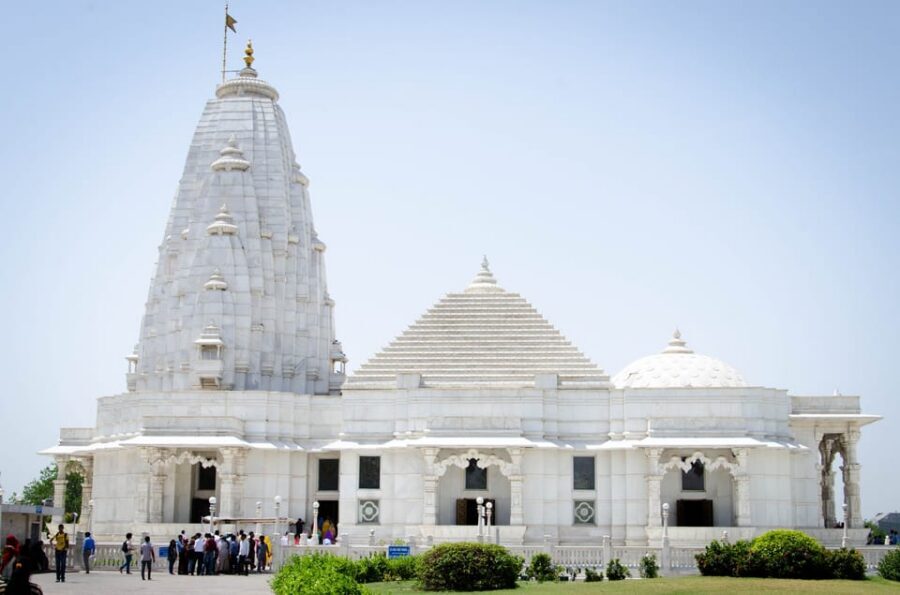
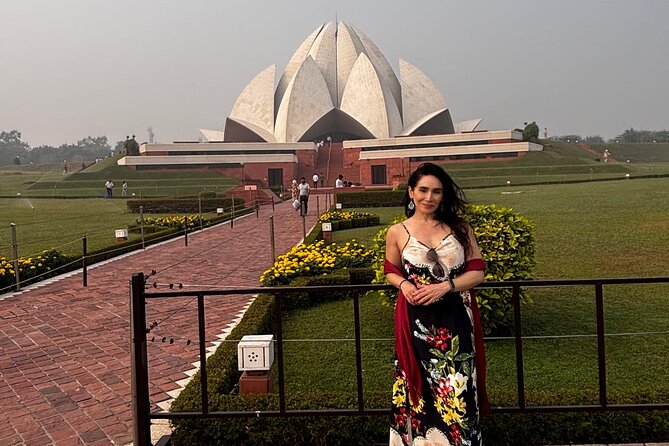
One of the most peaceful stops in the itinerary is the Lotus Temple, a Baháʼí House of Worship completed in 1986. The standout feature is the lotus-like shape, built in white marble that reflects light differently depending on the sky and time of day.
You’ll get about 30 minutes, with an admission ticket included. This is ideal as a lighter stop after heavier, older stone and complex street scenes. It’s also one of the easiest places to slow down without feeling like you’re “behind schedule.”
The tour data notes the temple is open to all faiths for prayer, and that openness is part of what makes it such a good reset. Just follow temple etiquette, keep your movement calm, and you’ll get more enjoyment out of the space.
Qutub Minar: the towering finish with Indo-Islamic architecture
You end with Qutub Minar, a UNESCO World Heritage Site and a legendary landmark: a 73-meter-high minaret. Construction began in the 12th century under Qutub-ud-din Aibak, and it’s known for its Indo-Islamic architecture and detailed stonework.
You’ll have about one hour here, again with admission ticket included. This stop is worth the time because the minaret isn’t just “tall”—it’s visually dense. If you take even a few minutes to look up and around, you’ll start noticing patterns rather than treating it like a single-point landmark.
If the weather is hot, consider how much walking you want to do. You can get great value from a slower pace and a few good observation points rather than sprinting from one angle to the next.
Price and value at $24.95 per person: what feels like a win
At $24.95 per person, this tour can be good value—mainly because it bundles several things together that cost time and effort on your own: a personal guide, an AC car with a driver, and transportation-related costs like parking, tolls, fuel, and taxes.
The one big variable is monument entry fees. The tour description says monuments entry ticket is included if option selected, and the stop times list admission tickets for certain stops. So you’ll want to check what you chose during booking. If you include the entry option, you’re more likely to have a smoother day with fewer surprise payments.
Also, food is not included, and tips are not included. That doesn’t make the price bad, but it does affect your true “all-in” cost. I like the fact that you don’t get trapped into a rushed meal. You can choose where you want to eat based on what you like and where you end up that day.
What to bring and how to handle Delhi crowds on this route
You’ll be moving between monuments and market lanes, and that means your comfort kit matters. Bring comfortable, grippy shoes. Old Delhi streets are uneven in places, and you’ll appreciate footwear you can trust.
Bring sun protection. Even with an AC car, you’ll spend real time outdoors at Jama Masjid, Chandni Chowk, and Qutub Minar. A hat and water discipline go a long way. Good news: the tour includes free water bottles, but that doesn’t stop you from wanting extras if you run hot.
Clothing should be respectful for religious sites, especially at Jama Masjid and Gurudwara Bangla Sahib. If you’re visiting in warmer months, use light layers so you can cover as needed.
Finally: plan for a day that feels full. This isn’t a sit-down-and-wait sightseeing plan. It’s a “see a lot with a guide” approach, and the payoff is that you leave with a real sense of how Old Delhi and New Delhi connect.
Who should book this tour (and who might not love it)
This tour is best for you if you want a private day, a guide to explain what you’re seeing, and efficient transport between key areas. It fits first-timers who feel overwhelmed by Old Delhi logistics and second-time visitors who still want a clean route across major sights.
It’s also a good fit if you like variety: mosque architecture, market lanes, a Sikh place of worship, UNESCO tomb-and-tower stops, and a modern religious landmark like the Lotus Temple in one day.
If you prefer slow travel or quiet neighborhoods with minimal crowding, you might find the schedule intense. The Old Delhi segment is short, but it’s active. You’ll want flexibility and patience.
The good news: it’s pushchair accessible, so it’s not a complete knockout if you’re traveling with mobility needs. Still, you’ll want to be realistic about cobblestones and crowd density around market areas.
Should you book this Old & New Delhi Private Sightseeing Tour?
Yes—if you want an efficient, guide-led introduction to Old and New Delhi without the stress of planning routes between far-flung landmarks. The biggest reasons to book are the private guide setup, the AC car that keeps the day manageable, and the fact that the itinerary covers both architectural icons and street-level Delhi.
I’d especially consider it if you care about understanding the story behind stops like Shah Jahan’s Jama Masjid, the Empress Bega Begum connection at Humayun’s Tomb, and the architectural significance of Qutub Minar. A stand-out review mentioned a guide named Shankrr who knows the culture and country well, and that’s exactly the kind of value you want in a day this packed.
If you hate crowds, want lots of free time, or are on a tight budget that can’t flex for snacks and tips, you may feel rushed. But for most people, this is a solid way to cover the key sights while still keeping the experience organized.
FAQ
How long is the private sightseeing tour?
It runs for about 4 to 8 hours depending on the option and pacing.
Is pickup available, and where do we start?
Pickup is offered, and the tour start is listed as Delhi, India.
Is this tour private?
Yes. It’s a private experience, so only your group participates.
What transportation is included?
You get an AC car with a driver, plus free water bottles.
Are monument entry tickets included?
Entry tickets are included if you select the monuments entry ticket option.
Is a tuk tuk ride included in Old Delhi?
A tuk tuk ride in Old Delhi is included if that option is selected.
Is food or drinks included?
No. Food and drinks are not included.
Can I cancel for free?
Yes. You can cancel for free up to 24 hours before the experience start time for a full refund.