REVIEW · NEW DELHI
Taj Mahal Tour By Gatimaan express with lunch
Book on Viator →Operated by My Taj Tour · Bookable on Viator
A day in Agra can feel like a sprint. This tour is built around the fast Gatimaan Express rhythm, with a live guide and monument tickets included, so you spend more time looking and less time bargaining or figuring out logistics. Two things I really like: you hit the Taj Mahal first after reaching Agra (better pacing for photos and calm viewing), and the tour includes a live guide service that can also handle photography well—guides like Pooran, Vikas, and Raja come up in the feedback for being helpful and enthusiastic. The one drawback to consider is simple: it’s a long day with an early start and several stops, so if you want slow wandering and lots of free time, you’ll feel the schedule.
In short, you get a guided, ticketed Agra circuit plus train meals, and you’re back in Delhi the same evening. You’ll also appreciate the practical touches like pickup/drop-off assistance and mineral water bottles. Just plan to move efficiently between sites and know that lunch drinks aren’t included—bring cash or be ready to buy what you want.
In This Review
- Quick hits before you go
- Why this Taj Mahal day works: timing, tickets, and real guidance
- The morning handoff in Delhi: from airport/hotel to the station
- Arriving at Agra Cantt: quick transfer, then Taj Mahal time
- Entering the Taj Mahal with a guide who manages the queue
- Agra Fort: the red-sandstone contrast and the second major stop
- Lunch timing and Itmad-ud-Daula: the Baby Taj payoff
- Fatehpur Sikri: the City of Ghosts with limited time
- Head back to Agra Cantt: catching the 5:50 train to Delhi
- Price and value: what you’re really paying for at $173.34
- Who should book this tour, and who might want a different plan
- Should you book? My take
- FAQ
- What time does the tour start?
- Where is the meeting point?
- How do I travel from Delhi to Agra?
- Which meals are included?
- Are entrance tickets included?
- What’s not included in the price?
- Is this tour private?
Quick hits before you go

- Gatimaan Express structure: early departure from Delhi, then a full monument run, then a scheduled return to catch the evening train.
- Taj Mahal first in Agra: a smart order that helps you beat the day’s crowd pressure and keeps the momentum.
- Tickets and guide included: entrance fees and live interpretation are part of the package, not add-ons.
- Strong guide track record: Pooran is noted as an excellent guide and photographer; Vikas and Raja also get praise for knowledge and helpfulness.
- Big Mughal mix: Taj Mahal, Agra Fort, Itmad-ud-Daula (Baby Taj), and Fatehpur Sikri all in one day.
- Train comfort meals: breakfast and dinner are served on the train, so you’re not hunting for food between stations.
Why this Taj Mahal day works: timing, tickets, and real guidance
If your goal is a classic Mughal highlight day without turning it into a logistics project, this tour is a good fit. You start early, swap to the Hazrat Nizamuddin station, and ride Gatimaan Express to Agra. Once there, you’re met by a driver and taken straight into the sightseeing flow, with a live guide managing your time across the main stops.
The best value part isn’t only that the entrance tickets are included—it’s that you’re not left to guess how long things take. The schedule gives each monument a workable block (roughly two hours for the Taj Mahal, then smaller timed windows for the others), and the guide keeps the story moving so you don’t just look at buildings—you understand what you’re seeing.
The other practical upside: the tour provides breakfast and dinner on the train and includes mineral water bottles. That means you’re less likely to get stuck late, hungry, or scrambling at the station. You still need to plan for lunch drinks (they aren’t included), but the core meals are handled.
You can also read our reviews of more tours and experiences in New Delhi


The morning handoff in Delhi: from airport/hotel to the station
Your day begins around 6:30 am, with meeting at Indira Gandhi Intl Airport in New Delhi. Pickup is offered, and the driver helps you get to Hazrat Nizamuddin Railway Station, where you catch Gatimaan Express.
One detail I like here is how it reduces your mental load. Instead of navigating the metro/taxi shuffle, you’re guided through the transition to the station area and onto the correct train departure. The train leaves at about 08:10 am, so you’re already committed to a timetable early—which is exactly what makes a one-day Agra trip possible.
Time-wise, you’re on the train for about 3 hours 30 minutes, arriving for onward pickup at Agra Cantt. If you’re traveling with kids or anyone who dislikes early starts, this is the part you’ll feel most. But if you’re comfortable waking up early, it’s a smooth way to turn distance into something you barely notice.
Arriving at Agra Cantt: quick transfer, then Taj Mahal time

After you reach Agra Cantt, your driver picks you up and takes you straight into the main attraction. The order matters. Starting with the Taj Mahal means your day’s biggest visual moment happens while you’re still fresh from the morning ride, and you’re less likely to be rushed later when you’re tired.
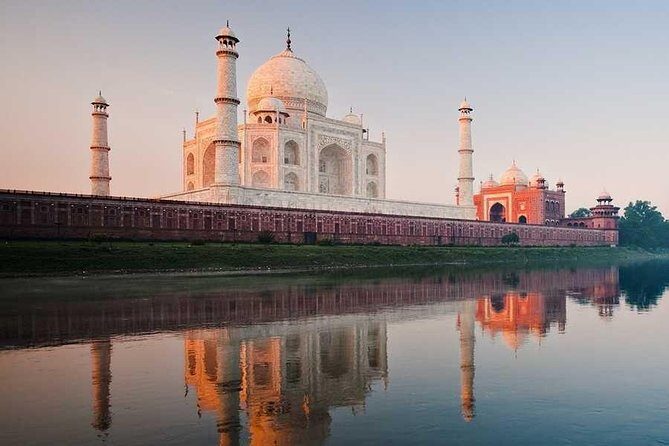
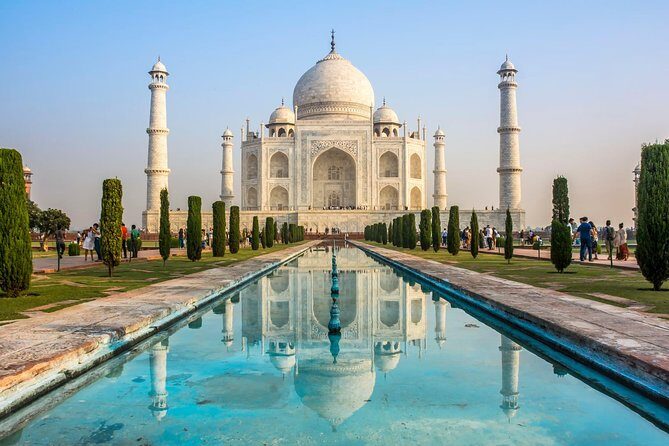
You’ll spend about 2 hours at the Taj Mahal. That’s typically enough time to see the key viewpoints and get your camera angles without feeling like you’re only passing through. And since there’s a live guide, you’ll hear the story behind what you’re looking at—like the fact that the Taj Mahal was built by Mughal emperor Shah Jahan as a memorial for Mumtaz Mahal. She died in 1630, and her last wish was for a memorial to be built in her memory. The monument is made from white marble, and it reportedly took 22 years to complete.
Here’s what I’d tell you to watch for: don’t treat it like just one photo spot. Use your guide-led time to notice how the details change as you move—shape, proportions, and the way light hits the marble. Two hours can feel short or perfect depending on how prepared your priorities are. If you want a classic set of images, this timing works well.
Entering the Taj Mahal with a guide who manages the queue
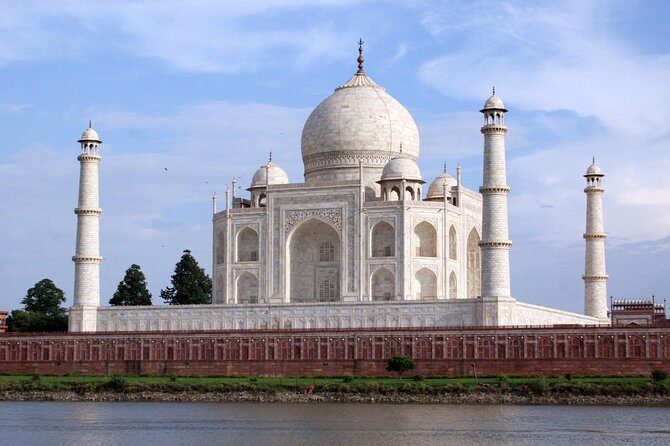
This tour includes entrance tickets, so you don’t spend your sightseeing budget on waiting in separate lines for forms and fees. More importantly, a strong guide can help you keep your bearings when the crowd energy rises.
The feedback I saw highlights guides who are proactive and friendly. Pooran is repeatedly mentioned for being an amazing guide and photographer, which is useful if you want great photos without awkward posing attempts at every stop. Vikas and Raja also get credit for being welcoming and helpful, with Raja specifically noted for knowing the history of the Taj Mahal and its surroundings.
You’ll still want to be realistic. In a place like this, there’s always some waiting involved. The advantage here is that your guide is there to keep the day moving and help you get the most from the time you’re actually inside.
Practical tip: bring your patience for peak moments and focus on quality over quantity. A few good angles, plus time to listen and observe, beats sprinting for a hundred shots.
Agra Fort: the red-sandstone contrast and the second major stop
After the Taj Mahal, the tour moves to Agra Fort, another UNESCO World Heritage site. You’ll have about 1 hour 30 minutes here, which is enough to catch the main sights without turning it into an all-day fortress marathon.
Agra Fort is built entirely in red sandstone, and the scale is big—about 2.5 km across the site area. That means you’ll be walking and you’ll want comfortable shoes. The benefit of this stop is contrast: the Taj Mahal is all about white marble elegance, while Agra Fort is strength, walls, and the practical power of the Mughal world.
The drawback is also built into the timing: 1.5 hours plus transit time means you’ll need to prioritize. If you love deep fortress details and want to linger at every doorway, you might feel like you’re moving. But if you want a solid overview with guided context, this is a strong pairing after the Taj.






Lunch timing and Itmad-ud-Daula: the Baby Taj payoff
Once you’re done with lunch, the tour takes you to Itmad-ud-Daula, often called the Baby Taj. This stop is about 1 hour, and it’s a smart use of time because it’s close in theme to the Taj Mahal—yet different in feel.
Itmad-ud-Daula is the tomb of Itmad-Ud-Daula, described here as the head of the court of Mughal Emperor Jahan. With the Taj Mahal still fresh in your mind, this is where many people start to connect design choices and decorative language. Even if you don’t spend forever at every corner, you’re likely to notice more this time than you expected.
One practical point: lunch is included, but any drinks with lunch are not. That’s not unusual in touring packages, but it’s something you’ll want to plan for so you don’t end up paying for everything last minute. If you’re particular about soda, juice, or bottled drinks, budget for it.
This is also the part of the day where your attention can either sharpen or fade. If you pay attention to the guide’s explanations here, the last hour can feel like the most thoughtful payoff of the afternoon.
Fatehpur Sikri: the City of Ghosts with limited time
Next up is Fatehpur Sikri, described as the City of Ghosts because the city lacks inhabitants today. You’ll have about 1 hour 10 minutes at this stop.
Fatehpur Sikri was built in the second half of the sixteenth century by Emperor Akbar. In other words, you’re moving from Shah Jahan’s era to Akbar’s—different Mughal chapter, different architectural mood, and a city scale that’s worth seeing even when you’re not staying long.
The main consideration here is the limited time. With just over an hour, you’ll likely cover highlights and major structures rather than doing a slow, full circuit. That’s not bad—this tour is designed for one-day efficiency—but it does mean you should decide in advance what you want most: big-picture understanding of the city’s role, or time-intensive detail hunting.
If you enjoy guided overviews, this stop can be surprisingly satisfying. A good guide can help you read the site like a story, instead of just walking through scattered sections.
Head back to Agra Cantt: catching the 5:50 train to Delhi
After Fatehpur Sikri, you head back toward Agra Cantt with the goal of making the return train. The departure is around 5:50 pm, and you return to Delhi around 7:30 pm.
This is where the tour’s pacing becomes very real. You don’t get a leisurely “wrap-up” period. You’ll be moving with time in mind, using the station window to rest briefly and keep your day on track.
Since breakfast and dinner are served on the train, you have less pressure to eat in between. Still, I’d suggest planning your energy like this: hydrate early, snack if you need it (water is included; drinks with lunch are not), and keep your camera charged. The day ends up being long, and the last leg is less scenic because you’re focused on the schedule.
Price and value: what you’re really paying for at $173.34
At $173.34 per person, the value mainly comes from stacking several costly items together: train travel time structure, entrance tickets, a live tour guide, and pickup/drop-off assistance. On top of that, you receive breakfast and dinner served on the train and mineral water bottles.
If you tried to build this yourself—booking train seats, figuring out station transfers, then purchasing monument entries while also arranging a driver—you’d likely spend time and money on separate pieces. The tour wraps those parts into one package, which matters when you have a single day.
Where you should be clear: this price covers a lot, but not everything. Tips/gratuities are not included, and drinks with lunch aren’t included. Those are small, but if you like ordering drinks freely, they can affect your final day cost.
Another value angle: the tour is described as private with only your group participating. That’s helpful if you want less waiting around for other groups and more control over your pacing (within the schedule).
Who should book this tour, and who might want a different plan
I’d point you toward this tour if you:
- Want the Taj Mahal plus the best-known Agra add-ons in one day
- Appreciate a live guide to explain what you’re seeing
- Prefer having tickets and train meals handled for you
- Are okay with a full schedule and early mornings
I’d think twice if you:
- Want long, slow time at each monument
- Hate moving from site to site with limited free time
- Expect lunch drinks to be fully covered
For many people, the sweet spot is a first-timer trip to Agra—especially if you’re short on days and want a guided highlights version you can trust.
Should you book? My take
Yes, I’d book this if your priority is a smooth, guided one-day Taj Mahal experience with monument tickets and train meals already included. The strong point is how the day is managed: train transfer, Taj first, then Agra Fort, Itmad-ud-Daula, and Fatehpur Sikri before the return ride to Delhi.
If you can handle an early start and keep your expectations realistic about time at each site, you’ll likely feel like your day was productive rather than chaotic. And if you’re lucky enough to get a guide like Pooran, Vikas, or Raja, you’ll probably get both the story and the photos handled with less stress than you’d expect.
FAQ
What time does the tour start?
The tour starts at 6:30 am.
Where is the meeting point?
The meeting point is Indira Gandhi Intl Airport in New Delhi, New Delhi 110037 India. The activity ends back at the meeting point.
How do I travel from Delhi to Agra?
You’re taken to Hazrat Nizamuddin Railway Station and catch the train to Agra. The train withdraws at 08:10 am from the station.
Which meals are included?
Breakfast and dinner are served in the train. Lunch is part of the day before Itmad-ud-Daula.
Are entrance tickets included?
Yes. Entrance tickets of all monuments are included.
What’s not included in the price?
Tips/gratuities are not included, and any kind of drinks served with lunch are not included.
Is this tour private?
Yes. It’s described as a private tour/activity, and only your group will participate.