REVIEW · NEW DELHI
New Delhi and Old Delhi Sightseeing Tour
Book on Viator →Operated by THE LOST COMPASS · Bookable on Viator
Delhi gets packed into one smart day. This outing strings together iconic New Delhi landmarks and the sensory hit of Old Delhi bazaars, with route variants that let you add a street-art option. I love that most major stops come with admission handled for you, and I also love that lunch is included with a clear veg or non-veg choice plus allergy notes in advance. One thing to consider: it is a full 5–7 hour day with lots of transitions between neighborhoods, and you are not doing a hotel door-to-door setup.
What makes it feel smooth is the pacing for a group that caps at 10 travelers. I also like the guide approach, especially when the storytelling style is in play; Parul is specifically praised as funny, kind, and the kind of person who makes solo guests feel comfortable fast. A possible drawback if you are trying to do this at an exact hour for a later plan: you will want buffer time for traffic and the short photo stops.
You get a neat mix of faiths and eras without it turning into a museum sprint. From Mughal-era Humayun’s Tomb to the stepwell at Ugrasen ki Baoli, then onto Gurudwara Bangla Sahib and the spice market lanes around Chandni Chowk, the day has variety built in. If you are sensitive to crowds, the Old Delhi stretch is the busiest moment of the trip, so plan your energy accordingly.
In This Review
- Key highlights worth your attention
- New Delhi meets Old Delhi in one smart, short day
- Price and value: $85 with admissions, lunch, and private transport
- The New Delhi section: Qutub Minar and the street-art variant
- Lotus Temple (option 1) and Lodhi Art District for modern Delhi eyes
- Humayun’s Tomb: Mughal architecture with time to slow down
- Ugrasen ki Baoli and the view of Delhi’s power corridors
- Gurudwara Bangla Sahib: temple visit plus kitchen-scale food culture
- India Gate photo pause and lunch break in Connaught Place
- Old Delhi at ground level: Chandni Chowk, Jama Masjid, and spice market energy
- Small-group pacing and guide storytelling that actually changes the day
- Practical tips to get the most out of your 5–7 hour schedule
- Who should book this tour, and who should think twice
- Should you book this New Delhi and Old Delhi sightseeing tour?
- FAQ
- How long is the New Delhi and Old Delhi sightseeing tour?
- What is included in the $85 price?
- Is lunch included, and can I choose what I eat?
- Do they pick you up from your hotel?
- How many people are in the group?
- Which major sites are part of the itinerary?
- What happens if the weather is poor or I cancel?
Key highlights worth your attention

- Street-art flavored New Delhi: Optional route adds street art framing to places like Qutub Minar area viewpoints and Lodhi Art District.
- Gurudwara meal culture: Gurudwara Bangla Sahib includes a look at the kitchen serving roughly 30,000 to 40,000 people daily.
- Old Delhi spice market time: Chandni Chowk covers Jama Masjid, a major spice market, and rickshaw rides as part of the plan.
- Most admissions included: Key monuments and worship sites list admission tickets as part of the tour.
- Small group feel: Maximum 10 travelers, so you are not lost in a mega-bus crowd.
New Delhi meets Old Delhi in one smart, short day
This is the kind of tour that saves you from the usual Delhi problem: you want the highlights, but you do not want to spend your whole vacation in transit chaos. In one day, you move between New Delhi’s monument zones and Old Delhi’s market streets, guided by a plan that keeps the stops clustered.
I like that the schedule is built around both wow-factor sights and real-life neighborhood energy. You are not just looking at buildings; you are also seeing the spaces where people pray, eat communal food, shop for spices, and ride through the lanes.
One more practical point: even though the day is 5–7 hours, the experience is still paced by short blocks at each location. That structure helps you see a lot without requiring you to commit to one place for half a day.
You can also read our reviews of more tours and experiences in New Delhi.



Price and value: $85 with admissions, lunch, and private transport
At $85 per person, the value depends on what you would otherwise pay and plan yourself. Here, you get private transportation and you also have admission tickets listed for many major stops, plus lunch included.
That matters because Delhi admissions and entry fees add up fast when you are piecing it together. It also matters because private transport reduces the friction of moving between New Delhi and Old Delhi, which are not close in practice.
Two more details that help the money feel more sensible: you get a mobile ticket, and the tour notes group discounts. On a day like this, those small logistics perks can save time and stress.
The New Delhi section: Qutub Minar and the street-art variant
Your first big stop is Qutub Minar. Plan about 40 minutes here, with the admission ticket included. Even if you only take a few photos, you will feel why this place is a Delhi anchor point: it is one of those landmarks you cannot help but notice from a distance.
Now, the interesting twist is the street-art option. In this version, the tour connects Qutub Minar with a modern visual layer. You are not replacing the monument. You are pairing it with Delhi’s street-art storytelling in the New Delhi part of the day.
What you’ll like: short enough to enjoy, but long enough to take it in and ask questions.
What to watch: if you choose the street-art framing, your time is still finite, so focus on a couple of areas rather than trying to see everything at once.
Lotus Temple (option 1) and Lodhi Art District for modern Delhi eyes
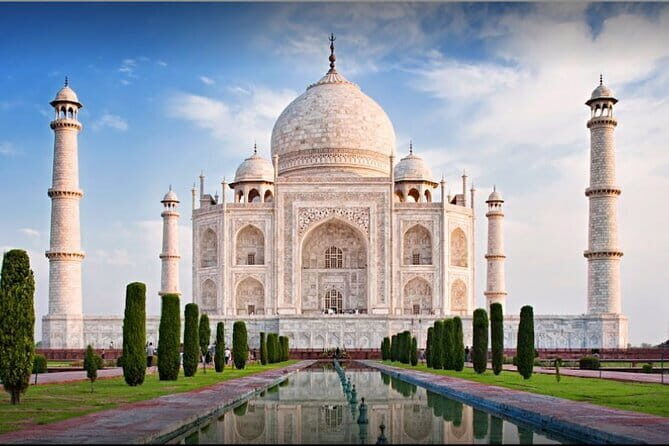
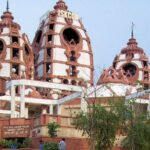
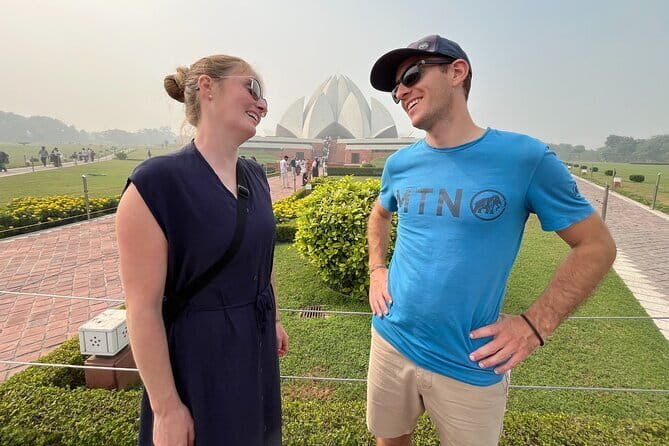
Lotus Temple is listed as part of an option (option 1), with about 30 minutes and admission included. It is a Baháʼí House of Worship, and the point of the stop is both the architecture and the Baháʼí culture behind it.
Then comes Lodhi Art District. This is your street-art anchor, with about 1 hour and admission included. This stop is explicitly part of the New Delhi with street art option, which is useful if you want the day to feel like more than only Mughal or temple architecture.
If you like seeing how cities show their current identity on walls and corners, this is a strong contrast. You start with a monument, then you move into a neighborhood where contemporary art becomes part of how you read the city.
Humayun’s Tomb: Mughal architecture with time to slow down
Humayun’s Tomb takes about 1 hour, with admission included. This is the Mughal architecture stop, and the time allocation matters. One hour gives you room to look past the first photo angle and notice the layout and details.
I like this portion because it is not just a quick sightseeing checkbox. You get enough time to understand why the site is famous, even if you are not an architecture expert. A good guide can turn it into a story about design, power, and how style traveled across generations.
Possible drawback: it is a popular kind of stop. If you have mobility limits or hate standing around waiting for photo moments, tell your guide what pace you want, so the group does not get forced into a slow shuffle.


Ugrasen ki Baoli and the view of Delhi’s power corridors
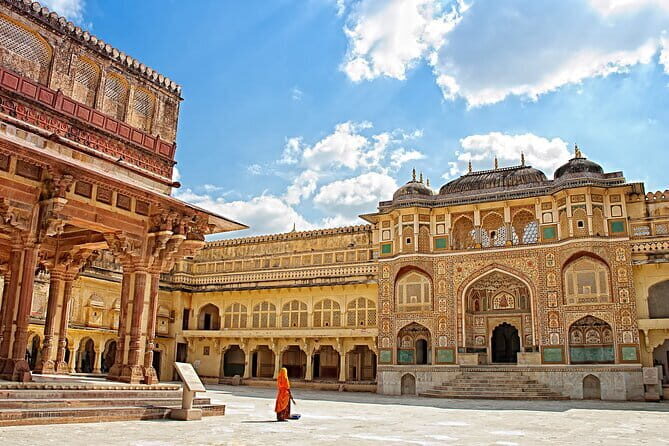
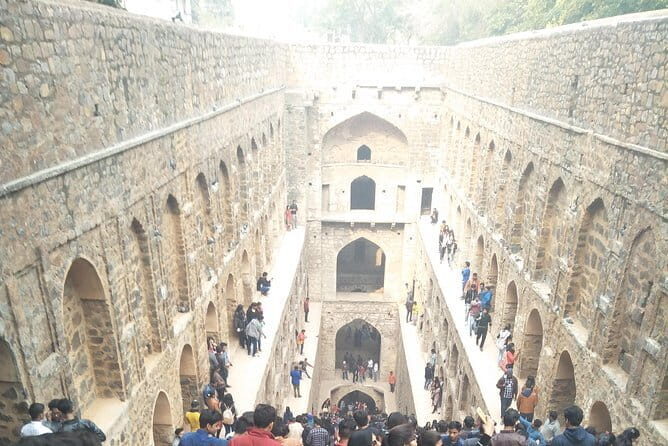
Next is Ugrasen ki Baoli, a 14th-century stepwell turned monument, with around 20 minutes and admission included. This is one of those Delhi stops that feels less obvious than the big names, but that is exactly why it works.
The key is the stories. The stop is framed around the stepwell’s history, not only its look. And while you are in the area, you also pass India Gate and the President House from the route by.
This is a neat way to connect different parts of Delhi’s identity in a short moment. You get an architectural relic, then you slide by the grand ceremonial landmarks nearby.
Gurudwara Bangla Sahib: temple visit plus kitchen-scale food culture
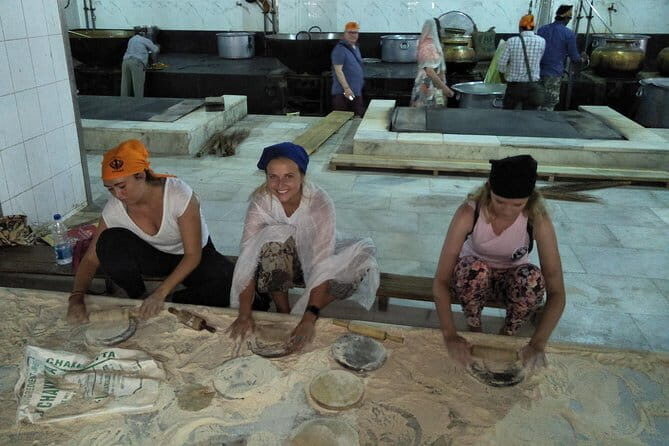
Gurudwara Bangla Sahib gets about 1 hour and includes admission. This is the Sikh temple stop, and the tour is built around learning the culture as you explore the temple area. The kitchen visit is also a standout, because it serves nearly 30,000 to 40,000 people daily.
That kitchen detail is not just trivia. It changes how you experience the place. Instead of treating it like a photo stop, you see the social function of worship: feeding people as part of the spiritual practice.
What I think works well here: one hour gives you time to understand the place and still keep the day moving toward Old Delhi.
What to remember: this is a functioning religious site. Keep your behavior respectful, and your visit will feel meaningful rather than rushed.
India Gate photo pause and lunch break in Connaught Place

India Gate is a short stop, about 10 minutes, with no admission ticket required for the photo moment. It is brief on purpose, acting like a quick reset between the monument zone and the lunch window.
Lunch happens around Connaught Place, specifically at Block-B in Connaught Place. The tour schedule lists about 1 hour here, and lunch is included. You can choose veg or non-veg, and you are asked to inform the provider about food allergies in advance.
I like this arrangement because Connaught Place is a convenient mid-day reset point. You can get your energy back before tackling the crowded streets of Chandni Chowk.
One practical tip: since lunch is part of the plan, do not plan a tight meeting right after the tour ends. Give yourself a buffer.
Old Delhi at ground level: Chandni Chowk, Jama Masjid, and spice market energy
Now the day turns to Old Delhi, and the shift is dramatic. Chandni Chowk is allocated about 1 hour, with a focus on bazaars and temples. The plan includes Jama Masjid, the Asia’s largest spice market, and rickshaw rides.
This is the part of the tour where you feel Delhi as a lived city. It is a mix of smells, color, sound, and motion. Even if you mostly want photos, it is worth being present with your senses for a few minutes.
I also like that rickshaw rides are part of the plan. You are not just walking; you get a different angle on how lanes work. That kind of movement helps you understand the scale and shape of Old Delhi quickly.
Possible consideration: this portion can be intense if you do not like crowds. If you want more breathing room, use the guide to move smartly from one focal spot to the next.
Small-group pacing and guide storytelling that actually changes the day
This tour runs with a maximum of 10 travelers, which makes a difference. You are more likely to hear details, get answers, and adapt the pace when the day gets busy. It also helps solo travelers feel less stranded in a foreign-city crowd.
The reviews point to a guide style that leans on storytelling and humor. Parul, for example, is praised as funny and kind, and solo guests especially mention feeling comfortable quickly. That human element matters in Delhi, where context helps you see what you might otherwise only partially notice.
The tour also notes that it can be tailored. That is a big deal for value: if you want to put extra attention on one area within the route structure, you may be able to steer the balance rather than just march through a fixed checklist.
Practical tips to get the most out of your 5–7 hour schedule
Because it is a full day, small choices help a lot. I suggest you wear comfortable shoes since you will be walking through temple areas and market lanes. Bring sun protection and plan for the heat and changing conditions during the day.
Also, think about timing. You have photo stops like India Gate and shorter time windows at big sites like Qutub Minar. If you want photos, pick your angles quickly and then spend the remaining time watching and listening instead of standing still.
If you are coming with food needs, this tour is set up to handle it. Lunch is included and you should inform the provider about allergies in advance. That is better than trying to solve it on the spot when you are hungry and time is tight.
Who should book this tour, and who should think twice
This tour is a good fit if you want a structured way to see both New Delhi icons and Old Delhi markets in one day. It is especially appealing if you like the contrast between old monuments and street-level creativity.
It is also a solid pick if you are traveling solo and want someone to guide you through neighborhoods with a steady hand. The feedback about comfort and welcome is exactly the kind of practical reassurance you look for when you are on your own.
You might think twice if you want a slow, unhurried day. With multiple stops, car travel, temple visits, and one market-heavy segment, it is not built for a leisurely pace. Also, if you hate crowds, the Old Delhi hour may test your patience.
Should you book this New Delhi and Old Delhi sightseeing tour?
I think this is worth booking when you want value without the planning headaches. At $85, the big savings are admissions handled for multiple stops, private transportation, and lunch included, all inside a short time window.
Book it if you like guided context. Delhi is one of those cities where a good explanation turns landmarks into stories. The guide storytelling and the ability to tailor what you see are also strong reasons to choose this over DIY.
I would not book it only if you are trying to squeeze this into a very tight itinerary with no buffer. Leave time for traffic and for the fact that Old Delhi can take more out of you than the clock suggests.
If the weather is bad, the tour notes it may be canceled and you will be offered another date or a full refund. That flexibility is worth keeping in mind when you pick your day.
FAQ
How long is the New Delhi and Old Delhi sightseeing tour?
The tour runs about 5 to 7 hours.
What is included in the $85 price?
The price includes private transportation, lunch (veg or non-veg, with allergies noted in advance), and all fees and taxes. Admission tickets are included for the listed paid stops.
Is lunch included, and can I choose what I eat?
Yes. Lunch is included and you can choose vegetarian or non-veg. You should inform the provider about any food allergies in advance.
Do they pick you up from your hotel?
Hotel pick and drop is not included, but pickup is offered. You should confirm the exact meet-up arrangement when you book.
How many people are in the group?
The tour has a maximum of 10 travelers.
Which major sites are part of the itinerary?
In New Delhi, you visit Qutub Minar, and depending on the option you may also visit Lotus Temple and Lodhi Art District. You also stop at Humayun’s Tomb, Ugrasen ki Baoli, and Gurudwara Bangla Sahib, plus a photo stop at India Gate and lunch in Connaught Place. In Old Delhi, you explore Chandni Chowk with Jama Masjid, a spice market, and rickshaw rides.
What happens if the weather is poor or I cancel?
The experience requires good weather. If it is canceled due to poor weather, you will be offered a different date or a full refund. Cancellation is free up to 24 hours in advance for a full refund.