REVIEW · AGRA
Story of Spices- A Food Tour of Agra
Book on Viator →Operated by Agra Heritage Walks · Bookable on Viator
Spices guide you through Agra’s old lanes. This 3-hour private food walk turns street-level eating into a story of how spices traveled and how Mughal-era cooks shaped what you taste today. Expect narrow alleys, long-running shops, and a guide who explains the why behind the flavors.
I especially love the Braj-food stops at 170-year-old joints, where you also get a quick lesson on Satvik food (without onion/ginger/garlic). I also like how the tour includes both sweet and savory breaks, not just one kind of bite, so you get the full flavor map of Agra’s old city.
One thing to consider: this is a walking-focused experience with a moderate fitness level, and it depends on good weather since you’ll be out on the streets.
In This Review
- Key highlights worth your attention
- Spices, side streets, and stories in Agra’s old city
- The Braj food lesson: what Satvik teaches you about flavor
- A practical note on Satvik and preferences
- The 16th-century market snack stop and spice basics you can actually use
- Silk-route lanes: pakoda/falafel and indigenous sweets
- Three-generation soda drinks: a break that still tells a story
- Live flute on a 17th-century pathway: food culture isn’t separate from art
- Mughlai meat at a local shop: Akbar’s kitchen and feast culture
- What to expect with Mughlai flavors
- Finishing with freshly made lassi: the last spice story
- Price and value: is $41.70 worth it?
- Timing, meeting point, and what to wear for a 4:00 pm walk
- Guides that make the stories stick
- Who should book this spice walk?
- Should you book Story of Spices in Agra?
- FAQ
- How long is the Story of Spices tour in Agra?
- What time does the tour start?
- Where does the tour meet?
- Is this a private tour?
- What food and drinks will I taste?
- Is there a vegetarian-friendly element?
- Is there live entertainment?
- Is it suitable for people who don’t like lots of walking?
- What if the weather is bad?
- What’s the cancellation policy?
Key highlights worth your attention
- Braj flavors at 170-year-old food joints, plus a short Satvik explanation (no onion/ginger/garlic)
- A 16th-century market stop that focuses on snacks and how local spices show up in everyday food
- A historic shopping street once tied to the silk route, with pakoda/falafel tastes and indigenous sweets
- Three-generation soda shop drinks, where the story of spices keeps going between bites
- Live flute on a 17th-century pathway, connecting music, Mughal culture, and culinary craft
- Mughlai food at a local meat shop, including a look at Akbar’s kitchen and feast culture
Spices, side streets, and stories in Agra’s old city
If you’ve only seen Agra from the big-ticket angles, this tour gives you a different picture—one made of smells, street corners, and shopfronts that have survived decades. The whole point is simple: you walk, you taste, and your guide ties each dish to the city’s food culture.
You start in the old bazaar area near Subash Bazar, Kinari Bazar, Hing ki Mandi, and Mantola. Then you move through lanes people would normally rush past, with your guide acting like a translator between what you’re eating now and what people were eating generations ago.
You can also read our reviews of more food & drink experiences in Agra


The Braj food lesson: what Satvik teaches you about flavor
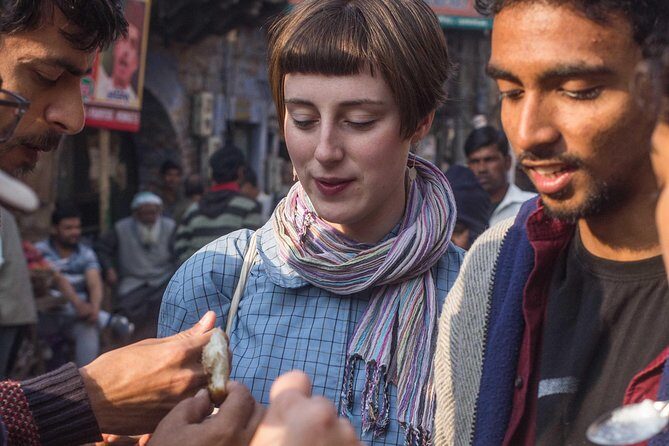
Early on, you get to sample Braj food from places that have been serving it for about 170 years. This is a smart start because it anchors the tour in one region’s palate—so later tastings (sweet, savory, Mughlai, meat-based) land with more meaning.
You’ll also get a brief explanation of Satvik food. The key rule they mention is straightforward: Satvik is made without onion/ginger/garlic. Even if you’re not usually a rule-following eater, it’s a useful framing device. It helps you notice how cooks build taste with spice and technique rather than relying on those three ingredients.
And yes, this section is about eating, not lecturing. The pace is set up so you can taste, then listen, then taste again. That’s the easiest way to understand why “spices” in Agra aren’t just seasonings—they’re the backbone of structure and mood.
A practical note on Satvik and preferences
If you have dietary restrictions, Satvik is at least one clearly defined category on the tour (no onion/ginger/garlic). For anything else, you’ll want to be upfront with your guide before you begin, since the tour includes both vegetarian-style tastings and meat-based ones later.
The 16th-century market snack stop and spice basics you can actually use
Next comes a stop tied to the 16th-century market, including a visit to an older snack shop. The focus here isn’t only on what you eat—it’s on how spices behave in local cooking.
This is where I like the tour format: you taste something small, then you get the story behind spice choices and preparation. Later, when you try other items—fried bites, sweets, and drinks—you’ll start to recognize spice patterns instead of treating each snack as a random taste-test.
The tour also gives you a chance to see how shops operate in the old-city economy. You’re not looking at food from behind glass. You’re watching it made and served in the same kinds of settings that have kept local recipes alive through changing eras.
Silk-route lanes: pakoda/falafel and indigenous sweets
One of the coolest sections is the walk through a 16th-century shopping street that once had a role in the silk route. That detail matters because it connects the food to movement—of people, ingredients, and cooking ideas.
Here you’ll taste pakoda/falafel and indigenous sweets from generation-old shops. The tour also points out how food changes when communities mix. Acculturation isn’t a buzzword here—it shows up in what gets fried, what gets sweetened, and what gets paired together.
This is a good moment to take your time. If you rush, you’ll miss the way sweetness and spice can talk to each other. If you slow down, you’ll notice how the same spice family can show up in totally different textures: crisp outside, soft inside; syrupy finish, spice-laced bite.
You can also read our reviews of more tours and experiences in Agra



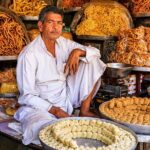

Three-generation soda drinks: a break that still tells a story
After all that savory, you get a refreshing interlude at a three-generation soda shop. This part works well for two reasons: it cools you down from spice and street heat, and it keeps the “spice story” going.
Even though it’s a drink stop, it’s not just a palate reset. The tour frames these drinks as part of the same cultural logic as the food—recipes that have been continued and adjusted over time, rather than replaced.
This is also a smart time to hydrate properly and wipe off the dust of the day. Bring a small water bottle if you can, and treat the soda stop as the sweet bonus—not your only hydration.
Live flute on a 17th-century pathway: food culture isn’t separate from art
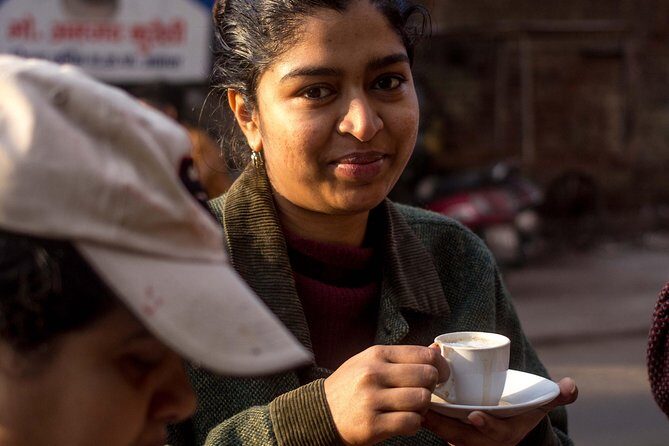
Then the tour shifts from eating to listening, with live flute performance on a 17th-century pathway. I like this choice because it prevents the experience from becoming only a checklist of snacks.
The guide connects culinary art flourished during the Mughal era to the bigger cultural scene—music, performance spaces, and the social side of eating. You’ll understand that spice and cooking weren’t just domestic matters. They were part of public life, celebration, and status.
If you’re the kind of traveler who enjoys history that feels practical (not stuck in dates), this section will probably land well. You can feel how the tour uses sound and setting as “context glue” between dishes.
Mughlai meat at a local shop: Akbar’s kitchen and feast culture
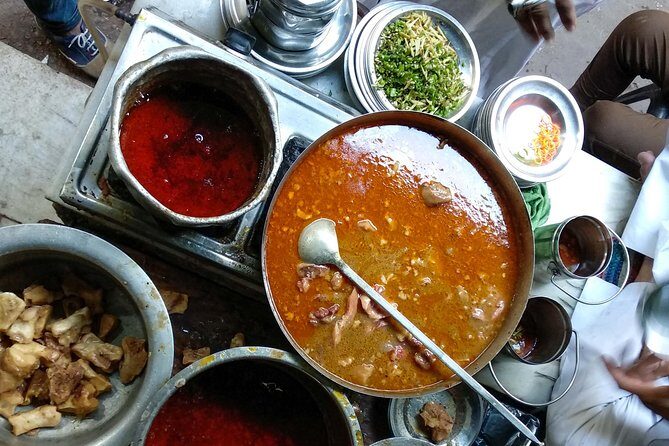
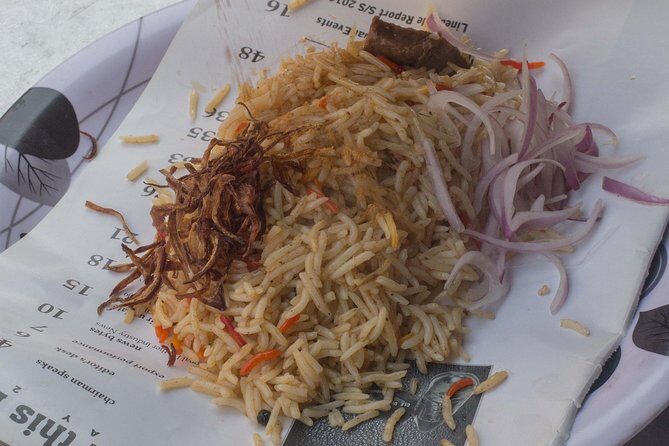
The tour doesn’t stay vegetarian. You’ll visit a local meat shop and taste authentic Mughlai cuisine, including the famous mutton stew at Pakiza Meat Shop. This is a highlight if you want Agra’s full range, not just spice blends in vegetarian form.
The guide also covers Akbar’s kitchen Ministry and explains how feast culture mattered in Mughal tradition. This doesn’t mean you’ll memorize an imperial organizational chart. It means you’ll understand why Mughlai food often feels layered and generous—built for gatherings, not lone snacking.
What to expect with Mughlai flavors
Mughlai flavors commonly feel deeper and heavier than quick street snacks, and the stew gives you that slow-cooked comfort effect. If you’re sensitive to richness, take your time and pair bites with the lighter drinks you had earlier. If you’re a spice-and-sauce person, this is where the tour earns its keep.
Finishing with freshly made lassi: the last spice story
To close, you’ll get freshly made lassi. It’s the kind of finale that makes practical sense: dairy cools the palate, refreshes your mouth, and lets you reflect on what you tasted without the heat sticking around.
The tour ties the ending to another spice story, reinforcing the theme: spices aren’t just ingredients. They’re a living language of technique, trade, and tradition.
By the time you head back to the meeting point, you’re not just full. You’re tuned in.
Price and value: is $41.70 worth it?
For $41.70 per person, you’re paying for a guided, private, 3-hour experience with multiple tastings across old shops and at least one live performance, plus the history-and-culture storytelling that connects the dots.
Here’s why that price feels fair: you get variety—Braj food and Satvik context early, snack-market flavors in the middle, then Mughlai meat and a lassi finale. That’s a lot more than the typical short “just eat a bite here” style tour.
Also, the private format matters. Your group moves at your pace, and you’re more likely to ask questions—especially if you’re curious about how spices are used instead of just what they taste like.
Timing, meeting point, and what to wear for a 4:00 pm walk
The tour starts at 4:00 pm and runs about 3 hours. Late afternoon can be ideal in Agra because the streets change mood fast—shops still run, but the heat eases compared with midday.
You’ll meet in the Subash Bazar / Kinari Bazar area near Hing ki Mandi and Mantola. It’s also described as near public transportation, so you shouldn’t feel stuck trying to get there.
Wear comfortable shoes. Expect walking through narrow lanes and busy market edges, the kind of streets that look charming from close range and annoying with poor footwear. Bring a light layer if you get cool at night, and keep small bills handy if you like to tip or buy anything extra at the end.
Guides that make the stories stick
This experience leans hard on storytelling, and that’s where guides like Khaleem and Tahir (sometimes spelled Kaleem in listings) make a difference. People describe them as engaging and passionate about Agra, and they use different tools to explain history—right down to poetry in at least one style of telling.
You don’t need to be a history nerd to enjoy this. The best part is that the stories connect to what you’re eating right then, so nothing feels like a random facts dump.
And with a 5-star average from eight reviews, the direction is clear: people come for food and leave with a more complete sense of Agra.
Who should book this spice walk?
Book it if you:
- Want Agra beyond the big monuments and want food culture to be the main plot
- Like learning how ingredients and spice methods shaped local identity
- Prefer guided tastings with context, not just wandering and hoping you find the right stall
You might skip it if you:
- Have trouble with moderate walking
- Are very sensitive to strong flavors and don’t want to handle spice-heavy food (tell the guide up front so you can pace tastings)
Should you book Story of Spices in Agra?
I’d book it if you want your Agra trip to taste like Agra, not like a souvenir circuit. The strongest reasons are the mix of Braj food + Satvik context, the 16th-century market street walk, the live flute in a historical setting, and the Mughlai meat finish with Pakiza Meat Shop’s mutton stew.
It’s also a smart buy for a short window: in about three hours, you get multiple categories of food and a clear story thread about spices and culture.
If you like food tours, this one fits your style. If you’re new to food tours, it’s also a good entry point because the pacing is easy to follow and the tastings keep coming.
FAQ
How long is the Story of Spices tour in Agra?
The tour lasts about 3 hours.
What time does the tour start?
It starts at 4:00 pm.
Where does the tour meet?
The start point is Subash Bazar, Kinari Bazar, Hing ki Mandi, Mantola, Agra, Uttar Pradesh 282003.
Is this a private tour?
Yes, it is private. Only your group participates.
What food and drinks will I taste?
You’ll taste Braj food, learn about Satvik food (without onion/ginger/garlic), try snacks at an old snack shop, taste pakoda/falafel and indigenous sweets, sample drinks at a three-generation soda shop, enjoy live flute during the walk, try authentic Mughlai cuisine at a local meat shop (including mutton stew at Pakiza Meat Shop), and end with freshly made lassi.
Is there a vegetarian-friendly element?
The tour specifically includes Satvik food with no onion/ginger/garlic, and you’ll also taste sweets and snack items. However, it does include a meat shop and Mughlai meat tastings later.
Is there live entertainment?
Yes. There is a live flute performance at a 17th-century pathway.
Is it suitable for people who don’t like lots of walking?
It requires a moderate physical fitness level, so it’s best if you’re comfortable walking through old city lanes and streets.
What if the weather is bad?
The experience requires good weather. If it’s canceled due to poor weather, you’ll be offered a different date or a full refund.
What’s the cancellation policy?
You can cancel for free up to 24 hours in advance for a full refund.