REVIEW · UDAIPUR
Secret Cooking Session with the bheel Tribe
Book on Viator →Operated by The Unseen Tribes · Bookable on Viator
Cooking with the Bheel tribe feels oddly personal. This morning-style Udaipur experience links Lord Shiva’s rock temple with everyday village life: tribal homes made from mud and straw, wheat-field farming methods, and local cooking taught in real conditions. I love the way the day mixes nature, food, and respectful conversation, and I also like that the food isn’t just something you taste, it’s something you watch get made step by step.
One thing to plan for: it runs in the morning (about 5 hours, ending back where you start) and the experience requires good weather, so if skies turn rough you may need to change dates or adjust expectations for outdoor time.
In This Review
- Key moments you will notice
- Chandpole Gate pickup: the day starts outside the main Udaipur scene
- Rock, ritual, and quiet: visiting the Lord Shiva Temple made of stone
- A Bheel house visit: mud, cow dung, straw, and everyday ingenuity
- Wheat fields and traditional farming: learning the work, not just seeing it
- Buffalo-milk tea and Rajasthani cooking: where the flavors get explained
- Satsang and meditation: the day’s rhythm shifts from looking to listening
- Learning more than recipes: the facts conversation section
- Nature time and trekking style: trails, views, and pacing that won’t exhaust you
- Price and value: what you get for about $50
- Who should book, and who might want a different style
- Should you book the Secret Cooking Session with the Bheel Tribe?
- FAQ
- Where is the meeting point for this experience?
- How long does the secret cooking session last?
- What time does the tour run?
- How many people are in a group?
- Do you get a mobile ticket?
- Is free cancellation available?
Key moments you will notice
- A rock-made Shiva temple where meditation is part of the long-term rhythm
- Mud-and-cow-dung house building materials you can actually see up close
- Wheat fields and traditional farming techniques taught in a hands-on way
- Buffalo-milk tea with jaggery and herbs that tastes like the region, not a menu
- Satsang and meditation that shift the pace from sightseeing to listening
- Small-group feel (max 20) that makes conversation easier than you’d expect
Chandpole Gate pickup: the day starts outside the main Udaipur scene
This tour is built for mornings, not late starts. You meet around Chandpole Bridge / Ambamata in the old city area, and pickup happens at Chandpole Gate. The timing matters because you get breathing room from the busiest parts of Udaipur, and the day feels less like a drive-by stop and more like a slow transition from city energy into countryside rhythms.
The group size is capped at 20, which helps. Instead of shouting over a large crowd, you’re more likely to hear stories, ask questions, and notice details like how work gets done in the fields or how people organize everyday life. The day also runs about 5 hours, so you get a complete arc: spiritual stop, home visit, farming time, then cooking and music/meditation.
If you like your travel days structured but not rigid, this fits. If you want a fully indoor experience with zero walking, you might find this one less comfortable since parts of the program are outdoors, in nature and around fields.
You can also read our reviews of more cooking classes in Udaipur

Rock, ritual, and quiet: visiting the Lord Shiva Temple made of stone
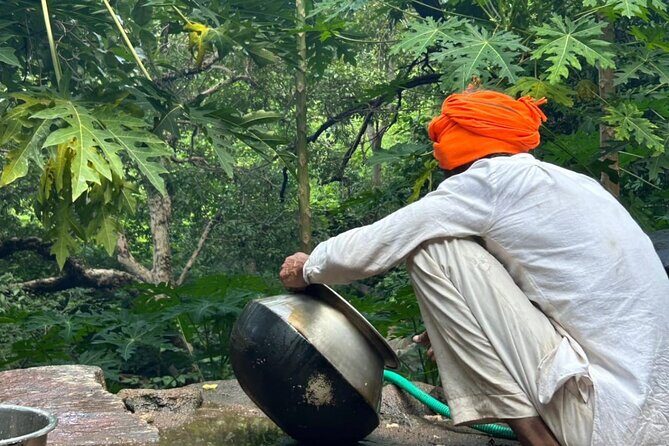
The morning begins at a Lord Shiva Temple described as naturally made of rocks. Even if you’re not a hardcore temple person, this stop is valuable because it sets the emotional tone. It’s not just about architecture. The key is that people have meditated there for all their lives, so the place has that steady, lived-in calm instead of a purely tourist vibe.
What I like about starting here is the reset. Your senses wake up before you’re asked to pay attention to cooking techniques, farming steps, and family life. You also get a strong sense of local spirituality without it being turned into a show.
Practical note: this is a temple. Dress and behavior matter. Keep your body language respectful, and move like you’re stepping into someone’s sacred daily space.
A Bheel house visit: mud, cow dung, straw, and everyday ingenuity
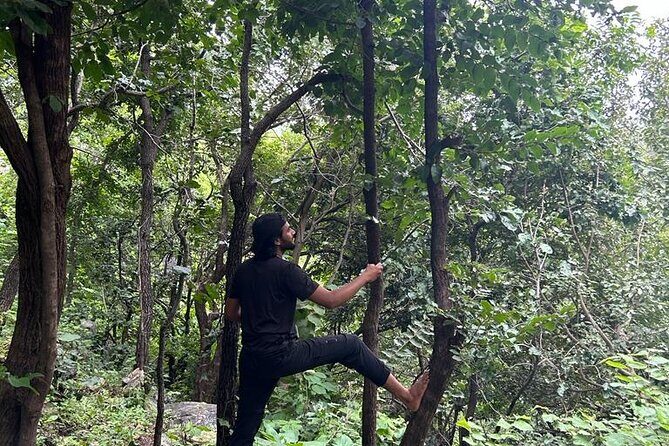
Next comes one of the most eye-opening parts: a visit to a tribal family house. You’ll see how the home is made using mud, cow dung, and straws. That detail isn’t just construction trivia. It explains why this part of Rajasthan runs on local materials and local knowledge.
When you stand near these materials, you start to understand sustainability in a very concrete way. Instead of abstract eco-talk, you see how people use what’s around them, keep homes functional, and pass skills through daily routines. The tour also frames this in a broader life perspective—how people live healthier lives with almost no money—which lands differently after you’ve seen the materials and the basic logic behind them.
Here’s a cultural moment you should be prepared for: the experience highlights respect rituals. One guest noted children showing respect by touching their feet. If that happens to you, it’s okay to respond warmly and follow the guide’s cues.
Wheat fields and traditional farming: learning the work, not just seeing it
The farming stop centers on the wheat fields and traditional growing methods. This is the part of the day that feels most practical, even if you’ve never farmed a day in your life.
Traditional farming techniques matter because they’re built for local climate and local constraints. They’re also labor-based: you can sense how much care goes into timing and process. The value for you is not that you’ll take home a step-by-step manual for every farm in Rajasthan. It’s that you’ll understand the logic behind the food you eat—how it arrived, how it was protected, and why the routines are what they are.
If you enjoy photo-light, knowledge-heavy travel, this section will treat you well. It’s more about watching work happen and asking questions than collecting quick pictures.
Wear shoes you’re comfortable walking in. Fields and uneven ground mean you’ll want traction and stability.
Buffalo-milk tea and Rajasthani cooking: where the flavors get explained
Before the main cooking, you’ll drink special tea made with fresh buffalo milk, jaggery, and herbs. That mix is a strong Rajasthan signature: rich milk sweetness from jaggery, plus herbal notes. It’s also a clever pacing move—tea helps you settle into the day and warms you up if the morning feels crisp.
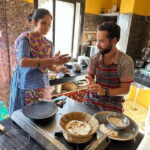
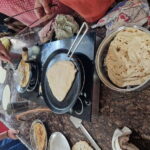
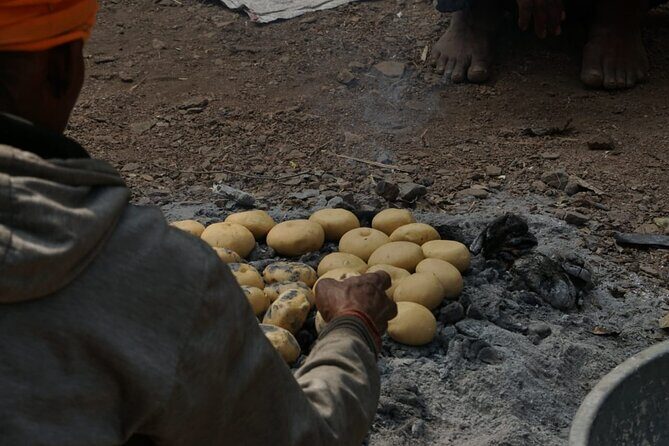
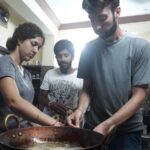
Then the focus turns to authentic Rajasthani food made the local way. You’ll witness the process from cooking techniques to ingredients, and you’ll learn how the cooking is done rather than only receiving a finished plate.
I like how this is described as a teaching experience: learning traditional way of cooking. For readers who’ve done “food tours” that are really just tastings, this format tends to feel more real. You should come away knowing what skill drives the taste—heat control, spice blending, and timing—because those are the pieces the tour emphasizes.
Food includes more than one moment, not only one meal. You’ll move through the day with breaks that keep you connected to what’s happening, including the tea and the eventual Rajasthani meal made by the family group you meet.




Satsang and meditation: the day’s rhythm shifts from looking to listening
This isn’t just a cooking class with a cultural backdrop. The schedule includes Satsang (regional music) and meditation as part of the experience. That matters because music and quiet time change how you remember a place.
When you hear the regional voice and songs in context, they don’t feel like entertainment; they feel like part of how life is organized. One guest specifically called the voice of the tribal people unique, and that matches what I’d expect when music comes from everyday community culture rather than a performance for outsiders.
Meditation also fits the theme of the Shiva temple. You’re not bouncing between attractions. You’re moving through a sequence: sacred stone space, daily home life, food preparation, then the reflective parts. It gives the whole trip a coherent emotional logic.
If you prefer active sightseeing all day, this may feel slower than some tours. If you want travel that leaves room for thought, it’s a strong match.
Learning more than recipes: the facts conversation section
A standout feature is that the experience doesn’t avoid the heavy topics. You’ll hear facts and stories related to:
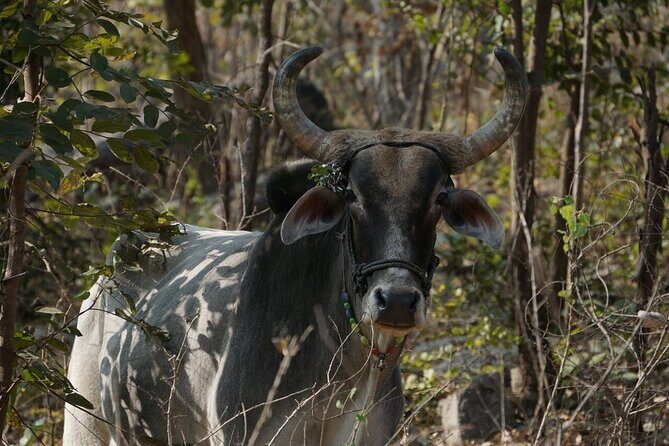
- Why cows are considered holy, and how that shows up in streets
- Sati system and its historical context
- Child marriage
- History of Udaipur
- Caste system
- Dowry
- Honor killing
This is one of those areas where your guide’s approach matters. The tour is described as including deep conversations and daily-life context, so the best-case outcome is learning through human stories and local explanations, not through a lecture.
My practical advice: ask questions with curiosity and keep a respectful tone. If the subject matter gets uncomfortable, that’s normal. This isn’t a kids-only soft cultural stop. It’s also not sensational. It aims to connect social systems to real life.
One reason I think this part is valuable is that it adds context to what you see. When you visit a house built with local materials and eat traditional food, you’re seeing daily life. When you also learn how social systems shaped that daily life, the whole experience stops being only scenic.
Nature time and trekking style: trails, views, and pacing that won’t exhaust you
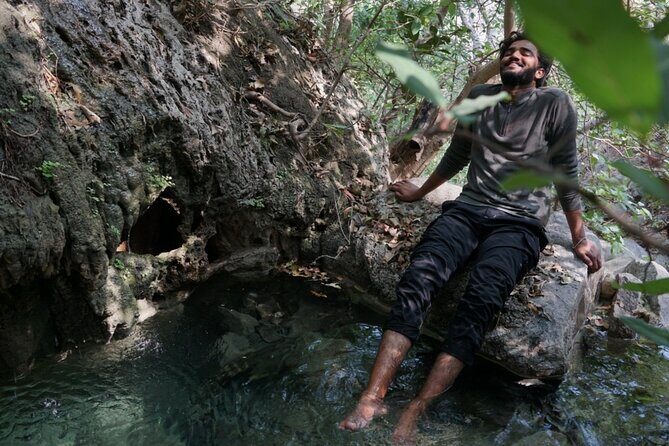
The day includes time in nature and visits to fields. It also includes a trekking element—guests described beautiful trails and different trail options, so you’re not necessarily stuck on one exact route.
Different trails are a big deal if you’re returning or if a group has mixed energy levels. It also makes the day feel less repetitive and more like you’re experiencing the land rather than checking a box.
Since this is a morning departure and around 5 hours total, plan for a moderate pace. Bring water, keep sunscreen in your day bag, and wear clothing that works for both outdoor walking and temple respect.
If you’re traveling with kids, it’s worth noting that the experience includes child involvement in the cultural interactions, based on what guests observed. That doesn’t mean it’s a theme park. It means the day is integrated into family life rather than staged.
Price and value: what you get for about $50
At $50 for roughly 5 hours, this isn’t a budget “just eat something” deal. You’re paying for access to a full sequence:
- a temple visit with spiritual context
- a tribal house visit
- farming exposure in wheat fields
- buffalo-milk jaggery tea
- witnessing and learning traditional Rajasthani cooking
- Satsang and meditation
The value shows up in the type of access. You’re not only sampling food. You’re walking through the living parts of the culture: materials, routines, work, beliefs, and music. The $50 price makes sense if you want a compact day that feels like more than a stop-and-go city excursion.
You also get small-group interaction, which makes it easier to ask questions. A solo traveler can sometimes worry about feeling comfortable on unfamiliar routes. One guest highlighted that a host named Aditya made them feel comfortable, even though they were traveling alone. That kind of human support is part of the value you’re buying.
Who should book, and who might want a different style
This tour fits best if you want:
- Culture with context, including real social history topics
- Food that comes from local work, not just a restaurant kitchen
- A morning schedule that avoids heavy crowds
- Conversation and music/meditation, not only visuals
It might be less ideal if you:
- prefer purely historical monuments and museum-style information
- want an all-day, high-energy sightseeing pace
- have mobility limitations that make outdoor walking difficult (the tour includes nature/fields)
If you like “simple, real, lived-in” travel, this one matches the mood.
Should you book the Secret Cooking Session with the Bheel Tribe?
I’d book it if you’re in Udaipur and you want one experience that connects spiritual space, village life, and cooking in a single morning. The strongest reason to choose it is the structure: you see homes and fields, taste local ingredients like buffalo-milk tea with jaggery and herbs, then learn Rajasthani cooking while music and meditation shift the pace.
I’d skip it only if you strongly dislike outdoor sections or you’re not comfortable with social-history conversation topics. Otherwise, this is the kind of trip that tends to stay in your memory because it’s not just about what you ate. It’s about how and why people live, work, and celebrate.
FAQ
Where is the meeting point for this experience?
You start near Chandpole Bridge, Ambamata, Udaipur, Rajasthan 313004, India. The pickup spot is listed as Chandpole Gate (old city).
How long does the secret cooking session last?
The duration is about 5 hours (approx.).
What time does the tour run?
It operates Monday through Sunday from 7:00 AM to 12:00 PM.
How many people are in a group?
This activity has a maximum of 20 travelers.
Do you get a mobile ticket?
Yes, the tour includes a mobile ticket.
Is free cancellation available?
Yes. You can cancel for a full refund up to 24 hours in advance of the experience start time, and cancellations due to poor weather can also lead to a different date or a full refund.