REVIEW · JAIPUR
Saree Draping – Timeless elegance of traditional Indian Saree
Book on Viator →Operated by Tours 2 Rajasthan · Bookable on Viator
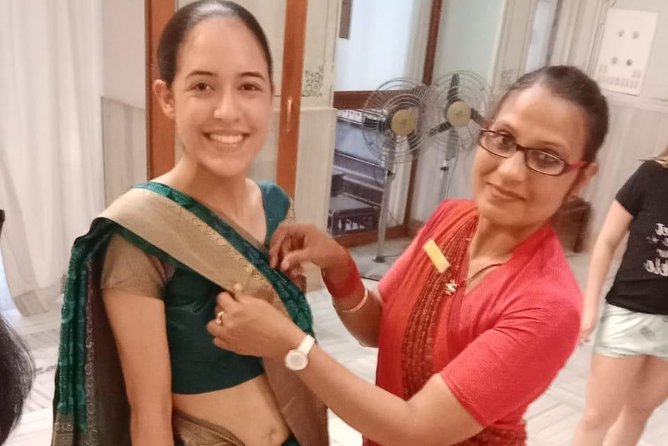
Saree draping turns a look into a skill. In just about 1 hour, you learn how to wear a saree with real elegance, plus you get help getting it to sit right on your body. I love that this isn’t about passing out costumes; it’s about teaching how to drape with confidence, and I also love that you get a take-home saree set (saree, matching blouse, and petticoat) and photos to remember it.
One thing to keep in mind: the outfit fit can be tricky if you’re very busty or have bigger hips or thighs. One account I read mentioned the skirt ripping, so I’d recommend you ask what size options are available—or speak up quickly if you need an adjustment.
In This Review
- Key points at a glance
- Why saree draping in Jaipur feels practical (not just pretty)
- Meeting at Hotel Arya Niwas: where it starts in the old city
- Your 60-minute saree lesson: how the drape actually gets formed
- Heritage hall or garden photos: why the bindi moment is more than a prop
- The take-home saree set is the real value
- Who should book this saree draping experience
- Price and logistics: the parts that matter most
- Should you book saree draping in Jaipur?
- FAQ
- How long is the saree draping experience?
- What do I get to take home?
- Do I need to be Indian to participate?
- Where is the meeting point in Jaipur?
- Is there a mobile ticket?
- What happens if the weather is bad?
- How many people are in a group?
Key points at a glance
- A brand-new saree set to take home with blouse and petticoat, not just a rental.
- You learn at least a couple regional draping styles, so you come away with choices.
- Bindi-and-photo moment in a heritage hall or garden for a memorable portrait.
- Small group size (max 15), which makes it easier to get personal help.
- Good-weather dependent, since part of the experience may move outdoors.
Why saree draping in Jaipur feels practical (not just pretty)
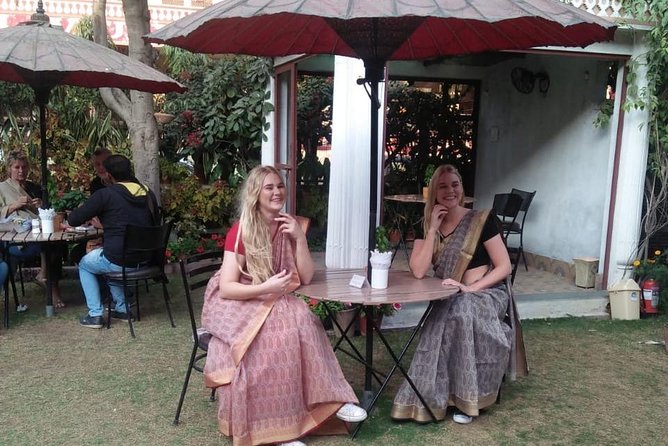
Jaipur is a great place to learn saree draping because the whole city is built around everyday beauty and craft. This experience leans into that idea in a hands-on way. You’re not just watching someone wrap cloth. You’re learning the steps so you can recreate the look later—at dinners, festivals, or any moment you want to dress up without guessing.
What I like most is the attitude: saree wearing is presented as something that flatters anyone. The goal is to help you look like a gracious Indian lady, with the right flow and the right kind of posture. That matters, because a saree drapes differently when you stand, walk, and hold your shoulders in a relaxed way.
You also get at least a couple of draping styles from different regions of India. That’s useful because it shows the saree isn’t one rigid template. Once you understand the logic (where the pleats sit, how the fabric is guided, how the end is handled), you’ll start spotting what changes between styles—and you can decide what you like for your own future wardrobe.
You can also read our reviews of more tours and experiences in Jaipur.


Meeting at Hotel Arya Niwas: where it starts in the old city
You’ll meet at Hotel Arya Niwas, Sansar Chandra Rd, behind Amber Tower, in Jalupura, Jaipur. The address is specific enough that you can plug it into your maps app and plan a smooth arrival.
A couple practical notes for your timing:
- Plan to arrive a few minutes early. You’ll want a calm start before the wrapping begins.
- Bring your booking confirmation on your phone since this activity uses a mobile ticket.
- It’s noted as near public transportation, so if you’re hopping around Jaipur that day, you can usually weave it into your plans without too much hassle.
Group size stays small (maximum 15), so the meeting spot isn’t like a long cattle-line. You’ll feel you’re joining a session rather than being swept into a crowd.
Your 60-minute saree lesson: how the drape actually gets formed
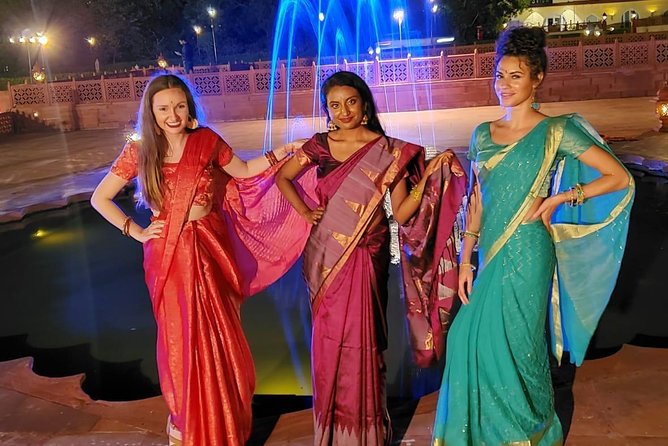
This is an approx. 1 hour session, so it moves at a good pace. The structure is simple: you’ll be given a new saree set—saree + matching blouse + petticoat—and you’ll learn how to wear it with elegance.
The most important part of any saree lesson is fit at the base. The petticoat helps create the foundation, and then the pleats and fabric handling come next. When it’s done well, the saree feels secure and looks smooth rather than lumpy. That’s what you’re training for here: not perfection, but a drape that looks intentional.
After the basics, you’ll practice at least a couple different styles. Different regions of India wear sarees in different ways, so you’ll see how the same fabric can read completely different depending on pleat placement and how the end is managed. For your photos, this is a big deal: you’ll get to try a look that photographs well from multiple angles, and you won’t feel stuck in one single pose.
Heritage hall or garden photos: why the bindi moment is more than a prop
After you’re dressed, you get a photo opportunity in a heritage hall or garden setting, and yes, there’s a bindi on your forehead for the portrait look. This is the part where the whole experience locks into your memory.
Photo time isn’t just about snapping pictures. It’s about seeing how the drape behaves in real life—how it falls, how it moves when you turn, and how it frames your face. That feedback helps your brain connect the steps you learned to the final result. You’ll walk away with images that prove you can recreate the look.
If the session lands in a garden, good weather matters because outdoor portrait settings can’t happen comfortably in rain or heavy wind. The experience explicitly requires good weather, so if conditions are poor, you’ll be offered a different date or a full refund.
The take-home saree set is the real value
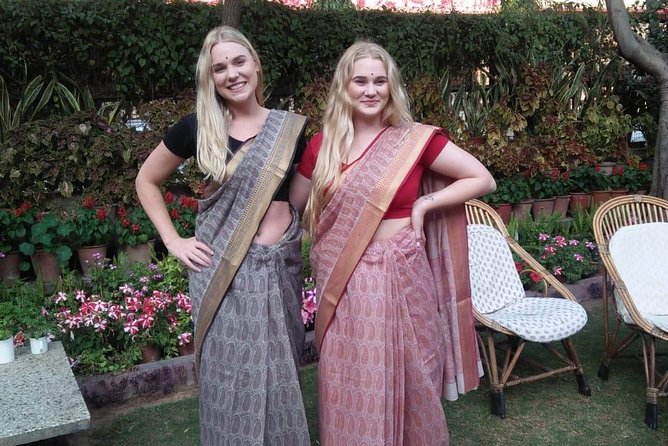
Let’s talk value, because this is where the price starts to make sense. The cost is $24 per person, and you don’t leave with just a lesson—you leave with a new saree, the matching blouse, and the petticoat.
Even if you’ve never bought a saree before, you can probably guess this: shopping for a proper set (saree + blouse + petticoat) in India isn’t usually a $24 decision. Here, the outfit is part of the experience, so you’re paying for instruction, photos, and the garments together.
There’s also a practical benefit for future use. Many people buy a nice outfit and then rarely feel comfortable wearing it again. This lesson helps you avoid that trap. When you take the saree home, you’re not staring at a big fabric purchase wondering where the pleats go.
One caution from what I’ve seen: sizing can be uneven. One account mentioned it didn’t feel like a true one-size-fits-all situation, and the skirt ripped at the thighs. That doesn’t mean you shouldn’t book. It means you should be proactive:
- Tell your guide if you’re between sizes or have a larger bust/hips.
- Ask whether there are alternate sizes available.
- If anything feels too tight, speak up early so it can be adjusted before it becomes a problem.






Who should book this saree draping experience
This works best if you want a hands-on cultural skill with a fun outcome. It’s ideal for:
- Anyone who plans to dress up in Jaipur during the trip and wants to learn first.
- People who enjoy photography and want a portrait look with meaning, not just a selfie stop.
- Travelers who like learning small crafts that you can actually use at home.
It’s also a good match if you’re shy about language or etiquette. The experience is framed so that it doesn’t matter whether you’re Indian or not—you’re welcomed to learn and to look graceful in the process.
If you’re very body-specific about fit, you can still enjoy it, just manage expectations. Bring your “ask questions” energy. The one account about ripped fabric is the clearest hint you should get clarity on sizing before things get pulled into place.
Price and logistics: the parts that matter most
At $24, you’re paying for a full one-hour instruction session, a take-home outfit set, and portrait photos with styling help. That price is especially fair when you consider you get an actual saree you can wear later, not a temporary rental.
Logistics are kept simple:
- Mobile ticket is used.
- The group is capped at 15 travelers, so it doesn’t feel chaotic.
- Service animals are allowed.
- It’s near public transportation, which makes it easier to fit into a Jaipur day plan.
There’s one more practical consideration: good weather. Since the experience may include outdoor photo time, you’ll want to check forecasts the morning of. If weather forces a change, you’ll be offered another date or a full refund.
Should you book saree draping in Jaipur?
If you want a cultural experience with an outcome you can hold onto, I’d book it. You’re learning a skill, not just visiting a place, and you’re taking home a brand-new saree + blouse + petticoat that you’ll actually be able to wear later. The bindi photo angle adds a fun, memorable final step that turns the lesson into something you can share.
I’d book with one small caution: don’t assume everything is perfectly one-size. If fit is a priority for you, ask about sizing early and speak up quickly if you feel limited movement where you need it.
Overall, for the price, this is one of those rare deals where your money buys both learning and something tangible you’ll use again.
FAQ
How long is the saree draping experience?
It lasts about 1 hour.
What do I get to take home?
You receive a brand-new saree along with a matching blouse and petticoat to take home.
Do I need to be Indian to participate?
No. The experience is described as welcoming for anyone, and it teaches you how to wear a saree regardless of background.
Where is the meeting point in Jaipur?
You start at Hotel Arya Niwas, Sansar Chandra Rd, behind Amber Tower, Jalupura, Jaipur, Rajasthan 302001, India.
Is there a mobile ticket?
Yes. The activity uses a mobile ticket.
What happens if the weather is bad?
The experience requires good weather. If it’s canceled due to poor weather, you’ll be offered a different date or a full refund.
How many people are in a group?
The activity has a maximum of 15 travelers.