REVIEW · NEW DELHI
Private Walking Tour: Old Delhi including Ancient Havelis and Chandni Chowk
Book on Viator →Operated by GeTS Holidays · Bookable on Viator
Old Delhi moves fast, and this tour keeps up. I love how it strings together Ballimaaran’s havelis with major sights like the Red Fort and Jama Masjid, and I also like the built-in food time at Chor Bazaar with local street snacks. One thing to plan for: it’s an all-street, all-day feel with lots of walking, so your feet and your water routine matter.
You start with a meeting point at your Delhi hotel and then roll into Old Delhi in air-conditioned comfort. The private format means only your group is involved, plus you’ll get a rickshaw ride as part of the day, which is a nice way to break up the walking without losing the local vibe.
By the time you reach Chandni Chowk, Kinari Bazaar, and Khari Baoli, you’re in the markets for craft, lace, and spices. Just note one practical detail: the Jama Masjid stop lists admission as not included, so you may need to budget for any entry you choose to make.
In This Review
- Quick takeaways before you go
- Entering Old Delhi the right way: hotel pickup and a car-to-walking flow
- Ballimaaran and the havelis: private mansions on real streets
- Chor Bazaar and street food: fuel up before the crush
- Back alleys after lunch: modern life among ancient walls
- Red Fort and Jama Masjid: big monuments with a lived-in route
- Chandni Chowk lengthwalk: markets you can smell and feel
- Kinari Bazaar: wholesale lace, beadwork, and festival craft
- Khari Baoli: Asia’s wholesale spice market in walking form
- Rickshaw ride and local transport: why the breaks matter
- Price and value at $58: what you’re really paying for
- Who should book this Old Delhi private walk
- Practical stuff that will make or break the day
- Should you book this tour?
- FAQ
- How long is the Old Delhi private walking tour?
- Is hotel pickup and drop-off included?
- What’s included in the price?
- Are admission tickets included for all stops?
- How much walking should I expect?
- What should I bring?
- Can I cancel for a full refund?
Quick takeaways before you go
- Ballimaaran havelis and Mirza Ghalib’s connection: You’ll learn about the private-mansion world, including Ghalib Ki haveli tied to the Urdu poet Mirza Ghalib.
- Chor Bazaar street food at the right moment: Food is placed early enough to fuel you before the deeper alley wandering and market sections.
- UNESCO landmarks on a working-street route: You’ll pass the Red Fort and Jama Masjid while getting commentary as you move.
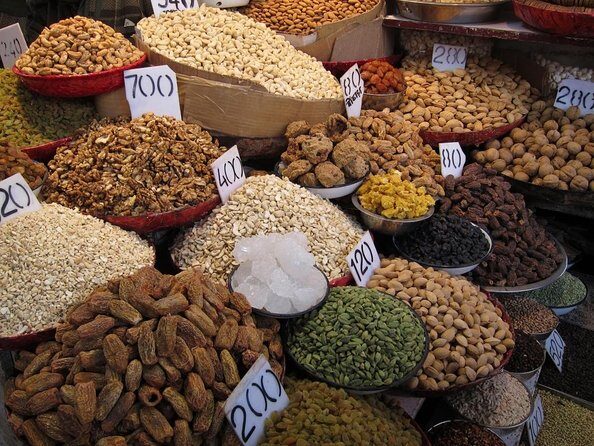
- Kinari Bazaar for craft detail: This is the place for wholesale laces, borders, tassles, beadwork, gifting paper, and festival decorations.
- Khari Baoli spice-market energy: Asia’s largest wholesale spice market is a quick hit of sensory overload you can actually handle on a walking schedule.
- A “private” day that stays flexible: It’s your group only, with an expert guide and a return transfer back to your hotel.
Entering Old Delhi the right way: hotel pickup and a car-to-walking flow

Old Delhi can feel like a puzzle when you first arrive: narrow lanes, crowds, and constant visual noise. What I like about this tour’s setup is that it gives you a clean start. Your guide meets you at your hotel, and you travel to Old Delhi in air-conditioned comfort, which helps a lot if you’re coming from a farther hotel or it’s hot out.
Once you’re inside the old walled area, the walking starts to make sense. This is the part of Delhi that was once the Mughal capital, so you’re moving through streets that still carry the shape of earlier urban planning. The private nature of the day also matters here. You’re not negotiating with strangers about pace or photo stops. Your guide can slow down when you need time to understand what you’re looking at, then keep momentum when you’re dealing with crowded lanes.
You also get a return transfer back to your hotel at the end. That’s not just comfort. It lets you focus on the sights instead of worrying about how you’ll get out of the market grid when you’re tired.
You can also read our reviews of more walking tours in New Delhi



Ballimaaran and the havelis: private mansions on real streets
The day’s first stop puts you in Pasar Chandni Chowk, with a strong focus on Ballimaaran. This neighborhood is famous for its older mansions—havelis—which were private homes built for status and family life. Instead of reading about them in a book, you’re walking past the structures and hearing what makes them significant.
One specific highlight is Ghalib Ki haveli, tied to the Urdu poet Mirza Ghalib. Even if you only know his name from literature classes, it helps to hear how these buildings fit into the cultural world of the time. Your guide’s commentary is what turns facades into context: why these homes were built the way they were, what “private” really meant in a dense city, and how architecture reads differently when you’re standing in the street rather than looking at it from a distance.
This is also where you get a sense of time layering. Ballimaaran isn’t an empty museum lane. You’ll see modern life continuing alongside older structures. That contrast is one reason I like havelis as a tour theme. They’re not just dramatic. They’re domestic history, still in use as the city keeps evolving.
Chor Bazaar and street food: fuel up before the crush
After the havelis intro, the tour moves into Chor Bazaar for a traditional meal made of local street food. Chor Bazaar is described as Delhi’s largest flea market, and what you feel on the ground matches that reputation: it’s active, loud, and full of people shopping and browsing while you’re trying to absorb the architecture around you.
Food here isn’t a side quest. It’s a practical one. Old Delhi walking can get dehydrating fast, and the route leans into markets where you’ll likely want to taste things as you go. Having a meal built into the schedule means you’re not left trying to find a safe, convenient food option while everyone else crowds the stalls.
A balanced note: this part of the route has a bit of a tradeoff. If you’re expecting Chor Bazaar to be the world’s most organized market, it can feel like it’s trying to do everything at once. But if you’re here to eat simply and watch daily commerce in action, it’s a strong fit.
For what to do with your senses: keep moving, but slow down when your guide points out food items you can’t just copy at home. Also, bring along the one basic survival item that makes this day better—water. The tour guidance recommends at least 1 liter per person.
Back alleys after lunch: modern life among ancient walls
Once you’ve eaten, the tour shifts into narrower alleyways in Ballimaaran. This is where the day starts feeling more like a local walk than a checklist.
Your guide takes you through the back-lane rhythm: close walls, small turns, and sudden openings where the street scene changes. It’s a good time to pay attention to how older buildings handle space—where doorways lead, how families might have navigated tighter streets, and how today’s signage and daily use sit on top of older forms.
This alley section also has a functional purpose. It breaks up the larger landmarks so you’re not just doing “photo stop, walk, photo stop.” Instead, you get a sense of flow, which is what you want in a place like Old Delhi. If you’re a first-timer, this kind of navigation help is worth more than another landmark.
Red Fort and Jama Masjid: big monuments with a lived-in route
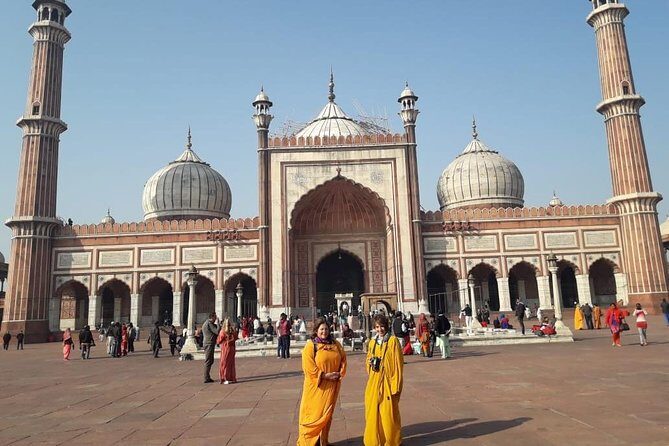
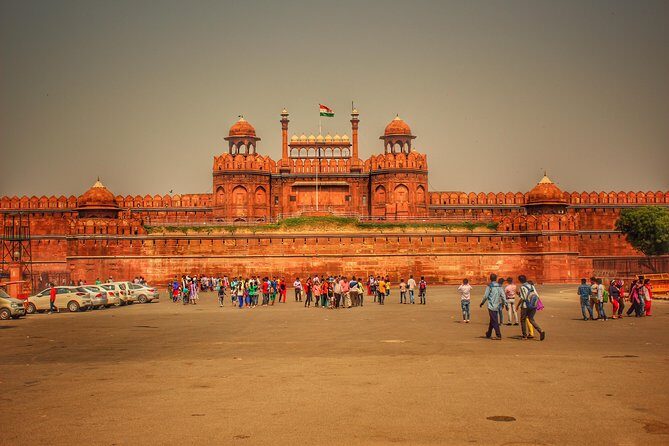
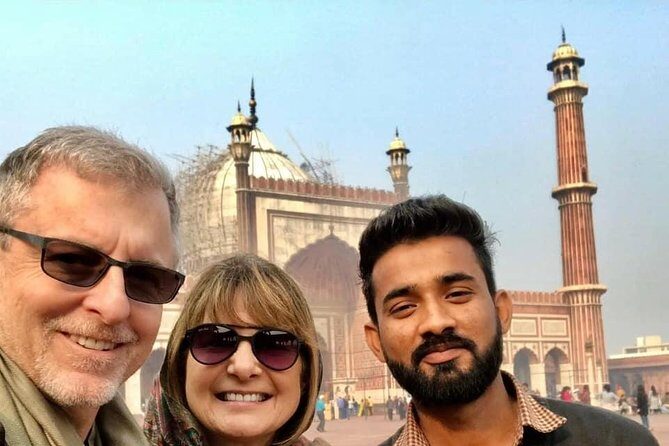
The next phase connects you to the UNESCO World Heritage–listed Red Fort and the Jama Masjid. Even though you may not spend hours inside every building, you still get the payoff of seeing them as they belong to the city. You’re not driving past scenery from a safe viewpoint. You’re walking past historic icons while the surrounding streets keep functioning.
Jama Masjid is noted as the largest mosque in India. That alone makes it a must-see. Here’s the key practical detail: the Jama Masjid stop lists admission as not included. So if you want to enter, plan for extra time and a possible separate fee. This doesn’t ruin the tour, but it changes how you manage expectations.
What I like about walking this area with a guide is the pacing of knowledge. You get historical context as you pass the Red Fort and Jama Masjid, which makes the buildings feel connected to the broader story of Old Delhi rather than floating as separate attractions.
Also, photos matter here. The Red Fort is often described as the highlight, and for good reason: the structure gives you a strong frame, and the surrounding setting lets you capture it with the street scale included. If you want quiet time for shots, your best bet is to follow your guide’s pace and choose moments when the crowd shifts.
You can also read our reviews of more private tours in New Delhi






Chandni Chowk lengthwalk: markets you can smell and feel
Chandni Chowk is the long walking segment that pulls the day’s market theme together. It’s a square lined with markets and also residential areas, so it doesn’t feel like a single “tourist strip.” It’s a public spine of daily life—crafts, treats, and browsing at human speed (or faster).
This is where you should expect a lot of people. The energy is part spectacle, part workflow. I like it because it’s visual and sensory: you’ll smell spices and food, see fabrics and crafts, and notice how shoppers move through narrow lanes.
But there’s a drawback consideration: Chandni Chowk can feel chaotic if you’re prone to getting overwhelmed. The solution is simple—keep your focus on the next point your guide gives you rather than trying to take in everything at once. Wear sunglasses, keep your water with you, and accept that this is a place where the street wins.
Kinari Bazaar: wholesale lace, beadwork, and festival craft
After Chandni Chowk, you head to Kinari Bazaar, described as the wholesale market for fancy laces, borders, and tassles. This stop is short but specific, and that focus is a good thing.
If you like detail, Kinari is a delight. You’ll also see beads and beadwork items, gifting paper and envelopes, adornments for idols, and festival decorations. In other words: you’re not just looking at random souvenirs. You’re watching the supply chain of decoration culture.
Because it’s a wholesale setting, the stalls can feel different from typical retail markets. The upside is that the variety can be impressive. The downside is that it’s easy to feel rushed if you’re trying to shop like you’re in a normal store. Let your guide set the pace and ask questions if anything is unclear.
Khari Baoli: Asia’s wholesale spice market in walking form
The final market stop is Khari Baoli, a street known for wholesale groceries and Asia’s largest wholesale spice market. This is one of those places where the description is accurate and the reality hits harder.
You’ll see spices, nuts, herbs, and other wholesale food products like rice and tea. The smell is the big sensory clue. It’s also a reason this stop is worth keeping in your itinerary even if you’re not a spice collector. It helps you understand how markets supply not just restaurants, but homes and everyday cooking.
Another practical plus: because it’s built into a walking tour with a fixed end time, you don’t have to worry about getting lost in a big commercial grid. Your guide keeps the route coherent, and you end the day with a private transfer back to your hotel.
Rickshaw ride and local transport: why the breaks matter
This tour includes a rickshaw ride. Even though the exact timing isn’t spelled out here, the function is clear. It gives you a breather when streets get narrow or when walking fatigue stacks up.
It also helps you see how dense the area is. Walking is great for detail, but a quick ride can show the bigger street geometry—how lanes connect and why certain markets cluster where they do.
If you’re sensitive to crowds or heat, the rickshaw is one more reason this route feels manageable despite the “extensive walking” guidance.
Price and value at $58: what you’re really paying for
At $58 per person for about 5 hours, you’re paying for more than a route. You’re paying for a professional guide, hotel pickup and drop-off (in the option that includes it), local street food, a rickshaw ride, and taxes.
The “value” part is how these pieces fit together. A self-walk through Old Delhi can be fun, but you’ll likely miss the havelis context and end up spending extra energy figuring out where to eat and what to prioritize. This tour builds in food and ties it to the walking schedule.
Also, some stops show admission tickets as included while others do not. The key mismatch to know is the Jama Masjid stop lists admission as not included. So when you’re deciding whether to book, think: do you want optional entry time and potential extra cost? If yes, you’ll plan around it.
Finally, the tour is private for your group. In a place like this, that can be a real quality-of-life upgrade.
Who should book this Old Delhi private walk
This is a good match if you want:
- A single, organized way to see Old Delhi with focus on havelis and major landmarks
- Street-level access to markets like Chandni Chowk, Kinari Bazaar, and Khari Baoli
- A guide who can explain what you’re seeing as you move
It’s also a solid choice for couples or small groups who want to walk together without negotiating with strangers. If you’re an experienced traveler who likes structure but still wants authentic street energy, you’ll likely enjoy the mix.
If you’re very sensitive to crowds, or you hate lots of walking, you may find parts of Chandni Chowk demanding. You don’t need to love chaos. You just need a strategy: comfortable shoes, water, and patience.
Practical stuff that will make or break the day
Old Delhi walking is not just “a walk.” It’s active, stop-and-start, heat-friendly or heat-unfriendly depending on the day.
Here’s what I’d do to make it easier:
- Wear comfortable walking shoes you trust.
- Bring drinking water. The guidance recommends at least 1 liter per person.
- Use sunglasses and sunscreen. Sun can hit harder than you expect in open market stretches.
- Keep your expectations flexible for markets. Kinari and Khari Baoli are wholesale and practical, not curated museum space.
- If you want to enter Jama Masjid, plan extra time and know admission is not included on that stop.
The good news: the tour structure includes pickup, transfers, and a return ride. That reduces the stress that can pile up on walking days.
Should you book this tour?
I’d book it if you want a clear path through Old Delhi that doesn’t just chase big names. The havelis piece, including the Mirza Ghalib connection, gives you a different lens than the usual monument-only sightseeing. Then the markets close the loop with food and sensory street life.
I would reconsider if you dislike crowds or you’re not comfortable with an extensive walking day. If you do book, go in with a plan: hydrate, wear real shoes, and let your guide steer you rather than trying to “win” the street on your own.
This is the kind of tour that’s most enjoyable when you treat it as a guided street day, not a strict sightseeing checklist.
FAQ
How long is the Old Delhi private walking tour?
It runs for about 5 hours (approx.), with a mix of walking segments and short market stops.
Is hotel pickup and drop-off included?
Pickup is offered, and hotel pickup and drop-off is included in Option 1. The tour ends with a private transfer back to your hotel.
What’s included in the price?
Included items are a professional guide, local street food, a rickshaw ride, and all taxes.
Are admission tickets included for all stops?
Admission ticket inclusion varies by stop. The havelis/Chor Bazaar area includes admission tickets, Kinari Bazaar and Khari Baoli include admission tickets, but the Jama Masjid stop lists admission as not included.
How much walking should I expect?
The tour involves an extensive amount of walking. Comfortable walking shoes and sunglasses/sunscreen are strongly recommended.
What should I bring?
Bring drinking water. The guidance recommends at least 1 liter (34 fl oz) per person, plus sunscreen and sunglasses.
Can I cancel for a full refund?
Yes. You can cancel up to 24 hours in advance for a full refund. If you cancel less than 24 hours before the experience starts, the amount paid is not refunded.