REVIEW · NEW DELHI
Private Sunrise Taj Mahal Tour from Delhi with Fatehpur Sikri
Book on Viator →Operated by Travel Creators Of India · Bookable on Viator
Sunrise does the Taj proud. This private tour is built around seeing the Taj Mahal at first light with a smooth early pickup from Delhi and a driver who keeps things calm and organized. You also get a licensed local guide to translate what you’re looking at, from Mughal power to marble craft.
I like two things most: the logistics are handled for you, and the pacing feels realistic for a long day. You’ll roll through Agra with round-trip private transportation and skip-the-line entry, which means less waiting and more time actually looking.
One thing to keep in mind: the timing is early, and sunrise can shift in winter if visibility is poor. Also, since you’ll have guided stops across multiple sites, the guide voice can vary by location, so you may want to ask about continuity if that matters to you.
In This Review
- Key things I’d circle before you book
- Sunrise timing and the private drive from Delhi
- What you should do with this information
- How the Taj Mahal stop works in real life (and why sunrise matters)
- The guide piece: what it should feel like
- Small practical note for photographers
- Agra Fort after breakfast: the power shift from marble to red sandstone
- How to get the most from your hour
- Itimad-ud-Daula (the Baby Taj): small scale, big craft
- Why this stop is valuable on a tight schedule
- Fatehpur Sikri: the abandoned Mughal capital you can still walk through
- Guide continuity is worth asking about
- Getting fed: breakfast at DoubleTree and lunch timing
- What this means for you
- Price and logistics: what $220 buys you (and what it avoids)
- Group size and vehicle choice
- Weather, closures, and when sunrise becomes daytime
- What you can do to reduce stress
- Comfort tips for a long day you’ll actually enjoy
- Who should book this private sunrise Taj Mahal tour?
- Should you book this private sunrise tour from Delhi?
- FAQ
- What time does the sunrise Taj Mahal tour start?
- How long is the tour?
- Is the Taj Mahal included, and is it ever closed?
- What’s included with the tour?
- What vehicle do I get for a small or large group?
- Is photography allowed at the sites?
- What happens if sunrise visibility is poor in winter?
Key things I’d circle before you book

- A 2:00 AM sunrise plan that aims for soft light at the Taj, not a crowded mid-morning scramble
- Skip-the-line entry tickets plus a licensed local guide at all attractions
- Agra Fort + Itimad-ud-Daula + Fatehpur Sikri in one focused run, without juggling transport yourself
- A 5-star hotel buffet breakfast at DoubleTree by Hilton Agra to power you through the morning
- Sunrise photos, but no drones (photography is allowed; drones are not permitted)
Sunrise timing and the private drive from Delhi
A Taj Mahal sunrise tour only works if you leave Delhi early enough to beat the crush. This one is set up for a 2:00 AM start, so you’re not rushing out after breakfast and hoping for the best. Instead, you’re traveling in the dark with an air-conditioned car and a driver, then arriving when the monument is still quiet and photogenic.
The big value here is that it’s private. You’re not sharing a bus with strangers, and your schedule is flexible within reason because it’s your group that sets the rhythm. You’ll still be on a full-day plan (about 12 to 14 hours), but the “private” part matters when you want control over pacing, photo breaks, and restroom timing.
You can also read our reviews of more private tours in New Delhi



What you should do with this information
If you’re prone to being cranky before sunrise, plan for it now. Wear something warm even if the city feels mild the night before. And bring comfortable walking shoes—moderate walking is involved across the sites, especially at Fatehpur Sikri.
How the Taj Mahal stop works in real life (and why sunrise matters)
The Taj Mahal is the headliner, and this tour is designed to let you experience it in the best lighting window. You’ll arrive at the Taj Mahal at sunrise, tour with a guide, and have time for photos in the soft morning glow. The difference between early and later is huge: the colors feel more gentle, shadows are easier to work with, and the crowds are typically less intense.
You’ll also get skip-the-line entry, which is a practical upgrade. At the Taj, time spent in queues is time you could spend looking at details—arches, calligraphy, and the symmetry that hits you even if you’ve seen photos before.
The guide piece: what it should feel like
A licensed local guide is included, and that makes a real difference for a place like this. The Taj is more than a postcard. Your guide’s job is to connect what you’re seeing to the stories behind the marble, layout, and the Mughal era that produced it.
If you get Saif as your guide, that’s a strong sign. Feedback highlighted Saif as very knowledgeable and detailed, and the hospitality angle came through in how the day was handled.
Small practical note for photographers
Photography is allowed, but drones are not permitted. If you travel with a drone, leave it at home or make sure you’re compliant. Sunrise also means you might shoot in low light first, then brighter light later, so be ready for quick settings changes.
You can also read our reviews of more tours and experiences in New Delhi





Agra Fort after breakfast: the power shift from marble to red sandstone

After the Taj, the itinerary takes you to DoubleTree by Hilton Hotel Agra for a buffet breakfast. This matters more than it sounds. A sunrise start is a long time to go without food, and breakfast at a major hotel gives you a real reset before more walking and more sights.
Once you’re fueled, you’ll head to Agra Fort, a UNESCO-listed complex made of striking red sandstone. This stop is about the Mughal emperors’ main residence—so you’re switching from the poetic exterior world of the Taj to the functional reality of rule, defense, and administration.
Agra Fort is often more tiring than the Taj for a lot of visitors, because you’re moving across courtyards and viewpoints. The time slot is about 1 hour, so you’ll want your guide to steer you toward the most meaningful angles fast.
How to get the most from your hour
Ask your guide to point out what changes across the fortress views—where you’d expect power to be shown, and what the layout tells you. If you like history that feels physical, this stop is a strong match.
Itimad-ud-Daula (the Baby Taj): small scale, big craft
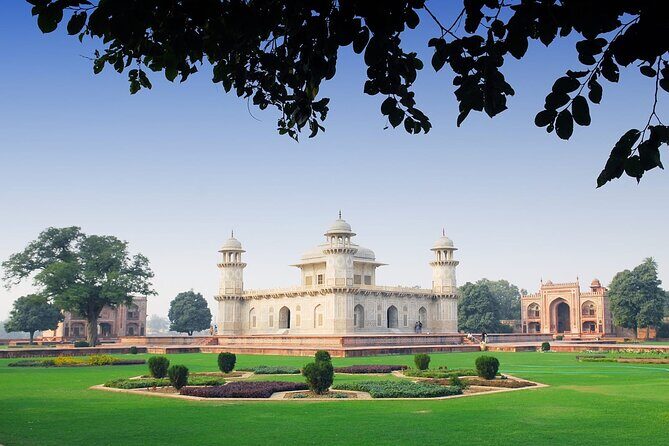
Next is Itimad-ud-Daulah, often called the Baby Taj. This is a shorter stop (about 30 minutes), but don’t treat it like filler. It’s known for intricate marble inlay work and for the calm riverside setting, which gives your day a breather between heavier sites.
The “Baby” nickname can make people underestimate it, but the details are the point. This is where you start appreciating the craftsmanship language of the marble—how patterns, surfaces, and inlays communicate refinement without needing the Taj’s giant scale.
Why this stop is valuable on a tight schedule
Because the day is packed, a quiet, detail-focused stop is a gift. The 30 minutes are short, but if you go with a plan—slow down, look closely, and don’t sprint—you’ll come away with more than a quick photo.
Fatehpur Sikri: the abandoned Mughal capital you can still walk through
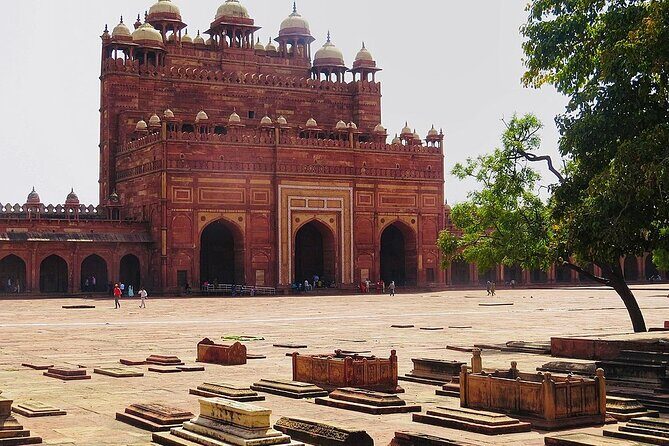
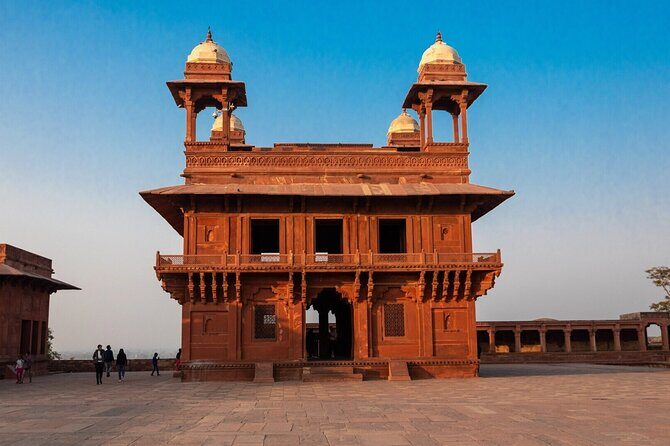
Later you’ll head to Fatehpur Sikri, the abandoned Mughal capital and a UNESCO World Heritage Site. This is your “big switch” moment: instead of one monument, you get a whole city-scale layout to read in pieces—palaces, courtyards, mosques, and the overall feeling of a place built with ambition.
Your time here is about 2 hours, which is enough to take in the major areas without turning it into a blur. But it’s still a walking-heavy site compared to some gardens or single-structure stops, so don’t treat it like a quick stroll.
Guide continuity is worth asking about
Your tour includes a licensed local guide at all attractions, and that’s important. Still, one piece of real-world feedback flagged that the guide experience at Fatehpur Sikri may differ from what you get at other stops. If it matters to you that the same guide stays with you from the Taj through Fatehpur Sikri, ask the operator before you leave. It’s a small question that can improve the whole day.
Getting fed: breakfast at DoubleTree and lunch timing
Food is included, and it’s not just a token mention. The plan includes a 5-star hotel buffet breakfast at DoubleTree by Hilton Hotel Agra, plus bottled water during the tour. The overall tour description also includes lunch, and the timing depends on which departure you take.
If you choose the sunrise start, you’re getting breakfast first. If you take a later start time (needed at times when sunrise is affected by fog or low visibility), the tour shifts to a daytime Taj Mahal visit with lunch instead of breakfast.
What this means for you
Plan to eat early and eat steadily. You’ll likely feel the day most at the Fort and Fatehpur Sikri stretches, so breakfast isn’t just comfort—it’s energy management.
Price and logistics: what $220 buys you (and what it avoids)
At $220 per person, you’re paying for more than tickets. You’re paying for private door-to-door transport from Delhi NCR, a driver, a licensed local guide at the sites, and a schedule that handles the big time problem: getting to the Taj early.
This package also includes:
- Skip-the-line entry tickets
- Round-trip private transportation
- Bottled water during the tour
- All taxes, tolls, parking, and driver fees
- Lunch (with the breakfast/lunch swap based on start time)
- A mobile ticket, so you’re not chasing paperwork
If you were to build this yourself, you’d still face the coordination headache: getting a private car, negotiating guides for each site, and trying to time Taj entry for sunrise. Doing it on your own can work, but you’ll spend time on logistics—time you don’t get back on a 12-to-14-hour day.
Group size and vehicle choice
The operator matches your group size to the car:
- 1–2 travelers: 3-seater sedan (Toyota Etios or similar)
- 3–5 travelers: 6-seater wagon (Toyota Innova or similar)
- 6–10 travelers: 10-seater van (Tempo Traveler)
If you’re traveling with family, this setup is one reason private tours feel calmer than group buses: your space stays predictable.
Weather, closures, and when sunrise becomes daytime
This tour has a few built-in reality checks, which is exactly what you want when you’re booking an early start.
- The Taj Mahal is closed every Friday, so you’ll need a different day.
- During winter (December–January), sunrise visits may shift to daytime due to fog or low visibility.
- Your confirmation comes at booking time, and you’ll get the details you need to plan your pickup timing.
What you can do to reduce stress
Pick your dates with the Taj closure in mind. If you’re traveling in winter, be open to the daytime option. The goal is still to see the Taj with good light, but fog can steal early-morning plans—this tour is set up to adapt.
Comfort tips for a long day you’ll actually enjoy
This isn’t a sit-on-a-bus tour. You’re getting up early, touring monuments, and walking through historic sites. The good news is the pace is built for a smooth flow—start early, see the Taj, then move through other major highlights without backtracking.
Bring:
- Comfortable walking shoes for moderate walking
- Warm layers if you’re doing a true sunrise departure (early mornings can feel cold)
- A camera you’re ready to use quickly, since sunrise photo windows are short
If you’re sensitive to early mornings, schedule the next day with an easier pace. You’ll likely feel the early wake-up more than the walking.
Who should book this private sunrise Taj Mahal tour?
This tour is a strong fit if you want:
- A private experience with hotel pickup and drop-off in Delhi NCR
- The sunrise Taj Mahal specifically, not a later compromise
- An all-in-one day covering Taj Mahal, Agra Fort, Itimad-ud-Daula, and Fatehpur Sikri
- Guides and entry handling taken care of, so you can focus on seeing
It may not be ideal if:
- You don’t like early starts or long travel days
- You’re the type who hates moving from one site to the next with little downtime
- You’re expecting a very slow, deeply unhurried pace—this day is efficient by design
If you do book it, the driver name Shiva showed up in feedback as part of what made the ride smooth. That kind of competent, steady driving matters more than people think on long Delhi–Agra timing.
Should you book this private sunrise tour from Delhi?
If you’re choosing between DIY and a guided private plan, I’d lean toward booking this style—especially for a sunrise Taj day. The combination of early timing, private transportation, skip-the-line entry, and included meals helps you avoid the most annoying parts: chaos at ticket gates and the waste of time waiting around.
But pick your dates carefully. Avoid Fridays, and in winter, accept that the plan might adjust if visibility is low. And if you care about a single guiding voice all day, ask whether your guide will stay consistent through Fatehpur Sikri.
If you want a day that’s big on major sights and organized enough that you don’t lose the plot, this tour fits the bill.
FAQ
What time does the sunrise Taj Mahal tour start?
The sunrise option starts at 2:00 AM, so you’ll be picked up early in Delhi NCR to reach the Taj Mahal for sunrise.
How long is the tour?
Expect about 12 to 14 hours total.
Is the Taj Mahal included, and is it ever closed?
Yes, the tour includes the Taj Mahal. The Taj Mahal is closed every Friday.
What’s included with the tour?
You’ll get hotel or airport pickup and drop-off in Delhi NCR, a private air-conditioned car with driver, a licensed local guide at attractions, skip-the-line entry tickets, 5-star hotel buffet breakfast, lunch, bottled water, and all taxes, tolls, parking, and driver fees.
What vehicle do I get for a small or large group?
For 1–2 travelers, it’s a 3-seater sedan (Toyota Etios or similar). 3–5 travelers use a 6-seater wagon (Toyota Innova or similar). 6–10 travelers use a 10-seater van (Tempo Traveler).
Is photography allowed at the sites?
Yes, photography is allowed, but drones are not permitted.
What happens if sunrise visibility is poor in winter?
During December–January, sunrise visits may shift to daytime due to fog or low visibility, with a later start time and lunch instead of breakfast.
If you want, tell me your travel month and how many people are in your group, and I’ll help you decide whether the sunrise departure is worth the early wake-up for your exact dates.