REVIEW · NEW DELHI
Private Guided Full Day Tour Of Old And New Delhi
Book on Viator →Operated by Fearless Tours and Travels · Bookable on Viator
One day, many Delhi moods.
This private guided route connects Old Delhi’s street life with New Delhi’s big landmarks in one smooth run. I like how it blends shopping streets, major religious stops, and quieter memorial moments, so you get more than one side of the city. You’ll also have room to adjust the day to your pace, with suggestions from your guide.
Two things I especially like: the tuk-tuk and rickshaw-style street travel (you see places without getting stuck in car traffic), and the way the tour mixes different faith landmarks back-to-back. One consideration: some stops are strict about what you can carry—at Laxmi Narayan Temple, electronic devices aren’t permitted inside—so plan to leave your phone in a locker room or your vehicle.
In This Review
- Key Highlights You’ll Actually Feel During the Day
- Why This Old-and-New Delhi Day Feels Like a Best-Of Without the Chaos
- Pickup, Timing, and How You’ll Stay Comfortable for 6 to 7 Hours
- Khari Baoli Spice Market: The Senses Start Here (and It’s Worth It)
- Chandni Chowk by Rickshaw: Street Noise, Close-Up Energy
- Jama Masjid: The Biggest Mosque Feeling Real, Plus Car-Free Navigation
- Raj Ghat: Gandhi’s Memorial as a Thoughtful Pause
- Laxmi Narayan Temple: Plan for Phone-Free Rules Inside
- Gurudwara Bangla Sahib: A Sikh Temple That Changes the Pace
- Agrasen Ki Baoli: The Stepwell Stop That Doesn’t Feel Like a Waste of Time
- India Gate and Rashtrapati Bhavan: War Memory Meets Presidential Grounds
- Lotus Temple: A Calm Architectural Finish You’ll Be Glad You Made
- Price and Value: How $5 Stacks Up for a Private Day
- What to Bring (So You Don’t Lose Time)
- Who This Tour Best Fits
- Should You Book This Private Guided Full Day Tour of Old and New Delhi?
- FAQ
- How long is the Private Guided Full Day Tour of Old and New Delhi?
- Where does the tour start?
- Do you offer pickup outside Old Delhi?
- Are admission fees included?
- What vehicle experience is included for the street sections?
- Are meals included?
Key Highlights You’ll Actually Feel During the Day
- Private guide + flexible pacing so you can adapt the route to your interests
- Khari Baoli spice market with free admission time for a classic Delhi sensory hit
- Rickshaw through Chandni Chowk to cut through the crowds the fun way
- Jama Masjid access via tuk-tuk because cars aren’t allowed nearby
- Laxmi Narayan Temple phone rules (you’ll need to store electronics)
- Lotus Temple architecture plus the calm that comes with it
Why This Old-and-New Delhi Day Feels Like a Best-Of Without the Chaos

Delhi can be overwhelming fast: lanes that look like they have no exits, traffic that refuses to be predictable, and landmarks that feel far apart. This tour’s big strength is how it stitches the day together so you can bounce between areas without doing the logistics puzzle yourself.
You also get a day that’s not just one vibe. You start with the sensory buzz of markets, then switch to major religious sites across faiths. After that, you move into the “official” landmarks: India Gate, a pass by Rashtrapati Bhavan, and finally Lotus Temple for a calmer architectural finish. It’s a smart mix if you want a first-timer day that still feels real.
You can also read our reviews of more guided tours in New Delhi



Pickup, Timing, and How You’ll Stay Comfortable for 6 to 7 Hours
The tour runs about 6 to 7 hours, which is long enough to feel like a full day but short enough that you’re not stuck in one place all day. It’s private, meaning it’s only your group—no sharing the guide’s attention with strangers.
You can get picked up from anywhere within Delhi, Noida, Gurugram, Ghaziabad, and Faridabad depending on the option you select. That matters because Delhi’s public transport connections are good, but crossing between Old and New Delhi takes time. This setup saves you that friction.
Two practical perks you’ll appreciate: the tour includes a free water bottle and an umbrella, and it covers parking, tolls, fuel, and taxes. That keeps the day from turning into constant add-ons. One more small detail: it uses a mobile ticket, which helps when you’re juggling phones for maps (even if one temple later says you should not).
Khari Baoli Spice Market: The Senses Start Here (and It’s Worth It)
Khari Baoli is famous for spice shopping, and this stop leans into that reputation. You get about 30 minutes and the admission time is free.
What makes this stop work on a guided day is context. You’re not just looking at piles of color—you learn how the market feels and moves. It’s Asia’s biggest spice market, and that scale shows up in how packed the lanes are and how goods are arranged for quick browsing. If you like photography, you’ll get plenty of scenes. If you’re shopping too, you’ll find the guide helpful for navigating what’s worth your attention and what’s more of a tourist trap.
Small drawback: spice markets can be a sensory shock if you’re sensitive to strong smells. Give yourself a minute to settle in, then enjoy the chaos.
Chandni Chowk by Rickshaw: Street Noise, Close-Up Energy

Next comes Chandni Chowk, with about 30 minutes planned and free admission time. Here you’ll take a rickshaw ride through the bustling streets.
This part is one of the most “Delhi in motion” segments of the day. From the seat of a rickshaw, you can actually see how street life works—people moving, shops stacked tight together, and the way the market keeps going even when you feel like you’ve seen everything.
What you’ll like most: it’s easier to experience Chandni Chowk when you’re not doing the stop-and-go walking all on your own. You also get a sense of the neighborhood rhythm without needing local driving confidence.
Practical note: wear comfortable shoes. Rickshaw rides are fun, but you’ll still be walking for parts of the route.
Jama Masjid: The Biggest Mosque Feeling Real, Plus Car-Free Navigation

Jama Masjid is a highlight—this is described as India’s biggest mosque—and you get about 1 hour here. Admission is included, and it’s approached with a useful twist: cars aren’t allowed, so the tour uses a tuk-tuk to get you in.
That detail matters more than it sounds. If you try to do this area on your own, you can easily get stuck in the logistics of where cars can and can’t go. On this tour, you simply switch modes and keep moving.
What to expect: you’ll be in a huge sacred space where the scale hits you instantly. A good guide helps you understand what you’re seeing instead of just staring at impressive architecture. You also get better timing for peak activity, since you’re not improvising from scratch.
Consideration: this is a high-traffic religious site. Expect queues or crowd flow. The guide will help you move sensibly.
You can also read our reviews of more private tours in New Delhi






Raj Ghat: Gandhi’s Memorial as a Thoughtful Pause

After the big mosque energy, you shift to a calmer landmark: Raj Ghat, connected with Gandhi. The stop is about 30 minutes, with free admission time.
This works well as a reset. You’re coming from dense urban movement, and Raj Ghat gives you open space and a more reflective mood. Even if you’re not deeply familiar with the details, it’s still a powerful place because of how it’s honored and remembered.
Practical tip: keep your pace slow here. The point is atmosphere, not speed.
Laxmi Narayan Temple: Plan for Phone-Free Rules Inside
Laxmi Narayan Temple is recommended for about 1 hour, and admission is free. The big heads-up is the rule: electronic devices, including mobile phones, aren’t permitted inside. The guidance says you should leave them in the locker room or your vehicle.
This is one of the few “real-world” rules that can catch you off guard. If you’re used to documenting everything, set expectations now. Think of it as a way to keep the moment focused.
Why I think this stop is valuable: it adds variety to the day. Earlier you’re in market energy and large mosque space; here you’re in another major religious atmosphere with a different feel. Just come prepared to store your phone.
Gurudwara Bangla Sahib: A Sikh Temple That Changes the Pace
Gurudwara Bangla Sahib is next, with about 1 hour and free admission time. You’ll explore the Sikh religion temple, described as the biggest temple in Delhi.
This stop helps balance the day because it’s not about monuments and war memorials—it’s about daily worship and a spiritual rhythm you can feel. With a guide, you’ll understand what you’re seeing without needing to guess.
I also like this timing: after busy streets and major landmarks, you get a chance to sit, watch, and slow down. Even if you don’t follow Sikh traditions, the atmosphere is welcoming and calming in a way that fits the rest of the itinerary.
Agrasen Ki Baoli: The Stepwell Stop That Doesn’t Feel Like a Waste of Time
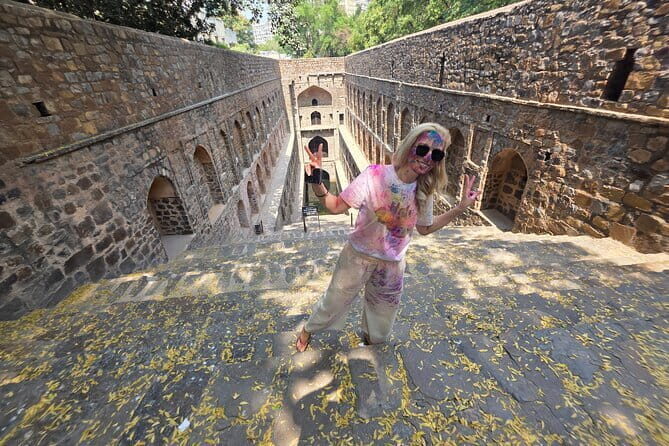
Agrasen Ki Baoli is brief—about 15 minutes—but it’s included for a reason. This is Delhi’s biggest well, also known as a steps well.
Here’s the value: short stops can still be memorable when the place has a strong visual story. Stepwells pull you in because they show human design for water storage, shade, and community. You don’t need a long lecture—just time to look around and notice the scale and steps.
If you’re trying to fit a lot into a day, this is a good one because you get impact without burning hours.
India Gate and Rashtrapati Bhavan: War Memory Meets Presidential Grounds
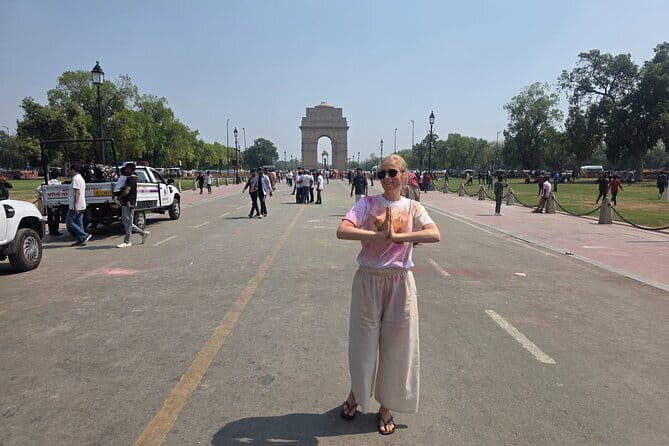
Now the tour moves into New Delhi territory. India Gate is about 15 minutes with free admission time. It’s described as a World War One memorial, built in 1921.
Then you pass through Rashtrapati Bhavan, also about 15 minutes and free. You don’t stay inside from what’s described, but you get the viewpoint of how the capital frames power and ceremony.
This pair works because it gives you two different kinds of meaning:
- India Gate is remembrance and public space.
- Rashtrapati Bhavan is the seat of state, seen from the road.
Practical note: it’s a good photo stretch, but not always a slow wander. It’s more about viewing and absorbing.
Lotus Temple: A Calm Architectural Finish You’ll Be Glad You Made
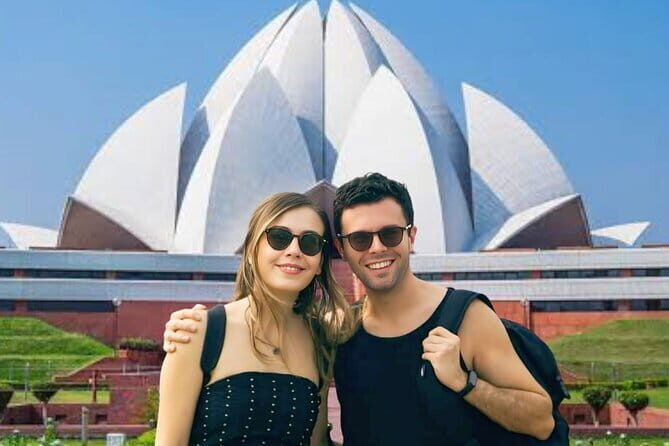
Finally, you reach Lotus Temple, also known as the Bahai House of Worship. It’s about 1 hour, free admission time is listed, and it’s described as completed in 1986.
This is a classic way to end a Delhi day: you go from crowded streets and huge religious spaces to an architectural setting that feels designed for quiet. The lotus shape is instantly recognizable, and the guided time helps you understand why it’s respected as a place of worship and gathering.
If you want your last hour to feel different from your first hour, this is the stop. It gives your brain a place to exhale.
Price and Value: How $5 Stacks Up for a Private Day
At $5 per person, this tour is priced like a bargain. The value comes from what’s included: personalized live tour guiding, transportation for pickup and drop-off within Delhi/nearby areas (depending on option), and coverage of parking, tolls, fuel, and taxes. You also get water and an umbrella, which adds up when you’re out all day.
Two things to keep straight:
- Meals are not included, so you’ll need to plan snacks or lunch separately.
- Entrance fees are only included if you choose the option that covers monuments/entry. That said, many stops are listed as free, and Jama Masjid admission is included.
Also keep in mind: tips aren’t included. That’s normal for private guiding, but it’s good to remember so you don’t feel surprised later.
What to Bring (So You Don’t Lose Time)
Based on the rules and the way you’ll move, I’d pack smart:
- Comfortable walking shoes for market and temple areas
- A phone charger or backup plan (even though one temple bans phones inside)
- Your patience for crowds at major religious sites
- A little cash/card for meals since food isn’t included
And if you’re worried about the phone-free stop: treat it as a short break from screen time rather than a hassle.
Who This Tour Best Fits
This private day works well if you:
- Want a first-timer overview of Old and New Delhi without doing the planning
- Like religion and culture stops across different communities in one go
- Prefer street experiences with guided navigation, like rickshaw and tuk-tuk segments
- Don’t want a big group pulling you in ten directions
It’s less ideal if you want a super slow, low-pace day with long stays in just one place, or if you strongly need your phone at all times (Laxmi Narayan Temple bans electronics inside).
Should You Book This Private Guided Full Day Tour of Old and New Delhi?
If you want one solid day that gives you variety—markets, major worship sites, Gandhi remembrance, and a calm architectural finish—this is an easy yes. The best reason to book is practical: you get a guided route that manages Delhi’s biggest headaches, like car-access limits near Jama Masjid and the friction of jumping between districts.
Book it when you’re ready to walk a bit, follow a few site rules, and accept that Delhi is lively. Bring lunch plans of your own, and you’ll feel like you got a full value day for very little money.
FAQ
How long is the Private Guided Full Day Tour of Old and New Delhi?
It runs about 6 to 7 hours.
Where does the tour start?
The meeting point is near Sunehri Masjid, Nishad Raj Marg, Lal Qila, Old Delhi, New Delhi, Delhi 110006, India.
Do you offer pickup outside Old Delhi?
Yes. Pickup can be arranged from anywhere in Delhi, Noida, Gurugram, Ghaziabad, or Faridabad depending on the option you select.
Are admission fees included?
Some stops are listed as free, and Jama Masjid has admission included. Entrance fees for monuments are included if the option you selected covers them.
What vehicle experience is included for the street sections?
You’ll do a rickshaw ride through Chandni Chowk, and a tuk-tuk is used for Jama Masjid because cars are not allowed there.
Are meals included?
No. Meals and gratuities are not included.