REVIEW · NEW DELHI
Private Full or Half Day Old and New Delhi City Tour
Book on Viator →Operated by India Tour Express · Bookable on Viator
One day, two Delhi worlds. This private Old and New Delhi tour is built for first timers who want big-name monuments plus the street-level feel of markets, mosques, and stepwells. You get in and out with a guide, plus hotel or airport pickup so Delhi’s chaos doesn’t eat your sightseeing time.
I especially like the mix of transport styles: a comfortable air-conditioned car for the long stretches, then a pedal-powered cycle-rickshaw in Old Delhi for that up-close street experience. I also like the human factor. Guides like Faez and Shamin show up ready to adapt, from adjusting the pace to helping you time key moments, and you’ll often get practical tips for photos and snacks along the way.
One thing to plan for: it’s a long day (about 7 to 8 hours) with lots of moving parts, so queues, closures, and Monday timing can squeeze the schedule. Also, entrance fees are listed as included on some sights, but the total “what’s paid for” can depend on the option you choose—so it’s smart to confirm before you go.
In This Review
- Quick hits before you book
- How this Old and New Delhi day tour actually works
- Pickup, private car comfort, and why it matters in Delhi
- Jama Masjid and Old Delhi’s street rhythm: where the day comes alive
- From Red Fort area to Agrasen Ki Baoli: Mughal power and stepwell oddities
- Bangla Sahib’s gold dome and a calm contrast
- India Gate and Rashtrapati Bhavan: modern Delhi’s big-photo moments
- Humayun’s Tomb: the garden-tomb stop that pays off
- Lotus Temple and Qutub Minar: two very different ways to end strong
- What you really get for $21: value and ticket reality
- The biggest strength: guides who adjust the day
- The main drawback to keep in mind: timing limits and closures
- Who should book this tour (and who might want something else)
- Should you book this Old and New Delhi City Tour?
- FAQ
- How long is the tour?
- Does the tour include hotel or airport pickup?
- Is this tour private?
- What kind of vehicle do I ride in?
- Are entrance fees included?
- Which stops have admission included on the route?
- Does the tour include a rickshaw ride?
- Is Lotus Temple open every day?
- What do I need to bring for monument entry?
- Can I cancel for a full refund?
Quick hits before you book
- Hotel/airport pickup across Delhi and NCR means fewer taxis and less time lost to first-day directions.
- Cycle-rickshaw through Old Delhi gives you that street-level feel without doing the whole thing on your feet.
- A guided route that connects Mughal landmarks to colonial-era New Delhi in one day.
- Khari Baoli spice market stop for a real taste of how vendors sell spices at fixed prices.
- UNESCO sites like Humayun’s Tomb and Qutub Minar help you see why Delhi’s architecture matters.
- Guide flexibility shows up in real ways, from pacing changes to handling flight delays.
How this Old and New Delhi day tour actually works
This is the kind of day trip that feels efficient without feeling like a checklist. You start with pickup (any location in Delhi, Noida, Gurugram, Ghaziabad, or Faridabad), then roll into the historic core of Old Delhi for major sights and markets. After that, you shift gears into New Delhi for broad streets, memorial architecture, and garden tombs, finishing with Qutub Minar.
The pacing works best if you treat it like a guided route, not a race. You’ll spend short to medium chunks at each stop, with a live guide explaining what you’re looking at, why it matters, and how to move through crowds. If you’ve only got one day in town, this is a strong way to get your bearings fast and avoid the “where do we go next?” scramble.
The other big benefit is comfort. Delhi’s traffic can turn a sightseeing day into a survival test. Here, you’re protected with a private air-conditioned vehicle, and the day is designed so you’re not constantly relying on public transport.
You can also read our reviews of more tours and experiences in New Delhi.



Pickup, private car comfort, and why it matters in Delhi
The tour is private, so it’s only your group, in the vehicle that matches your group size. Car choice is based on how many people you have (sedan for 1–2, wagon for 3–5, van options for larger groups). That matters because Delhi’s lanes and parking aren’t universal, and a bigger-than-needed vehicle can be a headache.
You can pick your pickup time from 7:00am to 3:00pm, which is handy if you’re dealing with a late arrival or a different plan earlier in the day. In one case, guides handled a delayed flight well, tailoring the Old Delhi portion to keep the day enjoyable instead of rushed.
Also included: water bottle and umbrellas. That sounds minor until you’re standing in sun or waiting while the monsoon decides its timing. You’ll feel it most in the Old Delhi part of the route.
Jama Masjid and Old Delhi’s street rhythm: where the day comes alive
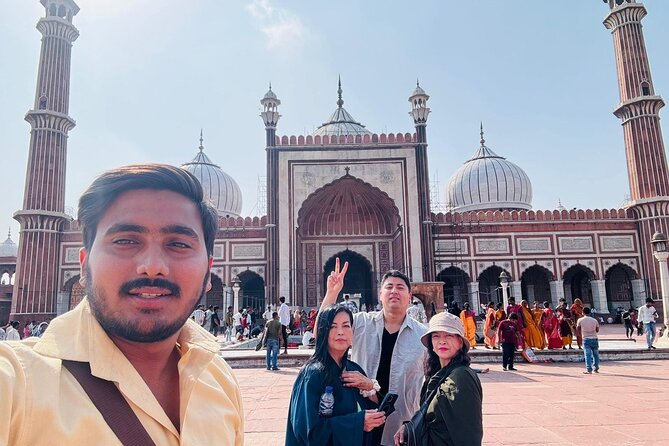
Old Delhi starts with Jama Masjid, India’s largest mosque. It was initiated in 1650 and completed in 1656, and you’ll feel the scale as soon as you’re near it. This stop works well at the beginning of the day because it helps you understand the rest of Old Delhi. When your guide explains the layout and what to look for, the nearby streets make more sense.
From there, you shift to Chandni Chowk, riding through the bazaars in a tuk-tuk style vehicle. This is one of those areas where walking can be slow in the best way and overwhelming in the worst way. The short ride helps you absorb the chaos without burning all your energy before lunch plans.
Then comes Khari Baoli, known as Asia’s largest spice market. What I like here is the practical feel: many items are sold at fixed prices, so bargaining doesn’t have to be your whole personality. It’s a great stop if you like watching how people actually buy and sell, and if you’re curious about everyday food culture, not just monuments.
A helpful detail for the whole Old Delhi stretch: if you’re sensitive to walking or crowds, tell your guide up front. Some guides on this tour have adjusted the pacing for walking conditions, which can be the difference between enjoying the day and feeling cranky by late morning.
From Red Fort area to Agrasen Ki Baoli: Mughal power and stepwell oddities
Between Old Delhi and New Delhi classics, you get a couple of stops that add texture beyond the big names.
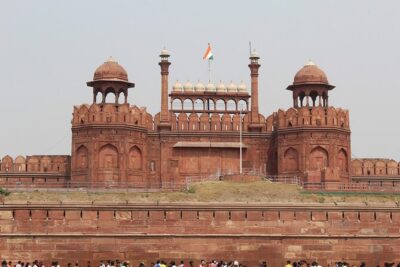
The Red Fort is a UNESCO-listed Mughal fortress, famous for its massive red sandstone walls and its role as an imperial residence for over 200 years. Even if you’re only seeing it from outside during your schedule, it’s still worth it because it anchors the theme of the day: Delhi’s layers of power and design.
Then you head to Agrasen Ki Baoli, a historic stepwell with 103 stone steps. Stepwells are one of those Delhi features that many visitors skip, but they’re a window into how people managed water, heat, and daily life. In this tour, it’s usually a shorter stop, so you’ll want to use your guide’s directions well—where to stand for photos, what architectural details to look for, and how the shape connects to the area around it.
This combination of monument and odd architecture is part of what makes the tour feel more human than “drive-by sightseeing.” It gives your eyes a break from only massive palace-scale sites.
Bangla Sahib’s gold dome and a calm contrast
Next up is Gurudwara Bangla Sahib, one of Delhi’s most important Sikh gurdwaras. The key detail here is the gold-toned structure associated with the complex, dating to the 17th century. The atmosphere tends to feel calmer than the street markets, and that contrast helps reset you before the New Delhi section.
This is also a good stop for people who want a spiritual site without the rigid tourist pressure you sometimes get elsewhere. You’ll still need to follow onsite expectations (dress and behavior), but the setting is generally more reflective than frantic.
If you’re traveling with a group and want low-stress moments, this is one of those places where conversation and quiet observing work well.



India Gate and Rashtrapati Bhavan: modern Delhi’s big-photo moments
After the Old Delhi-heavy portion, the tour moves into New Delhi’s landmark zone.
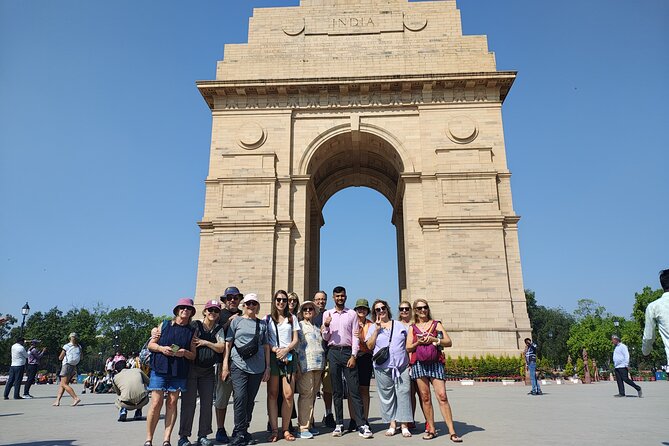
You’ll see India Gate, the First World War memorial built in 1921. It’s not just the gate itself—your guide can point you toward the names and symbolism so it doesn’t feel like a random monument photo.
Then there’s a photo stop at Rashtrapati Bhavan and Parliament. The tour doesn’t linger, but it’s a useful addition if you want at least one iconic New Delhi governmental view without a separate trip. Bring patience: these are popular spots, and you’ll likely be working around traffic and foot movement.
Humayun’s Tomb: the garden-tomb stop that pays off
If you want one stop where your guide’s explanations can really level up your experience, it’s Humayun’s Tomb.
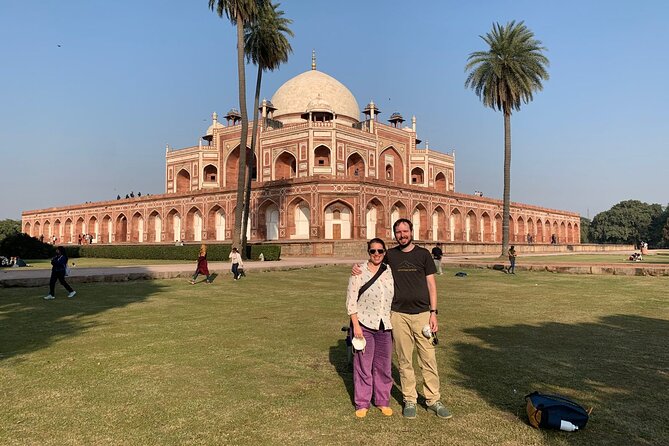
Humayun’s Tomb is UNESCO-listed and is often described as India’s first garden tomb. You’ll typically spend around an hour here, which is about right: long enough to notice symmetry and design, but not so long you feel stuck. The garden-tomb concept helps you see the site as more than a building. It’s planning, space, and movement, all arranged to make the architecture feel grounded and intentional.
This is also where the tour often becomes more satisfying for people who think they only came for the famous names. Once the guide connects details like layout and purpose, the time starts to feel earned.
Lotus Temple and Qutub Minar: two very different ways to end strong
The day often finishes with two very different styles: serene modern worship space, then medieval stone grandeur.
First, Lotus Temple, a Bahá’í House of Worship known for its lotus-shaped architecture and serene setting. Practical note: Lotus Temple is closed every Monday. If your schedule lands on a Monday, your guide may have to adjust timing or swap what’s possible, so it’s smart to build your plan around that.
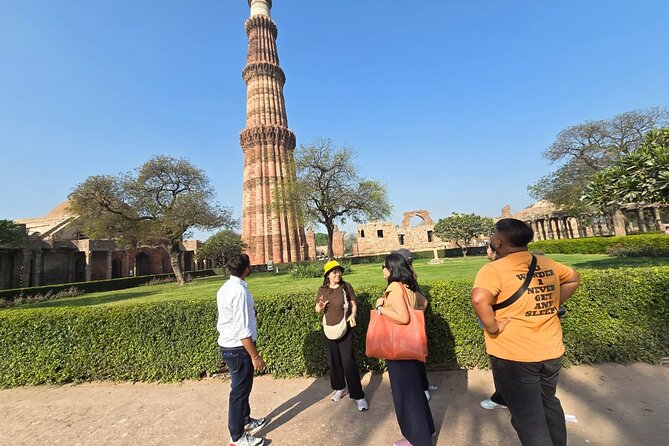
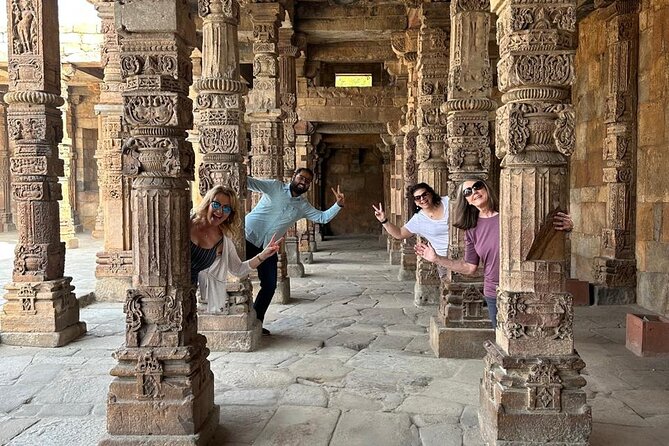
Then comes Qutub Minar, one of Delhi’s most famous monuments. It dates to the 12th century era: built in 1193 by Qutb-ud-din Aibak. The tower is about 73 meters tall with five storeys, and it features carvings including Quranic verses. You’ll usually get around an hour here, which is enough for both photos and context.
One reason Qutub Minar works as a finale is the way it ties the day’s themes together. You’ve moved from religious sites to imperial fortifications and garden tombs; the minaret gives you a clear architectural anchor that feels historic even after a long travel day.
What you really get for $21: value and ticket reality
On paper, $21 per person for a private full/half-day city tour sounds like a great deal. But value in Delhi depends on what’s included and what isn’t, especially around entrance fees.
Here’s the practical way to think about it:
- You’re paying for time savings: pickup, a private driver, and a guide coordinating the route.
- You’re getting transport coverage: air-conditioned car plus included old-city rickshaw-style movement.
- You’re getting some admissions included on key sites, but only on those where the tour marks admission as included, and only if the option selected covers entrance fees.
So before you lock in, make sure you know which option you’re choosing for entrance fees. If you want the full “no surprises” experience, confirm that the monuments you care about most are actually covered.
Also included: parking fees, tolls, fuel, taxes, a water bottle, and umbrellas. Those are small line items that quietly add up in Delhi.
The bottom line: for a one-day visitor who wants Old + New Delhi without figuring out buses, this is usually strong value—especially because a good guide can turn “I saw it” into “I understood it.”
The biggest strength: guides who adjust the day
This tour often succeeds or struggles based on one factor: the guide.
A recurring theme in the experiences shared with me is flexibility. Guides like Faez, Shamin, Anas, and Mohammed Kathir have been praised for friendliness, clear English, and adapting timing to fit your needs—like accommodating walking limitations or adjusting after delays.
Some guides have also helped with practical moments that make you feel like you’re traveling smarter. For example, one guide helped a guest tailor the day so they could go inside the Red Fort. Another guided snack choices, and others pointed out photo spots so pictures come out better without you guessing where to stand.
That adaptability is the difference between a tour that checks boxes and one that actually feels like a local day with a plan.
The main drawback to keep in mind: timing limits and closures
No day tour can control queues or openings. One concern that shows up in the feedback is that some sights didn’t get done due to reasons like closures or very long lines, and in at least one case the guide didn’t offer much in terms of substitution.
Another scheduling note: because you’re packing a lot into a limited day, you might feel time pressure at the later stops—especially if you want extra time for Qutub Minar photos or a deeper Lotus Temple visit.
Then there’s the Monday issue for Lotus Temple. If Monday is your only day, you should either expect an adjustment or consider another tour option for your schedule.
My advice: when you book, send your must-see list clearly. If you care most about Qutub Minar and Humayun’s Tomb, say so. If Red Fort interior access matters, ask what’s realistic for your chosen date and timing.
Who should book this tour (and who might want something else)
This tour is a great fit if:
- You have one day and want a “best of” sweep across Old and New Delhi.
- You’d rather sit in comfort than wrestle with transit.
- You want a guide who can explain what you’re seeing and help with practical navigation.
- You like markets and religious sites, not just standalone monuments.
You might want to choose a different plan if:
- You hate long days with lots of short stops.
- You only want one or two sights, and you prefer a slow, deep visit instead.
- You’re traveling on a Monday and Lotus Temple is a top priority.
Should you book this Old and New Delhi City Tour?
Yes—if you’re a first-timer who wants a smart route and real variety in one day. The strongest reasons to book are the private pickup, the Old Delhi street access via rickshaw-style movement, and the way many guides handle the day with flexibility. For $21, the value is mostly about avoiding guesswork and saving energy in a city where logistics can drain your day.
If you book, do two things:
1) Confirm entrance-fee coverage for the monuments you care about most.
2) Share your must-sees and your pacing needs early, so your guide can keep the day working for you, not just against the clock.
FAQ
How long is the tour?
The tour runs about 7 to 8 hours.
Does the tour include hotel or airport pickup?
Yes. Pickup is offered from any location within Delhi, Noida, Gurugram, Ghaziabad, or Faridabad, including the airport if you provide flight details when booking.
Is this tour private?
Yes. It’s a private tour/activity, and only your group participates.
What kind of vehicle do I ride in?
You ride in a private air-conditioned vehicle. The car type depends on group size (sedan for 1–2, wagon for 3–5, van options for larger groups).
Are entrance fees included?
Entrance fees are included if you select the option for entrance fees. Some sights list admission as included during the day, but your exact coverage depends on the option chosen.
Which stops have admission included on the route?
On the listed plan, admission is included for Jama Masjid, Humayun’s Tomb, and Qutub Minar.
Does the tour include a rickshaw ride?
Yes. You get a cycle-rickshaw ride in Old Delhi.
Is Lotus Temple open every day?
No. Lotus Temple is closed every Monday.
What do I need to bring for monument entry?
Carry a valid photo ID for monument checking.
Can I cancel for a full refund?
Yes. You can cancel up to 24 hours in advance for a full refund. Within 24 hours, the amount paid is not refunded.