REVIEW · NEW DELHI
Private Delhi Agra Jaipur Multi Day Tour
Book on Viator →Operated by Limra Trip · Bookable on Viator
Golden Triangle meets tiger country.
This Private Delhi Agra Jaipur Multi Day Tour strings together big-decision sights in a logical flow: Delhi’s Mughal icons, the Taj Mahal, Jaipur’s royal-era architecture, and then a wildlife day at Ranthambore National Park. I like that it keeps transportation and timing handled for you, so you spend your energy on seeing (and photos) instead of figuring out logistics at every stop.
I especially like the live tour guide approach, because the sites make more sense when someone explains what you’re looking at while you’re standing there. I also like the balance of monuments and everyday texture, like Old Delhi’s market area, not just grand buildings. One drawback to consider: the days include longer road stretches between cities, so you’ll want a comfortable pace mindset and patience for early starts.
In This Review
- Key Highlights
- How This Tour Fits Together (Delhi, Agra, Jaipur, Ranthambore)
- Day 1 in New Delhi: Arrival Transfer and a Soft Start
- Day 2 Delhi Sights: Qutub Minar, Humayun’s Tomb, and Old Delhi Markets
- Day 3 Delhi to Agra: Taj Mahal Time Plus Agra Fort
- Day 4 Agra to Ranthambore: Fatehpur Sikri Along the Way
- Day 5 Ranthambore National Park: Your Safari Day for Tiger Odds
- Day 6 Jaipur Arrival: Check In and Let Jaipur Unfold
- Day 7 Jaipur Sights: Sheesh Mahal Mirror Work and Hawa Mahal Windows
- Day 8 Return to Delhi: A Clean Finish
- Price and Value: What $459 Really Buys You
- What Kind of Traveler Should Choose This Tour
- Practical Tips to Make the Most of the Days
- Should You Book This Delhi–Agra–Jaipur with Ranthambore Tour?
- FAQ
- What’s included in the tour price?
- Is this a private tour?
- Do you offer pickup in Delhi?
- How much sightseeing is included in Delhi, Agra, and Jaipur?
- Do you go on a safari in Ranthambore?
- Can dietary restrictions be accommodated?
Key Highlights

- Private AC car + live guide keeps the schedule smooth across multiple cities.
- Delhi’s mix of monuments and markets covers Qutub Minar, Humayun’s Tomb, Birla Mandir, India Gate, Chandni Chowk, and Jama Masjid.
- Taj Mahal + Agra Fort gives you both the famous marble landmark and a key Mughal power site.
- A Fatehpur Sikri stop adds a major historical detour on the way toward Ranthambore.
- Ranthambore wildlife safari day is your main shot at seeing a tiger in the wild.
- Jaipur icons include Sheesh Mahal mirror work and Hawa Mahal’s 953 windows.
How This Tour Fits Together (Delhi, Agra, Jaipur, Ranthambore)
This is a classic Golden Triangle route with one big upgrade: you don’t stop at monuments. You go far enough into wildlife territory to include a Ranthambore National Park safari day, which changes the tone of the whole trip from temples and forts to a nature search.
What I like for you is the rhythm. You arrive in Delhi, get two full sightseeing days with old and new parts of the city, then roll into Agra, then into Jaipur, and finally into tiger-country. It’s not random hopping, and that matters because travel days can drain your will to explore.
You’re also traveling in private comfort, with a private AC car plus a live guide. That typically means fewer waiting games and more time at each site, which is the real value on an 8-day plan.
You can also read our reviews of more private tours in New Delhi


Day 1 in New Delhi: Arrival Transfer and a Soft Start
On day one, a tour consultant meets you after arrival and arranges a transfer to your accommodation. After check-in, the plan is deliberately light: relax for the rest of the day.
This is smart if you’re landing with jet lag or if you want a low-pressure first evening. It also gives you time to get oriented in your area before the guided city walking and monument visits begin.
If you’re the type who likes an early dinner and a good night’s sleep before big sights, this setup will feel like a win.
Day 2 Delhi Sights: Qutub Minar, Humayun’s Tomb, and Old Delhi Markets
Day two is where Delhi earns its reputation. You’ll visit standout Mughal-era landmarks first, then shift into Old Delhi’s market life.
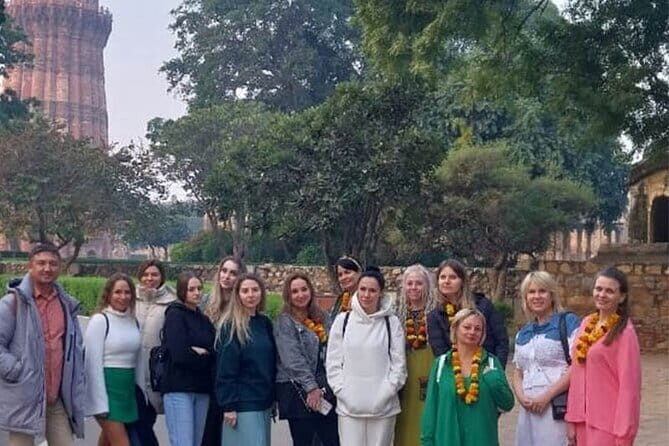
You start with Qutub Minar, the world-famous tall brick minaret. You also visit Humayun’s Tomb, a major Mughal tomb complex that helped set the stage for later Mughal architecture. Then you head to Birla Mandir Temple (Lakshmi Narayan), with its clean, formal temple layout.
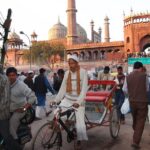
After that, the tour moves to the iconic city axis area around India Gate, then into Chandni Chowk, the old-city shopping streets where you’ll see stalls connected to spices, sweets, and everyday Indian shopping. The day finishes at Jama Masjid, India’s largest mosque, built in the 1600s and capable of holding a very large crowd.
One detail I’d call out: the guide component matters here. Delhi’s “big sights” can feel like a checklist unless someone helps you see the patterns—geometry, symmetry, and why certain buildings sit where they do.
Also, one guide name that comes up is Riyaz. He’s described as guiding people through Old Delhi lanes, calling out spice and craft-market points of interest, and then connecting that street-level texture to the monument story later in the day.
Day 3 Delhi to Agra: Taj Mahal Time Plus Agra Fort
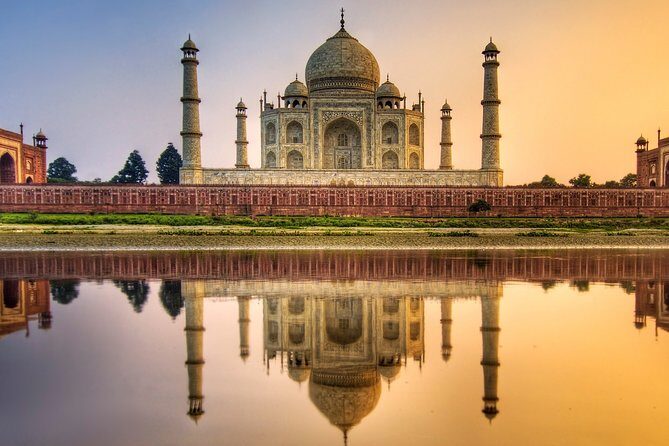
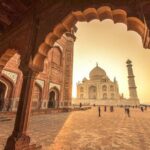
On day three, you take a road transfer from Delhi to Agra (about 4 hours). Once you arrive, the main event is the Taj Mahal, the ivory-white marble mausoleum commissioned in the 1600s by Shah Jahan for Mumtaz Mahal.
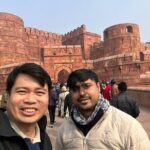
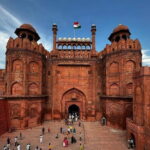
This visit is typically a “one-time, plan-for-it” moment, so the real value here is that the tour includes it as a focused stop with the right amount of time on site (instead of rushing through as a quick photo stop). You’ll also get Agra Fort, once a key Mughal residence area.
A balanced approach you might appreciate: Taj Mahal is the headline, but Agra Fort gives you the bigger picture of how power lived around the monument. Even if you only remember one building, you’ll come away understanding why this region became so central to Mughal rule.
If you’re sensitive to heat and crowds, plan to bring a pace strategy—don’t force every angle at the same speed. The guide can help you prioritize what’s worth your time.
Day 4 Agra to Ranthambore: Fatehpur Sikri Along the Way
Day four shifts from marble and fort walls to something more sprawling and “in-between.” You depart Agra for Ranthambore (about 6 hours by road), and you stop at Fatehpur Sikri.
Fatehpur Sikri is the kind of place where you can feel the historical ambition. The stop includes major sites such as the Tomb of Salim Chishti and Buland Darwaza, plus other areas like Panch Mahal and Birbal’s Palace.
This stop is valuable because it breaks up a long travel day with a destination that’s more than a rest stop. It turns the drive into part of the story rather than a time tax.
At the same time, it’s worth noting the trade-off: long days mean you need comfortable shoes and patience. Fatehpur Sikri can mean more walking and more time in the sun, depending on the season.




Day 5 Ranthambore National Park: Your Safari Day for Tiger Odds
Day five is the pivot into wildlife. After breakfast, you go to Ranthambore National Park for a wildlife safari.
The tour’s description emphasizes the excitement of seeing animals in their natural habitat, including the real possibility of spotting a tiger prowling nearby. That’s the part most people remember, even if the tiger moment doesn’t happen as you imagined.
Here’s the practical reality to keep in mind: tiger sightings depend on conditions and timing. But you’re still getting a full safari day experience built around the park setting and wildlife viewing approach.
If you’re someone who enjoys wildlife photography or just wants to trade temple crowds for open-air nature time, this is the day that justifies the whole trip’s “add-on” compared to a straight Golden Triangle.
Day 6 Jaipur Arrival: Check In and Let Jaipur Unfold

After breakfast on day six, you travel to Jaipur and check into your hotel. The rest of the day is at your leisure.
That free time matters. Jaipur is an active city, and you may want time to recharge, do a bit of wandering, or simply adjust after the safari and travel day rhythm.
One thing to remember: when your tour is structured like this, you’ll often get your biggest planned sights on day seven. So day six is your buffer day—use it to recover and set yourself up to enjoy the next morning without feeling rushed.
Day 7 Jaipur Sights: Sheesh Mahal Mirror Work and Hawa Mahal Windows
Day seven is the Jaipur day focused on architecture and signature sights.
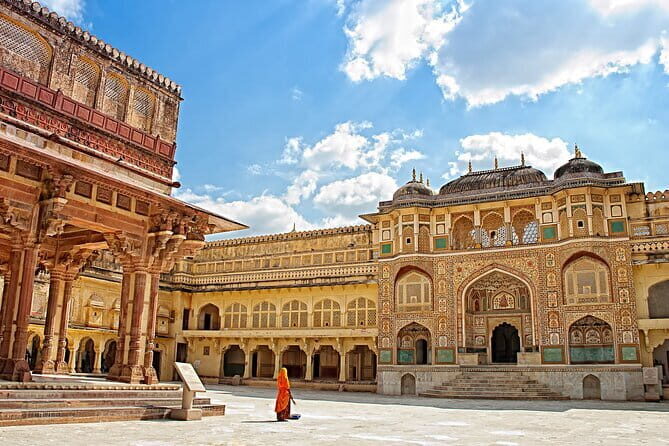
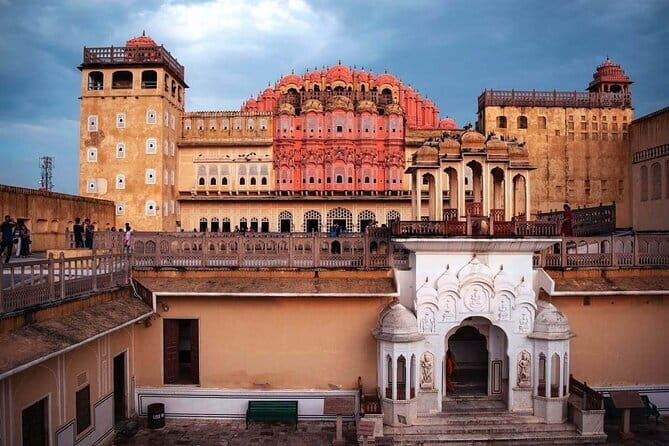
First up is Sheesh Mahal, known for exquisite carvings and mirror work. Then you go to Hawa Mahal, the five-story facade with 953 windows, nicknamed the Palace of Winds.
This pairing makes sense. Sheesh Mahal offers intricate craftsmanship up close, while Hawa Mahal gives you a dramatic visual silhouette from the outside. Together, they show you two different “faces” of Jaipur’s royal-era design—detail versus scale.
A tip for getting more out of these visits: slow down when you’re looking at the craftsmanship. Mirror work can be dazzling in a quick photo, but it’s more rewarding if you take a moment to see how the patterns are laid out.
Day 8 Return to Delhi: A Clean Finish
On the final day, you check out and drive back to Delhi (about 5.5 hours). From there, you can catch your flight or train.
This ending works well because it doesn’t cram in one last monument in your tired hours. Instead, you finish with a straightforward transfer and time to move on.
If you want a good last memory, plan something simple in the morning—coffee, a short walk, or just time to pack without rushing. It makes the ride back feel less like a countdown and more like the close of a proper trip.
Price and Value: What $459 Really Buys You
At $459 for an 8-day private tour, your value comes from what’s bundled and what’s handled for you: lunch, a private AC car, a live tour guide, and toll & parking.
That combination matters across long stretches between Delhi, Agra, and Jaipur, and then your road transfer toward Ranthambore. You’re not just paying for transportation—you’re paying for the friction removal that comes with a driver and guide coordinating the day’s flow.
The also-important part is what’s not included: no extra drinks. That means you may want to budget separately for water and beverages, especially on hotter days when hydration matters.
If you compare this tour against “DIY” planning, the difference is mostly time and stress. You can absolutely plan a Golden Triangle yourself, but you’ll spend time stitching together guides, tickets, and transfers. This package is built for people who want their time spent sightseeing, not troubleshooting.
What Kind of Traveler Should Choose This Tour
I think this works best if you want a structured route through the big names—Delhi, Agra, Jaipur—with one meaningful wildlife day added in. If you like clear planning and minimal decision fatigue, you’ll likely appreciate the way each day has its own focus.
It also fits well if you’re traveling as a small group and want a private experience rather than joining a larger bus-style crowd. The private format tends to help with pacing, and it keeps the guide’s attention on your group.
If you’re the type who loves deep research and independent wandering with no schedule, you might find the structure limits your freedom. Still, the “free time” moments in Jaipur help balance that.
Practical Tips to Make the Most of the Days
Start by protecting your energy. This tour includes several longer road legs (around 4 hours, 6 hours, and 5.5 hours), so bring what helps you feel comfortable—water, sunscreen, and shoes you can stand in for hours.
For the sight days, plan your attention, not just your photos. On sites like the Taj Mahal and Jama Masjid, the best experience is often about slowing down for one or two angles where you can really take in the design.
Finally, use the guide. With a live guide, you should ask at least a couple questions—why something was built, what to notice first, and what’s changed over time. That’s how the stops stop being random and start becoming a connected story.
Should You Book This Delhi–Agra–Jaipur with Ranthambore Tour?
I’d say book it if your priority is a well-run route that hits the essentials and still gives you a real wildlife day. You’re getting major Delhi monuments, the Taj Mahal, a strong Agra add-on with Agra Fort, a meaningful Fatehpur Sikri stop, Jaipur’s architectural icons, and then Ranthambore National Park safari time.
I’d hesitate only if you hate long driving days or if you need lots of flexible downtime every day. This tour gives you some lighter time (like the first day and Jaipur’s arrival day), but it still moves at a deliberate pace.
If your travel style is “show me the best stuff with minimal hassle,” this is a solid match.
FAQ
What’s included in the tour price?
The tour includes lunch, a private AC car, a live tour guide, and tolls and parking. It does not include extra drinks.
Is this a private tour?
Yes. It’s a private tour/activity, so only your group participates.
Do you offer pickup in Delhi?
Yes. A tour consultant greets you upon arrival in Delhi and arranges a comfortable transfer to your accommodation.
How much sightseeing is included in Delhi, Agra, and Jaipur?
You’ll visit major sights such as Qutub Minar, Humayun’s Tomb, Birla Mandir, India Gate, Chandni Chowk, and Jama Masjid in Delhi; the Taj Mahal and Agra Fort in Agra; and Sheesh Mahal and Hawa Mahal in Jaipur.
Do you go on a safari in Ranthambore?
Yes. In the morning, you go on a wildlife safari at Ranthambore National Park.
Can dietary restrictions be accommodated?
Yes. The tour can accommodate dietary restrictions such as vegetarian, vegan, and gluten-free. You should indicate your needs when booking.