REVIEW · NEW DELHI
Private City Tour to Old and New Delhi
Book on Viator →Operated by Ashok Tour · Bookable on Viator
Delhi feels easier with a plan. This private city tour stitches together Delhi’s big eras in one smooth arc, from UNESCO Qutub Minar to Mughal monuments, then to modern faith and grand memorials. I especially liked the private pickup setup and the fact that you’re riding in an air-conditioned comfort bubble instead of getting stuck in Delhi heat with no escape.
What I like most is that the day doesn’t read like a frantic photo sprint. You get a logical mix of architecture, religion, and city landmarks, with enough time at each stop to actually understand what you’re looking at. The one thing to watch is that entrance fees aren’t included, and some sites have strict security rules—especially Akshardham.
Key things I’d put on your radar
- UNESCO Qutub Minar with the tall red-sandstone tower and the famous iron pillar area
- Mughal trio: Humayun’s Tomb, Red Fort, and Jama Masjid, all in the same grand architectural language
- Faiths in parallel: Lotus Temple welcomes everyone, then you shift into Jama Masjid’s Mughal mosque design
- Akshardham security checks with rules about bags, cameras, and electronics
- A calm, professional pacing thanks to polite, often English-speaking drivers like Ashok’s team
In This Review
- How This Private Old-and-New Delhi Tour Feels Different
- Getting Set Up in Connaught Place and Letting the Driver Handle the Pacing
- Qutub Minar: UNESCO Tower, Red Sandstone, and the Iron Pillar Area
- Humayun’s Tomb: Mughal Symmetry That Came Before the Taj
- Lotus Temple and India Gate: Two Sides of Delhi’s Memory
- Red Fort and Jama Masjid: Red Sandstone Power in Mughal Form
- Red Fort
- Jama Masjid
- Swaminarayan Akshardham: The Big Temple Complex With Strict Entry Rules
- Lodhi Garden: A Garden Stop That Makes the Day Feel Livable
- Price and Value: When $65 Per Group Makes Sense
- Who This Tour Fits Best
- Should You Book This Old and New Delhi Private Tour?
- FAQ
- Where does this tour start?
- Is pickup included?
- How many people are in a group?
- How long is the tour?
- What’s included in the price?
- Are entrance fees included?
- What kind of ticket do you get?
- What sights are included?
- Is the tour offered on Mondays?
- Is there free cancellation?
How This Private Old-and-New Delhi Tour Feels Different
Delhi is one of those cities where “just go sightseeing” can turn into a traffic study. This is a private tour, which means you’re not stuck waiting for other people, and you’re not forced into a rigid script. You start from Connaught Place (a very central anchor), and you move around in an air-conditioned vehicle with bottled water, which matters more than you’d think once you’re out in the sun.
What makes the experience especially useful for you is the range in one day. You’ll go from medieval Sultanate-era architecture (Qutub Minar) to Mughal power (Humayun’s Tomb, Red Fort, Jama Masjid), then to modern religious design (Lotus Temple), and finally to a huge temple complex (Swaminarayan Akshardham) and a garden decompression stop (Lodhi Garden). It’s a strong way to get your bearings fast.
The private setup is also a value play. At $65 per group (up to 5), the price can drop to bargain territory per person if you’re sharing with friends or family. If you’re traveling solo or as a couple, it’s still a solid way to cover a lot of ground without the hassle of coordinating separate tickets and transport.
Getting Set Up in Connaught Place and Letting the Driver Handle the Pacing
Your tour starts and ends back at Connaught Place, which is a big deal in Delhi. Getting to the starting point is easier than figuring out a random meeting location far from where you’re staying. You also get pickup offered, plus a mobile ticket—small touches that reduce day-of stress.
Here’s the practical advantage: you get to focus on the sights instead of managing logistics. In Delhi, road conditions and traffic timing can change by the hour. A capable driver helps you stay on track, and the operator’s team is known for polite, English-speaking drivers. That doesn’t sound glamorous, but it makes a huge difference when you’re trying to ask quick questions or navigate entry rules.
Plan for a tour window of about 4 to 8 hours. The exact timing can shift based on traffic, visitor flow at the sites, and how long you spend at each stop. If you’re the type who likes to linger—this tour supports that. If you’re the type who likes to move quickly and just get the highlights—your driver can keep things efficient.
You can also read our reviews of more tours and experiences in New Delhi.



Qutub Minar: UNESCO Tower, Red Sandstone, and the Iron Pillar Area
Qutub Minar is one of those places you feel before you fully understand it. Even at a distance, the tower’s height makes the scale obvious—about 73 meters tall, built from red sandstone and marble. It’s part of a UNESCO World Heritage area and represents the early Delhi Sultanate era, started in the early 13th century by Qutub-ud-din Aibak and completed and enhanced under later rulers.
What I like about this stop for you is the architecture story. The tower isn’t just a tall monument; it’s a visual mix of Indo-Islamic Afghan architectural influence. You’ll also notice the changing materials and the way the monument dominates its surroundings, which helps you connect it to the political shift happening in the region at the time.
Also, don’t skip the iron pillar area. The tour includes time here, and it’s a famous feature of the complex. Even if you don’t nerd out on metallurgy, seeing how that pillar fits into the overall site layout makes the whole complex feel more alive.
Practical note: this is a stop where comfortable shoes help. You’ll likely do some walking on uneven surfaces, and you’ll appreciate having water in hand.
Humayun’s Tomb: Mughal Symmetry That Came Before the Taj
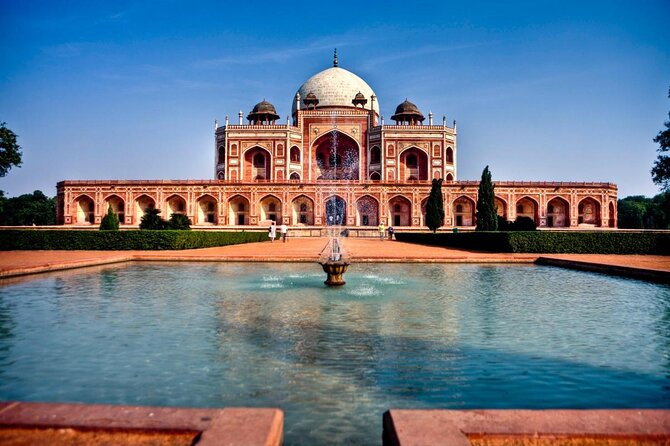
After Qutub Minar, the mood shifts. Humayun’s Tomb is Mughal architecture at a higher “master plan” level. It was commissioned by Empress Bega Begum and completed in 1572. If you’ve heard people compare it to the Taj Mahal, this is why: it’s often described as a precursor, with a Persian-influenced design that blends Persian and Indian elements.
I like this stop because it teaches you how to read Mughal design. You’re not just looking at a tomb—you’re looking at an ordered space meant to feel balanced and intentional. The setting also helps. The gardens and layout make the monument feel calmer than it might otherwise.
If you want a simple way to approach it: look at the structure first (symmetry and proportions), then look at the grounds and how people move through the space. That second look is where the “why it works” clicks.
Possible consideration: this stop is popular, so you may see crowds during peak hours. Having a driver and private pacing helps you avoid the worst clumping.
Lotus Temple and India Gate: Two Sides of Delhi’s Memory
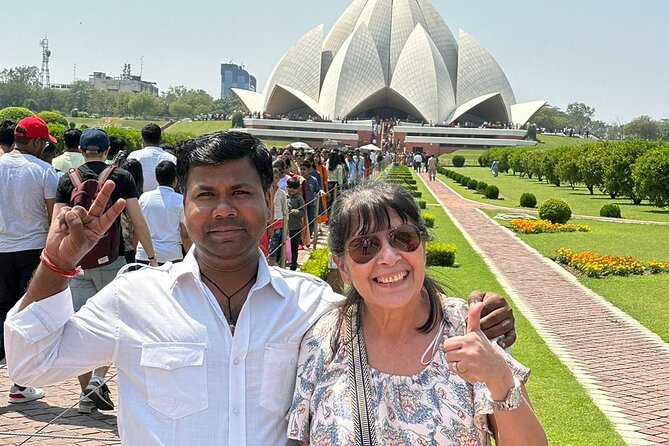
Then you swing into something that feels completely different: the Lotus Temple. It’s a Bahá’í House of Worship and is designed to be open to all people, no matter your faith. The architecture is iconic—white marble shaped like a lotus flower—completed in 1986 by Iranian architect Fariborz Sahba.
What I love for you here is the vibe. You get a meditation-and-prayer atmosphere, and visitors can enter with silence expected inside. Even if you’re not religious, it’s a rare pause in a city tour: an orderly space where you can reset your attention.
From there, you head to India Gate, a memorial with a “big monument” presence. It was built to commemorate soldiers who lost their lives in World War I and is inspired by the Arc de Triomphe in Paris. The foundation stone was laid in 1921 and it was completed in 1931. When you stand at the base, you’ll find the Amar Jawan Jyoti, an eternal flame.
India Gate also carries a specific inscription detail: names of more than 13,516 British and Indian soldiers connected to the Afghan war of 1919. That makes this stop more than a photo backdrop. It’s a living reminder of how global conflicts shaped the British-era Indian Army’s history.
Time reality: you won’t spend forever here, but even 30 minutes is enough to feel the scale and read what’s in front of you.
Red Fort and Jama Masjid: Red Sandstone Power in Mughal Form
If you’re building a “Delhi architecture brain,” Red Fort and Jama Masjid are your key chapters. They both use the Mughal language—red sandstone, white marble inlays, and grand entrances—so the day feels cohesive even as the sites change.



Red Fort
Red Fort was built by Shah Jahan, with construction starting in 1638 and finishing in 1648. It served as the Mughal emperors’ main residence for nearly 200 years. Inside, the fort includes the Diwan-i-Aam (Hall of Public Audience) and the Diwan-i-Khas (Hall of Private Audience). Even if you don’t memorize the names, you’ll feel the difference: it’s about who could access power, and how that power was displayed.
Jama Masjid
Jama Masjid was commissioned by Shah Jahan as well, with construction beginning in 1650 and completed in six years. It was inaugurated in 1656. The design uses red sandstone and white marble, and the main gateway is the Buland Darwaza, a grand entrance facing east.
What I like for you is the pairing. You see how Mughal rule expressed itself through monuments that served different functions—courtly authority at Red Fort, religious gathering at Jama Masjid. The architectural styling ties them together, so you get a more complete picture of Mughal Delhi rather than isolated “pretty sights.”
Possible consideration: these are major sites, and entry rules vary. Dress codes can matter at religious monuments, so plan clothing that covers shoulders and keeps you comfortable moving through crowds.
Swaminarayan Akshardham: The Big Temple Complex With Strict Entry Rules
Akshardham is a jump in scale and detail. It was inaugurated on November 6, 2005, built by the Bochasanwasi Akshar Purushottam Swaminarayan Sanstha (BAPS). The main focus is the Akshardham Mandir, dedicated to Bhagwan Swaminarayan.
The numbers alone tell you it’s designed to overwhelm you—in a good way—if that’s your thing. The temple complex features 234 intricately carved pillars, 9 domes, and over 20,000 statues of divine figures from Hinduism. If you like close looking, you’ll have plenty to spot.
Now for the part you should plan around: security measures are strict. Visitors aren’t allowed to carry bags, cameras, or electronic devices inside the temple complex. There’s a secure facility where you can leave belongings. If you show up with a bag and no plan, you’ll lose time.
This stop is also a good “mind reset” after the big historical sites. It’s modern in origin, but it still feels rooted in the idea of devotional space as a full experience, not just a monument.
Lodhi Garden: A Garden Stop That Makes the Day Feel Livable
After forts and mosques, your body will thank you for Lodhi Garden. It’s named after the Lodhi Dynasty, which ruled parts of northern India in the 15th and 16th centuries. You’ll find monuments from that period in the garden, and the site covers about 90 acres.
I like this stop because it breaks the constant “stone, stone, stone” rhythm. The garden is well-landscaped with lawns, trees, and flower beds, which makes it a comfortable place to slow down. It’s also located between Khan Market and Safdarjung’s Tomb in New Delhi, so it fits naturally into a city circuit.
For practical pacing: this is where you can breathe, take photos, and let your brain sort what it absorbed earlier. If you’ve got limited time in Delhi, this garden pause is the kind of thing that keeps the tour from feeling exhausting.
Price and Value: When $65 Per Group Makes Sense
The listed price is $65.00 per group (up to 5), with pickup offered. That’s the kind of pricing that can be a deal when you share it. If you have four or five people, you’re effectively paying a small slice per person for a full private day of transport.
The tricky part is the separate entrance fees. The tour data says entrance fees are not included, and it estimates $50 for two persons. That means your true cost depends on your group size, plus the specific entry fees each site charges on the day.
Here’s how I’d think about the value:
- If you’re sharing with friends or family, the private car cost per person drops fast.
- If you’re traveling solo or as a couple, you’re likely paying more per person, and the entrance fee estimate matters more.
- You’re paying for time saved: getting around Delhi efficiently, plus having someone guide you through a logical sequence of sites.
If you want your day to feel organized and not stressful, that “saved effort” value is real. Delhi can be chaotic; a private plan is like buying yourself sanity.
Who This Tour Fits Best
This tour works best if you want a strong first look at Delhi without turning your day into a scavenger hunt. It’s a good fit for first-timers because it covers multiple eras and multiple styles of architecture in a tight route. It’s also a good fit if you prefer quiet pacing and clear explanation, since you’re not sharing the day with strangers.
It may be less ideal if:
- You only want one neighborhood or one type of site (like only old Delhi).
- You’re very sensitive to security restrictions (Akshardham’s no-bag/no-camera rules are real).
- You have a strict schedule and can’t flex with traffic.
Should You Book This Old and New Delhi Private Tour?
Yes, I think you should book it if you want an organized introduction to Delhi and you value comfortable transport. The mix is smart: UNESCO Qutub Minar, Mughal heavyweights (Humayun’s Tomb, Red Fort, Jama Masjid), and then you get modern spiritual design at Lotus Temple plus the huge Akshardham complex, capped with Lodhi Garden so you don’t end the day fried.
I’d say book with extra planning if you’re particular about cameras, electronics, or bags. For Akshardham, prepare to travel light and plan for storage.
If you’re sharing the group cost, this tour also becomes much easier to justify. If you’re traveling just two people, still book-worthy—but do the math on entrance fees and decide if you’d rather spend the day independently.
FAQ
Where does this tour start?
It starts at Connaught Place, New Delhi, Delhi 110001, India, and it ends back at the same meeting point.
Is pickup included?
Yes, pickup is offered.
How many people are in a group?
This is priced per group for up to 5 people, and it’s a private tour/activity with only your group participating.
How long is the tour?
The duration is about 4 to 8 hours.
What’s included in the price?
You get an air-conditioned vehicle and bottled water.
Are entrance fees included?
No. Entrance fees are listed as not included, with an estimate of $50 for two persons.
What kind of ticket do you get?
You receive a mobile ticket.
What sights are included?
You’ll visit Qutub Minar, Humayun’s Tomb, Lotus Temple, India Gate, Red Fort, Jama Masjid, Swaminarayan Akshardham, and Lodhi Garden.
Is the tour offered on Mondays?
The opening hours provided include Monday from 10:00 AM to 4:00 PM.
Is there free cancellation?
Yes. You can cancel up to 24 hours in advance for a full refund, based on local time.