REVIEW · JAIPUR
Private 4-Day Wildlife & Taj Mahal Tour from Jaipur to Delhi
Book on Viator →Operated by vwitours · Bookable on Viator
Tigers and the Taj in four days.
This private route is interesting because it stitches together wildlife time and Golden Triangle icons without forcing you to juggle tickets, guides, or transport. You start in Jaipur, head to Ranthambore for a jungle safari day, then roll on to Agra for an early Taj Mahal visit, and finish in Delhi with a string of Mughal-era highlights.
I especially like how the plan leans on naturalist-guided experiences. Ranthambore includes a nature guide plus a scheduled safari drive window, and Keoladeo Ghana is handled with a nature guide and rickshaw time so you can focus on seeing birds instead of navigating.
One possible drawback is the hotel expectation. The tour includes 4-star category accommodation, but at least one past booking flagged serious issues with hotel condition and comfort, so it’s smart to confirm details before you go.
In This Review
- Key points to know before you book
- Why starting in Jaipur works so well for Taj Mahal plus wildlife
- The core of the trip: Day 1 in Sawai Madhopur and Ranthambore
- Ranthambore Fort: a quick step inside the park zone
- Ranthambore National Park safari drive: the main event
- Day 2: Keoladeo Ghana bird sanctuary and then Agra’s Mughal side trips
- Keoladeo Ghana National Park: rickshaw + nature guide
- Fatehpur Sikri: Akbar’s complex in red sandstone
- Day 3: Taj Mahal at 6:00 a.m. and then Agra Fort
- Taj Mahal sunrise timing: why the early slot matters
- Agra Fort and city touring: Mughal power in stone
- Day 4 in Delhi: Jama Masjid, Humayun’s Tomb, Lotus Temple, India Gate, Qutb Minar
- Jama Masjid: a cycle rickshaw ride for old-city views
- Humayun’s Tomb: a Mughal-era landmark with a calmer pace
- Lotus Temple: a modern pause in the schedule
- India Gate and Qutb Minar: the day’s closing energy
- Safari and sanctuary logistics: what’s included, what you still need to plan
- Hotel and meals: value, risk, and how to reduce disappointment
- Price check: is $203.67 per person a good deal here?
- Who this tour fits best (and who should choose another style)
- Should you book this Jaipur to Delhi wildlife and Taj Mahal tour?
- FAQ
- FAQ
- How long is the tour and what cities does it cover?
- Is this tour private or shared?
- What’s included with the hotels and meals?
- Are entrance tickets to monuments included?
- Does the tour include the Ranthambore jungle safari?
- Does the Keoladeo Ghana bird sanctuary include a guided activity?
- What kind of transportation and guides will I have?
- Where do you pick up and where do you drop off?
- Is free cancellation available?
Key points to know before you book
- Private door-to-door pickup and Delhi drop-off: You get an air-conditioned car with an English-speaking driver.
- Ranthambore safari is built in: You’re scheduled for a 3-hour jungle safari drive with jeep/canter ticketing.
- Keoladeo Ghana is bird-first: You’ll use a rickshaw with a nature guide in the sanctuary.
- Taj Mahal at 6:00 a.m.: The early start helps you avoid the later crush and gives cleaner light for photos.
- A strong guide setup in Agra and Delhi: Private English tour guiding is included for those city days.
- Monument entrance fees are not included: Plan to budget for Taj Mahal and other ticketed sites.
Why starting in Jaipur works so well for Taj Mahal plus wildlife

Most Golden Triangle trips begin in Delhi, which means you spend day one stuck in transit. Starting in Jaipur flips that. You begin with real variety on day one: wildlife-country mood right away, then a city loop through Agra and Delhi by the end.
This tour also helps you avoid the classic India travel stress stack. You’re not coordinating a driver, hunting for the right guides, and trying to match transport to safari timing. The logistics are handled, and you’re kept on a private schedule.
For wildlife lovers, it’s a strong setup. Ranthambore is the headline, but the trip doesn’t ignore birding and nature—Keoladeo Ghana is a very different experience than tiger country, and it’s scheduled right in the middle.
You can also read our reviews of more private tours in Jaipur



The core of the trip: Day 1 in Sawai Madhopur and Ranthambore

Day 1 is all about getting into the Ranthambore area and setting you up for a safari day at a reasonable pace. You begin from Jaipur in the morning, then head toward Sawai Madhopur, the gateway to Ranthambore National Park.
Ranthambore Fort: a quick step inside the park zone
You visit Ranthambore Fort for about an hour. This isn’t just a photo stop. The fort sits right in the park landscape, so it gives you context for why this area feels special even before you’re in a vehicle looking for wildlife.
What to watch for: wear shoes you can handle with uneven ground. Even if time is tight, forts in this region often involve uneven steps and sun exposure.
Ranthambore National Park safari drive: the main event
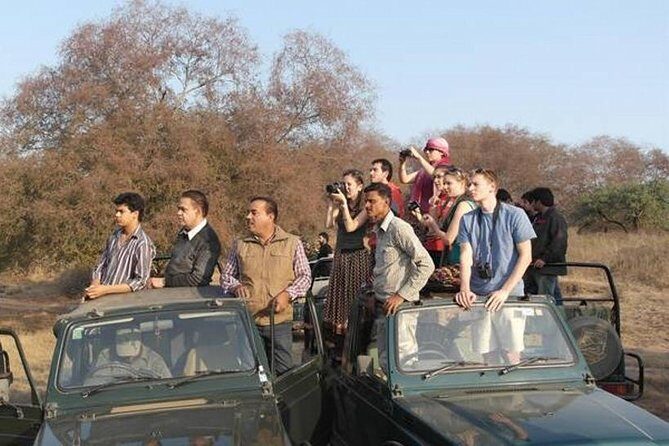
At around 1:30 p.m., you’re picked up for the 3-hour jungle safari in Canter/Gypsy format. This is one of the big value pieces of the tour: safari drive tickets are included, and there’s a nature guide on the wildlife side.
Practical tip: bring something light for shade and sun (a hat helps). Safari time can feel long in the heat, even when you’re excited.
A note on expectations: safari wildlife spotting is always a game of timing and animal movement. What you can count on is that the tour gets you into the park in a planned window with the right local support.
Day 2: Keoladeo Ghana bird sanctuary and then Agra’s Mughal side trips
Day 2 turns from big-cat country to bird-watching intensity. If you like variety, this is one of the best switches in the whole itinerary.
You can also read our reviews of more tours and experiences in Jaipur


Keoladeo Ghana National Park: rickshaw + nature guide
You go to Bharatpur Bird Sanctuary (Keoladeo Ghana National Park) early, and you experience it by rickshaw with a nature guide. That matters because a sanctuary like this is basically a living information system—if you have a guide, you spend more time noticing birds and less time guessing what you’re looking at.
What to expect: you’ll be moving at a slower pace than a car safari, which gives your eyes time to work. Bring binoculars if you have them, but even without them, a guide can help you track birds by behavior and calls.
Fatehpur Sikri: Akbar’s complex in red sandstone
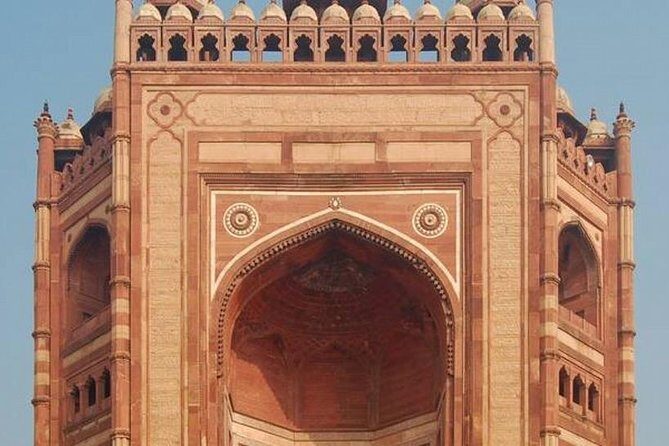
After the bird sanctuary, you head toward Agra and stop at Fatehpur Sikri, built by Mughal Emperor Akbar in honor of Salim Chishti. This stop is short—about an hour—but it’s a good “big picture” Mughal break before you reach the Taj Mahal city.
This is where you get the feeling of how Mughal architecture was designed to impress. The red sandstone setting makes it look different from white-marble monuments, and that contrast keeps the trip from feeling like one long sameness streak.
Day 3: Taj Mahal at 6:00 a.m. and then Agra Fort
Day 3 is the classic payoff day. It starts early—around 6:00 a.m.—with a visit to the Taj Mahal, scheduled for about two hours.
Taj Mahal sunrise timing: why the early slot matters
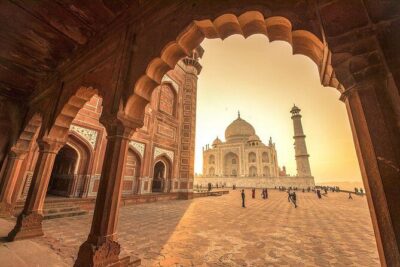
An early Taj Mahal visit can feel like cheating. The main thing you notice first is movement: fewer crowds and a calmer pace mean you can actually look at details instead of constantly sidestepping.
Even when you’ve seen pictures, you’ll likely notice scale and symmetry in a new way once you’re there. The tour doesn’t include the Taj Mahal entrance ticket, so you’ll want to budget for that before you arrive.
Practical tip: water and a light layer help. Mornings can feel cool at first, then warm fast.
Agra Fort and city touring: Mughal power in stone
After breakfast and checking out the hotel, you visit Agra Fort plus an Agra city tour segment. Agra Fort is listed for about an hour, and it’s one of the best “different texture” experiences after the Taj.
The Taj Mahal is about perfection and love symbolism. Agra Fort is more about control—fortifications, views, and the sense that this city mattered strategically. You’ll also feel the shift from pure sightseeing to a more grounded “how they lived and ruled” vibe.
Monument entrance tickets for these stops are not included, so plan your budget accordingly.
Day 4 in Delhi: Jama Masjid, Humayun’s Tomb, Lotus Temple, India Gate, Qutb Minar

Day 4 is a full-on Delhi day, and it’s smartly structured to keep travel time manageable while still hitting major sites. You’ll move through Old Delhi and then into New Delhi.
Jama Masjid: a cycle rickshaw ride for old-city views
You start with Jama Masjid. You also get a cycle rickshaw ride in the area, which is a fun way to get your bearings fast while still keeping your time focused on the key sights. Jama Masjid is among the largest mosques in India, built by Shah Jahan between 1644 and 1656.
Because entrance tickets aren’t included, you’ll want to have the monument fee piece handled in advance so you don’t lose time at the gate.
Humayun’s Tomb: a Mughal-era landmark with a calmer pace
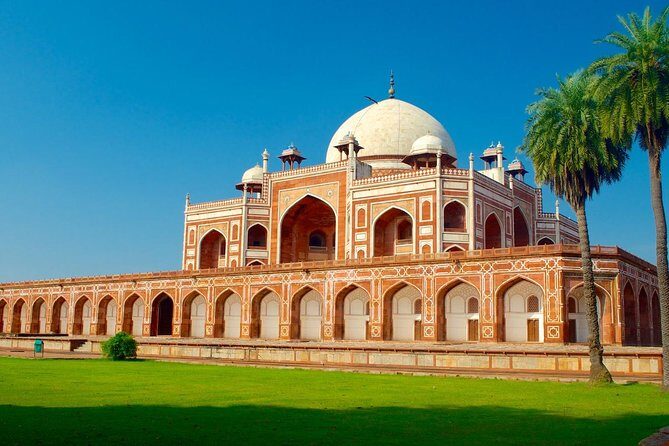
Next up is Humayun’s Tomb, about a 30-minute stop. This is a strong contrast to the Taj day. It’s also Mughal, but the energy feels different—less “one building dominating the sky” and more “complex you move through.”
Lotus Temple: a modern pause in the schedule
You then visit the Lotus Temple, scheduled for about an hour. This is a nice change of pace after Mughal stonework. Even if you don’t know the details of Baháʼí worship, the architecture gives you something visually calm to reset your eyes.
India Gate and Qutb Minar: the day’s closing energy
You wrap up with India Gate (about 30 minutes) and then Qutb Minar (about 30 minutes). Qutb Minar is part of the Qutb complex and relates to Delhi’s older fortified city area. You get a sense of how deep Delhi’s timeline goes, long before the Mughal period.
India Gate is more of a pause—a viewpoint and a walk-and-look moment—while Qutb Minar pushes you into architectural scale and age.
Safari and sanctuary logistics: what’s included, what you still need to plan
This tour handles a lot of movement for you. You get private transportation by car with an English-speaking driver, plus private English tour guiding in Agra and Delhi. In the parks, you get the right kind of support: a nature guide in Ranthambore and a nature guide for Keoladeo Ghana.
Here’s the practical trade-off: because the experience is private and supported, you’re less likely to waste time asking around for the next step. The ride schedule also helps you reach the Taj Mahal early without playing calendar Tetris.
What you still need to plan:
- Monument entrance/admission fees aren’t included. The Taj Mahal is explicitly not included, and the same is true for the other Delhi sites listed.
- You’ll want to keep a small daypack for water and sun protection.
- Safari day comfort matters. The canter/gypsy style and long sitting time can be tiring if you’re not ready for it.
Hotel and meals: value, risk, and how to reduce disappointment
The package includes 4-star category hotel accommodation plus 3 breakfasts and 1 lunch. On paper, that’s a solid value structure because hotels and meals are usually where multi-day tours add costs.
Breakfasts included is especially helpful for early mornings, since you don’t have to hunt for food before the Taj timing.
That said, the “4-star category” label is only useful if the property actually matches the promise. One past booking flagged serious issues with hotel cleanliness, hot water, and quality versus advertising. So I’d treat this as the main decision point before you commit.
My advice to you: ask for the exact hotel name and room details before you finalize. If the operator won’t clarify, you’ll want to factor that uncertainty into your expectations.
Price check: is $203.67 per person a good deal here?
At $203.67 per person for a 4-day private route, the value comes from the mix of included costs:
- Private transport with an English-speaking driver
- 4-star category hotels
- Guides (naturalist/nature support in parks and private guide in Agra/Delhi)
- Safari drive ticketing in Ranthambore
- Ranch-bird logistics like rickshaw rides with guides
The biggest reason this can still be a bargain is that entrance fees add up fast on this type of route. Even if only some major sites are ticketed, the Taj Mahal and multiple Delhi monuments can meaningfully raise a trip’s final cost if you pay out of pocket.
So the right way to judge the price:
- If you’re okay paying monument entrance fees separately, this can be a strong deal.
- If you want everything fully included, you should expect extra costs because the tour lists admissions as not included.
Also, the private nature matters. You’re not sharing a vehicle with strangers, and you get pickup/drop-off at your chosen place in Jaipur and drop-off in Delhi.
Who this tour fits best (and who should choose another style)
This is a great match if you want:
- A private itinerary from Jaipur to Delhi
- Both wildlife time (Ranthambore safari) and birding (Keoladeo Ghana)
- Early scheduling for the Taj Mahal at 6:00 a.m.
- A supported route with guides in key cities
It may feel like a lot if you want slow travel and lots of free time to roam at your own pace. Delhi and Agra are packed with multiple stops, and the tour is designed to keep momentum.
Should you book this Jaipur to Delhi wildlife and Taj Mahal tour?
If your priority is a smooth, guided way to do Ranthambore + the Taj Mahal + Delhi’s main sights in one shot, I’d say this tour is worth considering. The safari and sanctuary support, plus private transport and city guiding, are the backbone of the good value.
Before you book, do two quick checks:
- Confirm the exact hotels you’ll be staying in, not just the 4-star category label.
- Budget for monument entrance fees, since those are not included, including the Taj Mahal.
If you want a single “best of North India” plan with minimal hassle, this one is built for you. If hotel standards would make or break the trip for you, treat that as the main variable—and verify it in advance.
FAQ
FAQ
How long is the tour and what cities does it cover?
The tour runs for about 4 days. It starts in Jaipur and ends with drop-off in Delhi.
Is this tour private or shared?
It’s private. Only your group will participate.
What’s included with the hotels and meals?
You get 4-star category hotel accommodation, 3 breakfasts, and 1 lunch.
Are entrance tickets to monuments included?
No. Entrance and admission for monuments are not included.
Does the tour include the Ranthambore jungle safari?
Yes. You get a 3-hour jungle safari drive ticket (jeep/canter) and nature guide support in Ranthambore National Park.
Does the Keoladeo Ghana bird sanctuary include a guided activity?
Yes. You visit Keoladeo Ghana National Park with a nature guide by rickshaw.
What kind of transportation and guides will I have?
You’ll have private transportation by car with an English-speaking driver. You also get a private English-speaking tour guide in Agra and Delhi, plus naturalist/nature guide support in the parks.
Where do you pick up and where do you drop off?
Pickup is offered from any location in Jaipur. Drop-off is in Delhi at your desired place.
Is free cancellation available?
Yes. You can cancel up to 24 hours in advance for a full refund.