REVIEW · NEW DELHI
Old & New Delhi Tour
Book on Viator →Operated by Agra Voyage · Bookable on Viator
Old Delhi moves fast, in a good way. This tour strings together Mughal landmarks and New Delhi monuments in one day, using an air-conditioned car for the transfers and a heritage walk through older alleyways near Jama Masjid and Chandni Chowk. You also get a classic rickshaw ride that helps the market feel real, not staged.
I love the mix of experiences: big-ticket sights plus street-level moments. I also like that you’re in a private tour setup with an English-speaking chauffeur/guide and no other guests joining, which makes it easier to ask questions and set your pace. One possible drawback: the schedule is full, and Red Fort is viewed from outside, so this won’t satisfy you if you’re set on going inside.
For the price (about $28.37 per person), the value is strong because you’re getting pickup/drop-off, an AC car with driver, parking/fuel/taxes, a guide service, bottled water, and monument admissions are included if your option selects tickets. If you choose the lunch add-on, you’ll have it at a five-star hotel/restaurant; if not, plan to grab food on your own.
In This Review
- Key Highlights You’ll Actually Feel During the Day
- How This Old-and-New Delhi Day Runs in Real Life
- Jama Masjid: Mughal Power in Red Sandstone and Marble
- Chandni Chowk by Rickshaw: A Market You Understand by Moving
- Red Fort From the Outside: Worth It When Time Is Tight
- Raj Ghat and Gandhi’s Memorial: A Necessary Quiet Stop
- Humayun’s Tomb: The Mughal Bridge Toward the Taj Mahal
- Gurudwara Bangla Sahib: Community, Worship, and the Big-Complex Feel
- India Gate and the Government-District Drive: Seeing Modern Delhi’s Form
- Qutub Minar and Lotus Temple: Two Very Different Endings
- Qutub Minar
- Lotus Temple
- Your Guide Matters Here: English Explanations and Flexible Timing
- Price and Logistics: Why This Deal Can Be a Winner
- Who Should Book This (and Who Might Want Another Option)
- Should You Book This Old & New Delhi Tour?
- FAQ
- How long is the Old & New Delhi tour?
- Is this tour private, or will I share it with other people?
- Do you provide pickup and drop-off?
- Is there a rickshaw ride during the tour?
- Are monument tickets included?
- Is lunch included?
- Can I cancel for a refund?
Key Highlights You’ll Actually Feel During the Day
- Private, no-mixing experience with an English-speaking chauffeur/guide setup
- Rickshaw ride in Chandni Chowk, a quick hit of classic bazaar energy
- Heritage walk through the older lanes around Jama Masjid and Chandni Chowk
- Multiple UNESCO-style icons: Humayun’s Tomb, Qutub Minar, and more
- A balanced Old vs New Delhi route, including a government-district drive
- Guides who explain the big picture (in English), from Mughal era to modern India
How This Old-and-New Delhi Day Runs in Real Life
This is a straight, sensible plan for a limited day. You start in Old Delhi for the sights that shaped the city’s early power—then you cut across to New Delhi for the big monument statements and wide ceremonial spaces. The AC car matters here because the distances are real, and Delhi traffic can turn a slow day into a stressful one.
You’ll also notice how the day is designed for variety. Old Delhi isn’t only about stopping at one monument; it’s also about walking the alley system behind the main roads. That’s where you get the layered feel of the city: mosque area life, market life, and historic walls all sitting close together.
One more practical point: the tour includes car, driver, parking, fuel, taxes, and bottled water, so you’re not constantly making small decisions like how to get between stops. It’s easier to enjoy the sights when you’re not juggling logistics every hour.
You can also read our reviews of more tours and experiences in New Delhi.



Jama Masjid: Mughal Power in Red Sandstone and Marble

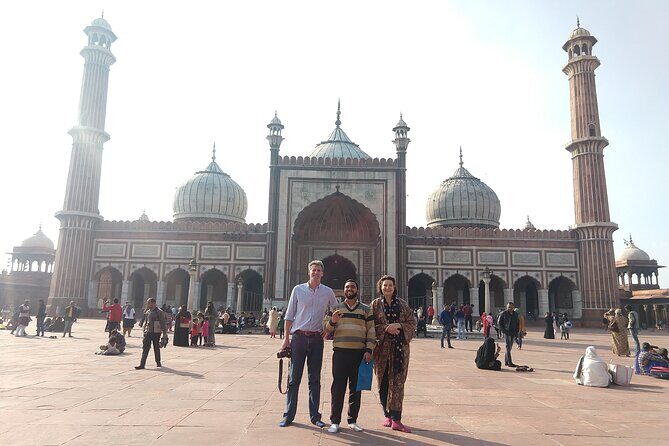
Jama Masjid is one of India’s largest mosques, built in 1656 by the Mughal emperor Shah Jahan. This stop is worth your time because it’s not just a photo target—it gives you scale. When you stand around a massive religious complex like this, you understand how important it was to the city’s daily rhythm.
What you’ll like here is the architectural style described in the tour details: the mix of red sandstone and marble work. That color contrast is easy to spot, and it makes the mosque feel crisp even if you’re visiting in busy daytime conditions.
Practical note: the tour states admission ticket is included for this stop. That’s good for planning. Also, expect you’ll spend about 30 minutes on site—enough time to see the main areas without turning it into a half-day commitment.
Chandni Chowk by Rickshaw: A Market You Understand by Moving
Chandni Chowk is where Delhi shows you its everyday face. Here you do the centerpiece activity: a rickshaw ride through the bazaar area. You’ll get views between storefronts and street life that you simply can’t copy from a car window.
The tour also includes time at Chandni Chowk (about 1 hour) and positions this as a typical bazaar experience. That matters because the market is the point, not just the scenery. You’ll see how people shop, how streets connect, and how dense the city feels right at street level.
One reason this stop works so well for many people: it’s paced. You’re not stuck walking the entire time. The rickshaw ride gives you motion, and then you have time to look around after—so you can balance curiosity with not getting exhausted.
Admission ticket is listed as free for this part, which is another small value plus baked in.
Red Fort From the Outside: Worth It When Time Is Tight
Red Fort is tied to Shah Jahan again, and it was the home for the Mughal royal family. In this tour, you don’t go inside; you visit from outside.
That can be a deal or a limitation depending on what you want:
- If you mainly want the iconic exterior and the sense of place, the outside view is still satisfying.
- If you want interior halls and deeper museum-style exploration, this tour format won’t replace that.
The advantage is time. Seeing the fort from outside keeps the day moving so you can still hit the major stops later—especially the Gandhi memorial and the Mughal tomb complex that follow.
Raj Ghat and Gandhi’s Memorial: A Necessary Quiet Stop

After the market and fort atmosphere, Raj Ghat gives you a reset. This is the crematorium and memorial of Mahatma Gandhi, often described as the Father of the Nation in the tour notes.
The tour time here is about 30 minutes, which is ideal in a packed day like this. You’ll have enough time to slow down, read the memorial space, and absorb why this spot is important without feeling rushed for the next transfer.
If you like tours that give you both spectacle and reflection, Raj Ghat is one of the stronger parts of this route. It’s also a useful break from nonstop sightseeing and helps you avoid that end-of-day fatigue where everything starts blending together.



Humayun’s Tomb: The Mughal Bridge Toward the Taj Mahal
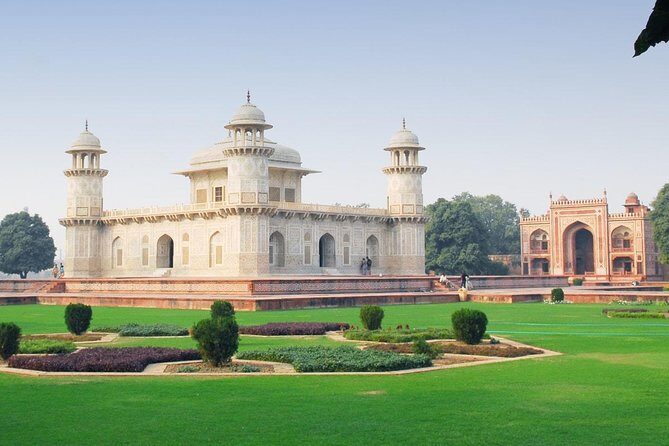
Humayun’s Tomb is the tomb of the second Mughal emperor Humayun, built in 1556 by his wife. The tour description notes it as a precursor to the Taj Mahal, and you can see why people use that comparison. Even if you’re only here for about 1 hour, it helps you connect styles across centuries.
This stop is also a good example of how the tour balances time. You’re not spending all day on one monument, but you’re getting meaningful exposure. Admission ticket is included here, which helps keep the day smooth.
One smart way to enjoy this is to take a few minutes to look at how the tomb sits in its setting, then return for details. On a tight timeline, that two-pass approach helps you see both the big view and the finer architectural choices.
Gurudwara Bangla Sahib: Community, Worship, and the Big-Complex Feel
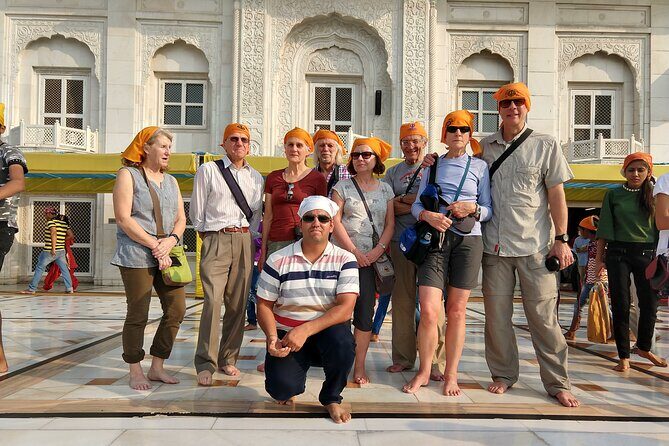
Gurudwara Bangla Sahib is associated with the ninth Sikh Guru, Guru Har Krishan. The complex is described as large and includes a communal kitchen and a hall for worship, plus additional areas within the site.
This is a stop that often lands emotionally for many visitors, and the tour notes point to the scale and structure of the complex. When a place is designed for communal life, it feels less like a single building and more like a living system.
You’ll spend about 1 hour here and the admission is included. That’s enough time to understand the layout and experience the space without rushing through it. Also, because this stop is spiritual and communal, it’s one of the best moments in the day to practice calm observation rather than check-list behavior.
India Gate and the Government-District Drive: Seeing Modern Delhi’s Form
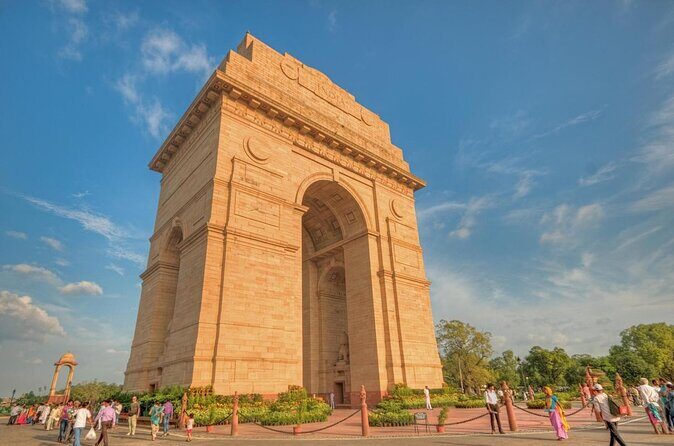
India Gate is a memorial for 82,000 Indian and British soldiers who died during the First World War. In this tour, it’s a shorter stop (about 15 minutes), which makes sense because you’re also doing a drive past major government buildings.
The route includes passing the President House and other buildings such as the Parliament house, the Ministry of External Affairs, and the Ministry of Internal Affairs. Even if you’re not going inside, the drive gives you a sense of New Delhi’s planned spaces and formal layout.
This part is valuable for a simple reason: many Old Delhi days feel like they end at old walls. This route shows you the city’s modern “center of gravity,” even if only from the road.
Admission ticket is included for India Gate, though your time here is brief. Treat it like a quick historical waypoint before the monuments continue.
Qutub Minar and Lotus Temple: Two Very Different Endings
Your final stretch is where the day shifts again—away from memorials and drives and into two iconic landmarks.
Qutub Minar
Qutub Minar is described as the longest tower in India and was built in the early 13th century. You’ll spend about 1 hour here, with admission included.
Why this works at the end: tall monuments are easiest to appreciate when you’ve already seen the city’s main clusters. By now you’ll recognize patterns in design and planning, and you’ll be better at spotting what makes Qutub Minar different.
Lotus Temple
Then you get a big stylistic change: the Lotus Temple, also known as the Bahai Temple, designed in the shape of a lotus flower. The tour allots about 30 minutes, with admission included.
This shorter time is fine because the structure’s shape does most of the work for you. If you’re the type who likes a calm finish, the Lotus Temple is often a good counterweight to the earlier busy bazaar energy.
Your Guide Matters Here: English Explanations and Flexible Timing
One of the biggest strengths of this experience is the way the day is guided. In examples from past tours, guides such as Bhanuprtap Singh, Shivam, and Kaleem have led the experience and were praised for clear, friendly English and for making both the historical and modern sides easier to follow.
The practical value is huge. When a guide can answer questions—like how India and Pakistan connect historically, for example—you stop feeling like you’re just collecting facts. You start understanding why the city looks the way it does.
You’ll also benefit from flexibility. The tour format includes time management, and some reviews highlight that the guide adjusted when needed. That’s the difference between a rigid “check the boxes” day and a “see what matters to you” day.
Price and Logistics: Why This Deal Can Be a Winner
At $28.37 per person for a roughly 9-hour day, this isn’t just a budget outing. It’s built around included essentials: pickup and drop-off in an AC car, parking/fuel/taxes, bottled water, guide service, and admissions for included stops (where the option applies).
Two things to look for in the value math:
- Monument tickets inclusion is listed as included if that option is selected. So, double-check what you’re choosing before you go.
- Lunch is included only if you select that option. If you do select it, it’s listed as lunch in a five-star hotel/restaurant. If you don’t, you should plan to buy your own meal near one of the stops.
Also, the tour provides a mobile ticket, which makes the day easier—no printing stress.
Finally, because this is a private tour/activity with only your group participating, the per-person price can feel especially fair if you’re traveling as a small group. You’re paying for transport plus a guide, not sharing that cost with strangers.
Who Should Book This (and Who Might Want Another Option)
This is ideal if you:
- Have limited time and want both Old Delhi and New Delhi in one day
- Like a mix of major monuments and a hands-on bazaar moment (rickshaw ride)
- Prefer a private setup where you can ask questions without competing for the guide’s attention
- Appreciate English explanations that connect historic sites to modern city life
You might consider a different style of tour if you:
- Want Red Fort interior access, not outside viewing
- Prefer a slower day with more time at fewer stops (this route is scheduled and active)
Should You Book This Old & New Delhi Tour?
If your goal is a first “Delhi snapshot” that hits the biggest symbols of both eras, I’d book it. The combination of Jama Masjid, a Chandni Chowk rickshaw ride, Gandhi at Raj Ghat, and the later monument finishers like Qutub Minar and the Lotus Temple gives you a day that feels complete.
Just go in with the right expectations: this is a packed route with a focus on variety, not a deep, slow study of one single site. If you can handle that pace, you’ll likely leave with a strong sense of how Delhi works—streets, faith, empires, and government all in one orbit.
FAQ
How long is the Old & New Delhi tour?
The duration is listed as approximately 9 hours.
Is this tour private, or will I share it with other people?
It’s described as a private tour/activity where only your group will participate.
Do you provide pickup and drop-off?
Yes. Pickup and drop-off are included, along with an air-conditioned car.
Is there a rickshaw ride during the tour?
Yes. You get a rickshaw ride in Chandni Chowk.
Are monument tickets included?
The tour notes that monument tickets are included if that option is selected. Admission ticket details are also listed for specific stops.
Is lunch included?
Lunch is included only if you select the option. The notes say lunch at a five-star hotel/restaurant.
Can I cancel for a refund?
Free cancellation is offered. You can cancel up to 24 hours in advance for a full refund.