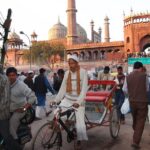
Crafts lovers, this one’s for you. The National Crafts Museum is built like a village, where stone and wood carving, plus folk and tribal paintings, all sit side by side in one place. I love the craftsmanship details you can spot up close (doors, windows, lintels, posts), and I also like the built-in craft demonstration program that puts makers in front of you. One drawback to plan for: a local guide isn’t included, so you’ll get the most out of it if you come ready with a few questions.
You’ll start early with pickup from your Delhi hotel and head to the museum for about two hours of exploring and demos. Then you’ll finish with lunch at a well-known local restaurant, which is a smart move in a city where timing can get messy. Dress is smart casual, and most people can participate, but if you’re not into visual arts or traditional objects, the value may feel more niche than you expect.
In This Review
- Quick High-Value Highlights
- Entering The National Crafts Museum Like It’s a Village
- Stone and Wood Carving Details You Can Actually See
- Folk and Tribal Paintings in the Passageways
- Crafts Demonstration Program: Seeing Makers, Not Just Objects
- Hotel Pickup and Timing: A Smooth 3 to 6 Hours in Delhi
- Lunch at a Local Restaurant: The Right Way to End
- Price and Value: Is $79 a Fair Deal?
- Who This Tour Suits (and Who Might Skip It)
- A Note on Support: Clear Communication Helps
- Should You Book the National Crafts Museum with Lunch?
- FAQ
- FAQ
- What time does the tour start?
- How long is the experience?
- Where does the tour take place?
- Is hotel pickup included?
- What’s included in the price?
- What is not included?
- Is lunch included, and do I pay separately for drinks?
- What should I wear?
- Can I cancel for a full refund?
- Is it a private group?
Quick High-Value Highlights
- Village-style museum layout: incompatible crafts are displayed together, so you see contrasts instantly
- Close-up carving focus: stone and wood details on doors, windows, lintels, and posts
- Folk and tribal painting corridors: artworks spread across passage walls for an “on the way” viewing experience
- Craft demonstration program: you can watch a rotating set of about 50 craft persons per month from across India
- Lunch included at a local restaurant: you don’t have to figure out food logistics after the museum
Entering The National Crafts Museum Like It’s a Village
The biggest thing I like about this museum is the idea behind it. Instead of treating crafts like separate categories in separate rooms, the whole building is conceived around the feel of an Indian village. That means you don’t just look at objects. You experience how crafts naturally “live together” in one space.
As you move through, you’ll notice how the architecture supports the art. The museum isn’t just white walls and glass cases. It has a real built environment, including visible stone and wood work on structural parts like doors and window frames. That helps you understand why crafts matter—these aren’t random souvenirs. They are design language.
What you should watch for: slow down at the edges. Many people rush straight to paintings or major exhibits. But the museum’s craft story shows up repeatedly in what surrounds you: the carvings, the joinery, and the way materials are treated.
You can also read our reviews of more museum experiences in New Delhi

Stone and Wood Carving Details You Can Actually See
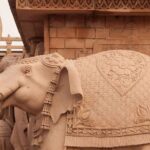
This is where the visit gets satisfying. The museum is known for a diverse, rare range of stone and wood carvings on the building itself—especially around doors, windows, lintels, and posts. It’s the kind of display that rewards close attention, because the craftsmanship is physical and architectural.
Here’s what I’d do if you want the most out of the carving areas:
- Look for repeated motifs. Same shapes or patterns across different materials usually means a tradition or regional style is being echoed.
- Check texture, not just shape. Stone carvings and wood carvings can feel totally different even when the design looks similar.
- Scan vertically and horizontally. Lintels and posts often get skipped, but they’re perfect for spotting how patterns wrap and frame openings.
Also, keep your eyes open in the passages. The museum uses those walking spaces to keep the craft viewing continuous, not stop-start.
Folk and Tribal Paintings in the Passageways
Another strong point is the way folk and tribal paintings are placed. Instead of confining them to a single gallery, the paintings are spread out across wall canvas in the passages. That matters because you’re not waiting to “start the art part.” You’re surrounded while you move.
If you like art that feels connected to everyday life, this placement is a good match. Folk and tribal styles can be visually busy, and seeing them in transit through the building helps your brain process them as part of a larger whole.
Practical tip: take a quick pass first to get the overall vibe, then circle back for the pieces that catch your eye. With painting displays in passageways, you’re naturally walking past a lot. A second look makes the difference.
Crafts Demonstration Program: Seeing Makers, Not Just Objects
This is the standout activity. The museum has a participatory craft demonstration program, where you can see around 50 craft persons every month coming from different parts of India. That “every month” detail is important. It means the specific demonstrations can vary depending on when you go, so your experience may feel different from someone else’s.
I like this format because it changes your role from spectator to question-asker. Even if the demos are short, you usually get context that you don’t get from display-only viewing: what tools are used, how materials behave, and what artisans focus on.
What to bring mentally: curiosity. Come ready to ask simple questions like what the craft is called, how long it takes, or which part is most difficult. And if the demo is more visual than talk-heavy, watch for process cues—hands, tools, and finishing steps tell the story.
Also, because this is a group experience with a set window, you may not have hours to linger in every section. The demo helps you prioritize your time because it’s the most interactive element in the schedule.
Hotel Pickup and Timing: A Smooth 3 to 6 Hours in Delhi
The day starts with pickup from your hotel in Delhi. The tour begins at 8:00 am, and the overall duration is listed as 3 to 6 hours (approx.). That flexible time window is common for museum-and-lunch tours in busy cities, but it does mean your pace can vary a bit based on timing and how long you spend inside.
Here’s how I’d think about your schedule:
- Give yourself time to slow down at carvings and paintings. Those details need a few extra minutes each.
- Don’t try to “check everything.” With craft museums, you’ll enjoy the visit more if you focus on your favorite themes and go deeper on those.
- Plan to end the museum portion with room for lunch. The lunch stop is part of the experience, not an afterthought.
One more practical note: this is a private tour/activity where only your group participates. That usually feels calmer than large group bus tours, and it gives you better control over questions and pacing.
You can also read our reviews of more tours and experiences in New Delhi



Lunch at a Local Restaurant: The Right Way to End
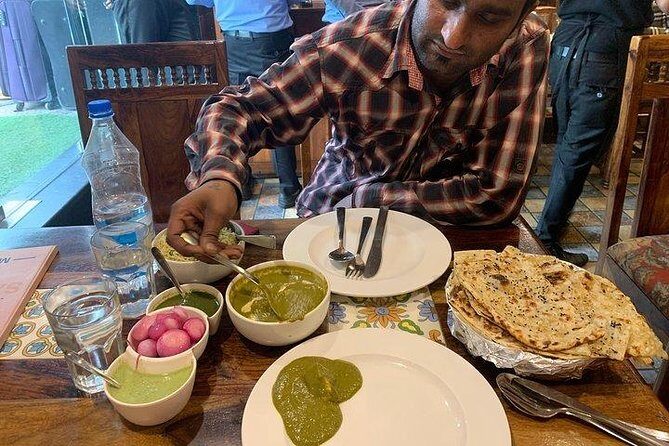
After the museum, you’ll wrap up with lunch at a famous local restaurant. The tour doesn’t list the restaurant name here, but it does include lunch as part of the overall experience flow.
Why this is good value: in Delhi, figuring out where to eat can eat up your mental energy. You’re already spending time seeing crafts. Having a meal built into the plan means you can focus on the main event and not on transportation or menu decisions after you’re tired.
You should know what’s not included: drinks aren’t part of the package. Plan to pay separately for any beverages you want with your meal.
If you’re the kind of traveler who likes a full reset after a museum visit, this ending works well. You’ll have a clear stop to rest and digest before heading back.
Price and Value: Is $79 a Fair Deal?
At $79 per person, you’re paying for a set experience in New Delhi that includes several helpful items: pickup and transport by private vehicle, bottled water, and admission ticket included. You also get a mobile ticket, which is one less thing to manage on the day.
So where does the value come from?
- The private vehicle and pickup can save time and hassle, especially if you don’t want to fight transit logistics early in the morning.
- Admission included means the museum cost isn’t a surprise add-on.
- Bottled water is a small thing, but it’s a real comfort when you’re walking and looking closely.
What’s not included matters too. A local guide isn’t included, which can be a tradeoff. If you love museums and want deeper explanations, you might want to rely on the museum staff during your visit or bring your own questions. If you mostly want a comfortable ride + entry + a good overview, you’ll likely find the structure easy to enjoy.
Bottom line from a value lens: you’re not just buying tickets. You’re buying the ability to do the museum without wrangling logistics, plus the meal at the end.
Who This Tour Suits (and Who Might Skip It)
This works best for:
- You if you’re interested in Indian crafts, especially carving and traditional painting
- You if you like interactive elements like watching artisans demonstrate their work
- You if you want a structured half-day that includes museum time and food without planning
It may not be ideal if:
- You’re mainly in Delhi for landmark sightseeing and want minimal museum time
- You prefer fully guided commentary with named experts throughout (a local guide isn’t included)
If you fall somewhere in the middle, you can still enjoy it by treating the experience as a craft-focused walk-through with demos as your “bonus.”
A Note on Support: Clear Communication Helps
One small but helpful detail shows up in the follow-up you may receive after booking. I’ve seen correspondence signed by Jai Singh at Discover Activities. That kind of quick, polite communication can make a difference when you’re trying to coordinate plans in a foreign city.
Even so, don’t treat the support message as a substitute for asking questions on the day. If you want background on what you’re seeing, keep a short list of questions and use the museum environment to get answers.
Should You Book the National Crafts Museum with Lunch?
If you want a half-day in Delhi that feels practical and genuinely craft-focused, I’d say yes. The museum setting—village-style design plus visible stone and wood carving—gives you a lot to look at even if you don’t read every label. And the crafts demonstration program adds movement and real human process, not just objects behind glass. Add in pickup and lunch, and it’s a solid value package for people who don’t want to plan meals and transport after a museum morning.
Skip it only if you’re not interested in traditional crafts, or if you strongly prefer a guided narrative the whole time. With no local guide included, your enjoyment will depend on whether you’re happy exploring and asking questions on your own.
FAQ
FAQ
What time does the tour start?
The start time is 8:00 am.
How long is the experience?
It runs about 3 to 6 hours.
Where does the tour take place?
It’s in New Delhi, India, at the National Crafts Museum, followed by lunch at a local restaurant.
Is hotel pickup included?
Yes. Pickup is offered from your Delhi hotel, and transport is by private vehicle.
What’s included in the price?
The price includes bottled water, transport by private vehicle, and the admission ticket. Lunch is also part of the experience.
What is not included?
Drinks and a local guide are not included.
Is lunch included, and do I pay separately for drinks?
Lunch is included as part of the tour, but drinks are not included, so you should expect to pay for them separately.
What should I wear?
The dress code is smart casual.
Can I cancel for a full refund?
Yes, you can cancel up to 24 hours in advance for a full refund.
Is it a private group?
Yes. It’s described as a private tour/activity, meaning only your group participates.