REVIEW · NEW DELHI
Majestic Golden Triangle With Varanasi
Book on Viator →Operated by Fragrance of Taj · Bookable on Viator
Golden Triangle plus Varanasi is a lot of India. This package strings together Delhi, Agra, Jaipur, and Varanasi in one efficient circuit, so you see Mughal power, Rajput flair, and the river-soaked spiritual side of north India without spending weeks planning.
You’ll start in Delhi’s Old City, then shift to Jaipur’s palace views, roll into Agra for the big-ticket monuments, and finish with Varanasi and its sacred river rhythms.
I like two things most. First, you get a professional tour guide and the kind of hands-on help that keeps your pickup and handoffs moving. Second, the included A/C overnight train from Agra to Varanasi reduces friction and keeps the trip pacing realistic.
The main drawback: it’s a fast itinerary. You also need to budget extra because monument entrance fees and food are not included, and that can add up on a day full of major sites.
In This Review
- Key highlights to know before you go
- Price and logistics: what your $380 really buys
- Day 1 in Delhi: arrival day and getting oriented
- Red Fort, Jama Masjid, Chandni Chowk: Old Delhi’s high-voltage morning
- Red Fort (Lal Qila)
- Jama Masjid
- Chandni Chowk (bazaars)
- India Gate
- Humayun’s Tomb, Lotus Temple, Qutub Minar: Delhi’s Mughal-to-modern contrast
- Humayun’s Tomb
- Lotus Temple
- Qutub Minar
- Lunch break: Gulati Restaurant (Pandara Road)
- The drive to Jaipur: a half-day move with a tea break
- Hawa Mahal to Amber Fort: Jaipur’s signature sights in order
- Hawa Mahal (Palace of Breeze)
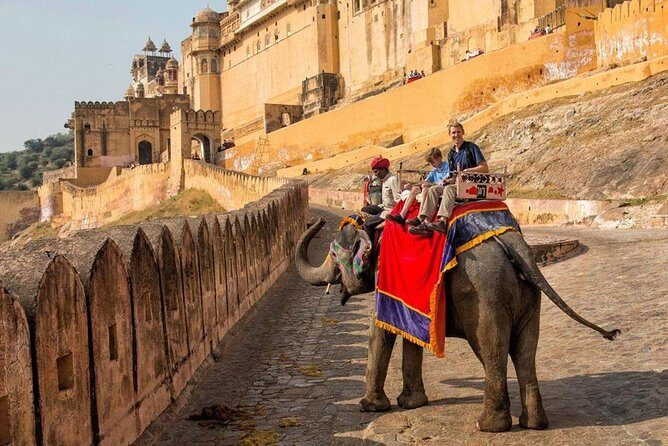
- Amber Fort
- Jal Mahal
- Lunch: Pink City Cafe & Restaurant
- City Palace, Jantar Mantar, Bapu Bazaar: history and everyday Jaipur
- City Palace
- Jantar Mantar
- Bapu Bazaar
- Road trip via Abhaneri and Fatehpur Sikri to Agra
- Abhaneri: Chand Baori stepwell
- Fatehpur Sikri: Panch Mahal area
- Arrive in Agra
- Taj Mahal day: plus Agra Fort, Baby Taj, and Mehtab Bagh
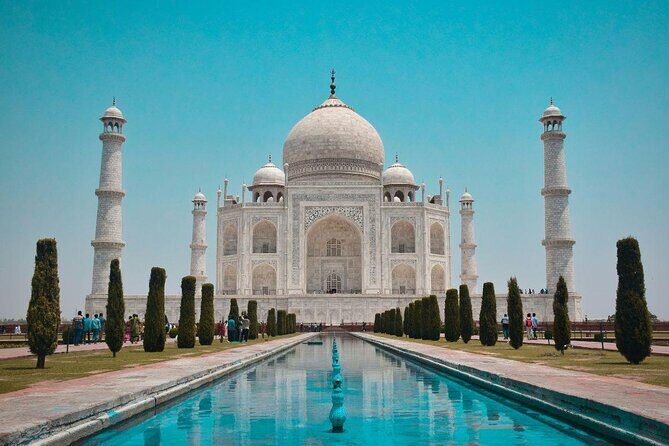
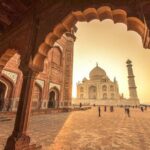
- Taj Mahal
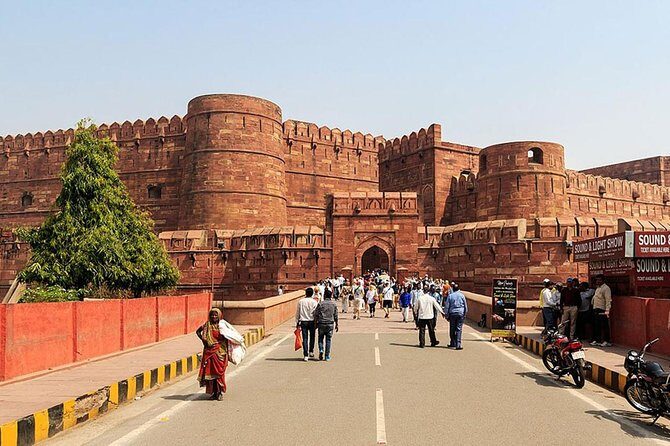
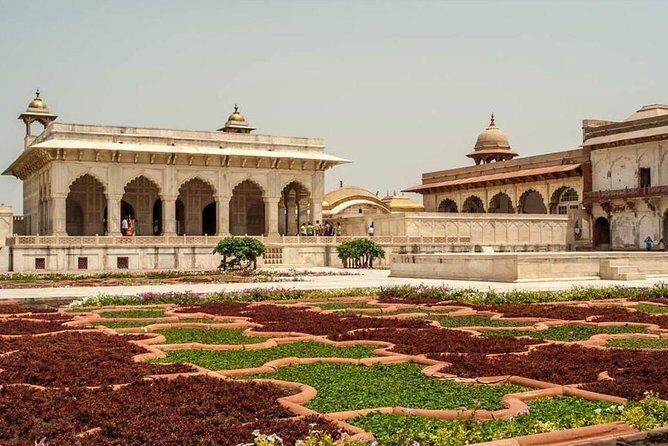
- Agra Fort
- Itmad-ud-Daula (Baby Taj)
- Lunch: Sun Barbecue
- Mehtab Bagh
- Overnight A/C train to Varanasi: shifting gears while you sleep
- Sarnath and a Ganges boat ride: the calmer spiritual chapter
- Sarnath excursion
- Ganges boat ride
- Departure day into the city’s edge
- What you’ll likely spend extra on (so there are no surprises)
- Who this Golden Triangle with Varanasi tour is best for
- Should you book Majestic Golden Triangle With Varanasi?
- FAQ
- Is pickup offered on this tour?
- Which cities does this Golden Triangle with Varanasi trip include?
- How long is the tour?
- What’s included in the price?
- Are monument entrance fees included?
- Are meals included?
- What is the cancellation window?
Key highlights to know before you go
- Big sights in a smart order: Delhi to Jaipur to Agra, then Varanasi, so you’re not backtracking.
- Overnight A/C train shift: You trade a long day of driving for a night train from Agra to Varanasi.
- Private-vehicle comfort: You’ll move by transport arranged for your group, not public transit hopscotch.
- Old Delhi street energy: Chandni Chowk is built for walking, bargaining, and people-watching.
- A spiritual end chapter: Sarnath and a Ganges boat ride give you a different feel than forts and palaces.
- Some easy wins are marked free: A few stops are listed as admission free in the schedule, but entrance fees overall aren’t included.
Price and logistics: what your $380 really buys
At about $380 per person for roughly 8 days, this is the kind of package that can be good value if you like structure. You’re paying for a guide, comfortable transport, and the heavy lifting of getting you between cities—plus 6 nights in 3-star hotels.
Here’s what’s included that matters day to day:
- A professional tour guide
- Transport by private vehicle
- 6 nights accommodation in 3-star hotels
- A/C overnight train from Agra to Varanasi
- Free Wi‑Fi and water bottles
- Pickup offered, and a mobile ticket
What to budget separately:
- Food and drinks
- Monument entrance fees
In real terms, that means you can expect to pay your way into the big monuments (and you’ll also want to plan meals so you don’t end up hunting last-minute). It’s not a deal-breaker, it’s just how this package is set up.
You can also read our reviews of more tours and experiences in New Delhi.



Day 1 in Delhi: arrival day and getting oriented
Your trip begins with arrival in New Delhi, then transfer to the hotel. You’re welcomed in a traditional style, which is a nice soft landing after the airport shuffle.
This matters because Delhi can feel intense fast: traffic, noise, and lots of movement. Having that first guided handoff means you can start your sightseeing day with less stress.
Practical tip: keep your first morning light. You’re about to stack forts, mosques, and temples in quick succession.
Red Fort, Jama Masjid, Chandni Chowk: Old Delhi’s high-voltage morning
Day 2 is your full-day Old Delhi circuit, and it’s a strong one.
Red Fort (Lal Qila)
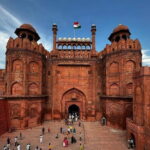
The Red Fort is one of the most recognizable symbols of Mughal rule. You’ll be there for about an hour of visit time, and entry is not included, so plan on paying that yourself if you want to go inside.
Why I think it’s worth it: it gives you the political backbone behind the rest of the Mughal architecture you’ll see later in the week.
Jama Masjid
Next comes Jama Masjid, built by Mughal Emperor Shah Jahan (1650 to 1656). It’s a huge, serious mosque, and you’ll have about an hour.
Consideration: religious sites often have dress and behavior expectations. Carry something you can cover with if needed, and be ready to slow down and follow guidance.


Chandni Chowk (bazaars)
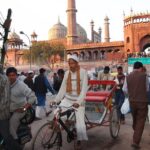
Then you shift into Chandni Chowk, the specialty bazaars area that’s been around since the 17th century. This part is about getting your bearings on foot—narrow lanes, old-market energy, and plenty of chances to see daily life.
The schedule marks admission free here. The “cost” is more about time and attention: it can be easy to lose track of where you are while you browse.
India Gate
You’ll also stop at India Gate, a war memorial near the ceremonial axis of New Delhi. It’s a shorter stop (about 30 minutes) and free in the schedule, which makes it a nice reset before the later monuments.
Humayun’s Tomb, Lotus Temple, Qutub Minar: Delhi’s Mughal-to-modern contrast
Your Delhi day doesn’t just stick to Old Delhi. You get a second wave of sights that show different eras.
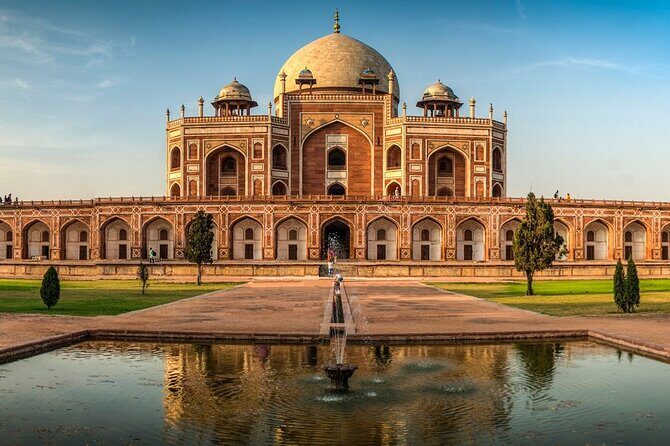
Humayun’s Tomb
Humayun’s Tomb is the Mughal answer to “how do you build grandeur with stone?” It’s about an hour, and entrance is not included.
If you like architecture, this is one of those stops that makes the rest of your Mughal sights in Agra feel more connected.
Lotus Temple
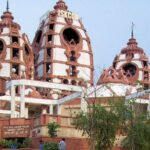
Then you hit the Lotus Temple, a Bahá’í House of Worship famous for its flowerlike shape. The schedule marks it as free, and it’s a 1-hour stop.
I like this pivot because it breaks the pattern of only seeing imperial monuments. It’s calmer. It’s also a good place to take a breath after busier markets.
Qutub Minar
Last on the Delhi sightseeing list is Qutub Minar at the Qutb complex. It’s about an hour, and entry is not included.
This is where Delhi can quietly remind you it’s older than its most famous eras. You don’t need a history lecture—just let the scale hit you.
Lunch break: Gulati Restaurant (Pandara Road)
You’ll have a lunch break at Gulati Restaurant on Pandara Road. The buffet concept is built into the plan, but it’s not included in the tour cost, so treat lunch as your own budget line.
The drive to Jaipur: a half-day move with a tea break
Day 3 is mostly travel. After breakfast, you check out and drive to Jaipur (about 4 hours). You’ll also get a tea break along the way, then arrive for hotel check-in.
This is a good pacing choice. Jaipur doesn’t feel like a “do everything immediately” city, and arriving with time to settle helps you enjoy the next day’s major sights.
Hawa Mahal to Amber Fort: Jaipur’s signature sights in order
Jaipur Day 4 is built around the city’s most visual landmarks.
Hawa Mahal (Palace of Breeze)
You start with Hawa Mahal, the iconic facade in red and pink sandstone. The schedule marks it as admission free and keeps it shorter (about 30 minutes).
Even if you’ve only seen photos, it’s impressive in person. The real payoff is how it prepares you for the rest of Jaipur’s palace-and-courtyard vibe.
Amber Fort
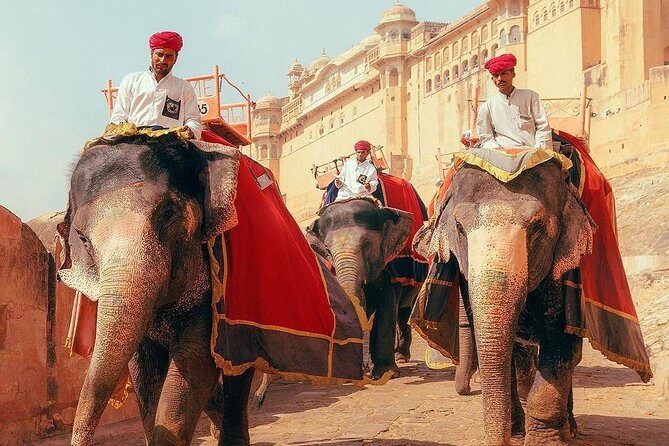
Next is Amber Fort in Amer, about 2 hours. Entrance is not included.
This is one of those places where you’ll understand why forts mattered in Rajasthan. It’s a whole compound of power: views, defenses, and palace rooms in one sweep.
Practical consideration: it’s a lot to take in, and you’ll be walking. Comfortable shoes are not optional.
Jal Mahal
Then there’s Jal Mahal, the palace in the middle of Man Sagar Lake. Admission is listed as free, and the stop is about 30 minutes.
It’s more of a sight-and-photo pause than a long museum stop. Still, it’s a lovely contrast between fort stone and water geometry.
Lunch: Pink City Cafe & Restaurant
Your day includes a lunch slot at Pink City cafe & Restaurant. It’s a buffet lunch type stop, but it’s not included in the tour price.
City Palace, Jantar Mantar, Bapu Bazaar: history and everyday Jaipur
After the forts and facade shots, you get into deeper Jaipur culture.
City Palace
City Palace is about an hour. Entrance is not included.
This is where you start connecting Jaipur’s architecture to how rulers lived and staged power. You don’t need to be a royal-studies person to enjoy it—just watch how the spaces are arranged.
Jantar Mantar
Then comes Jantar Mantar, the Jaipur Observatory built in 1728 by Maharaja Sawai Jai Singh II. It’s marked as admission not included and about an hour.
If you like gadgets and measurement tools, you’ll enjoy this. It’s science, but it also reads like public art.
Bapu Bazaar
To round out the day, you stop at Bapu Bazaar on MI Road, a long-running shopping destination. The schedule marks it as free and gives you about an hour.
This is a good place for last-minute shopping because you’re not rushed by a fixed museum clock. Still, prices and bargaining vary, so go in calm and don’t assume everything is a bargain.
Road trip via Abhaneri and Fatehpur Sikri to Agra
Day 5 is travel with stops, so you don’t waste the hours.
Abhaneri: Chand Baori stepwell
You’ll pass through Abhaneri for Chand Baori, a highly photogenic stepwell with triangular symmetry. Entrance is not included.
Why it works in a day like this: it’s a visual break from palaces and forts. And the geometric layout gives you something interesting to focus on when you’re tired from driving.
Fatehpur Sikri: Panch Mahal area
Then you visit Fatehpur Sikri and the Panch Mahal area. Entrance is not included and the stop is about 2 hours.
This area is known for its clustered red sandstone buildings and the sense of being in a Mughal world. It can feel like a whole city frozen into stone.
Arrive in Agra
After these stops, you check into your Agra hotel. Agra is your base for the big Taj-centered day that comes next.
Taj Mahal day: plus Agra Fort, Baby Taj, and Mehtab Bagh
Day 6 is the classic Agra lineup, built for maximum famous-site impact.
Taj Mahal
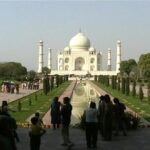
You visit Taj Mahal with a scheduled guide and photo help at the best spots. The visit time is about 2 hours, and entrance is not included.
Even if you’ve stared at it for years through photos, it still has that effect: the whole place is crafted for sightlines. Plan to give yourself time to look up and step back to see the overall shape.
Agra Fort
Next is Agra Fort, about an hour. Entrance is not included.
Agra Fort helps you understand the city’s power system—who controlled what, and how defenses shaped daily life.
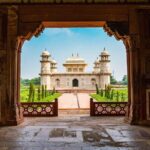
Itmad-ud-Daula (Baby Taj)
Then comes Itmad-ud-Daula, often called the Baby Taj. It’s about an hour, and entrance is not included.
This is a quieter stop that can feel more intimate than the big headline monuments. It’s a great place to slow down and notice details.
Lunch: Sun Barbecue
There’s a lunch break at Sun Barbecue with a buffet lunch format. Entrance is not included, but again food and drinks are on your own budget for the day.
Mehtab Bagh
Finally, you visit Mehtab Bagh, a charbagh garden complex north of the Taj Mahal area. Entrance is not included, and the stop is about an hour.
This is a smart add-on because it gives you another angle and a more garden-like pace to close the day.
Overnight A/C train to Varanasi: shifting gears while you sleep
Day 7 starts with an early rhythm. Your train reaches Varanasi at around 7am, and a company representative picks you up and drops you at your pre-booked hotel.
You’ll also have afternoon time for local sightseeing (the plan lists a short local sightseeing slot). After that, there’s an excursion to Sarnath after lunch.
The real value here is the logistics. By using the included overnight A/C train from Agra to Varanasi, you avoid the stressful alternatives that often eat up your time and energy.
Sarnath and a Ganges boat ride: the calmer spiritual chapter
Varanasi is not like Delhi or Jaipur. It’s slower, more river-driven, and more about the lived moment than the monument.
Sarnath excursion
You’ll spend about 2 hours at Sarnath. This is the place where Buddha delivered his first sermon to disciples, and the sights include Buddha temples and the Dhamekha stupa area.
Entrance tickets here are not included. Still, the big payoff is context: you’ll see the spiritual setting that shaped centuries of practice.
Ganges boat ride
Then you have an early morning Ganges boat ride, described as mystical and spiritual as you watch people offering water and devotees taking a holy dip.
This is one of the few times in the whole trip when the day feels like it’s built around reflection instead of checkpoints. It’s also a strong “Varanasi only” memory.
Departure day into the city’s edge
The package ends with drop-off at Varanasi airport or train station (plus the itinerary’s end point in the city). That’s the clean finish: you’re not left trying to organize your own last leg.
What you’ll likely spend extra on (so there are no surprises)
Because food and monument entrance fees are not included, it helps to plan a simple extra budget.
Typical add-ons for this kind of circuit:
- Monument tickets for major sites like Red Fort, Jama Masjid, Humayun’s Tomb, Qutub Minar, Amber Fort, City Palace, Jantar Mantar, Taj Mahal, Agra Fort, Itmad-ud-Daula, and Mehtab Bagh.
- Meals and drinks each day (the schedule includes specific lunch spots, but they’re not covered).
- Any optional tips for guides/drivers (not listed, so treat as your own call).
If you like “pre-planned” travel, this still works. Just don’t assume the sticker price is the all-in number.
Who this Golden Triangle with Varanasi tour is best for
This is a strong fit if:
- You want a structured highlights plan across Delhi, Jaipur, Agra, and Varanasi.
- You prefer a professional guide and private vehicle comfort instead of constant logistics.
- You like packing famous sights into a single trip so you can return home with a complete mental map of north India.
It’s less ideal if:
- You hate tight schedules and want long museum-style pacing.
- You want food and entrance fees fully covered in the price.
- You’re sensitive to early starts and the long-feeling rhythm of a tour that’s always moving.
Should you book Majestic Golden Triangle With Varanasi?
I’d book it if you want the “big north India sampler” done in a way that stays organized. The combination of private transport, a professional guide, good hotel coverage, and the included A/C overnight train is exactly what makes a trip like this feel manageable.
But I wouldn’t book it if you’re aiming for slow travel or you’re trying to keep spending locked to the base price. The missing piece is flexibility: you’ll do a lot, and you’ll pay your way into many monuments.
If you choose to go, pack smart, budget for entrances and meals, and plan for days that feel full. Then let the contrasts do their work—Delhi to Jaipur to Agra, and finally Varanasi’s river life.
FAQ
Is pickup offered on this tour?
Yes. Pickup is offered, and at the end of the tour you are dropped off at Varanasi airport and Varanasi train station.
Which cities does this Golden Triangle with Varanasi trip include?
The cities included are New Delhi, Jaipur, Agra, and Varanasi.
How long is the tour?
The duration is 8 days (approx.).
What’s included in the price?
Included are a professional tour guide, private vehicle transport, free Wi‑Fi, water bottles, 6 nights in 3-star hotels, and an A/C overnight train journey from Agra to Varanasi.
Are monument entrance fees included?
No. Monument entrance fees are not included. Some stops are marked admission free in the schedule, but the package itself lists monument entrance fees as not included.
Are meals included?
No. Food and drinks are not included, even though lunch breaks are part of the day plan.
What is the cancellation window?
Cancellation is free if you cancel up to 24 hours in advance for a full refund.