REVIEW · NEW DELHI
Local Market Tour & Five Course Meal Class
Book on Viator →Operated by TASTESUTRA · Bookable on Viator
Five dishes, one neighborhood lesson.
This half-day experience takes you through Lajpat Nagar with a real market look, then into a hands-on cooking studio at Tastesutra. You’ll browse ingredients, learn what matters in Indian spices, and put it all into practice with a five-course lunch you share right after you cook.
I really like two things here. First, the spice and ingredient guidance is practical, not just theory, so you leave with a way to shop and cook at home. Second, you get that eat-what-you-make payoff, so the class ends with a meal that feels earned, not tacked on.
One consideration: the whole thing runs about 4 hours, starting at 11:00 am, so you’ll want to plan your arrival calmly. The meeting point is near Lajpat Nagar Metro, but you don’t want a tight transfer to turn the start into a scramble.
In This Review
- Key highlights worth your attention
- Lajpat Nagar at street level: why the market matters
- Meeting at Tastesutra: what you’re really paying for
- The market walk: what to watch for in spices and produce
- Cooking workshop at Tastesutra: five courses, real technique
- Lunch: when the teaching lands on your plate
- Price and timing: is $75 actually good value?
- Who this is best for (and who should think twice)
- Practical tips so you get the most out of it
- Should you book the Local Market Tour & Five Course Meal Class?
- FAQ
- How long is the market tour and cooking class?
- What time does it start?
- Where do I meet for the class?
- Is lunch included?
- Can I request vegetarian, vegan, or gluten-free options?
- How big are the groups?
- Is there any ticket information provided?
- Is it near public transportation?
- What’s included in the tour price?
Key highlights worth your attention
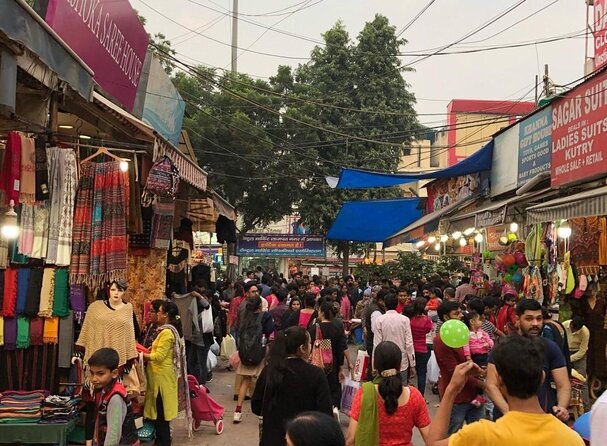
- Lajpat Nagar Central Market context: see how locals shop for kitchen and home basics, plus street food culture
- Hands-on cooking at Tastesutra: learn family-style techniques while you’re actively cooking
- Five-course meal you eat right after cooking: a built-in reward and a clearer feedback loop
- Spice shopping skills: learn how to pick ingredients so the recipes actually work at home
- Dietary flexibility: vegetarian/vegan and gluten-free options can be requested at booking
- Small group feel: capped at 20 people, which helps questions and attention
Lajpat Nagar at street level: why the market matters
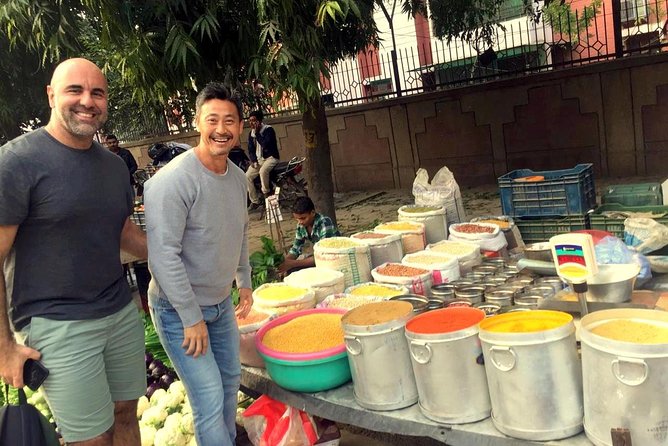
If you’ve ever bought spices at home and wondered why your food didn’t taste like the restaurant version, you already know the secret. The difference is usually not the recipe. It’s the ingredients, the freshness, and how you use them.
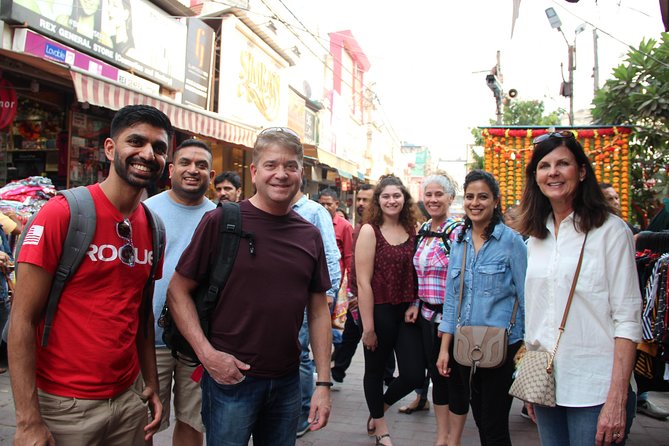
Lajpat Nagar is a strong choice for a food-focused visit because it’s not a “show” neighborhood. The market area is where people from around the city come for the everyday stuff—clothes, jewelry, and also kitchen and home items. That matters because you’ll be shopping with a local rhythm in mind, not just walking past stalls for photos. You’ll also get a sense of how street food fits into daily life there, which helps you understand why certain spices and flavors show up again and again.
And yes, there’s time to enjoy it without turning into a marathon. Your market portion is short, about 40 minutes, so you don’t end up rushing through everything like a checklist tourist. The goal is to help you learn how to spot quality and understand what you’re buying—especially spices—so your cooking improves, not just your souvenir bag.
You can also read our reviews of more tours and experiences in New Delhi.



Meeting at Tastesutra: what you’re really paying for
The cooking part takes place at Tastesutra Cooking Studio, First Floor, A-20, near Lajpat Nagar Metro Station (Block A, Lajpat Nagar II). The class starts at 11:00 am and lasts roughly 4 hours total, and that timing is part of the value.
For $75 per person, you’re not just paying for a recipe card. You’re paying for:
- instruction while you cook (not just watching),
- guidance on ingredient choices before you start,
- and lunch that’s included.
The studio time is about 3 hours, and that’s long enough to actually practice, ask questions, and get feedback. It’s also capped at 20 participants, so you’re less likely to feel like one face in a crowd. Reviews also point to the host leading the class with a warm, patient approach—learning can be serious, but it doesn’t have to feel stiff.
A detail I like: the meal isn’t separate from the teaching. You cook, then you eat along with the host. That makes it easier to connect each step to the final flavor, which is exactly what you want if your goal is to recreate the dishes later.
The market walk: what to watch for in spices and produce
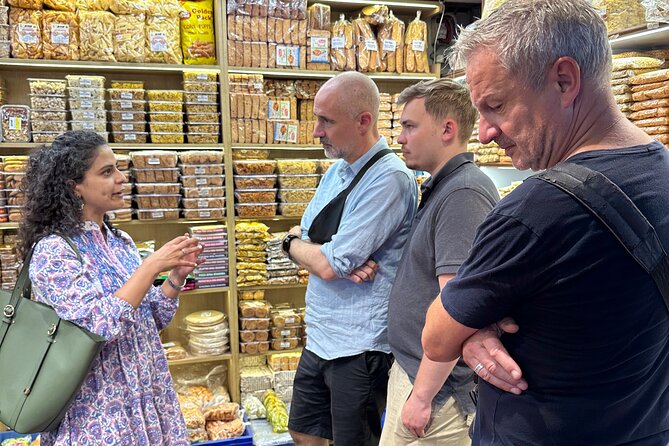
Even with a short market visit, you’ll come away with habits you can reuse. The focus is on learning how to select fresh produce and Indian spices before you cook.
Here’s what you should pay attention to as you walk:
- How stalls present spices: you can often tell a lot by how the shop keeps things covered, labeled, and kept dry.
- Smell and freshness cues: good spices tend to smell sharp and specific rather than dull.
- Produce condition: watch color, firmness, and how items look after handling.
- The way locals decide quickly: you’ll pick up the logic of “buy what looks right today,” not “find a perfect Instagram shot.”
This is also where you get cultural texture. The market isn’t only about food; it’s about how locals shop for life—kitchen items and home basics alongside snacks and street food. That background helps the cooking make sense. You’re learning flavors that match local buying habits.
Some classes also include practical talk about bargaining. In this experience, you might get a feel for how people negotiate for supplies in that setting—useful if you plan to keep cooking after the trip.
Cooking workshop at Tastesutra: five courses, real technique
The core of this experience happens in the studio, where you’ll do hands-on cooking with the host (Anchal is named in the instruction). Since the class centers on five quintessential Indian dishes, you’ll likely move through multiple techniques rather than repeating one trick five times.
That variety is why this type of class is so useful for home cooks. If you only learn one dish, you go home confident about one meal. If you learn five, you build a mental toolkit.
Expect a learning flow that usually goes like this:
- you’re shown ingredient roles and spice behavior,
- you practice the steps as a group,
- then you eat the results.
One review highlight stands out: the class doesn’t just teach what to do, it teaches the why behind each step of recipes and ingredients. That’s the difference between following instructions and actually understanding them.
Another smart touch: you’re taught in a way that supports different dietary needs. Vegetarian and gluten-free options are available and can be specified at booking. That means the “learn to cook Indian food” goal doesn’t get derailed if you avoid certain ingredients.
Also, there’s an element of learning how to eat like you’re meant to. One review notes trying eating with fingers. You might get that kind of guidance too, which turns lunch into part culture lesson, part technique lesson (because how you handle the food changes the experience).
Lunch: when the teaching lands on your plate
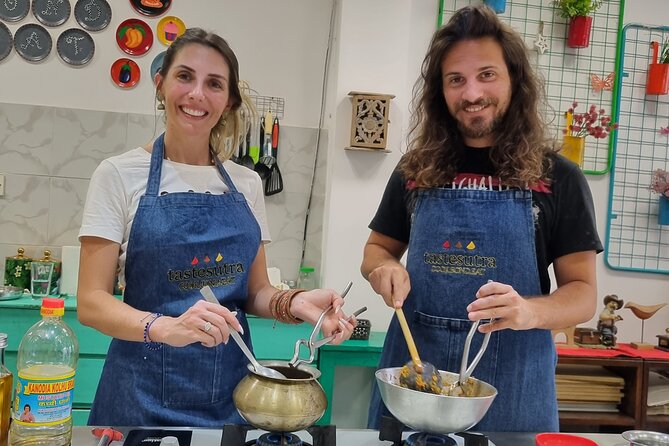
Lunch is included, and beverages are included too—soft drinks, per the description. You’ll sit down to enjoy what you cooked as a five-course meal.
This is a key part of the value. Cooking classes often end with you making food and then… waiting. Here, the payoff is immediate. When you taste right after you cook, you can connect:
- what spice timing did to the flavor,
- how texture changed as ingredients cooked,
- and whether your balance was on point.
And for many people, the easiest memory hook is food you ate while the lesson was fresh. It’s also just a relief. After a market walk and cooking work, eating together feels like finishing the story, not starting a new one.



Price and timing: is $75 actually good value?
Let’s talk money in a grounded way.
At $75 per person for about 4 hours, you get:
- market time in Lajpat Nagar,
- a studio class with hands-on cooking,
- and a meal lunch plus beverages.
For Indian cooking, $75 isn’t “cheap,” but it also isn’t inflated considering what’s included. You’re getting instruction, ingredients used in the class, and lunch. If you were to recreate this later on your own, buying spices, producing the right ingredients, and paying for your time to learn techniques would quickly add up.
Also, the average booking window is about 32 days in advance, which suggests this tends to fill. If you’re traveling around holidays or busy weekends, booking sooner is a smart move.
Timing is another value element. Starting at 11:00 am is often ideal: you get a full midday experience without losing an entire day. And the tour ends back at the meeting point, which makes it easier to plan what comes next.
Who this is best for (and who should think twice)
This fits especially well if you:
- want to learn how to shop for spices and ingredients, not just cook one recipe,
- like hands-on classes and prefer learning by doing,
- have dietary needs (vegetarian/vegan or gluten-free options can be requested),
- and want something more grounded than a generic food show.
It’s also a good choice if you’re the type who cooks at home and wants recipes to taste right—not just be edible.
You might think twice if:
- you’re extremely sensitive to being on your feet during the market portion and hands-on cooking,
- you strongly prefer classes where you only watch (this is hands-on for participants),
- or you want a long, slow deep-dive experience without time pressure. This one is half-day focused and moves at a steady clip.
Practical tips so you get the most out of it
Here are a few practical moves that will help you enjoy the day and bring the skills home.
- Arrive early enough to settle. The studio is near Lajpat Nagar Metro, but you still want a buffer before 11:00 am.
- Tell them your dietary needs when booking. Vegetarian/vegan and gluten-free options are available, and it’s best to specify ahead of time so the class can plan accordingly.
- Ask about spice substitutions if you’re cooking at home. The class emphasizes Indian spices, but the best takeaway is learning what role each spice plays.
- Take notes on ingredient choices. The market portion is short, so jot down what you learn about selecting produce and spices.
- Plan your next meal lightly. After a five-course lunch, you may not want a heavy dinner.
One more small mindset shift: try to learn the technique behind each dish, not only the ingredients list. If you understand how the spice timing and cooking steps work, you’ll adjust more easily when your pantry doesn’t match India exactly.
Should you book the Local Market Tour & Five Course Meal Class?
I’d book it if you want a half-day that blends real market shopping with hands-on cooking and a full meal at the end. The best part is the practical loop: learn ingredient selection, cook the dishes, then taste the results right away. You’re leaving with habits, not just photos.
Skip it only if you’d rather do a longer market wander, or if you expect a purely instructional class where you don’t touch ingredients at all. This experience is built for participation.
If you can make the 11:00 am start and you’re okay with a focused 4-hour window, this is a strong value choice for learning Indian cooking in a way you can repeat at home.
FAQ
How long is the market tour and cooking class?
It runs for about 4 hours total.
What time does it start?
The start time is 11:00 am.
Where do I meet for the class?
Meet at Tastesutra Cooking Studio, First Floor, A-20, near Lajpat Nagar Metro Station, Block A, Lajpat Nagar II, Lajpat Nagar, New Delhi.
Is lunch included?
Yes. Lunch is included, along with beverages.
Can I request vegetarian, vegan, or gluten-free options?
Yes. Vegetarian/Vegan/Gluten Free options are available, and you should advise your needs at booking.
How big are the groups?
The class has a maximum of 20 travelers per booking, and a minimum of 2 people is required.
Is there any ticket information provided?
You’ll get a mobile ticket.
Is it near public transportation?
Yes. It’s accessible by public transportation and is near the Lajpat Nagar Metro station.
What’s included in the tour price?
Based on the experience details, meal (lunch) and beverages are included.