REVIEW · JAIPUR
Jaipur Walking Tour- Explore Old Heritage City With Private Guide
Book on Viator →Operated by Abby & Scout Tours · Bookable on Viator
Follow Jaipur’s footsteps through the old city. This private walking tour threads together temples, lanes of artisans, and markets where you can actually watch daily trade in action. You’ll cover the Pink City’s quieter backstreets, then hit classic stops like Hawa Mahal from the outside and the craft lanes around Tripolia Bazaar.
Two things I really like: first, the hands-on feel of craft shopping, especially around bangles and silver items where you can talk to workers and understand what goes into each piece. Second, the tour is timed and stocked for comfort: you get bottled water and tea or coffee during the walk, plus you’re set up to try local sweets (at your own cost for anything you choose) like the favorites at Bhagat Mishthan Bhandar.
One heads-up: the price is good, but not everything is included. Street food/snacks, lunch, and any entry you choose to take inside Hawa Mahal or Swargasuli Tower are extra, and hotel pickup/drop-off costs more.
In This Review
- Key highlights you’ll feel on the walk
- Jaipur on foot: why this tour works for real travel time
- Timing and walking reality: start later, and wear comfy shoes
- Stop 1: Kalki Temple to set the tone (and a gentle start)
- Stop 2: Hawa Mahal from the outside, with inside options if you want them
- Stop 3: Purohit Ji Ka Katla shopping zone for wedding fabrics
- Stop 4: Gopal Ji Ka Rasta and the mawa/khoya story behind sweets
- Stop 5: Swargasuli Tower (Victory Tower) for a quick photo win
- Stop 6: Choti Chopad for ancient temple vibes, silver goods, and spice/flower lanes
- Stop 7: Bhagat Mishthan Bhandar for a sweet tasting break
- Stop 8: Maniharo Ka Rasta at the Tripolia Bazaar end
- Stop 9: Thatheron ka rasta for utensil makers and metal-on-metal street rhythm
- Stop 10: Sai Baba Mandir, the oldest Sai Baba temple in Jaipur
- Stop 11: Golcha Cinema to close the loop with old Jaipur street life
- Price and value: how $20.17 adds up for a private market walk
- Who should book this (and who might want a different style)
- Should you book this Jaipur walking tour?
- FAQ
- How long is the Jaipur walking tour?
- Is this tour private or shared?
- Do I get hotel pickup and drop-off?
- Are market and temple visits included, or do I need tickets?
- Are street food and lunch included in the price?
- What time should I plan to start the tour?
- What’s included in the tour besides the guide?
Key highlights you’ll feel on the walk
- English-speaking private guide (Gaurav-style energy): friendly, talkative, and great at explaining what you’re seeing as you go.
- Wedding costume and fabric shopping area: you’ll pass through Purohit Ji Ka Katla with wedding fabrics, dresses, and sherwanis.
- Mawa/khoya stop that connects to sweet-making: Gopal Ji Ka Rasta is known for making mawa (khoa/khoya), a key ingredient in many Indian sweets.
- Craft lanes with real trades: flower/spice areas near Choti Chopad, plus utensil-making in Thatheron ki Gali.
- A sweet break built into the route: Bhagat Mishthan Bhandar is the stop where you can taste local sweets.
- Old Jaipur on film vibes: the tour ends at Golcha Cinema, one of the older cinema halls in town.
Jaipur on foot: why this tour works for real travel time
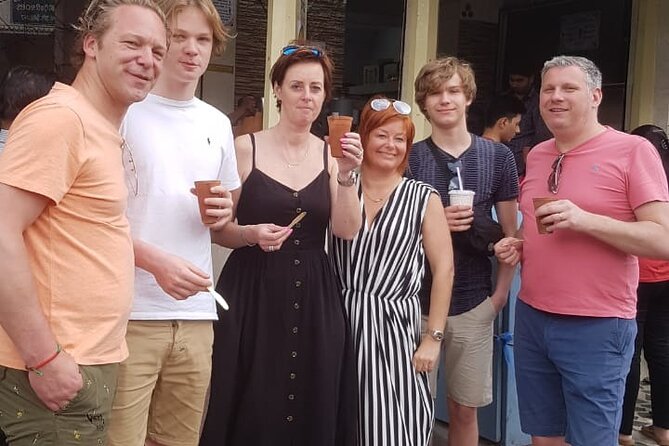
This isn’t the kind of tour where you race from one big monument to the next and barely catch your breath. It’s a walking route that mixes landmarks with the streets that made Jaipur what it is: crafts, food, and everyday commerce.
The practical win is flow. You start at Kalki Temple, then work your way toward Hawa Mahal, then into market zones and craft streets where the shopping looks like work, not a theme park. Along the way you’re given the chance to taste and to ask questions. When you can connect a street you’re standing on to what you eat or wear later (like sweets made with mawa/khoya), the city stops feeling abstract.
And because it’s a private setup, the pace can stay human. If you’re into shopping, you’ll get time in the lanes. If you just want to watch and photograph, you can keep it moving without feeling rushed.
You can also read our reviews of more tours and experiences in Jaipur.



Timing and walking reality: start later, and wear comfy shoes

This tour runs during older-city hours, with the experience time set between 11:00 AM and 4:00 PM (Monday through Sunday). Most shops and markets in the old city open around 10:30 AM to 11:00 AM, so a late-morning to mid-afternoon start usually makes life easier.
You’ll want moderate physical fitness for a 3 to 4 hour walk. It’s not listed as extreme, but Jaipur old streets can mean uneven sidewalks, crowded corners, and lots of turns. Bring comfortable shoes, and plan for heat and sun the way you would for any old-city walk—this one is outdoors most of the time.
Two timing notes that matter:
- Sundays are generally less active in the old city, with limited shop hours or closures. If you can choose, pick a weekday.
- If you’re starting even earlier than the typical timing, some spots may be open, and you can explore whatever’s available.
Stop 1: Kalki Temple to set the tone (and a gentle start)
You begin at Kalki Temple, a small but meaningful way to start before you hit the big visual hits. The goal here isn’t a long sit-down visit. It’s about getting grounded in the religious rhythm of the city and learning how temples sit next to daily street life.
The itinerary lists the walk time as about 10 minutes at the start, and admission is free. Even if you’re not the type to chase temple details, it’s a good warm-up. It helps you understand the area you’re entering and sets context for the stops that follow.
Quick practical tip: show a little patience at quiet temple moments. You’ll likely have better photos if you wait for a clear shot rather than trying to squeeze through people’s space.
Stop 2: Hawa Mahal from the outside, with inside options if you want them
Next up is Hawa Mahal, the Palace of Wind. You’ll spend about 15 minutes here, and admission is free for the roadside viewing portion of the experience.
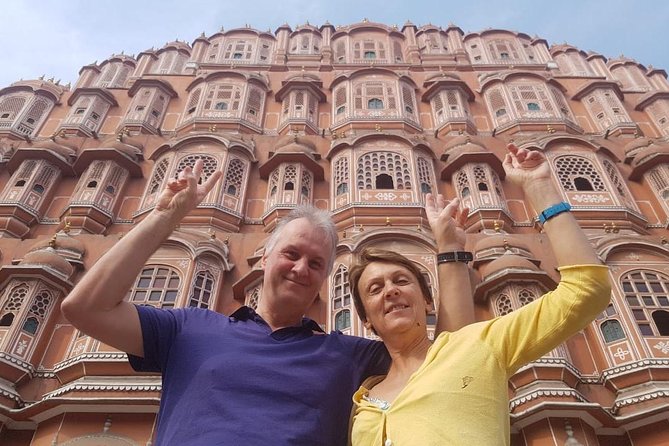
Hawa Mahal is famous for its facade and how it has drawn poets, writers, artists, and travelers over time. What I like about this approach is that you don’t have to commit to an inside ticket to get the iconic look. You can still understand why it’s such a signature face of Jaipur.
If you want to go inside, the tour notes that tickets are applicable and that the guide can help you skip the line for tickets. Keep timing in mind: entry to the two ticketed sights closes about an hour before sunset. So if you’re aiming for inside visits, don’t push the day too late.
Stop 3: Purohit Ji Ka Katla shopping zone for wedding fabrics
After Hawa Mahal, you head toward Jai Mata Di Paridhan in the Purohit Ji Ka Katla area. This is where the tour leans hard into Jaipur’s role as a city for celebration clothing—wedding fabrics, dresses, and sherwanis.
You’ll spend around 20 minutes here. The itinerary describes the market area as something that can feel challenging to enter from entry points, but it’s still a treasure trove for wedding costume needs (and for anyone who likes to see textiles up close). This is one of those stops where a guide helps you see beyond random browsing, especially if you want to ask how pieces are chosen or what materials are used.
A practical way to enjoy it: go in with a question in mind. Maybe you’re comparing colors, or asking how people coordinate fabrics. If you just wander, it can still be great—but you’ll get more from it if you treat it like a conversation.






Stop 4: Gopal Ji Ka Rasta and the mawa/khoya story behind sweets
Then you hit Gopal Ji Ka Rasta, known for manufacturing mawa. Here’s the connection that makes this stop smart: mawa is also called khoya or khoa, made from dried evaporated milk solids. It’s a key ingredient in many northern Indian sweets.
You’ll spend about 15 minutes here. This is one of the stops where I love the “learn while you walk” approach. You see the production focus, then later you’re in the vicinity of a sweets shop. Even if you don’t buy anything on the spot, you’ll understand why sweets taste the way they do.
If you’re a foodie, this is a strong point to ask your guide what the local sweets use most often. It makes the tastings later feel more intentional.
Stop 5: Swargasuli Tower (Victory Tower) for a quick photo win
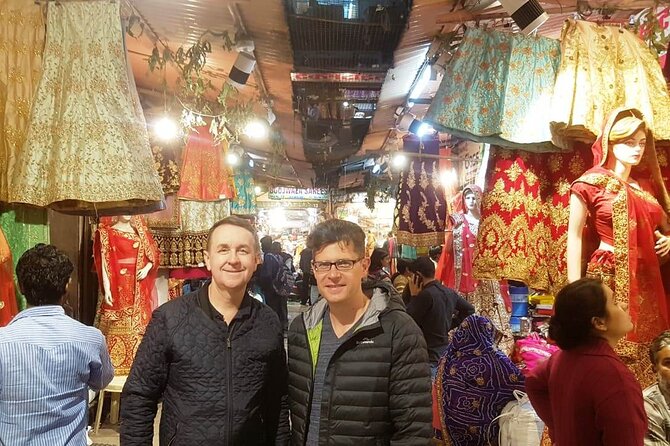
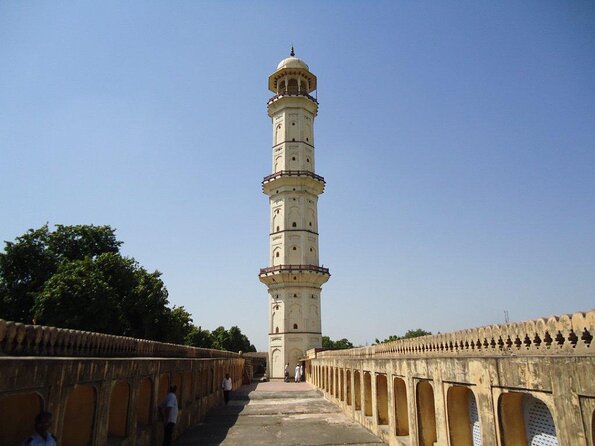
Swargasuli Tower is an 18th-century minaret often called the Victory Tower. You’ll see it from a scenic roadside vantage point, spending about 10 minutes.
What I like here is that it’s short and efficient. You get the “yes, that’s it” photo moment without turning the tour into a long monument detour. The tower is described as 7 or 8 stories tall, and that height matters for what you’ll photograph from the street.
If you want to go inside, the tour says you can help with tickets, but the standard plan is roadside viewing only. Again, timing matters because entry closes roughly an hour before sunset.
Stop 6: Choti Chopad for ancient temple vibes, silver goods, and spice/flower lanes
Choti Chopad is a practical market intersection: you can visit an ancient temple in the area, browse shops selling silver items, and also explore flower and spice markets nearby. You’ll spend about 30 minutes here, which is longer than most stops—this is clearly meant to be a browse-and-look stop.
This is where Jaipur’s craft identity becomes easy to recognize. Silver items sit near daily market life, and the flower and spice lanes make the senses work even if you don’t buy.
One smart move: if you want photos, take a few at the temple frontage and then shift your camera down toward hands at work in the shops. Market street photos get better when you capture people doing the real job.
Stop 7: Bhagat Mishthan Bhandar for a sweet tasting break
Next comes Bhagat Mishthan Bhandar, a famed sweets shop where you can taste locally made sweets. You’ll have about 15 minutes here.
This is one of the stops you should plan for. It’s not included as a full meal, but tasting is the point. Since the tour notes street food charge and lunch aren’t included, budget a little extra if you want more than one bite.
If you’re trying to keep the tour costs controlled, buy one or two small items you can share. That way you sample variety without blowing the snack budget.
Stop 8: Maniharo Ka Rasta at the Tripolia Bazaar end
Now you step into Maniharo Ka Rasta, a street that still feels tied to the old regal layout of the city. It’s described as existing because of the modesty of its citizens, and it stretches out enough that you can enjoy a slower walk while looking at shopfronts.
You’ll spend about 20 minutes here. This is another craft-and-shopping moment, and it pairs well after Choti Chopad: first you see silver and market products, and then you move into another stretch of the old bazaar logic.
If you like souvenirs, this is a good place to look for items that feel tied to Jaipur craft traditions rather than mass-produced tourist goods. Your guide’s explanations can help you spot what’s actually being made locally versus just sold there.
Stop 9: Thatheron ka rasta for utensil makers and metal-on-metal street rhythm
Thatheron ka rasta (Thatheron ki Gali) is described through sound: the rhythmic clangs and clinks of metal. The focus is on skilled utensil makers, a traditional craft that still lives on the street.
You’ll spend about 15 minutes here. This is the stop that tends to feel most alive, even if you don’t plan to purchase anything. You can watch work happening and see how craft is part of the street’s everyday soundtrack.
A helpful approach: slow down and look at the tools and steps. Even without buying, you’ll start understanding the craft process in a way that generic museum explanations can’t match.
Stop 10: Sai Baba Mandir, the oldest Sai Baba temple in Jaipur
Then you reach Sai Baba Mandir, described as the oldest Sai Baba temple in Jaipur City. You’ll spend about 15 minutes here.
This works as a calm pivot point. Markets and crafts can be visually loud, so a temple stop gives your eyes a break. It also helps balance the tour: yes, you’re shopping and tasting, but you’re also seeing the spiritual side of how communities use these neighborhoods.
If you want photos, be respectful and wait for open moments. In active worship areas, moving carefully is more important than capturing everything.
Stop 11: Golcha Cinema to close the loop with old Jaipur street life
Finally, the tour ends at Golcha Cinema, described as one of Jaipur’s oldest cinema halls. You’ll spend about 15 minutes there, and the tour notes you can go inside if you want (entry ticket applicable, and your guide can help you buy it).
This is a fun ending because it adds a different layer to the day. You finish with an experience that feels like local routine—shopping lanes earlier, then the city’s entertainment culture.
If you’re the type who likes to end a tour with something slightly off the monument track, this last stop is a great choice. It’s a reminder that Jaipur’s heritage isn’t only about forts and palaces.
Price and value: how $20.17 adds up for a private market walk
At $20.17 per person for roughly 3 to 4 hours, the math can look surprisingly fair—especially because this is a private tour with an English-speaking local guide plus bottled water and tea or coffee included, along with GST.
Also worth noting: children and infants up to age 17 are free of cost on this tour. That can make a huge difference for families who want a structured old-city experience without paying full rates for everyone.
Where costs can creep up:
- Hotel pickup/drop-off is available but costs extra.
- Street food and lunch are not included, so anything you taste beyond the included tea/coffee/water is on you.
- If you choose to go inside Hawa Mahal or Swargasuli Tower, those entries have their own ticket requirements.
So I’d treat the published price as paying for the guide, the route, and the basic comfort. Then think of food, snacks, and optional indoor entries as your personal add-ons.
Who should book this (and who might want a different style)
I think this tour suits you if you want Jaipur through small streets and working crafts rather than just postcard landmarks. It’s also a good fit if you like a guide who can talk you through what you’re seeing and help you use your time well inside market areas.
It’s especially good if you’re:
- Interested in textiles and wedding clothing areas
- Curious about sweets ingredients and local food culture
- The kind of traveler who enjoys browsing artisan shops and learning what items are made from
You might want a different option if you:
- Want a monument-only day with lots of major ticketed sites
- Expect street food to be fully included (it isn’t)
- Need a tour that starts very early (typical market rhythm is later, around 11:00 AM)
Should you book this Jaipur walking tour?
If you like markets, crafts, and the real working texture of old cities, this is an easy yes. You’ll get a focused 3 to 4 hour route, an English-speaking guide (Gaurav is specifically noted for enthusiasm), and a day structured so you can see landmarks without spending your whole time in lines.
I’d book it when:
- You can start around 11:00 AM or later
- You’re okay with extra costs for snacks and any optional interior entry
- You want an old-city walk that ends with something local and human, not just another viewpoint
One last comfort note: it requires good weather, and cancellation is free if you cancel at least 24 hours in advance. That makes it easier to plan without feeling trapped.
FAQ
How long is the Jaipur walking tour?
It runs for about 3 to 4 hours.
Is this tour private or shared?
It’s private. Only your group participates.
Do I get hotel pickup and drop-off?
Pickup and drop-off from/to your hotel are available, but not included. It’s offered at an additional charge.
Are market and temple visits included, or do I need tickets?
Most included stops are free of entry ticket costs. Hawa Mahal and Swargasuli Tower are free for roadside viewing, but if you want to go inside, tickets are applicable and the guide can help you buy them and skip the line.
Are street food and lunch included in the price?
Street food charges and lunch are not included, so you’ll pay for anything you choose to eat.
What time should I plan to start the tour?
Most markets open around 10:30 AM to 11:00 AM, so starting anytime later on around 11:00 AM up to 5:00 PM is recommended. The listed opening hours are 11:00 AM to 4:00 PM.
What’s included in the tour besides the guide?
You get bottled water and tea or coffee during the tour, plus GST. Infants and children up to 17 years old are free of charge.