REVIEW · JAIPUR
Jaipur Heritage and Old Market Shopping Tour
Book on Viator →Operated by Unique Jaipur Tour · Bookable on Viator
Want real Jaipur shopping, not mall errands? This 5-hour old-market route mixes classic heritage sights with hands-on craft demos you can actually watch and ask questions about.
I especially like the craft demo stops (block printing, blue pottery, and jewelry making) and the shop-lane approach to markets like Chandpole and Johari. One thing to plan for: some major sights are mainly viewed from the outside, and entry to places like Isarlat Tower and Albert Hall Museum isn’t included.
This is a private tour, with hotel pickup and drop-off, bottled water, and a friendly local expert driver. In the reviews, Rauf stands out for being upbeat, patient, and flexible with what you want to focus on, including steering people toward more local-feeling stops instead of only the obvious tourist counters.
In This Review
- Key moments I’d prioritize on this Jaipur tour
- How the Jaipur heritage-and-market day is paced
- Chandpole Bazar: your shortcut to Jaipur’s traditional goods
- Khazane Walon ka Rasta: marble decor as a specialty lane
- Maniharo Ka Rasta: bangles and silver ornaments you can actually compare
- Isarlat Tower and Tripolia Gate area: photos plus royal context
- Albert Hall Museum: a great exterior break (entry is on you)
- Johari Bazaar and Hawa Mahal: famous facades, market energy
- Jaipur Blue Pottery Art Centre: why the craft demo is more valuable than shopping blind
- Satguru’s Textile World: women’s block printing and fabric-making time
- Food, spices, and shopping focus: what this day does and doesn’t do
- Price and value: how $16 works for a 5-hour private day
- The Rauf factor: why your guide can make or break a market day
- Who this tour suits best (and who should choose differently)
- Should you book this Jaipur heritage and old market shopping tour?
- FAQ
- How long is the Jaipur Heritage and Old Market Shopping Tour?
- What does the $16 price include?
- Is pickup from my hotel included?
- Are monument entry tickets included?
- Do I get time to shop at the markets?
- Are there craft demos during the tour?
- Is food included?
- Is this a private tour?
Key moments I’d prioritize on this Jaipur tour

- Chandpole Bazar lanes: a fast, sensory introduction to traditional Rajasthani goods
- Marble decor streets (Khazane Walon ka Rasta): a specialty shopping lane that’s easy to miss on your own
- Bangle and silver focus (Maniharo Ka Rasta): a concentrated area for jewelry styles and gifting ideas
- Old markets plus famous facades: you get photo-worthy sights like Hawa Mahal without a heavy ticket day
- 10–15 minute craft demos: block printing, blue pottery, and jewelry-making—short, watchable, useful
- Textile workshop time: see how patterns get made on fabric before you buy anything
How the Jaipur heritage-and-market day is paced
This tour is built like a “see it, then shop it” day. You’ll spend time in major market lanes, with heritage points along the way. The key practical detail: monuments are viewed from the outside, so you’re not stuck waiting in long entry lines. That also means the day doesn’t promise a full inside-museum experience.
You’ll have roughly 5 hours total, split between street time in markets and quick sight/photo stops. Expect an efficient drive between areas and multiple short stops rather than one long museum session.
Because the route is shop-forward, you’ll get more value if you go in with a plan: what do you want—textiles, jewelry, blue pottery, or souvenirs that won’t fall apart in six months? If you know your targets, this kind of tour becomes a money-saver.
You can also read our reviews of more tours and experiences in Jaipur.



Chandpole Bazar: your shortcut to Jaipur’s traditional goods
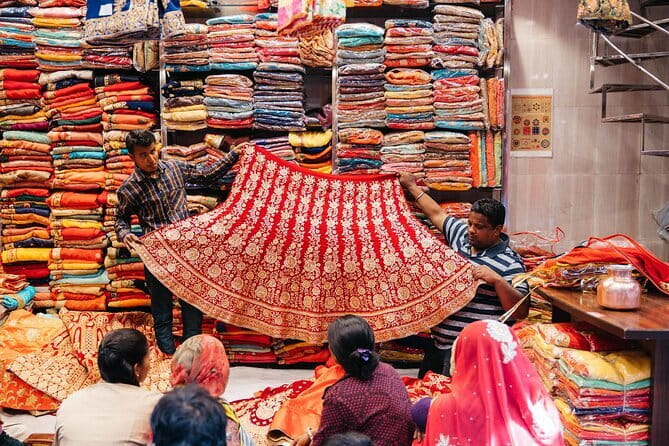
Chandpole Bazar is where you start to feel the city’s shopping rhythm. The stalls cluster around classic Rajasthan categories: textiles, jewelry, brassware, and pottery. Even if you don’t buy much, this first stop is useful because it helps you learn what “normal prices” feel like, what styles are common, and which items you’ll actually want later.
Practical tip: early in the day is the best time to compare materials. If you’re deciding between two similar-looking pieces later, you’ll remember which shop felt more honest, sturdier, or better-made.
One gentle caution: market shopping moves quickly. If you hate crowds, bring patience and keep your eyes on your shopping list so you don’t get swept into random browsing.
Khazane Walon ka Rasta: marble decor as a specialty lane
Next you’ll head to Khazane Walon ka Rasta, known for marble sculptures and decor in different sizes and designs. This isn’t a generic souvenir strip. It’s more like a themed shopping lane, so it’s easier to browse with focus.
Why I like this stop: it’s a chance to shop beyond the usual textiles-and-trinkets routine. Marble decor tends to be heavier and more “home display” than “wearable,” which can help you decide what will work for your luggage.
If you’re buying anything breakable, plan ahead for packing. Ask questions about how items are finished and whether any parts are detachable or fragile. That’s the difference between a fun purchase and a regret.
Maniharo Ka Rasta: bangles and silver ornaments you can actually compare
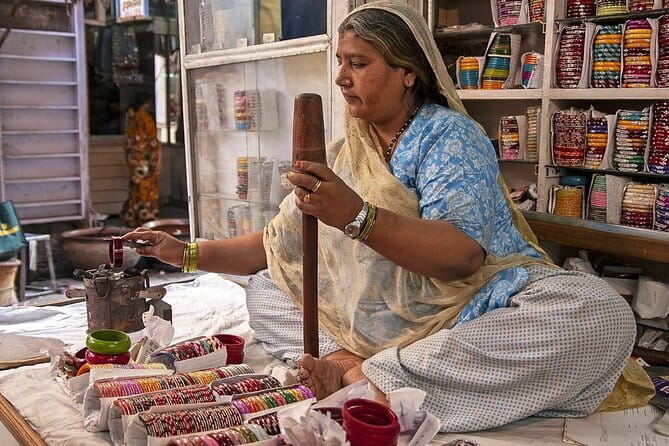
Maniharo Ka Rasta is famous for jewelry shops, especially traditional Rajasthani bangles and silver ornaments. You’ll get a concentrated look at styles—so you can compare without walking an entire day.
This is the kind of lane where a local guide helps. Not because you’re getting a secret discount, but because you can ask better questions: what’s the usual design language for the region, what looks authentic in person, and what might be more trendy than traditional.
If you’re buying bangles, keep a realistic expectation: shape and fit vary. Try to buy only what you’re sure you’ll wear, gift, or display. Otherwise, focus on complementary items like small ornaments or charms.
Isarlat Tower and Tripolia Gate area: photos plus royal context
The tour includes Isarlat Tower (victory memorial built by Maharaja Jai Singh II). Admission isn’t included, so treat it as a viewpoint/photo stop unless you decide to pay to enter separately. The useful part here is perspective—this is the city at an elevated angle, perfect for orienting yourself.
Then you’ll visit the Tripolia Gate area and spend time around Tripolia Bazar / Tripolia mausoleum (royal family resting place). This stop is more about atmosphere and architecture details than shopping. Look for carved features and take your time with photos, but don’t expect a long guided museum lecture here.
If you’re short on time, these heritage moments are a smart trade. You get “Jaipur story” without turning the day into a ticket-and-timetable headache.






Albert Hall Museum: a great exterior break (entry is on you)

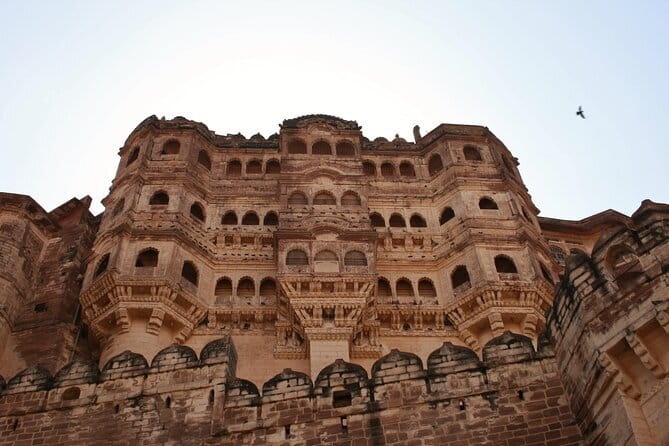
You’ll also stop near Albert Hall Museum, a famous Indo-Saracenic building dating to 1876. Admission isn’t included, and with the tour’s style (monuments viewed from the outside), you should plan for an exterior look and some photo time.
Is it worth your time? Yes—at least as a visual stop. Even from outside, the building stands out. But if you’re the type who wants to spend real time inside galleries and collections, you’ll likely need to add that separately on another day.
Johari Bazaar and Hawa Mahal: famous facades, market energy
After the quieter heritage stops, the tour moves back into shopping lanes.
Johari Bazaar is known for Rajasthani handicrafts: textiles, jewelry, pottery, spices, and leather goods. It’s also associated with bright fabrics, bandhni, block prints, and silver jewelry. This is a strong area to revisit if Chandpole showed you the basics and now you want better comparisons.
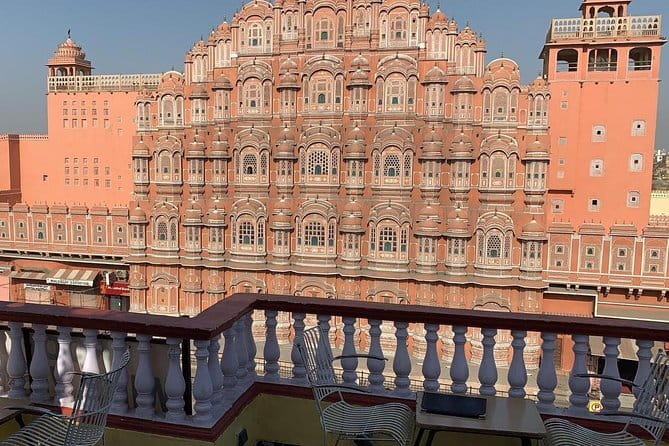
Then comes Hawa Mahal, the Palace of Wind with its honeycomb-like facade and hundreds of small windows. Built in 1799 by Maharaja Sawai Pratap Singh, it’s one of Jaipur’s most photographed buildings for a reason. The tour gives you time for the iconic look and photos, and because entry isn’t required for the exterior experience, it keeps the day moving.
Quick reality check: Hawa Mahal is famous, so it can feel crowded around photo times. If you’re sensitive to crowds, go for a couple of clean angles quickly and then head back into the market streets.
Jaipur Blue Pottery Art Centre: why the craft demo is more valuable than shopping blind

One of the best parts of this tour is the Jaipur Blue Pottery Art Centre demo, around 10–15 minutes. You’ll watch artisans work and learn what makes Jaipur blue pottery recognizable: the signature vivid blue tone and patterned designs.
This demo matters because it changes how you shop. Instead of grabbing a pretty item, you start noticing quality signals—how designs are laid out and how the surfaces look up close. Even if you don’t buy pottery, seeing the process gives you better judgment about what feels well-finished versus mass-produced.
If you do buy, ask for practical details: how it’s made, how delicate it is, and what to expect for packing. The demo gives you the background to ask those questions with confidence.
Satguru’s Textile World: women’s block printing and fabric-making time
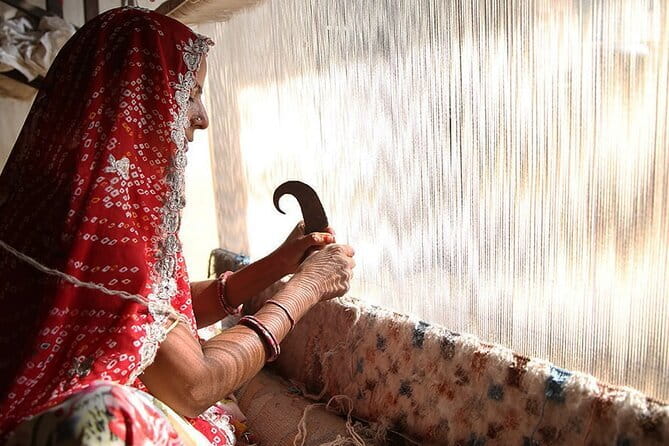
Another highlight is the textile stop at Satguru’s the Textile World, where you can watch women and artisans crafting carpets and rugs. You’ll also see block printing in action—patterns made by hand on fabric.
This is one of those experiences where short demo time still pays off. You start seeing the craft as a process instead of a product. That matters because textiles can look similar from far away, but the quality difference is often in the finishing and how consistent the prints feel.
The tour also frames the craft work in a social way—supporting women’s craftsmanship and empowerment through traditional skills. That’s not just a feel-good line. It gives your shopping more meaning: you’re not only buying decor; you’re supporting a skill that takes time to learn and keep.
Food, spices, and shopping focus: what this day does and doesn’t do
Food isn’t included, so you’ll either eat before or after, or stop for a meal on your own. This can be a good thing. Markets are better when you’re not stuck at a fixed lunch table, but it means you should watch your timing.
About spices and teas: one review noted the tour isn’t ideal if your main goal is spices and tea. The good news is Johari Bazaar does include spices among the goods you may see. The better takeaway: if you want tea-focused shopping or specific food souvenirs, treat this as a crafts and heritage day first, then add food time separately.
Price and value: how $16 works for a 5-hour private day
At $16 for about 5 hours, this tour can feel almost too good to be true—so here’s the balanced way to look at it.
You’re paying for:
- hotel pickup and drop-off
- a private vehicle and a local expert driver
- time in multiple market lanes and heritage stops
- bottled water
- short craft demos (block printing, blue pottery, jewelry)
You’re not paying for:
- food
- personal shopping
- monument entry fees that aren’t included (like Isarlat Tower and Albert Hall Museum)
So the “value” depends on your travel style. If you’re the kind of person who would otherwise spend half a day figuring out routes and paying for extra transport, this setup saves time and energy. If you plan to do a lot of ticketed museum time inside, you may feel limited because the tour is designed around outside viewing and markets.
For a first look at Jaipur’s craft culture, though, this pricing is hard to beat.
The Rauf factor: why your guide can make or break a market day
In the reviews, Rauf comes up as the kind of guide you actually want in a market: warm, cheerful, patient, and focused on keeping you feeling safe. People also liked that he tailors the experience to what they want, rather than running everyone through the same chain of tourist shops.
That tailoring is especially important on shopping days. Market lanes can blur together fast, so a guide who helps you pick the right streets for your interests saves you from second-guessing and wasted walking.
Also, the reviews mention he suggested restaurants that matched preferences and made the day feel smooth. That matters when food is on you—you want practical help, not just sightseeing.
Who this tour suits best (and who should choose differently)
This experience is a great fit if you want:
- a short heritage + shopping day
- craft demos you can watch in real time (block printing, blue pottery, jewelry)
- concentrated market streets where you can compare items fast
- a private setup with pickup and drop-off
You might want a different kind of day if:
- you want mostly ticketed interiors (this is mostly outside viewing)
- you’re chasing a full food-shopping experience centered on spices and teas
- you dislike markets and prefer museum time
A helpful mindset: think of this tour as a “craft culture sampler” and then build the rest of your Jaipur itinerary around what you learn from those demos.
Should you book this Jaipur heritage and old market shopping tour?
If you’re on a first visit to Jaipur and you want your day to feel both educational and useful—this is a strong choice. The biggest wins are the craft demos, the focused market lanes (Chandpole, Johari, jewelry streets), and the fact that you’re not paying extra just to see famous Jaipur from the outside.
I’d book it if you’re planning to buy at least one thing you can’t easily replace at home, like textiles, jewelry, or blue pottery—and if you’re happy to handle your own food timing.
Skip or supplement it if your priority is mostly museum interiors or a deep food-and-tea hunt. In that case, pair it with another itinerary day and keep this one for crafts, architecture photos, and market learning.
FAQ
How long is the Jaipur Heritage and Old Market Shopping Tour?
It lasts about 5 hours.
What does the $16 price include?
It includes hotel pickup and drop-off, a private vehicle with a friendly local expert driver, bottled water, and guided time at markets and heritage stops with craft demos.
Is pickup from my hotel included?
Yes, pickup and drop-off from your hotel are included.
Are monument entry tickets included?
No. Some monuments are viewed from the outside, and admission for Isarlat Tower and Albert Hall Museum is not included.
Do I get time to shop at the markets?
Yes. The route includes major market areas like Chandpole Bazar, Johari Bazaar, and jewelry-focused streets.
Are there craft demos during the tour?
Yes. You’ll have 10–15 minute demo classes related to block printing, blue pottery, and jewelry making.
Is food included?
No. Food and drinks are not included.
Is this a private tour?
Yes. It’s a private tour/activity, and only your group participates.