REVIEW · JAIPUR
Jaipur: Full-Day Tuk-Tuk Sightseeing Tour with Monkey Temple
Book on GetYourGuide →Operated by Jaipur tour travels · Bookable on GetYourGuide
Jaipur by tuk-tuk feels like a moving postcard. This full-day, private ride stitches together major landmarks—Amber Fort, Jantar Mantar, City Palace, and the Monkey Temple—so you see more Jaipur without feeling chained to a big bus schedule. I especially like the freedom to slide through tight lanes and make quick photo stops when something catches your eye. I also like that the day mixes UNESCO sites with calmer, off-the-main-roads moments like Gaitor ki Chhatriya. The one trade-off: a small tuk-tuk plus a full 8-hour loop means some mild walking, stairs, and uneven ground, so it is not the easiest day for everyone.
For the price, this tour is strong value because your transport, pickup and drop, parking, fuel, and bottled water are handled. You’ll still need to budget for meals and monument entrance fees, and camera or monument-specific charges may apply.
In This Review
- Key things I’d plan for before you go
- Why a private tuk-tuk is the right Jaipur pace
- Amber Fort: the big hilltop wow factor
- Panna Meena ka Kund: a quick stepwell stop that pays off
- Jal Mahal: the floating palace photo moment
- City Palace: where Rajput and Mughal styles meet in one complex
- Jantar Mantar: UNESCO astronomy you can actually see
- Gaitor ki Chhatriya: a calm royal-cenotaph pause
- Hawa Mahal and Albert Hall: Jaipur’s two different faces
- Birla Mandir: a quick spiritual stop near the end
- Monkey Temple (Galta Ji): sunset, sacred tanks, and real monkey energy
- What to know about walking, clothing, and the tuk-tuk size
- Price and value: what $6 covers, and what you should budget
- How to get more out of your day
- Should you book this Jaipur tuk-tuk tour with Monkey Temple?
- FAQ
- What is the duration of the Jaipur tuk-tuk tour?
- Is this a private tour or shared group?
- What sights are included in the day?
- Are meals included?
- Are monument entrance fees included?
- What languages does the driver speak?
- What are the key restrictions for luggage or visitors?
Key things I’d plan for before you go
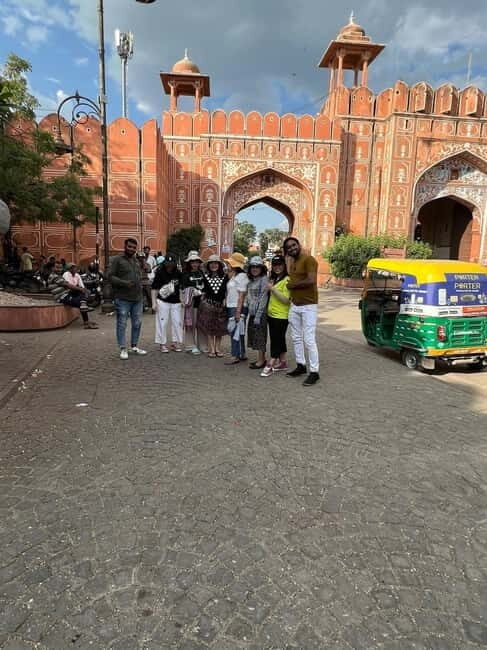
- A private tuk-tuk keeps you close to the street, including narrow lanes big cars can’t handle well
- Two UNESCO stops are stacked into one day: Amber Fort and Jantar Mantar
- Monkey Temple sunset gives you a memorable end to the day, with monkeys and sacred water tanks around you
- Short, efficient photo stops help you see the main sights even if you do not want to linger
- Small-group comfort: the tuk-tuk fits up to 3, but it is most comfortable with 2
- Your guide matters: the best days are the ones where the driver doubles as a friendly storyteller and helps with small needs
Why a private tuk-tuk is the right Jaipur pace
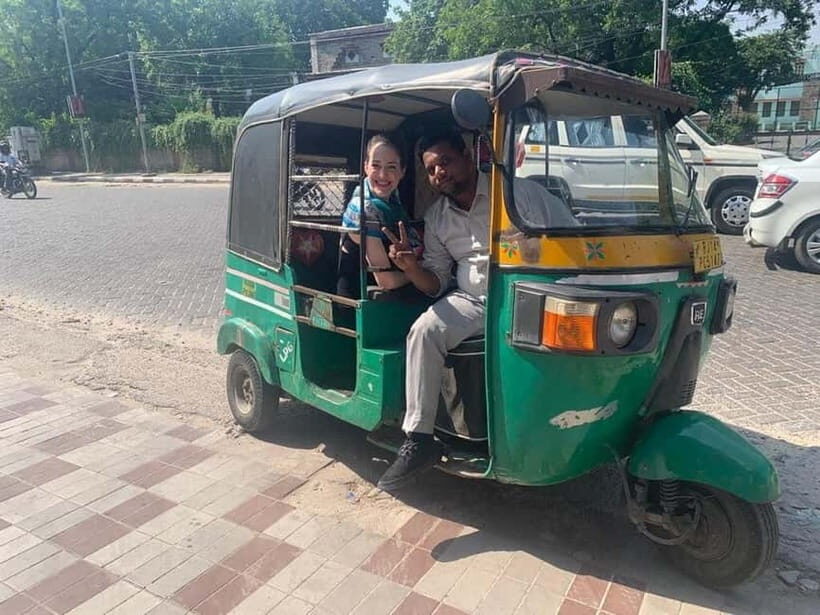
Jaipur is a city where street life happens right at sidewalk level—shops, workers, neighbors, and color everywhere you look. A tuk-tuk is perfect for that because you feel the scale of the city. You move slowly enough to take in the details, but you still cover ground fast.
This tour also stays flexible because it is private. You are not sharing time with strangers who drift slower or rush ahead. If you want an extra photo moment at a façade or you need a quick pause for water, it is easier to make that work than on fixed group schedules.
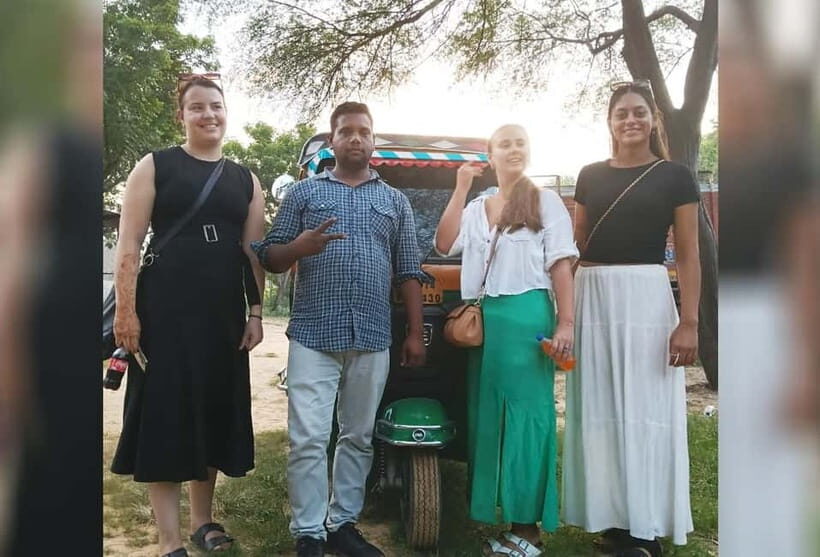
Just be realistic about one thing: a tuk-tuk is small. Bring comfortable clothes, and plan for some sun and roadside dust. If you are sensitive to crowds or movement, you will still likely enjoy the day, but keep your expectations aligned with a full sightseeing day.
You can also read our reviews of more tours and experiences in Jaipur


Amber Fort: the big hilltop wow factor
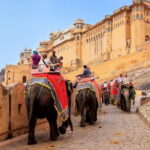
Amber Fort is the kind of place that makes Jaipur feel larger than life. Perched on a hilltop, it is a 16th-century fortress with a Rajput and Mughal mix of architecture, plus ornate interiors and courtyard spaces. One of the best reasons to go is that you get views both ways: the fort looks dramatic from the outside, and the surrounding area gives you a sense of how the fort dominated the landscape.
Plan for walking. You will want comfortable shoes because you will move around the fort grounds and go in and out of viewpoints. Also, go with patience: forts are popular, and you’ll want to slow down to enjoy the carvings, mirror work, and the way the courtyards frame the scenery.
If you’re the type who likes photos, Amber Fort is a clear winner. Even short stops turn into good angles because the architecture is made for picture-taking.
Panna Meena ka Kund: a quick stepwell stop that pays off
Next comes Panna Meena ka Kund, an ancient stepwell known for symmetrical staircases and geometric patterns. It’s the sort of place where the design does the work for you—straight lines, repeating shapes, and a calm stone feel that contrasts with the busier streets.
This stop is short enough to keep your day moving, but it’s long enough to walk the edges and catch photos in the right light. If you like architecture and patterns more than big museum-style pacing, you’ll likely enjoy this one a lot.
The only drawback here is timing: because it is a brief stop, you cannot treat it like a long, slow wander. If you want extra time, you’ll need to ask your driver/guide to be flexible with the order later.
Jal Mahal: the floating palace photo moment
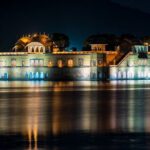
Jal Mahal sits on Man Sagar Lake, and the famous trick is that only parts of the palace are visible above water—so it looks like it is floating. The interior is not accessible, so this is primarily a photo stop and a viewpoint moment.
If you manage your expectations, you’ll love it. This is not about touring rooms. It is about getting that postcard-like silhouette and then relaxing for a few minutes with the lake and Aravalli hill backdrop in view.
Pro tip: bring your camera habits into the real world. You may see the best shots from outside, so do not spend time hunting for interior access that will not be available.
City Palace: where Rajput and Mughal styles meet in one complex
City Palace is in the heart of Jaipur and is known for blending Rajput and Mughal architecture. Even better, it is still partially home to the royal family, which gives it a living, working feel rather than a purely museum vibe.
You’ll get a mix of spaces—courtyards and building façades—that help you understand how Jaipur’s rulers used art, design, and power together. This is the stop where it helps to have a guide or driver who can explain what you’re seeing, because the details can be easy to miss if you just look fast.
If you want an authentic-feeling break from heavy crowds, City Palace can do that for you. It’s central, but the palace layout still lets you find quiet corners for photos and pauses.



Jantar Mantar: UNESCO astronomy you can actually see
Jantar Mantar is a UNESCO World Heritage site and an 18th-century astronomical observatory. What makes it special is that it is not abstract. You’re looking at large-scale instruments made to measure time and track celestial bodies—built as both science and architecture.
You’ll see a set of 19 large instruments. Standing among them is the main experience. It’s like walking through a giant outdoor physics textbook where the buildings are the calculations.
A practical note: give yourself enough energy to move around. Even if you are not climbing anything intense, there is walking and looking from different angles. If you’re visiting in bright afternoon light, plan water breaks, and keep your phone lenses clean for clearer shots.
Gaitor ki Chhatriya: a calm royal-cenotaph pause
Gaitor ki Chhatriya is a quieter stop made for slowing down. It’s known for intricately carved cenotaphs (chhatris) dedicated to the Maharajas of Jaipur. The mood here is more reflective than the forts and palace streets.
If you’re the type who likes contrast in a day—big monuments, then calmer places—this stop is a helpful reset. You can enjoy carved stone work and take a breather before returning to city traffic and busier sight points.
This is also where you’ll feel the value of a private tour: you can spend a little longer in the quiet zones without worrying about keeping a big group on time.
Hawa Mahal and Albert Hall: Jaipur’s two different faces
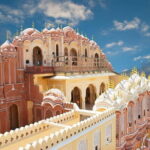
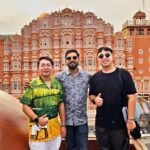
Hawa Mahal is the iconic façade with 953 intricately designed windows. The architecture is the main event. From different angles, you can appreciate how the palace structure was designed to interact with street life—plus, the whole feel is airy and open because of all those window openings.
Then you’ll shift into a more formal, museum-style stop with Albert Hall Museum. This kind of stop works well after Hawa Mahal because it slows things down while still keeping you in the world of Jaipur’s built heritage.
If you like photography, these two stops are good for different reasons:
- Hawa Mahal gives you façade patterns and dramatic window grids.
- Albert Hall gives you a more structured, indoor/outdoor heritage feel depending on what’s accessible.
Keep an eye on your energy at this stage. By now the day is usually in full motion, and this is when it helps to stand with intention rather than rush everything.
Birla Mandir: a quick spiritual stop near the end
Birla Mandir is included as a shorter visit, so treat it as a pause point. Even in a limited time window, it offers a change of pace: a focused, religious space that gives your day shape before the final leg.
If you are a person who likes seeing how locals use sacred spaces—quiet moments, respectful behavior, and simple observation—Birla Mandir is a good fit late in the day.
Monkey Temple (Galta Ji): sunset, sacred tanks, and real monkey energy
Galta Ji, also called the Monkey Temple, is the emotional closer for this tour. The setting is in a valley, with temples, sacred water tanks, and a large population of macaques. This is not a place to treat like a zoo. It’s a functioning spiritual site, and the monkeys are part of the everyday environment.
The big highlight is the stunning sunset view. Timing matters here, because the light changes the feel of the valley fast. When the day ends with sun on the stone, you get that “now I get Jaipur” feeling.
Practical advice: stay alert around the monkeys. Do not provoke them, do not reach toward them for photos, and keep your bags close. If you’re carrying food or anything scented, hold onto it. A respectful distance is your friend.
If you want a memorable, sensory finale to a heritage-heavy day, Monkey Temple is it.
What to know about walking, clothing, and the tuk-tuk size
This is a full day with mild walking, not a sit-and-watch tour. Some stops involve steps, uneven surfaces, and hillside or fort-ground movement. Bring comfortable shoes you can walk in for stretches, not just for standing.
You should also dress smart for Rajasthan heat and sun: comfortable clothes, breathable layers if you run cold in vehicles, and something that covers up enough to feel respectful in temples.
Tuk-tuk comfort matters too. The vehicle can accommodate up to 3 people, but it is ideally suited for 2 for a more comfortable ride. If you’re traveling as a larger group, it’s worth thinking about whether you’ll enjoy being close together for 8 hours.
Finally, this tour is not suitable for pregnant women or people with pre-existing medical conditions, based on the walking and overall physical demands. If that applies to you, choose a less step-heavy alternative.
Price and value: what $6 covers, and what you should budget
At around $6 per person, this is a low-cost way to string together major sights with private transport. The value is in the logistics: pickup and drop from your hotel (or a preferred Jaipur location), a private tuk-tuk with an English-speaking driver, bottled water, and the everyday costs like parking, fuel, and handling charges.
What is not included is the usual big-ticket category: meals and monument entrance fees (and camera-related charges may apply). So your real total cost depends on how many sites you personally enter, what you photograph, and whether you choose a guide option.
For many people, the sweet spot is this: you pay little for transport and time-saving, then you pay modestly for entrances as needed. If you were planning to taxi between Jaipur’s most famous stops, the tuk-tuk arrangement often feels like a smarter use of time for the money.
How to get more out of your day
A tour like this runs on timing and small choices. Here’s how to make it feel less rushed and more yours:
- Wear shoes that work on steps and stone.
- Keep water handy, and take small breaks before you feel tired.
- At photo stops, ask your driver to pause where the light and angle look best. It’s often faster than you think.
- If you want coffee or chai, be direct. Drivers often help with quick local stops that fit the schedule.
- Bring an ID card (passport or ID is fine as stated) so you’re not scrambling at checkpoints.
Also, consider what kind of traveler you are. If you want a calm, slow cultural immersion, an 8-hour loop can feel tight. If you want a full-sight day with local street energy, this setup is a great match.
Should you book this Jaipur tuk-tuk tour with Monkey Temple?
I think this is a solid book if you want:
- Private transport that gets you into the thick of Jaipur without big-vehicle hassle
- A day that mixes UNESCO-level sights with a standout finale at Monkey Temple
- A flexible feeling where your driver can support photo stops and keep the day moving
Skip it or choose carefully if:
- Walking and uneven ground could be an issue for you
- You need lots of rest time, because the day is packed with multiple major stops
- You want meals included and fully scheduled downtime
If you’re aiming for maximum “Jaipur highlights” in one day—Amber Fort views, Jantar Mantar’s science-meets-architecture, and a sunset finish with Galta Ji—this tuk-tuk tour is a practical, good-value way to do it.
FAQ
What is the duration of the Jaipur tuk-tuk tour?
The tour lasts 8 hours, and that timing includes pickup and drop-off travel time plus time spent at each destination.
Is this a private tour or shared group?
This is a private group tour, so it’s just your group in the tuk-tuk.
What sights are included in the day?
The tour includes Amber Fort, Panna Meena ka Kund, Jal Mahal (photo stop/pass by), City Palace, Jantar Mantar, Hawa Mahal, Albert Hall Museum, Birla Mandir, and the Monkey Temple (Galta Ji).
Are meals included?
No, meals are not included.
Are monument entrance fees included?
Monument entrance fees are not included, so you may need to pay at the sites. Camera-related charges may also apply.
What languages does the driver speak?
The driver is available in English, Spanish, German, and French.
What are the key restrictions for luggage or visitors?
Pets are not allowed, and luggage or large bags are not allowed. Mild walking is involved, so comfort with walking is important.