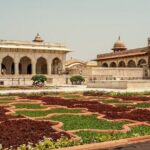
Old Delhi hits you fast, and it stays interesting. This walking tour strings together the parts of the old city that feel most real: tight lanes, food stops, spice and dry-fruit trading, wedding shopping streets, and a look at Mughal-era power at Red Fort. You’ll get brief context as you go, so the chaos turns into a story you can follow. I especially like the market-focused route and the built-in moments for food sampling.
Two more things I like: the pace is long enough to actually notice details, and the group stays small (up to 14 travelers), which makes questions easier. One drawback to plan for: you’re walking through busy narrow lanes in a dense area, so wear comfy shoes and expect a lively crowd around you.
In This Review
- Key highlights
- Old Delhi on foot: how the 3.5 hours really works
- Where you’ll go: a route built around markets, faith, and food
- Chandni Chowk’s Pasar: your longest stop for real market energy
- Khari Baoli: spice and dry-fruit trading in one focused sprint
- Kinari Bazar: where wedding supplies become the main language
- Gali Paranthe Wali: 150-year paratha shops and a fast taste hit
- The Sikh temple stop: how faith softens the market noise
- Red Fort outside view: Mughal symbolism in modern sightlines
- Price and value: what you really get for $32.43
- Who this Old Delhi market walk is best for (and who should think twice)
- Should you book this walking tour?
- FAQ
- How long is the walking tour?
- What time does the tour start?
- Where does the tour meet?
- Is the tour in a small group?
- What’s included in the price?
- Is hotel pickup or drop-off included?
- Is there a mobile ticket?
- Can children join the tour?
- What if I need to cancel?
Key highlights
- Chandni Chowk market time: a longer first stretch to take it all in (about 1.5 hours)
- Khari Baoli spices: quick access to a major spice and dry-fruit market
- Wedding-street shopping energy: Kinari Bazar is all about what Indian weddings need
- Gali Paranthe Wali paratha stops: taste from well-established, old shops
- Red Fort outside view: a short, guided snapshot of Mughal significance today
- Food included: breakfast plus 3 food tastings, with coffee and bottled water
Old Delhi on foot: how the 3.5 hours really works
Plan on about 3 hours 30 minutes starting at 11:30 am. The tour meets at 839, Netaji Subhash Marg, Lal Qila, Old Delhi, New Delhi, Delhi 110006, India and ends back at the same spot. That means you don’t have to fight with logistics across town. You just show up, follow your local guide, and let the old city do what it does best.
The tour is designed for walking through concentrated areas, so you’ll feel the texture of Old Delhi up close: narrow lanes, constant foot traffic, shops packed tight along the street. The route keeps moving, but it isn’t a sprint. You get meaningful time at the big market areas, plus shorter stops where the point is to taste or spot a specific kind of shopping culture.
Small group size (max 14 travelers) is a big deal here. In a place where streets can get crowded quickly, smaller groups help you keep track of what’s happening and hear explanations. Also, the tour includes bottled water, plus breakfast and coffee and/or tea, which takes the edge off a long day of sights.
You can also read our reviews of more walking tours in New Delhi



Where you’ll go: a route built around markets, faith, and food

This walk covers several classic Old Delhi zones, and they connect in a smart way. You start in the heart of the shopping-and-street-life world, then branch into spice trading, wedding supplies, and iconic old-food lanes. You also include a brief look at a Sikh temple area and then finish with an outside view of Red Fort.
What I like about this structure is that it’s not just “see a monument.” It’s also “see how daily life runs.” Markets are not separate from culture here. They’re part of it. Even when the stops are short, the guide’s job is to give you the framing so you understand why a place matters and what you’re looking at.
You should be ready for sensory intensity. Smells from spices hit fast. Visuals are loud—colors, fabrics, and signage crowd your attention. The tour doesn’t try to tame it. It helps you navigate it with context and timing.
Chandni Chowk’s Pasar: your longest stop for real market energy
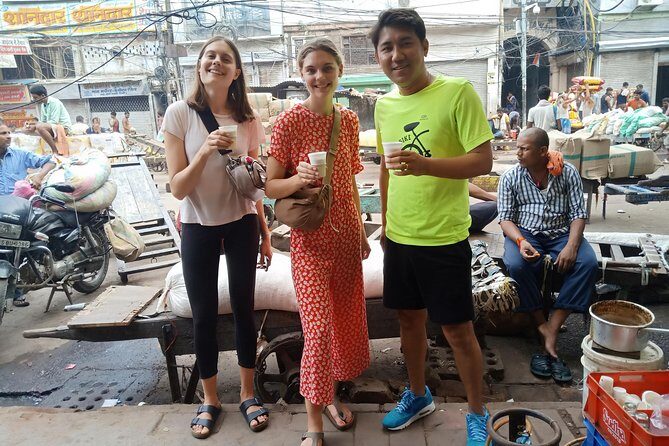
Your first stop is Pasar Chandni Chowk, and it gets the most time—about 1 hour 30 minutes. This is where the tour leans into the idea of Old Delhi as a place of variety in the same streetscape. The guide’s framing is about how different communities and crafts sit side by side, and it’s easy to see why this area is so important to how people shop, snack, and meet each other.
You’ll also get the strongest food-focus feel here, because the tour includes breakfast and multiple food tastings across the route. Even if you’re not a “big eater,” these tastings are a practical way to try local flavors without trying to guess what to order in the middle of a crowd.
Because this is a long stop, it’s also your chance to get your bearings. After you’ve walked a bit in the first market stretch, the rest of Old Delhi makes more sense. You’ll start recognizing the rhythm: small counters, quick purchases, and lots of movement through narrow lanes.
A consideration: 1.5 hours can be a lot if you’re sensitive to crowds or heat. If you don’t love dense streets, prepare yourself mentally and stick close to the guide so you don’t lose time.
Khari Baoli: spice and dry-fruit trading in one focused sprint
Next up is Khari Baoli, with about 20 minutes here. This stop is shorter on purpose. The tour’s message is clear: you’re going to a place where spice and dry fruits are a main event, then you move on.
What you’ll notice quickly is the smell. Spices are the headline, and they’re the kind of sensory clue that helps you understand why this trading area matters. Even with a short visit, you can get a real sense of how Old Delhi’s commerce feeds into kitchens across the city.
Practical tip for this stop: slow down just enough to look, then keep moving. If you stop too long at every stall, you can lose the flow of the group, especially in tighter lanes. If you’re shopping, keep it simple—know what you’re buying and why. No one wants to carry extra bags for the rest of the walk.
Also, the tour includes bottled water, which you’ll appreciate here. Strong spices and lots of walking can make you feel warmer than you expect.
Kinari Bazar: where wedding supplies become the main language
Then it’s Kinari Bazar for about 30 minutes. This is the “wedding street” stop, where the shops stock the kinds of items people use for Indian weddings. The value of including a place like this is that it adds a cultural angle that isn’t only about food. You see how craft and celebration show up in retail—what gets used, what gets bought, and how a whole tradition has a shopping ecosystem built around it.
You’ll likely spend your time scanning colors and details rather than looking for one specific landmark. That makes Kinari Bazar a good pause from the heavier sensory load of the spice markets, but it still keeps the visual excitement.
Since the stop is half an hour, treat it as a “focus lens,” not a leisurely browse. If you like taking photos, this is also the kind of street where you can get great close-up images without leaving the main action—just be mindful of foot traffic.
A small consideration: if you’re not into shopping, the time can feel like “looking at stalls.” Still, the cultural context from the guide helps it feel purposeful rather than random.






Gali Paranthe Wali: 150-year paratha shops and a fast taste hit
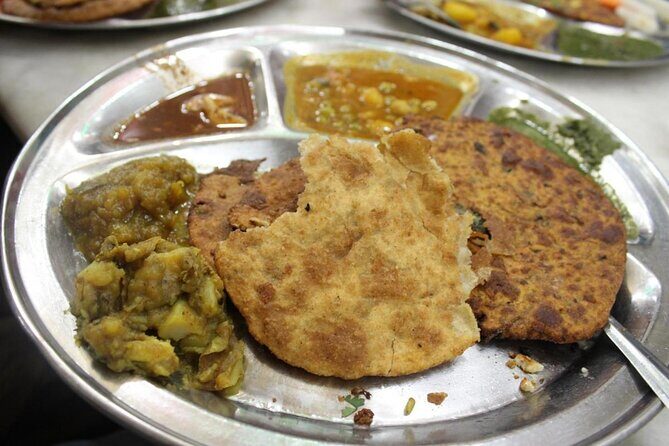
The tour’s food-forward lane comes next: Gali Paranthe Wali, about 15 minutes. This is the classic stuffed-bread stop, tied to parantha made at long-running shops—150 years is mentioned in the tour context. Even if you don’t consider yourself a “street food person,” this is one of the most direct ways to understand Old Delhi’s food culture in a short time.
Because the stop is only 15 minutes, you’ll want to treat it like a timed snack mission. The tour includes food tasting, so the goal here is not endless menu debating. It’s a chance to try something local that’s strongly associated with the area, then move on with the rest of your walk.
If you’re picky about timing or textures, plan for that now. You’ll be in a market lane, so it’s not the setting for slow, sit-down eating.
The Sikh temple stop: how faith softens the market noise
In the overall route, you also have a Sikh temple stop. The tour doesn’t just throw you into markets and then hop to the next shopping street. This inclusion matters because it gives you a contrast moment—a change in atmosphere where you’re reminded that community life isn’t only about transactions. It’s also about faith and daily practice.
I like temple stops in market tours because they add perspective. Markets can make everything feel commercial. A place of worship gives context for how people structure their lives around shared traditions even while walking through noisy bazaars.
Because the tour time at this stop isn’t itemized in the same way as the market points, don’t assume it’s long. Instead, treat it like a brief reset. Quiet attention here helps the rest of the walking feel more meaningful rather than just chaotic.
Red Fort outside view: Mughal symbolism in modern sightlines
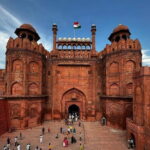
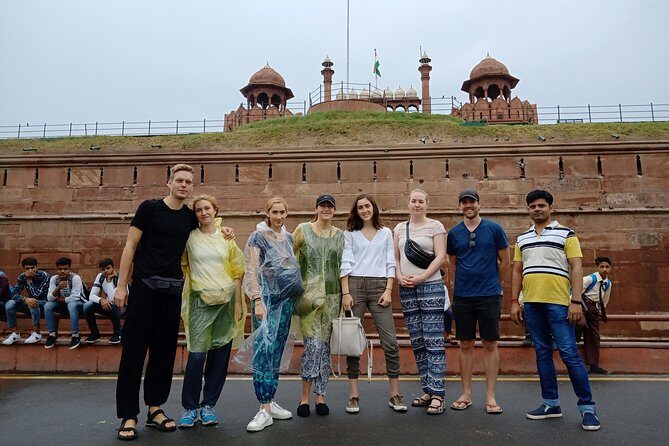
Finally, you get Red Fort from the outside, around 10 minutes, with a short briefing on the Mughal Empire fort palace and its significance in modern Indian life. This is a practical add-on: you get a landmark that anchors the geography, without turning the tour into a full museum day.
From a value standpoint, this works because it keeps your focus on the route. You’re not switching from markets to a separate time-consuming plan. Instead, you get a quick, guided snapshot—enough to understand why Red Fort is a headline sight, even if you’re mainly here for the markets and food culture.
If you want a fuller Red Fort visit (interior, galleries, exhibits), you’ll likely need a separate ticket and more time. But as a guided walking-tour closer, the outside view is a strong way to tie everything together.
Price and value: what you really get for $32.43
At $32.43 per person, this tour is priced like a solid half-day experience rather than just a sightseeing walk. The ticket includes local guide, breakfast, food tasting, coffee and/or tea, bottled water, and admission tickets tied to the scheduled stops.
That bundle is the big reason I think the price makes sense. In Delhi, food and entry costs add up fast if you do it on your own while also trying to stay oriented. Here, the tour handles the sequencing: you get food where it makes sense, and you get short guided context where you’d otherwise be guessing.
One point to keep in mind: no hotel pickup or drop-off is included. So you’ll need to make your own way to the meeting point near Lal Qila. The upside is that you’re starting close to the core of Old Delhi, so you’re not losing time traveling across the city before the tour even begins.
Who this Old Delhi market walk is best for (and who should think twice)
This tour fits best if you want a hands-on Old Delhi experience that mixes markets + food + brief culture framing. If you like street life, you’ll probably enjoy how the route moves from spice trading to wedding shopping culture to a famous paratha lane, with a temple stop adding balance.
It’s also a good option for first-time visitors who don’t want to figure out the whole city on their own. The guide’s job is to connect the dots quickly so you don’t just see crowds—you understand what those crowds are doing.
Who might want to reconsider? If you hate walking through crowded areas or you get overwhelmed by intense smells and close quarters, this could feel like too much. It’s also not described as a slow, wide-space route. You’re in narrow lanes, and the time is set up to keep you moving.
Good fit for families? Children must be accompanied by an adult, so families are welcome as long as everyone can manage the walking time and crowd conditions.
Should you book this walking tour?
If your goal is a first taste of Old Delhi that goes beyond one monument photo, I’d book it. The strongest reason is the mix of practical inclusions—breakfast, coffee/tea, tastings, bottled water, and guided stop context—paired with a route that hits spice, wedding shopping, and old-food culture without dragging the day out.
I’d pass or choose another style of tour only if you strongly prefer quieter areas, or if you’re not comfortable with narrow crowded lanes. Otherwise, it’s a smart value way to see why Old Delhi still runs on markets, faith, and food.
FAQ
How long is the walking tour?
It’s about 3 hours 30 minutes.
What time does the tour start?
The start time is 11:30 am.
Where does the tour meet?
Meet at 839, Netaji Subhash Marg, Lal Qila, Old Delhi, New Delhi, Delhi 110006, India.
Is the tour in a small group?
Yes. The group size has a maximum of 14 travelers.
What’s included in the price?
Inclusions are bottled water, breakfast, food tasting, coffee and/or tea, and a local guide. Admission tickets are included at the scheduled stops.
Is hotel pickup or drop-off included?
No. Hotel pickup and drop-off are not included.
Is there a mobile ticket?
Yes. The tour features a mobile ticket.
Can children join the tour?
Yes, but children must be accompanied by an adult.
What if I need to cancel?
Cancellation is free up to 24 hours before the experience start time for a full refund. Within 24 hours, the amount paid is not refunded.