REVIEW · NEW DELHI
Golden Triangle Tour Delhi-Agra-Jaipur
Book on Viator →Operated by Royal Majestic Tour · Bookable on Viator
Golden Triangle trips move fast. That is also the magic.
This 4-day circuit stitches together Delhi–Agra–Jaipur with a guide in each city and an air-conditioned vehicle doing the long drives for you. I really like that the schedule is built around big-picture, high-impact landmarks: Taj Mahal at sunrise on Day 2, plus iconic Delhi and Jaipur stops that map well to a first visit. You also avoid the usual headache of coordinating between cities, since each leg is typically a 4 to 6 hour road run, and you get pickup plus a mobile ticket for the day-to-day flow.
The main catch is pacing. With a packed list of stops and road time every day, you’ll want to slow yourself down at each monument. If you rush, you’ll lose what makes the Golden Triangle special.
In This Review
- Golden Triangle by road: what 720 km feels like in 4 days
- Day 1 in Delhi: Qutub Minar, Lotus Temple, and the Rajpath photo stops
- Qutub Minar: the victory tower UNESCO calls out
- Lotus Temple: free, open to all, and calm
- India Gate: a war memorial with scale you can feel
- Parliament House and Rashtrapati Bhavan: exterior context, not deep entry
- Then it’s on to Agra
- Sunrise Taj Mahal plus Agra Fort: why this day is the centerpiece
- Taj Mahal at sunrise: plan for the magic, budget for tickets
- Agra Fort: Mughal power in a more rugged setting
- Drive onward to Jaipur
- Jaipur in one day: Hawa Mahal, Amber Palace, and the stepwell stop
- Hawa Mahal: quick photos from the outside edges
- Amber Palace (Amber Fort): the main royal stop
- Panna Meena ka Kund: stepwell shapes your pacing
- Jal Mahal: the lake palace moment
- City Palace: where power becomes the street layout
- Jantar Mantar: astrology-meets-architecture science tools
- Pacing and comfort: how to make this packed loop feel humane
- Price and value: why $283.32 can be a fair deal
- Who should book this Golden Triangle loop?
- Should you book Golden Triangle Delhi–Agra–Jaipur?
- FAQ
- FAQ
- What’s the duration of the Golden Triangle Tour Delhi–Agra–Jaipur?
- What time does the tour start?
- Does the price include pickup?
- What’s included in the tour price?
- Are hotel and meals included?
- Are monument entry fees included?
- What stops are included in Delhi on Day 1?
- What are the main Agra stops?
- What are the main Jaipur stops on Day 3?
- Will I be dropped back in Delhi?
- What is the cancellation policy?
Golden Triangle by road: what 720 km feels like in 4 days
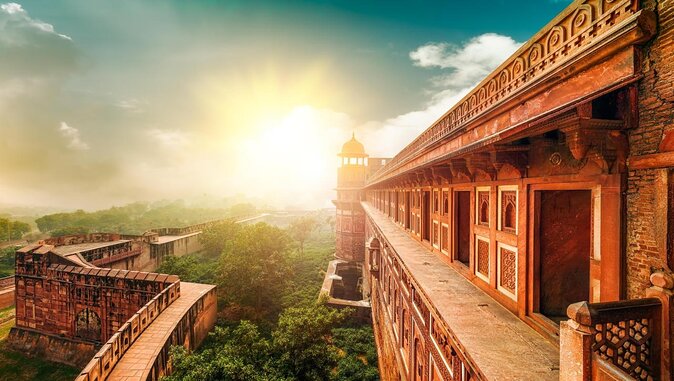
The classic Golden Triangle route forms a triangle on the map: New Delhi in the north, Agra in the middle, Jaipur in the west. By road it’s about 720 km, and the itinerary is designed like a relay—drive, see, drive again.
Start time is 8:00 am, and you’ll spend a lot of hours inside the vehicle, especially on the transfer days:
- Delhi to Agra: about 4 hours
- Agra to Jaipur: about 4 hours
- Jaipur back to Delhi (or to Jaipur airport): about 5 hours
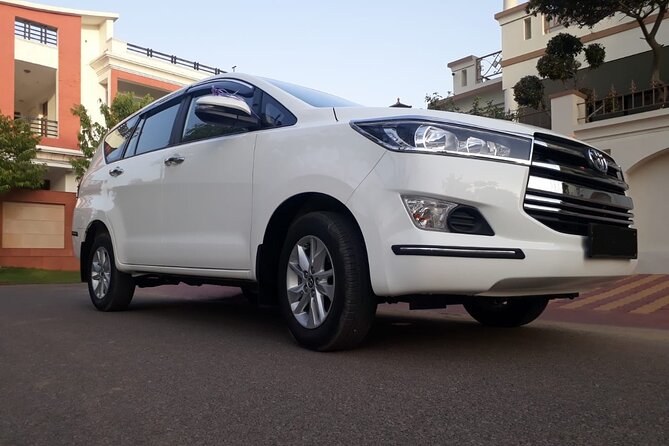
That means your biggest comfort lever is simple: plan for the ride. The tour includes an air-conditioned vehicle, which matters on long stretches. If you’re the kind of person who gets antsy in transit, you’ll appreciate that you don’t have to negotiate transport at every changeover.
Also note what is not included. Hotel and meals are on you, and monument entry fees are not included. Guides help you make sense of what you’re seeing, but you’ll still need tickets for many of the major sights.
Day 1 in Delhi: Qutub Minar, Lotus Temple, and the Rajpath photo stops
Day 1 is a tight sweep through central Delhi landmarks—good for orientation, great for photos, and easy to build your bearings for the rest of the trip.
You can also read our reviews of more tours and experiences in New Delhi.



Qutub Minar: the victory tower UNESCO calls out
You start at Qutub Minar, a UNESCO World Heritage Site and one of Delhi’s most recognizable structures. It’s described as a minaret and victory tower, and the complex includes the minaret’s history, including that it reached 73 meters before the final section was added after 1369. You’ll get about an hour here.
One practical note: admission is not included, so budget for tickets if you want the full experience rather than just exterior views.
Lotus Temple: free, open to all, and calm
Next is the Lotus Temple, famous for its flowerlike shape. The key detail here is that it’s open to everyone, regardless of religion. It’s also a free stop, and you only have about 30 minutes.
This is a nice contrast after a busy morning site. If you want a moment that feels less like a fortress landmark and more like a space to slow down, this is your chance.
India Gate: a war memorial with scale you can feel
India Gate is quick—about 30 minutes—but it hits with meaning. It’s an All India War Memorial and commemorates 70,000 soldiers. It’s free, and it sits along the Rajpath ceremonial axis area, so you’ll likely see it as part of a broader city-picture day.
Parliament House and Rashtrapati Bhavan: exterior context, not deep entry
You also stop at Parliament House and Rashtrapati Bhavan. Both are listed as stops with short time windows, and admission tickets aren’t included.
Think of these as orientation stops. You’re not here for ticketed interiors; you’re seeing where power sits in the city layout and how the grand avenue framing connects these monuments.


Then it’s on to Agra
After lunch, you continue to Agra via the Yamuna Expressway, about 4 hours. This is one reason the tour is popular: you don’t waste time figuring out transit between cities—you’re already moving toward the main event.
Sunrise Taj Mahal plus Agra Fort: why this day is the centerpiece
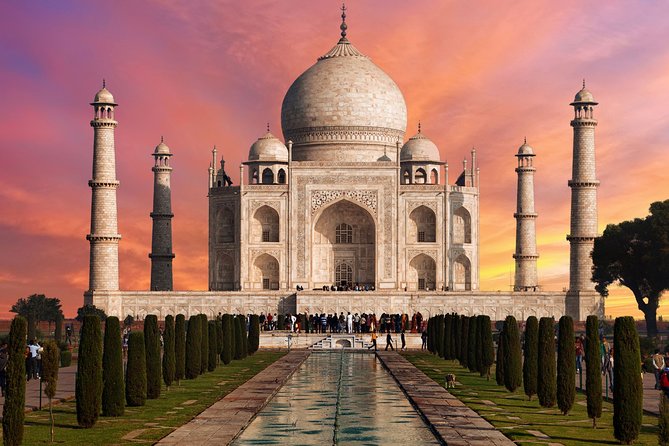
Day 2 is built around one big moment: Taj Mahal at sunrise.
Taj Mahal at sunrise: plan for the magic, budget for tickets
The Taj Mahal visit is listed as 1 hour 30 minutes, and the tour frames it as a sunrise experience. The mausoleum is described as ivory-white marble on the Yamuna’s southern bank, commissioned in 1632 by Mughal emperor Shah Jahan.
Even though the visit time is set, remember that admission tickets are not included. Sunrise is also a timing choice. You’re trading extra sleep for better light and a more special atmosphere. If you prefer a relaxed pace over early starts, this is the one day where you’ll feel that tradeoff most.
Agra Fort: Mughal power in a more rugged setting
After Taj, you move to Agra Fort for about 1 hour. It’s described as a Mughal Dynasty residence until 1638, when the capital shifted to Delhi, and it was later captured by the British.
This is a good counterbalance to the Taj. The Taj is about perfection and design choices made for one specific purpose. Agra Fort is about rule, defense, and everyday scale of imperial life. If you like seeing how regimes physically arranged their authority, this stop matters.
Again, admission isn’t included, so plan for entry if you want inside access.
Drive onward to Jaipur
After your Agra time, it’s about 4 hours to Jaipur. You’re not given much slack time for sitting around, so this leg keeps the tour’s theme intact: see the big stuff, then keep moving.
Jaipur in one day: Hawa Mahal, Amber Palace, and the stepwell stop
Day 3 is the densest day of iconic Jaipur landmarks. You go from façade-famous to royal fortress to astronomy tools—all in one sweep.
Hawa Mahal: quick photos from the outside edges
You begin with Hawa Mahal – Palace of Breeze, a red and pink sandstone structure on the edge of City Palace and extending to the women’s chambers area. Your time is short, about 10 minutes, and no entry fee is included.
So treat this as an excellent photo primer. You’ll want to look for the façade details and the idea of how the building works from its specific position.
Amber Palace (Amber Fort): the main royal stop
Next is Amber Palace, also tied to Amer, located about 11 km from Jaipur. You have about 1 hour 30 minutes.
This is the stop with the clearest “one of the big reasons to come” energy. It’s described as originally built by the Meenas and later connected to broader developments under subsequent rulers. Even without long wandering time, the fortress-palace feel comes through fast.
Admission isn’t included, so expect to pay tickets if you want full access.
Panna Meena ka Kund: stepwell shapes your pacing
Then you get Panna Meena ka Kund, a square-shaped stepwell with stairs on all four sides and a room on the northern wall. You spend about 15 minutes.
This is one of those stops that can feel unexpectedly satisfying. It’s smaller than Amber Fort, but it gives your brain a different visual rhythm—geometry, steps, and a setting that’s not as photo-pressured.
Jal Mahal: the lake palace moment
You stop at Jal Mahal for about 10 minutes. It’s a palace in the middle of Man Sagar Lake, renovated and enlarged in the 18th century by Maharaja Jai Singh.
Even if you’re not spending time inside, it’s a quick visual pause. It breaks up the royal architecture sequence with something that feels water-framed rather than fortress-framed.
City Palace: where power becomes the street layout
Next is The City Palace, about 1 hour 30 minutes. It’s described as established by Maharaja Sawai Jai Singh II, after moving his court to Jaipur in 1727.
This stop is about seeing how a royal seat grows into a city centerpiece. City Palace sits in the same broader story as Amber, but it’s closer to Jaipur’s day-to-day identity, not just its outskirts.
Jantar Mantar: astrology-meets-architecture science tools
Finally, Jantar Mantar – Jaipur takes about 30 minutes. It’s a collection of nineteen architectural astronomical instruments built by Sawai Jai Singh II, completed in 1734.
This is the “wait, this is actually built science” stop. It gives you a sense of how rulers used measurement and design, not just monuments and palaces.
No admission is included here either, so be ready for entry fees if you want to go beyond the exterior.
Pacing and comfort: how to make this packed loop feel humane
This tour is efficient. It is also dense.
Here is how to keep it from turning into a stamp-collection day:
- Slow down on the anchor stops. Taj Mahal and Amber Palace deserve your real attention. If you sprint through those, the rest will feel rushed even if you technically hit every scheduled time.
- Use the natural breaks. Short stops like Lotus Temple, Jal Mahal, and India Gate are best when you treat them as scene-change moments, not deep-study missions.
- Plan your own timing for food and rest. Food and beverage aren’t included, so you’ll need to manage meals yourself during the day. That also gives you control—don’t let hunger drive your mood.
- Remember entry tickets aren’t included. Many of the named sights are ticketed. If you show up without those tickets planned in your head, the day can feel more stressful than it needs to.
One small practical detail that helps: the tour includes a mobile ticket, and there are guides for 1 day in each city. That usually means you get enough explanation to understand what you’re looking at without needing to crowdsource everything on your own.
And yes, one review tip echoes this: don’t go as fast as you can. Go as slow as you can while still enjoying the ride. The route is short on slack time.
Price and value: why $283.32 can be a fair deal
At $283.32 per person, this doesn’t look like a bargain on the surface. But value is about what’s bundled.
Here’s what you get:
- Air-conditioned vehicle across the major transfers
- Tour guides for 1 day in each city
- Pickup offered
- Group discounts
- Mobile ticket
- A full Delhi–Agra–Jaipur loop with structured time at major landmarks
And here’s what you pay separately:
- Hotel accommodation
- Food & beverage
- Monuments entry fees
So the deal becomes clear. If you would otherwise pay for private transport between cities and add knowledgeable guidance inside each city, this tour’s package pricing starts making more sense. It’s especially relevant if you want the convenience of a guided schedule without building your own transport plan from scratch.
This is also the kind of tour where early coordination helps. One review mentioned early contact from Rishi—that kind of proactive communication reduces friction when you’re arriving in unfamiliar places.
Who should book this Golden Triangle loop?
This tour fits best if you:
- Want a first-timer outline of Delhi, Agra, and Jaipur without solving transit logistics
- Prefer guided landmark time over planning each stop alone
- Are okay with a packed schedule and long road stretches
- Travel as part of a group where group discounts can apply
It may not fit if you:
- Want lots of free time in each city for wandering
- Hate early starts like the sunrise Taj Mahal
- Don’t want to budget for monument ticket fees on top of the tour price
Should you book Golden Triangle Delhi–Agra–Jaipur?
If your goal is to hit the Golden Triangle highlights in a short window, this is a solid way to do it. The value is in transportation handled for you, plus guides across the three cities, plus a schedule built around the biggest draw: the sunrise Taj Mahal.
My call: book it if you like structure and you’re realistic about pacing. Go slow where it counts, especially on the anchor sights, and treat shorter stops as quick scene changes. If you want a slower, deeper travel pace, you might be happier building a more open itinerary instead.
FAQ
FAQ
What’s the duration of the Golden Triangle Tour Delhi–Agra–Jaipur?
The tour is listed as 4 days (approx.), covering Delhi, Agra, and Jaipur, plus a return to Delhi (or drop-off at Jaipur airport) on Day 4.
What time does the tour start?
The meeting time is 8:00 am.
Does the price include pickup?
Yes, pickup is offered.
What’s included in the tour price?
Included features are an air-conditioned vehicle, tour guides for 1 day in each city, and a mobile ticket. The tour also notes group discounts.
Are hotel and meals included?
No. Hotel accommodation and food & beverage are not included.
Are monument entry fees included?
No. Monuments entry fees are not included.
What stops are included in Delhi on Day 1?
Day 1 includes Qutub Minar, Lotus Temple, India Gate, Parliament House, and Rashtrapati Bhavan, followed by travel to Agra.
What are the main Agra stops?
In Agra on Day 2, you visit the Taj Mahal at sunrise and Agra Fort, then continue to Jaipur.
What are the main Jaipur stops on Day 3?
Day 3 includes Hawa Mahal, Amber Palace, Panna Meena ka Kund, Jal Mahal, The City Palace, and Jantar Mantar – Jaipur.
Will I be dropped back in Delhi?
On Day 4, after breakfast, the tour includes an approximately 5-hour journey back to Delhi or a drop-off at Jaipur airport.
What is the cancellation policy?
You can cancel up to 3 days in advance for a full refund. If you cancel less than 3 days before the start time, the amount paid is not refunded.