REVIEW · NEW DELHI
Full Day Old & New Delhi City Tour
Book on Viator →Operated by Tour4Fun · Bookable on Viator
Delhi can feel like a lot. This tour turns that chaos into a clear route of major sights, with an air-conditioned car and a guide keeping the day moving.
I like the mix of Old Delhi and New Delhi in one long loop, so you get Mughal monuments, a Gandhi memorial, and modern landmarks without arranging separate trips. I also like that the day includes built-in logistics like pickup/drop-off, bottled water and masala tea, plus key admission and even a rickshaw ride.
One thing to consider: it’s an 8-hour day and some stops depend on timing, so you may not see absolutely everything if the schedule runs tight, and lunch is not included.
In This Review
- Key highlights to look for
- How this Old and New Delhi day stays organized
- Qutub Minar: start with the 73-meter vertical wow
- Lotus Temple: a modern reset in white marble petals
- Humayun’s Tomb: where Mughal garden ideas take root
- Raj Ghat: Gandhi’s final resting place by the Yamuna
- Jama Masjid and Old Delhi courtyards: scale you can feel
- Chandni Chowk by rickshaw: the market side of Delhi
- Khari Baoli: spice shopping in Asia’s big market street
- Gurudwara Sis Ganj Sahib: a stop when timing allows
- India Gate and government landmarks: modern Delhi from the road
- Red Fort: Shah Jahan’s former royal residence
- Price and value: what you really get for $11.19
- Timing, crowding, and the reality of an 8-hour route
- Who should book this tour
- Should you book this Old and New Delhi city tour?
- FAQ
- What is the duration of the tour?
- Does the tour include hotel or airport pickup and drop-off?
- Which major sights are part of the tour?
- Is lunch included?
- Are entrance fees and camera fees included?
- Is a rickshaw ride included?
- What is the cancellation policy?
Key highlights to look for

- Air-conditioned private car with pickup and drop-off to keep your day comfortable
- UNESCO sights like Humayun’s Tomb and Qutub Minar on the same route
- Lotus Temple for a calm reset in white marble petals
- Old Delhi walking blocks by design, including Jama Masjid and the Chandni Chowk area
- Rickshaw + spice market time to make the markets feel real, not rushed
- Guide support, with Anil specifically praised for staying calm and organized
How this Old and New Delhi day stays organized
This is built as a guided, single-day route that stitches together two very different Denlis: the Mughal-era core and the 20th-century government-and-ceremony center. You start with a pickup from the airport or your hotel in a private air-conditioned car. Then you bounce between neighborhoods with a driver, while your guide handles the pacing and context.
The practical value here is that you’re not doing the hard parts yourself—finding sites, matching them to opening hours, and negotiating transport in traffic. The route is also “layered”: big ticket monuments first, then Old Delhi’s human scale with courtyards, markets, and street scenes.
Group size is capped (up to 50), and that can matter in Delhi. You still get the advantages of a group schedule, but it’s large enough that your guide’s ability to manage time matters. The good news: the guide service is a core part of the package, and one guide named Anil is repeatedly described as cool, calm, and steady under pressure.
You can also read our reviews of more city tours in New Delhi


Qutub Minar: start with the 73-meter vertical wow
The day begins at Qutub Minar, the towering brick minaret often credited as the world’s tallest of its kind. It rises about 73 meters, and it’s tied to the early Delhi Sultanate period—built in 1193 by Qutub-ud-din Aibak right after the defeat of Delhi’s last Hindu kingdom. That context matters: this isn’t just a tall photo spot, it’s a statement of a new power era.
What you’ll likely enjoy most is how the site holds attention even before you “read” it. The vertical scale is the main event. If you’re the type who likes architectural details, this is a good opening stop because you can focus on shape, stonework, and the sheer presence of the minaret.
A practical note: even though your stop time is around an hour, the site is a real landmark complex. You’ll want to look, pause, and still keep an eye on the group’s timing so you don’t feel like you’re late for the rest of the day.
Lotus Temple: a modern reset in white marble petals
After Qutub Minar, the route shifts to Lotus Temple. It’s a striking, petal-shaped white marble building, and it’s also one of the last of seven Bahai temples in the world. Unlike the older Mughal sites, Lotus Temple gives you a different kind of experience: modern, geometric, and visually calm.
Your scheduled time is about 45 minutes, which is enough to take in the shape, walk around, and get a feel for the space without rushing. This stop works as a palate cleanser between centuries of fortifications and memorials.
If you’re sensitive to crowds, it’s still worth showing up early in your day energy. Lotus Temple is a popular Delhi sight, but the architecture is so distinctive that it still feels satisfying even when the atmosphere is busy.
Humayun’s Tomb: where Mughal garden ideas take root
Next comes one of Delhi’s most rewarding monuments: Humayun’s Tomb. This UNESCO World Heritage Site is a Mughal monument and is often described as the inspiration behind the Taj Mahal idea of a grand garden-tomb. It was recognized as a UNESCO site in 1993, and it’s described as the first garden-tomb on the Indian subcontinent.
Why this stop is valuable is simple: you get to see how power, grief, and landscape planning mix in the Mughal approach. You’re not only looking at a building. You’re looking at the entire concept—how symmetry and gardens help turn a tomb into something visitors experience slowly.
Your time here is about an hour, and that’s a good amount. The space invites pauses, especially if you enjoy taking photos with the tomb’s layout in frame.
Raj Ghat: Gandhi’s final resting place by the Yamuna
From the Mughal site, you move toward a very different kind of significance: Raj Ghat. This is where Mahatma Gandhi was cremated on 31 January 1948, with his ashes buried there. It sits near the sanctity of the Yamuna River, which gives the stop a quiet, reflective tone compared with the grand monuments around it.
The scheduled time is about 30 minutes. That’s not a lot, but it’s enough to pay respects, walk through the space, and take in the meaning without feeling like you’re on a stopwatch the whole time.
If you want this stop to land emotionally, treat it as a pause in the day rather than another “checkmark.” Even a short stop can feel longer when you slow your pace and keep your attention on what the place represents.
You can also read our reviews of more tours and experiences in New Delhi




Jama Masjid and Old Delhi courtyards: scale you can feel
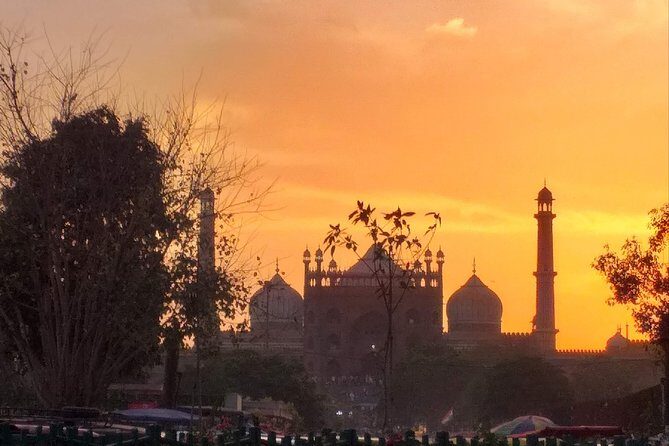
Then the tour moves fully into Old Delhi with Jama Masjid, one of the biggest and most iconic mosque experiences in India. It’s described as the largest mosque in India, built in 1656 with the help of 5000 workers. It also sits in front of the Red Fort, which helps you understand how Old Delhi’s royal and religious landmarks connect.
Your time is about 30 minutes, and the main focus is walking around the red sandstone courtyard area. Even with limited time, the scale is noticeable. This is one of those stops where you’ll feel the size before you measure it, and where people-watching is part of the experience.
Practical consideration: courtyards can be uneven underfoot and filled with movement, so keep a steady pace and watch your footing. With only half an hour, it helps to decide early what you want most—wide courtyard views, mosque details, or just soaking in the energy of the place.
Chandni Chowk by rickshaw: the market side of Delhi
After Jama Masjid, the day shifts to the markets. The tour includes Chandni Chowk, focusing on the area around Pasar Chandni Chowk. This is described as one of the busiest and oldest streets of Delhi, known for markets of electronics, jewellery, textile, wedding items, home decoration, and shoes.
You also get a rickshaw ride, with rickshaw fees included in the package. That matters because rickshaws are part of the street rhythm here. A ride helps you cover ground and see more than you could on foot in a short window.
Scheduled time is about 30 minutes for the Chandni Chowk stop, which means you’ll want to treat it like a focused sampler. Look first, then buy only if something truly catches your eye. The market feel is the point.
Khari Baoli: spice shopping in Asia’s big market street
Right after Chandni Chowk, the tour heads to Khari Baoli, described as Asia’s biggest spice market. This street is dedicated to spices, dried fruits, nuts, and herbs. The point here isn’t only shopping. It’s understanding how Delhi’s food culture and trade culture connect in one place.
Your time is about 30 minutes, which is enough for a quick walk-through, to spot the variety, and to decide if you want to pick up small spice gifts. If you’re sensitive to strong smells, you’ll still be able to see the shops from a careful distance—the market is the attraction.
This is one of the best places in the day to slow down and let your senses do the work. After big monuments, Khari Baoli can feel like a natural gear shift.
Gurudwara Sis Ganj Sahib: a stop when timing allows
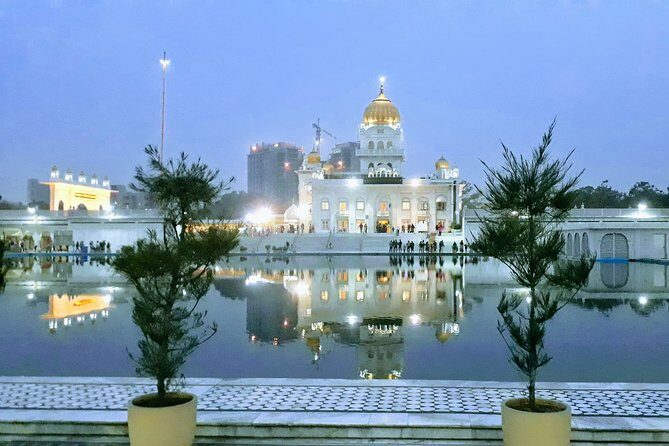
There’s also an optional-feeling cultural stop at Gurudwara Sis Ganj Sahib, dedicated to Guru Teg Bahadur. It was built in 1785, and the visit depends on the timings of the place.
This is a good example of how the tour handles real-world conditions. Some stops aren’t just on a static map—they depend on when places are open and when the group can arrive smoothly. If you make it here, it adds depth to the day by balancing the Mughal-era focus with Sikh heritage.
If you don’t get this stop, the rest of the tour still covers a full set of major Delhi landmarks.
India Gate and government landmarks: modern Delhi from the road
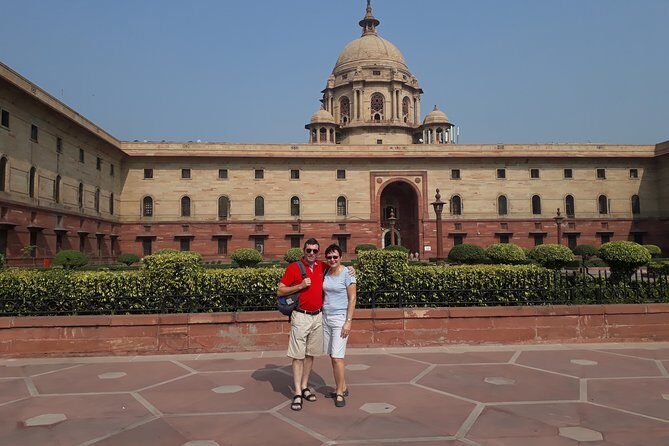
Later in the day, the route includes major modern landmarks like India Gate, plus drive-by viewing of places connected with President House and Parliament House. These are the kinds of Delhi sights you usually see from a car or a quick roadside pause rather than as long entry visits.
Why this matters: it helps you understand the city as more than monuments. You’re also seeing Delhi as an operating capital—where ceremonies, governance, and national symbolism shape the skyline and street logic.
The time you’ll get here is tied to traffic and the rest of the schedule, so the best approach is to keep your camera ready and grab a couple of steady shots rather than trying to turn the drive-by into a long stay.
Red Fort: Shah Jahan’s former royal residence
To close the day, the tour visits the Red Fort. This former royal residence was built by the Mughal emperor Shah Jahan, and it’s one of the most memorable Delhi landmarks because it ties together authority, architecture, and the idea of a “center” in the city.
Your actual experience here depends on the day’s pacing, but the structure and scale tend to create a strong impression even if you don’t spend hours inside. This stop is also a satisfying way to end a day that started with Mughal-era power and craftsmanship.
After the last stop, you’re dropped off near the end area in Old Delhi at Shani mandir gate no 01, Lal Quila metro station, Netaji Subhash Marg.
Price and value: what you really get for $11.19
At $11.19 per person, the biggest value piece isn’t just the low price tag. It’s what’s wrapped into the day: pickup and drop-off, a private air-conditioned car with a driver, a tour guide service, plus bottled water and masala tea.
On top of that, the package includes key costs like monuments entrance and camera fees, and the rickshaw ride fees (with an all-inclusive option). For Delhi, that kind of bundle reduces the guessing game and the extra payments you’d otherwise have to handle one by one.
Two costs to keep in mind: lunch is not included, and you may want to bring extra spending money if you plan to shop at Chandni Chowk and Khari Baoli. If you treat lunch as a separate plan and you keep shopping intentional, the day feels like a smart deal.
Timing, crowding, and the reality of an 8-hour route
This is an 8-hour tour, and it aims to cover “most” of the major places on the route. The day moves fast, which is the trade-off for seeing many famous Delhi landmarks.
A good way to make it work for you:
- Keep your expectations realistic: you’ll see highlights, not everything in depth.
- Watch the optional timing stop (like Gurudwara Sis Ganj Sahib) as a bonus, not a guarantee.
- Be ready for lots of transitions between neighborhoods in a single day.
Also, because it’s a group tour, the pacing is designed around keeping everyone together. If you’re the kind of traveler who needs long, silent time alone at every monument, you might feel slightly rushed at some stops. If you’re happy with focused visits and good guidance, it’s a strong format.
Who should book this tour
This tour is a great fit if you want:
- A first-time Delhi day that covers both Old and New Delhi in one go
- A guided day where you don’t have to plan transport across the city
- Included extras like masala tea, bottled water, major entrance/camera fees, and a rickshaw ride
It may be less ideal if you hate structured group pacing, you want a long lunch break, or you prefer museum-style “slow looking” rather than landmark-hopping.
Should you book this Old and New Delhi city tour?
If your goal is to get oriented in Delhi fast, this is one of the better-value ways to do it. The route hits the headline monuments (Qutub Minar, Humayun’s Tomb, Jama Masjid, Red Fort) and adds meaningful stops like Raj Ghat and the market streets around Chandni Chowk and Khari Baoli. Add in the air-conditioned private car, included entrance and camera fees, and even rickshaw cost handling, and the day feels practical.
Book it if you want a guided highlights tour with a smooth logistics net. Consider skipping or choosing a slower option if you strongly prefer deep time at fewer sites or you plan to spend a lot on lunch and shopping and need more breathing room.
FAQ
What is the duration of the tour?
The tour lasts about 8 hours.
Does the tour include hotel or airport pickup and drop-off?
Yes. Pickup and drop-off from the airport or your hotel are included.
Which major sights are part of the tour?
The tour includes Qutub Minar, Lotus Temple, Humayun’s Tomb, Raj Ghat, Jama Masjid, Chandni Chowk (including Pasar Chandni Chowk), Khari Baoli spice market, and stops that include Red Fort and India Gate. President House and Parliament House are included as part of the route, and Gurudwara Sis Ganj Sahib depends on timings.
Is lunch included?
No. Lunch is not included.
Are entrance fees and camera fees included?
Yes. Monuments entrance and camera fees are included (as part of the all-inclusive package option).
Is a rickshaw ride included?
Yes. Rickshaw ride fees are included.
What is the cancellation policy?
Free cancellation is available. You can cancel up to 24 hours in advance for a full refund; cancellations within 24 hours are not refunded.