REVIEW · NEW DELHI
Full Day 8 Hours Old and New Delhi City Tour.
Book on Viator →Operated by GREEK INDIA TOUR · Bookable on Viator
Delhi moves fast, and so should you.
This full-day Old and New Delhi tour is a smart way to see huge contrasts in one go, from prayer halls and spice streets to Mughal and modern landmarks. I like that it hits the classics without turning the day into a maze: you start early, you get a plan, and you’re not stuck figuring out routes and timing on your own. I also like the mix of sacred places and landmarks, so the city feels like more than postcard scenery.
The trade-off is simple: it’s a lot of stops in 7 to 8 hours, so you’ll want comfortable shoes and a mindset of quick, focused visits—not long museum-style wandering. If you’re sensitive to crowds or want extra time for shopping or photos, you may feel rushed. But if your goal is an efficient first day in Delhi, it’s a strong value.
In This Review
- Key Highlights You’ll Care About
- Old Delhi First: Turning 8AM Into Real Culture
- Jama Masjid to Spice Markets: What This Part Really Means
- From Red Fort to New Delhi Icons: Fast, Focused Sightseeing
- Agrasen ki Baoli and Humayun’s Tomb: Two Kinds of Wonder
- Lotus Temple: A Calm Ending With Big Visual Impact
- Price and Logistics: The Real Value Check for $11
- Who Should Book This Tour (and Who Might Skip It)
- Should You Book This Old and New Delhi City Tour?
- FAQ
- What time does the pickup start?
- How long is the tour?
- Is the tour private?
- Is pickup offered from hotels?
- What transportation is included?
- Is there a guide?
- Are admission tickets included?
- Are meals included?
- Is there a place for dinner during the tour?
- Can I get a refund if I cancel?
Key Highlights You’ll Care About

- Old Delhi at the start of the day with guided stops that make sense of the chaos
- Jama Masjid + Chandni Chowk + Khari Baoli as a single Old Delhi storyline
- Modern landmarks in New Delhi including India Gate and the drive-past sights
- Humayun’s Tomb + Agrasen ki Baoli for architecture you can actually spot and discuss
- Lotus Temple gives you a calmer, reflective end to the day
Old Delhi First: Turning 8AM Into Real Culture
You begin around 8:00AM with pickup from your hotel (or a designated location), meeting your guide and driver. That early start matters in Delhi. Not because you’ll magically beat every traffic jam, but because you’ll get to experience Old Delhi when the streets are more manageable and the light is better for photos.
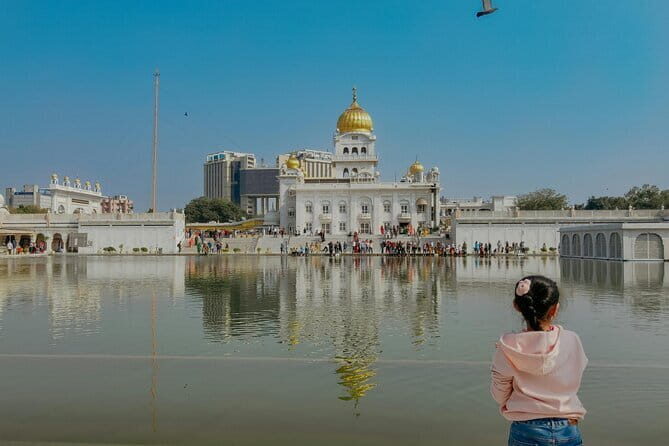
Your first major stop is Gurudwara Bangla Sahib. This Sikh gurdwara is known for its spiritual importance and standout architecture. It’s also a place where you can see faith as something everyday and lived-in, not just a monument you pass by. The key here is attitude: keep your behavior respectful, dress appropriately, and follow any guidance from staff. The payoff is a site that feels human-scale and welcoming.
Next you head into Jama Masjid, one of India’s biggest and most iconic mosques, right in the heart of Old Delhi. This is where the guide really earns their keep. A guided walkthrough helps you understand what you’re looking at—massive scale, detailed design, and how the mosque anchors the neighborhood around it. You get about an hour here, which is enough time to orient yourself, see key views, and not feel like you’re sprinting through.
Old Delhi’s energy intensifies after that. The tour flows into Chandni Chowk, the famous shopping area where the streets are packed with everything from spices and dried fruit to silver jewelry and colorful saris. Then you swing into Khari Baoli, often described as Asia’s largest wholesale spice market. Even with limited time, you’ll leave with a clear sense of how the city trades goods and flavors—not just how it looks.
You can also read our reviews of more city tours in New Delhi


Jama Masjid to Spice Markets: What This Part Really Means
If you’ve only ever seen Indian markets through shopping-center photos, this stop cluster will reset your expectations. What you’re really seeing is a working city economy, right next to major religious space. You can almost feel the different “rhythms” as you move: quiet reverence at the gurdwara, big architectural presence at Jama Masjid, then the sensory overload of lanes that smell like spices and passersby who move with purpose.
A practical tip: plan for your senses before you plan for your camera. In Old Delhi, it’s easy to focus on photos and forget how intense it can be—heat, noise, close crowds, and strong scents. You’ll enjoy it more if you take in the atmosphere for a few minutes before you start shooting. That’s how you find good moments instead of just getting jostled for a good angle.
Khari Baoli is especially worth your attention because it’s not a tourist souvenir bazaar in the usual sense. The focus is on wholesale spice culture, and the market is known for operating since the 17th century. Even in a short visit, you can see the range of colors and packaging styles, plus you get a sense of why people talk about this place like it’s a Delhi institution rather than just a street stop.
Then, the tour pivots back toward “history you can point at,” with Red Fort next. The Red Fort has long been a symbol of power, tied to Shah Jahan’s reign, later marking a shift through British rule, and becoming associated with Indian independence celebrations. Even if you don’t go deep into every architectural layer, the guide can help you place it in time so it doesn’t feel like a random wall with tourists in front.
From Red Fort to New Delhi Icons: Fast, Focused Sightseeing
Once you reach New Delhi, the pace becomes more monumental. You’ll stop at India Gate, the famous All India War Memorial. It’s a quick visit—about 15 minutes—but India Gate is one of those landmarks where a short stop can still deliver. You get the proportions, the setting, and the obvious visual impact, and it gives you a mental map for where you are in the capital.
From there, the tour includes Parliament House in the route. You won’t spend hours inside (there’s no time slot for that in the provided plan), but you’ll see the building’s presence as the political heart of India—home to Lok Sabha and Rajya Sabha, known as Sansad Bhavan. This matters because it shifts the story from Mughal-era grandeur and old markets into modern state power and national symbolism.
One of my favorite parts of these “New Delhi by car” routes is what you notice when you’re not walking. You can actually see how the city is planned—wide roads, major institutional buildings, and the way traffic flows around these big sites. The drive-past stops also help if you’re doing this as a first overview day. Even with limited time at each place, you’ll build a baseline understanding of where things sit relative to each other.
The tour passes sights like:
- President’s House
- Parliament House
- Connaught Place
And yes, Connaught Place is a big deal because it anchors a lot of visitors’ later plans. Seeing it early helps you decide what you want to revisit when you have more time.
Agrasen ki Baoli and Humayun’s Tomb: Two Kinds of Wonder

Not every stop on this tour is about the most famous brand-name site. Agrasen ki Baoli is a great example. This historic stepwell—also called Ugrasen ki Baoli—is one of those places you tend to appreciate more after you slow down and look. You have about 30 minutes here, which is just enough for photos, a visual scan of the architecture, and to understand why stepwells are such a distinctive Indian solution to water.
Why it’s worth your time: stepwells are not just pretty. They’re engineering. Seeing one in person helps you connect Delhi’s built environment to climate and daily survival long before modern plumbing.
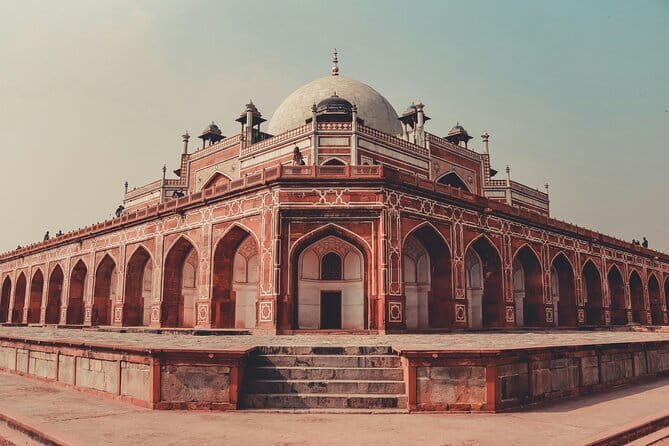
Then comes Humayun’s Tomb, one of the standout monuments on the route. It’s about 1 hour, and it’s your first “deep breath” after the hustle of earlier Old Delhi streets. Humayun’s Tomb is celebrated for Mughal architecture, and the guide helps you appreciate the layout and design choices instead of treating it like a single-point photo stop. Even if you’ve seen Mughal structures elsewhere, this one often feels especially readable because you can trace the composition and get a sense of scale without having to be an architecture critic.
Dinner fits into this portion of the day. The plan includes time for you to enjoy dinner at a popular Indian restaurant before returning to your hotel. Meals and drinks aren’t listed as included, so budget for it separately and treat dinner as your chance to recharge before the last spiritual stop.
Lotus Temple: A Calm Ending With Big Visual Impact

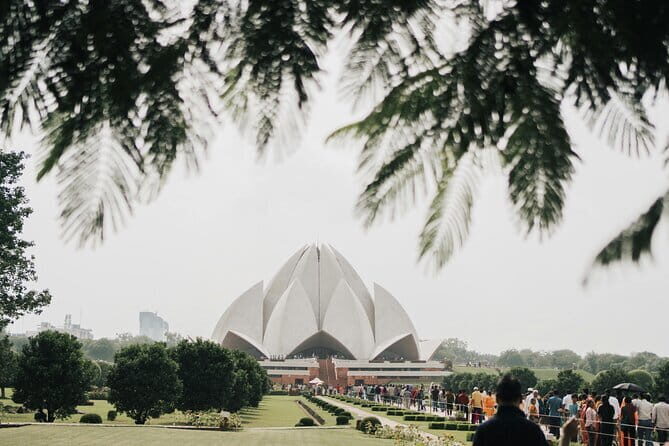
You finish at the Lotus Temple, a modern place of worship that draws attention for both design and spiritual purpose. You get about 45 minutes, and that timing is perfect. It’s late enough that you’ve covered Old and New Delhi, but early enough that you’re not completely wiped out.
The Lotus Temple’s “calm” isn’t just a vibe. It’s a physical change from the rest of the day—less market noise, fewer tight lanes, and a structure that feels designed for stillness. Even if you’re not a worshipper, you’ll likely find it easier to appreciate architecture here because the space encourages quiet and slower movement.
This stop also works as a memory anchor. When someone asks you what Delhi “felt like,” it’s hard to summarize hundreds of small moments. But the Lotus Temple gives you one clear end image: clean lines, recognizable shape, and a sense of order after the day’s motion.
You can also read our reviews of more tours and experiences in New Delhi




Price and Logistics: The Real Value Check for $11

At $11.00 per person, this tour is priced like it’s made for people who want the highlights without blowing the budget. The value isn’t just the sticker price—it’s what’s wrapped into the day:
- Pickup included from the Delhi/NCT and NCR region
- Private air-conditioned car with driver
- Live tour guide service
- Taxes and charges covered
- Key admissions included where applicable (like Jama Masjid and Humayun’s Tomb)
Also, you’re not sharing the day with strangers beyond your group. It’s described as a private tour/activity, meaning only your group participates. That matters for two reasons: you’re less likely to feel steamrolled by a crowd’s pace, and you can ask questions without shouting over dozens of other voices.
The big practical consideration is time management. With 7 to 8 hours on the clock including travel time, you’re moving. You’ll enjoy this more if you travel light, wear shoes you can stand in, and accept that each site is a focused visit, not an all-day deep study.
Meals and drinks aren’t included, and personal expenses are on you—so plan for water and a meal buffer. The itinerary structure gives you a dinner opportunity, but you should assume you’ll pay.
Finally, Delhi is a big city. Even with an efficient route, you’ll want realistic expectations about how much you can absorb in one day. The upside is that you’ll get a clear overview that makes later independent exploring easier.
Who Should Book This Tour (and Who Might Skip It)
This is a great fit if:
- You’re visiting Delhi for the first time and want a guided overview of Old and New Delhi
- You prefer a plan that handles transport and timing for you
- You like architecture + markets + cultural stops more than long museum time
- You want to see major monuments like India Gate, Humayun’s Tomb, and Lotus Temple without hiring multiple guides
You might want to skip or add extra time if:
- You hate crowds and tight lanes (Old Delhi can be intense)
- You want long stays at each monument
- You’re traveling with someone who needs a slower pace and more breaks
A smart strategy: think of this tour as your “orientation day.” Afterward, you’ll know what you want to revisit—whether it’s the monuments, the markets, or simply the neighborhoods.
Should You Book This Old and New Delhi City Tour?

If you want an efficient first-day plan that shows you Delhi’s two faces—Old Delhi’s faith-and-market streets and New Delhi’s monumental skyline—this tour is a solid choice for the price. The big wins are the live guide, the AC private car, and the way the day connects religious sites, iconic monuments, and architecture without wasting your time.
Book it if you’re okay with a busy but manageable schedule and you’re ready to trade slow sightseeing for a wider scope. Don’t book it if you want leisurely pacing at just one or two locations. For most first-time visitors, though, this is exactly the kind of day that helps you get your bearings fast—and then explore the city with confidence.
FAQ
What time does the pickup start?
Pickup starts at 8:00AM. You meet your guide and driver at your hotel or a designated location.
How long is the tour?
The tour runs about 7 to 8 hours, and travel time is included in that duration.
Is the tour private?
Yes. It’s described as a private tour/activity, so only your group participates.
Is pickup offered from hotels?
Yes. Pickup is offered from the Delhi NCT and NCR region, meeting your guide and driver at your hotel or a designated location.
What transportation is included?
You get a private air-conditioned car with a driver.
Is there a guide?
Yes. The tour includes live tour guide service.
Are admission tickets included?
Admission tickets are included for Jama Masjid and Humayun’s Tomb. Other stops are listed as free.
Are meals included?
Meals and drinks are not included.
Is there a place for dinner during the tour?
The plan includes time to enjoy dinner at a popular Indian restaurant before returning to your hotel, but meals are not listed as included.
Can I get a refund if I cancel?
You can cancel for a full refund if you cancel up to 24 hours in advance of the experience start time.