REVIEW · JAIPUR
From Ranthambore: Official Tiger Safari in Canter With Guide
Book on GetYourGuide →Operated by Find My Holidays · Bookable on GetYourGuide
Ranthambore’s tiger country hits fast. This open-top Canter safari gets you out into the reserve with an English naturalist-style guide talking biodiversity as you ride through different zones. It’s a practical way to see a lot in a short time, with wildlife spotting built into every stretch of the drive.
My two favorite parts are the way the guide frames what you’re seeing (plants, birds, and animal clues) and the excitement of a shared Canter ride where you’re constantly scanning for movement. One real consideration: sightings are never guaranteed in a tiger reserve, and results can swing based on which zone you’re assigned.
In This Review
- Key things to know before you go
- Quick value check: is a $27 Ranthambore Canter safari actually good?
- Meeting at Ganesh Dham Circle and making sense of the 3-hour flow
- Riding the open-top Canter: comfort, noise, and spotting strategy
- Wildlife you can realistically watch for in Ranthambore
- The 10 zones in Ranthambore—and why Zones 1 to 5 get extra attention
- How the guide improves what you see (and what can go wrong)
- Photo stops, self-guided pauses, and getting the most from your 3 hours
- What to bring for comfort: camera, binoculars, and real sun protection
- Who this safari suits best (and who should rethink it)
- Booking reality: limited seats and why you should plan ahead
- Should you book this Ranthambore tiger safari?
- FAQ
- How long is the Ranthambore Canter safari?
- Where do I meet for the safari?
- Can I choose between a morning and afternoon safari?
- Are tiger sightings guaranteed?
- What do I need to bring with me?
- Do I need a passport and can I bring pets?
Key things to know before you go
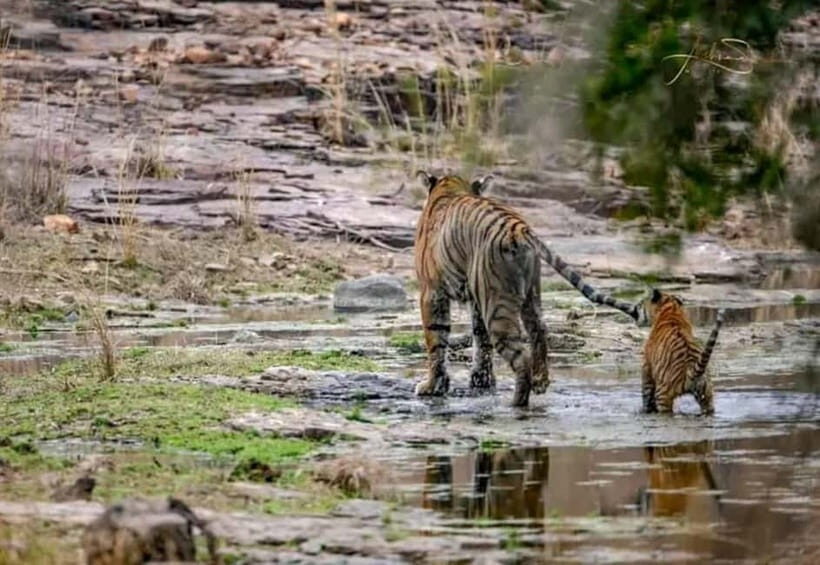
- Zones 1–5 are the usual hot spot for tiger activity, so your zone assignment matters.
- Shared open-top, 20-seat Canters mean you’ll hear other people and do a lot of scanning fast.
- Three-hour timing is tight, so pack for comfort and treat it like a wildlife sprint.
- Passport is required for park entry, so don’t leave that step until the last minute.
- Bring binoculars and patience: birds and smaller mammals can still be great even when tigers stay hidden.
Quick value check: is a $27 Ranthambore Canter safari actually good?
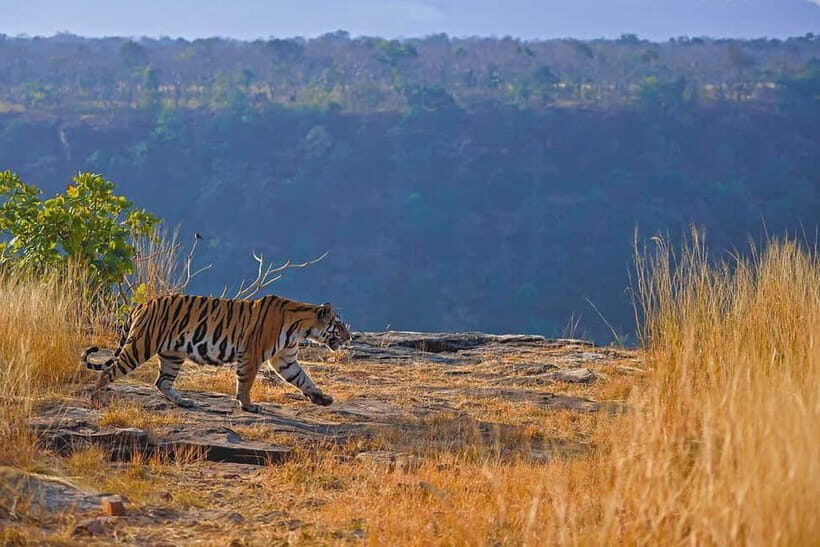
At about $27 per person for a 3-hour outing, this safari can be good value if you want the essentials: park entry, a shared vehicle, and a guide who explains what you’re looking at. You’re not paying extra for a private vehicle here, so the trade-off is that you’ll ride with other people and you won’t control the vibe.
Where the value really shows is in the included package. Your ticket covers entry fees, the Canter safari, and taxes, plus a professional guide. That’s the kind of all-in setup that saves you time at the gate and keeps the day focused on the reserve.
The big “value” reality is also the toughest part to budget for: tiger sightings are unpredictable. If you need guaranteed tigers, this isn’t that kind of experience. If you’re okay chasing chances, then this format is a solid, efficient way to do Ranthambore.
You can also read our reviews of more guided tours in Jaipur



Meeting at Ganesh Dham Circle and making sense of the 3-hour flow

Your safari starts and ends at Ganesh Dham Circle (गणेश धाम सर्किल). That’s the anchor point for your day, and it matters because not every operator-style pickup setup is equal. If you’re thinking of a hotel pickup, confirm it ahead of time. The official start is the circle, and some schedules may still involve you walking to meet the group.
Once you meet your guide, you’ll board the open-top Canter (about 20 seats). From there, the day moves in a loop: a photo stop, time inside the park for wildlife viewing, and guided interpretation of what’s around you. The listing also points to sunrise or sunset timing, which typically lines up with whether you book a morning or afternoon slot.
The practical takeaway: you’re not wandering around for hours. This is a ride-and-scan safari. The faster you get into observation mode, the more you’ll enjoy the drive.
Riding the open-top Canter: comfort, noise, and spotting strategy

There’s nothing subtle about an open-top safari. You’re up high enough to scan, close enough to feel the day, and moving often enough that the wildlife can surprise you.
A shared Canter can be fantastic—or a little chaotic—depending on the crowd. Because it’s a shared vehicle, you may encounter people who talk loudly, use phones, or get distracted by photos instead of watching. When that happens, the whole group has to work a bit harder to see through the noise.
Your best strategy:
- Use binoculars quickly once you spot likely cover—bush lines, edges of open areas, and water-adjacent zones.
- Take photos, then look. Phones can steal your eyes from the actual animal, so keep checking your surroundings after you shoot.
- Stay calm about gaps. You’re moving through the park’s zones, not waiting in one spot forever.
Weather matters too. If you safari in winter mornings or evenings, plan for cold and bring layers. The vehicle helps with speed and visibility, but it won’t magically keep you warm.
Wildlife you can realistically watch for in Ranthambore
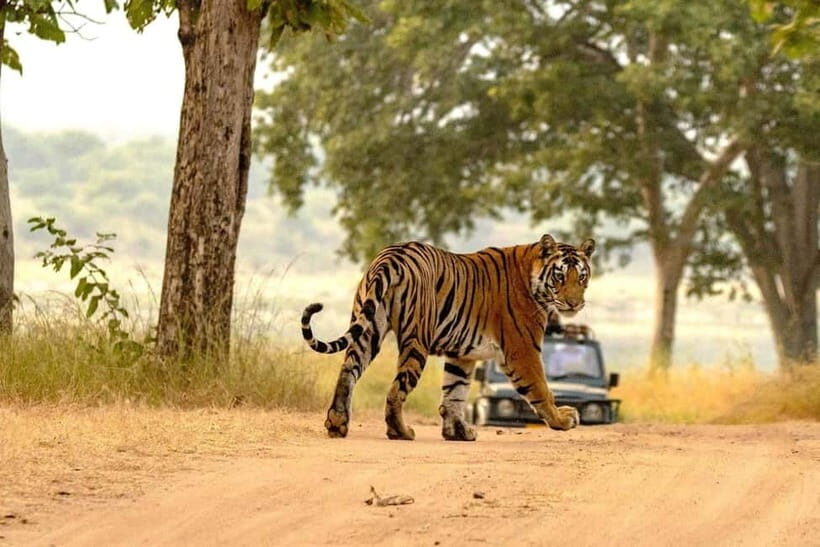
Ranthambore is famous for tigers, but it’s not only tigers. This safari is built to catch a range of wildlife sightings and bird activity, and that’s key to enjoying a reserve where big cats can be hard to predict.
Expect your guide to keep an eye on:
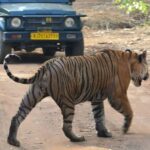
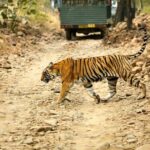
- Bengal tigers (unpredictable, but tiger activity is more common in Zones 1 to 5)
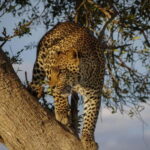
- Leopards
- Sloth bears
- Wild boars
- Deer species
- Crocodiles (where the conditions and waterways line up)
- Birdlife (the park is described as having over 300 bird species)
Here’s the mindset shift that helps: don’t make your entire day equal to one animal sighting. On safaris, “no tiger in front of you” can still turn into a great experience through birds, tracks, small mammals, and the way the ecosystem works. If you come wanting one species only, the day can feel like a letdown. If you come as a wildlife watcher, you’ll notice more.
The 10 zones in Ranthambore—and why Zones 1 to 5 get extra attention
Ranthambore National Park is divided into 10 zones, and they differ in character. The listing also notes something important for anyone planning big-cat expectations: tiger sightings are more frequent in Zones 1 to 5.
So what does that mean for you?
- If you’re aiming for the highest odds at a tiger encounter, you want a slot that puts you into Zones 1–5.
- If your assignment ends up outside those zones, don’t panic. You can still see wildlife, but the chance of a tiger close enough to truly appreciate can drop.
In practice, results can vary zone to zone in a way that feels almost unfair—some zones can deliver lots of visible activity, while others can be mostly birds and smaller sightings. That’s why experienced planning focuses on zone selection when possible.
You can also read our reviews of more tours and experiences in Jaipur


How the guide improves what you see (and what can go wrong)

A good safari guide changes everything. You’re not just driving through trees—you’re learning how to read the reserve.
This experience includes a guide who shares insights about biodiversity and what’s happening in the park. That kind of explanation helps you interpret movement: birds calling from cover, tracks that hint at nearby predators, and the way different habitat patches behave.
One note to keep realistic: guide communication quality can vary. The safari language is listed as English, but sometimes guides may rely more on local language in the moment. If English is a must for your enjoyment, it’s worth going in with a flexible attitude: ask questions, and if needed, use a simple phone translation tool for quick clarifications like animal names and habitat hints.
Also, remember that the Canter is a shared ride. Even the best guide can’t control every passenger’s attention. Your job is to keep your eyes on the park first, then let the guide help you connect the dots.
Photo stops, self-guided pauses, and getting the most from your 3 hours
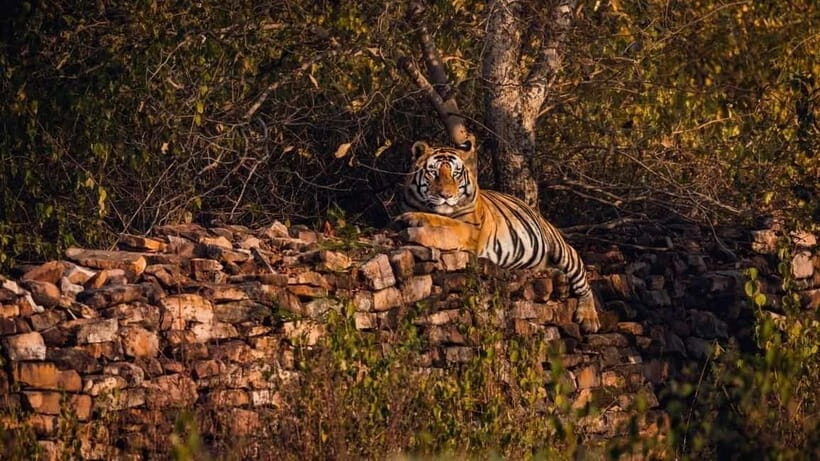
Your safari schedule includes a photo stop plus time for sightseeing, and it also mentions free time and self-guided moments. That usually means you’ll get short windows to take pictures, reposition your body for sightlines, and enjoy the scenery without constant narration.
Use those pauses smartly:
- Scan before you shoot. If you only photograph, you may miss the animal’s direction of travel.
- Look for behavior, not just presence. A quiet animal can become visible if you watch where it looks or what it’s alert to.
- Be quick with changes. In a 3-hour safari, you don’t have time for long lingering once the Canter moves on.
The ride schedule is short on purpose. This is about maximizing chances, not turning it into a slow nature hike.
What to bring for comfort: camera, binoculars, and real sun protection

For Ranthambore, your packing list is mostly about comfort and observation speed. Bring:
- Comfortable shoes (you may need to walk at the meeting point)
- Hat and sunscreen (sun can hit hard even when wildlife is elusive)
- Water (don’t treat this like a light snack day)
- Camera
- Binoculars (this is the single most useful tool for spotting distant movement)
Also think about layers if you’re going early or late. The Canter ride keeps you exposed since it’s open-top, so cold air can sneak in fast during cooler months.
And one simple rule: no pets. The park restrictions apply, and it’s not a place for bringing animals along.
Who this safari suits best (and who should rethink it)
This is a strong fit if you:
- Want an efficient big-cat area experience without spending all day
- Enjoy wildlife viewing as a process, not a guaranteed outcome
- Like the idea of guided learning while you’re actively searching
It may be a poor fit if you have:
- Back problems (noted as not suitable)
- Pregnancy (also not suitable)
Even though the experience is listed as wheelchair accessible, the “not suitable” note for back problems tells you that comfort and movement around vehicles and seating still matter. If you have mobility limitations, it’s smart to talk directly to the operator before booking so your body is genuinely compatible with the day.
Booking reality: limited seats and why you should plan ahead
Forest department safari supply is limited, and these Canter slots can sell out. The experience also indicates that it’s not a confirmed booking in the sense that safari availability can change. If there’s a sellout, you get a full refund.
So here’s the practical approach: book with the assumption that you need the slot, and try to lock it in early—especially in peak season. Also, plan for the passport requirement. The listing says all guests must present a valid passport for park entry, and you’ll need to send your passport details after booking via WhatsApp or email.
This is where people sometimes trip up. If your passport step is delayed, your day can’t happen.
Should you book this Ranthambore tiger safari?
Book it if you want a focused, 3-hour Ranthambore experience with a guide, an open-top shared Canter, and a realistic chance at tigers plus a lot of other wildlife. At $27, the included entry + vehicle + guide package can feel like a fair deal—especially when you compare it to the cost and time of DIY logistics.
Skip it if you’re chasing guaranteed tigers or you know you’ll be unhappy unless the first big cat appears. This is a reserve. The best you can do is increase your odds (aim for Zones 1–5 when possible) and show up ready to watch everything, not just one animal.
If you do book, go in prepared: binoculars, layers, patience, and an attitude that birds, tracks, and quiet moments count too.
FAQ
How long is the Ranthambore Canter safari?
The safari duration is 3 hours.
Where do I meet for the safari?
The meeting point is Ganesh Dham Circle (गणेश धाम सर्किल), and you return there at the end.
Can I choose between a morning and afternoon safari?
Yes. You can choose between a morning or afternoon safari slot to match your schedule.
Are tiger sightings guaranteed?
No. This is a tiger reserve, not a zoo, so sightings are unpredictable and not guaranteed.
What do I need to bring with me?
Bring comfortable shoes, a hat, a camera, sunscreen, water, and binoculars.
Do I need a passport and can I bring pets?
Yes. You must provide a valid passport for park entry. Pets are not allowed.