REVIEW · NEW DELHI
From Delhi: New and Old Delhi Private Sightseeing Tour
Book on Viator →Operated by India Tours Plan · Bookable on Viator
A day in Delhi can feel like speed-walking through time. This private route strings together Old Delhi’s Mughal-era lanes and mosques, then switches to New Delhi’s colonial and modern sights. You’ll see how the city layers power, faith, and architecture across centuries, all with a driver and a live guide.
What I like most is the contrast you get without extra planning: Humayun’s Tomb as the “first garden-tomb” on the subcontinent, then later Lotus Temple as a modern faith landmark shaped like a white petal lotus. Second, the logistics are genuinely smooth—hotel pickup, an air-conditioned private car, and a rickshaw ride in Old Delhi so you’re not stuck trying to figure out transport in crowded streets.
One consideration: this is a full day (about 7 to 8 hours), and Old Delhi’s lanes can feel tight and chaotic. If you’re sensitive to crowds or want slow, long visits, you’ll need to lean into your guide’s pacing and take short breaks when you can.
In This Review
- Key Highlights You’ll Actually Feel
- A Fast Way to See Mughal, Colonial, and Modern Delhi
- Price and Logistics: What $35 Buys You
- Old Delhi Morning: Humayun’s Tomb and Jama Masjid
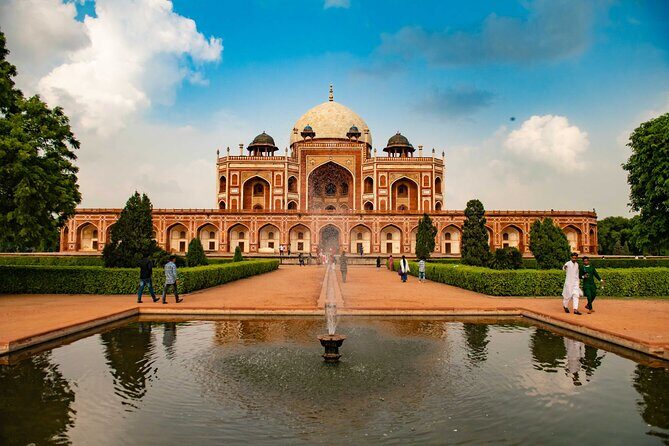
- Humayun’s Tomb: Mughal garden-tomb planning
- Jama Masjid: massive scale, massive atmosphere
- Rickshaw Into Chandni Chowk and Khari Baoli Spice Energy
- Pasar Chandni Chowk: the market world in motion
- Khari Baoli: spices up close
- Red Fort, Bangla Sahib, and the Pace Break Between Crowds
- Red Fort: Mughal fortress presence
- Gurudwara Bangla Sahib: calm amid the day
- A quick strategy for this section
- New Delhi Icons: India Gate, Rashtrapati Bhavan, Qutub Minar, Lotus Temple
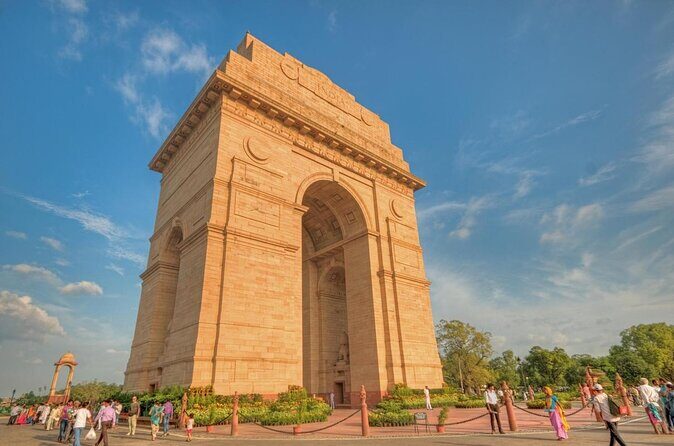
- India Gate: memorial architecture in public space
- Rashtrapati Bhavan: Raisina Hill views and scale
- Qutub Minar: a medieval landmark with a clear timeline
- Lotus Temple: modern faith design with a white-petal look
- How the Day Really Feels in 7 to 8 Hours
- The Guide Effect: Why Names Keep Coming Up
- Best Fit: Who Should Book This Private Delhi Day Tour
- Should You Book This Old and New Delhi Private Tour?
- FAQ
- FAQ
- How long is the Delhi private sightseeing tour?
- What’s included in the price?
- Are tickets included for all monuments?
- Where does pickup happen?
- Does the tour include Old Delhi street travel?
- What if the weather is bad?
Key Highlights You’ll Actually Feel
- Air-conditioned private car with chauffeur plus hotel/airport/rail pickup across Delhi, Noida, and Gurugram
- Old Delhi rickshaw ride that puts you close to spice stalls and the Chandni Chowk bustle
- Main monuments with tickets included for key sites (and entrance fees depend on your chosen option)
- A mix of faith landmarks: Jama Masjid, Gurudwara Bangla Sahib, and Lotus Temple
- Guide quality is a strong theme, with named guides praised for care, pacing, and photo help
A Fast Way to See Mughal, Colonial, and Modern Delhi
Delhi is big, and it’s not one story—it’s several. This private tour is built to make the city understandable in a single day. You start where Mughal influence is loudest, move through the high-energy markets of Old Delhi, then swing into the planning logic of New Delhi and its major monument set.
The best part for me is how the route keeps explaining what you’re seeing. Humayun’s Tomb is not just a tomb—it’s the “first garden-tomb” on the Indian subcontinent, so it frames a whole style of Mughal architecture. Later, you’ll see major New Delhi icons like India Gate and Rashtrapati Bhavan, and then you end in a calmer, modern-feeling space at Lotus Temple.
And yes, the tour is busy. That’s the point. You’re not wandering for days—you’re getting a complete picture fast.
You can also read our reviews of more private tours in New Delhi



Price and Logistics: What $35 Buys You
At about $35 per person, you’re paying for time, transport, and a guide—not just for entry into buildings. The value is especially good if you don’t want to coordinate drivers, ticket lines, and neighborhood connections yourself.
Here’s what’s included that matters in real life:
- Pickup and drop-off from your hotel/airport/railway station in Delhi, Noida, or Gurugram
- Private air-conditioned car with chauffeur so you’re not sharing routes with strangers
- A private live guide following the itinerary
- Complimentary water bottles and umbrellas (useful because Delhi weather can change quickly)
- Parking fees, tolls, fuel, and taxes handled for you
- Rickshaw ride in Old Delhi included
- Monument tickets included if you choose the entrance-fee option
What you should plan for:
- Meals are not included, and Delhi day trips can run long. Pack a simple plan for lunch or bring a snack if you get hungry on the move.
- Tips/gratuities are also not included, so budget a little for the people who make the day smooth.
Group discounts are offered too, which can make the price even better if you’re traveling with friends.
Old Delhi Morning: Humayun’s Tomb and Jama Masjid
Your day starts with the Mughal “wow factor,” and the two early stops do a good job of setting the tone.
Humayun’s Tomb: Mughal garden-tomb planning
You’ll spend about 1 hour at Humayun’s Tomb. This site is famous because it’s described as the first garden-tomb on the Indian subcontinent. That matters because it’s not random grandeur—it’s designed space: a tomb integrated into planned gardens, with a strong sense of symmetry and stillness compared with the city outside.
If you like architecture and layout, this is a strong first anchor. It helps you spot Mughal design logic later as your route heads into more religious and monumental areas.
Jama Masjid: massive scale, massive atmosphere
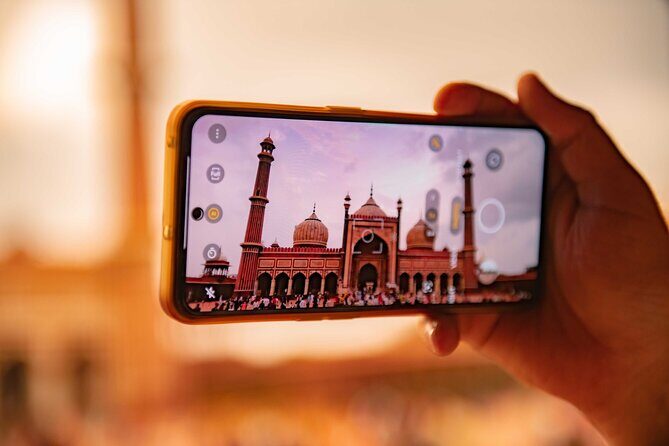
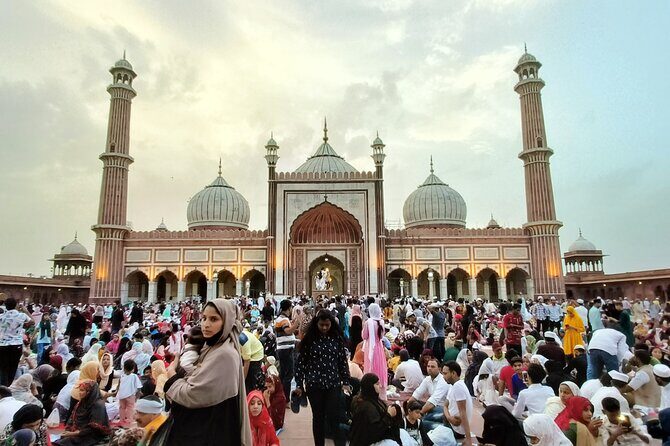
Then you move to Jama Masjid, also called the Grand Mosque. You’ll have around 1 hour here, and admission ticket is included. The big numbers tell you the scale: it’s described as one of the largest mosques in India, with an occupancy of around 25,000 people at a time.
The other reason I’d put this stop high on your list is authorship: it was built by Shah Jahan, described here as the fifth emperor of the Mughal dynasty. So you’re not just seeing a building—you’re seeing power expressed in stone and space.
Practical note: this is an active religious site. Go respectful, move with the flow, and follow your guide’s timing so you don’t feel rushed in a place where crowds can move unpredictably.





Rickshaw Into Chandni Chowk and Khari Baoli Spice Energy
Old Delhi can hit you all at once—noise, people, smells, and alley geometry. This part of the tour is where that intensity becomes useful rather than overwhelming.
Pasar Chandni Chowk: the market world in motion
You’ll head to Pasar Chandni Chowk for about 1 hour, and the itinerary includes a rickshaw ride in Old Delhi. This ride isn’t just for fun—it’s the best way to move through narrow lanes while still getting the “this is really how people live and shop” feeling.
The tour also frames Chandni Chowk historically, noting the area around it was designed by Jahanara, the eldest daughter of Shah Jahan. Even if you’re not deep into history, it gives you a mental map: this isn’t a random market. It has a designed origin.
Khari Baoli: spices up close
Next is Khari Baoli, also tied to the Chandni Chowk area, and it’s another 1 hour stop. Admission is free here. This is the place for a full-senses moment: spices, movement, and shopfront energy.
If you’re a foodie or just curious about what Indian cooking flavors actually come from, you’ll feel the logic fast. You’re not reading a textbook. You’re seeing spices in the format people use daily.
Small caution: spice markets are famous for strong smells and lots of hands reaching out. If you get overwhelmed easily, keep your pace steady and let your guide lead the path.
Red Fort, Bangla Sahib, and the Pace Break Between Crowds
This is a “breather” zone in the middle of a long day. Not quiet exactly, but it changes the vibe.
Red Fort: Mughal fortress presence
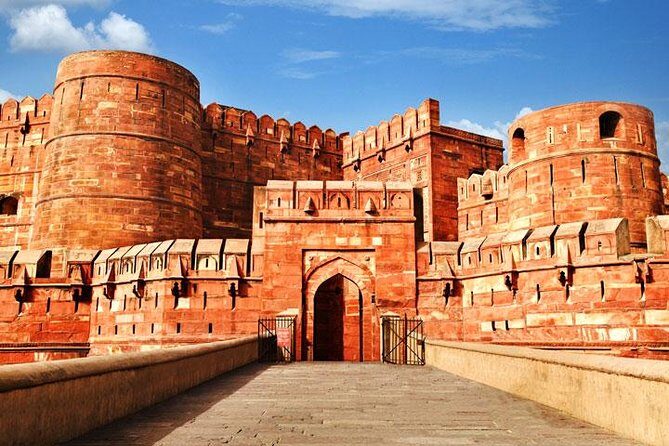
You’ll also stop at Red Fort, described as a magnificent beauty of red sandstone, also known as Lal Qila, constructed by Shah Jahan and built on the banks of the Yamuna. Your time here depends on the day’s flow, but it’s a key visual moment because it ties Mughal power to a fortress setting.
One thing to watch: because the day is structured for multiple sites, you might not get the slow, deep exploration you’d want if Red Fort is your only priority. Think of it as a strong must-see stop, not your entire Red Fort experience.
Gurudwara Bangla Sahib: calm amid the day
Then comes Gurudwara Bangla Sahib for about 30 minutes, with admission listed as free. This Sikh temple is tied to a specific story: it was built to commemorate Guru Har Krishan’s visit in 1664. The site is designed to be a place of welcome and reflection, so it’s a helpful contrast after the market intensity.
A quick strategy for this section
If you want to enjoy this middle stretch instead of just “checking boxes,” do this: use the temple stop to reset your energy. Drink water, step back from crowd edges, and let your guide finish the key explanations before you move on.
New Delhi Icons: India Gate, Rashtrapati Bhavan, Qutub Minar, Lotus Temple
Now the city feels more open. The route shifts into big monument sightlines and planned spaces.
India Gate: memorial architecture in public space
You’ll spend about 1 hour at India Gate, with admission free. The tour describes it as a war memorial established by the British in honor of Indian soldiers who died fighting for them in World War I.
This stop works even if you don’t love war memorials, because India Gate is also a people-and-space landmark. It’s the kind of place where you can step back, take photos, and get a sense of how New Delhi functions socially, not only historically.
Rashtrapati Bhavan: Raisina Hill views and scale
You’ll also stop by President Estate, also known as Rashtrapati Bhavan, located on Raisina Hill. It’s described as one of the major architectural buildings in the world.
The itinerary doesn’t state a specific time here, so treat it as a major photo-and-sightstop. If you’re hoping for a long look or special access, you’ll want to plan that separately—this tour keeps things moving.
Qutub Minar: a medieval landmark with a clear timeline
Next is Qutub Minar for about 1 hour, with admission ticket included. This is the “timeline” stop. The construction is described as commissioned by Qutub-Ud-Din Aibak in 1192, continued by his successor and son-in-law Iltumish.
Even if you’re not a structure-analysis person, this date-and-successor framing helps. You’ll see not just a tall tower, but an ongoing project across rulers.
Lotus Temple: modern faith design with a white-petal look
Finally, you end at Lotus Temple for about 1 hour, admission free. It’s dedicated to the Baha’i faith and designed in the form of a white petal lotus. The description also notes it’s one of the most visited establishments in the world.
This ending tends to land well because it softens the day. After crowds and markets, you get a visual reset: clean lines, calm atmosphere, and a building that looks like it was made for photos.
How the Day Really Feels in 7 to 8 Hours
A tour that covers this many sights needs pacing. Here’s what you should expect based on the itinerary structure and stop times given.
- You’ll spend the longest chunks on Humayun’s Tomb, Jama Masjid, Chandni Chowk/Pasar Chandni Chowk, Khari Baoli, India Gate, Qutub Minar, and Lotus Temple—each roughly around 1 hour (with Gurudwara Bangla Sahib shorter at about 30 minutes).
- You’ll also have shorter or moving segments at Red Fort and the President Estate/Rashtrapati Bhavan stop, so don’t count on long lingering.
If you like to take lots of photos, build in mental micro-pauses. Delhi moves fast. A good guide will keep you from spending your energy stuck waiting or doubling back.
Also, it helps that the tour includes water bottles and umbrellas. You won’t be scrambling mid-day.
The Guide Effect: Why Names Keep Coming Up
The biggest pattern from past experiences is that the day improves when the guide can explain and manage movement. In the feedback you’ll see multiple guide names praised for care, timing, and clarity—examples include Danish, Javed Khan, Vivek Kumar, Zayn, Daniyal, Ramesh, and Subash.
What does that mean for you? It means this isn’t just a driver with a checklist. A strong guide helps you:
- understand what you’re looking at at Humayun’s Tomb and Jama Masjid
- navigate the sharp turns and crowd flow in Old Delhi
- keep the day from turning into rushed “see it, sprint, repeat”
If you care about photography, the guide quality matters too. Some guides are specifically noted for photo help and attention to comfort.
Best Fit: Who Should Book This Private Delhi Day Tour
This tour is a good match if:
- you want Old and New Delhi in one day without planning transport between neighborhoods
- you like architectural variety and landmark sequencing—from Mughal tomb gardens to modern faith design
- you value a private setup (your group only) and a live guide, not audio-only sightseeing
- you’re okay with a full day and want efficient pacing
It may be less ideal if:
- you want slow museum-level depth at just one monument
- you dislike busy spaces and hate crowds, even when guided through
- you expect meals to be included (you’ll need a lunch plan)
Should You Book This Old and New Delhi Private Tour?
I’d book it if you’re visiting Delhi for the first time and want a fast, structured tour that covers the city’s main “identity zones.” The private car, guide, and rickshaw ride are the kind of combo that saves energy and keeps you feeling oriented. And at $35 per person, the value is strong because so much is handled for you—transport, parking, and key site tickets depending on your chosen option.
Skip it or rethink if you already have tight time for just one or two sites you love most. In that case, a focused half-day to one area could feel more satisfying.
FAQ
FAQ
How long is the Delhi private sightseeing tour?
It runs about 7 to 8 hours.
What’s included in the price?
You get pickup and drop-off, a private air-conditioned car with chauffeur, a private live guide, complimentary water bottles and umbrellas, parking/tolls/fuel/taxes, and a rickshaw ride in Old Delhi. Monument tickets are included only if you choose the option with entrance fees.
Are tickets included for all monuments?
Not necessarily. Some sites are listed with admission tickets included (like Humayun’s Tomb, Jama Masjid, and Qutub Minar), while others are listed as admission free. For other monuments such as Red Fort, tickets depend on selecting the entrance fees option.
Where does pickup happen?
Pickup is available from your hotel, airport, or railway station in Delhi, Noida, or Gurugram.
Does the tour include Old Delhi street travel?
Yes. You’ll do a rickshaw ride in Old Delhi, along with stops like Chandni Chowk and Khari Baoli.
What if the weather is bad?
The tour requires good weather. If it’s canceled due to poor weather, you’ll be offered a different date or a full refund.
If you tell me your travel month and whether you prefer fewer stops vs. maximum coverage, I can suggest the best way to pace this day and what to prioritize first.